Flybar: the original pogo stick company that taught broadway to bounce
Official homepage: https://flybar.com
Flybar is the oldest toy on this tag — the direct descendant of the first American pogo stick, patented in 1919 and carried to fame by Ziegfeld Follies dancers bouncing across Broadway. After a century of modest sales and one astonishing reinvention — turning the backyard pogo into an extreme sport — it now runs a store with more than 500 products in fourteen categories, sells its old rival's air-powered supersticks, and still stamps some of its wares in the same upstate New York town where it all began. This review traces the Burma legend, the rubber-band arms race, and the modern bounce ladder.
A Burmese farmer, a rotten boatload, and Gimbels
The origin legend is one of toy history's best stories — far-fetched, as chroniclers note, but too good to surrender. An American traveler named George Hansburg, exploring Burma in the early 1900s, met a poor farmer whose daughter Pogo walked to temple daily through mud and rocks with no shoes; the farmer built her a jumping stick, and Hansburg returned home to patent the pogo stick in 1919, building it from a factory called SBI Enterprises in Ellenville, New York. His first big break curdled: Gimbel Brothers imported a boatload, and the wooden sticks rotted on the wet voyage over. Asked for something more resilient, Hansburg went all-steel — the Master Pogo — and an icon was born. The company claims the Flybar name reaches back to 1918, making it a genuine century brand, and its own About page calls it the world's largest pogo stick manufacturer.
Ziegfeld girls, Hippodrome choruses, and a pogo wedding
The Roaring Twenties made the pogo stick a phenomenon, and Hansburg its impresario. He taught the Ziegfeld Follies dancers to bounce; the chorus girls of the New York Hippodrome performed entire shows on sticks; marriage vows were exchanged mid-bounce in what was perhaps the world's first and last pogo-mounted wedding; jumping contests filled arenas and world records for consecutive jumps were set and reset. A local businessman named Irwin Arginsky bought the company from Hansburg in 1967, and his assessment of the market became the industry's permanent reality check: 'You're not talking about a hot toy... a market that maybe — maybe — we topped out one year at 475,000 units.' For decades the pogo was nostalgia more than growth. Then, in 2000, a physicist's demo video landed on Arginsky's desk, and everything changed.
Twelve rubber thrusters and a skateboard crash dummy
The physicist was Bruce Middleton, and his idea was a giant rubber band. Convinced the pogo's century-old coil spring had nowhere left to go, he built a stick powered by twelve solid rubber tubes — 'thrusters,' each generating a hundred pounds of force — arrayed around the piston so riders could slip tubes off to tune for weight or fear of heights. SBI spent four years and nearly three million dollars turning it into a marketable sporting device, and signed eight-time World Cup skateboarding champion Andy Macdonald to field-test it. Macdonald, the collaboration's self-described crash-test dummy, broke dozens of prototypes before he and Middleton arrived at a safe design — the physicist talking energy storage and thrust per pound, the skater replying, 'Yeah, that's rad, dude.' In 2004 the Flybar 1200 launched at $299, the Flybar 800 and 400 followed for smaller riders, and extreme pogo had a founding company. The honest footnote: the inventor's ending was less triumphant — the Smithsonian's account finds Middleton years later in a single-room-occupancy hotel on Vancouver's skid row, saying the company owed him money; SBI's president called the parting amicable.
The feud: rubber bands versus Boyle's law
While SBI bet on rubber, a rival bet on air. Bruce Spencer — inspired by the Flybar's publicity but convinced rubber bands were a dead end — borrowed Boyle's law from college chemistry, took out a $180,000 home-equity loan, and built the Vurtego, a pogo whose entire cylinder works as an adjustable air spring: pump it harder for heavier riders and bigger air, softer for control. Spencer tested cylinders to 800 PSI in a park batting cage at dawn, he told the Smithsonian, 'before the cops came.' The Vurtego V4 Pro went on to set nine world records with ten-foot bounces, anchoring the Xpogo extreme community. Here is the ending nobody predicted: the rubber-band company and the air-spring rival now share a store — current buying guides list the Vurtego Slingshot as sold through Flybar's own shop. The feud became a catalog.
Five hundred products, fourteen categories, one bounce
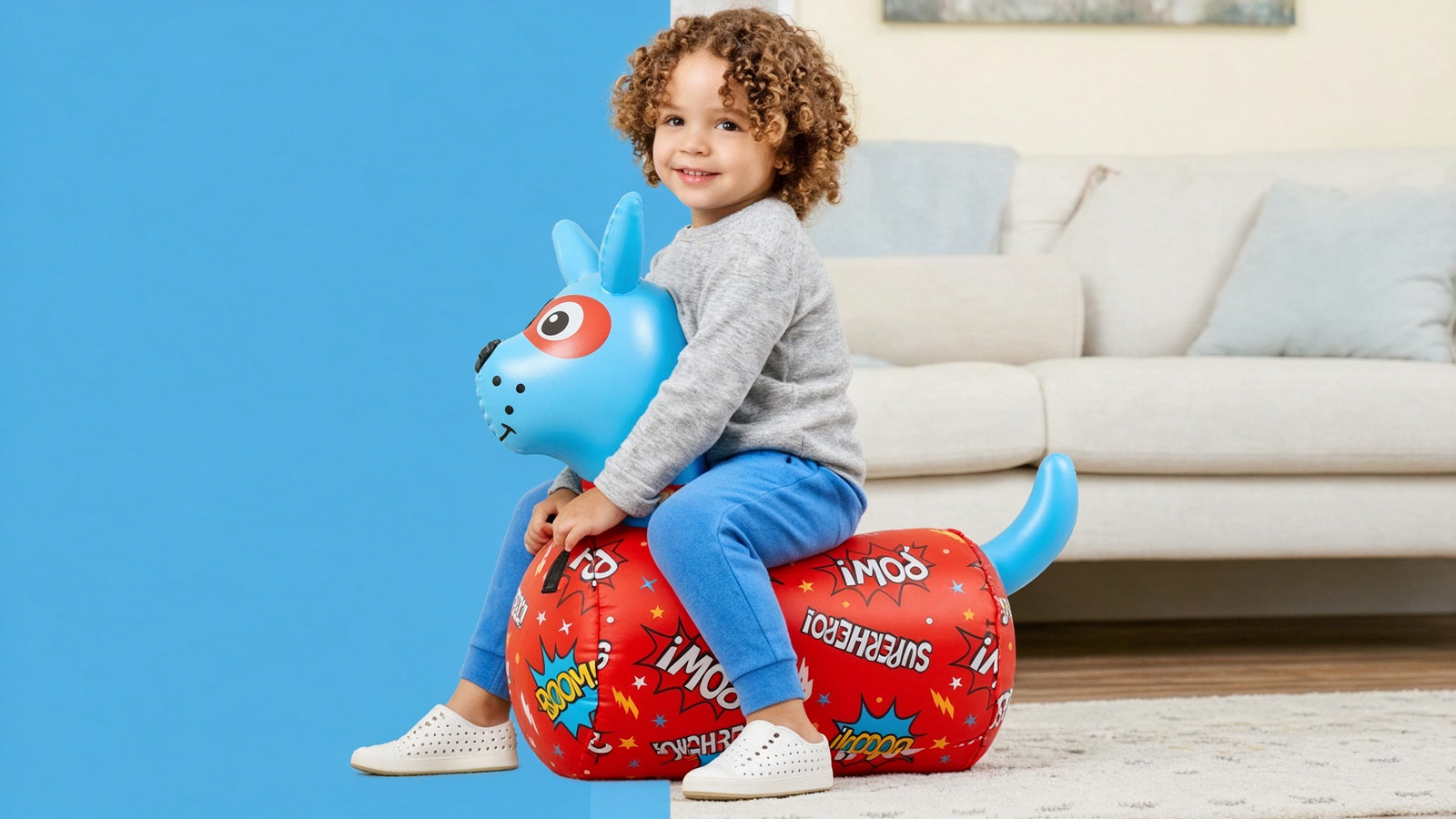
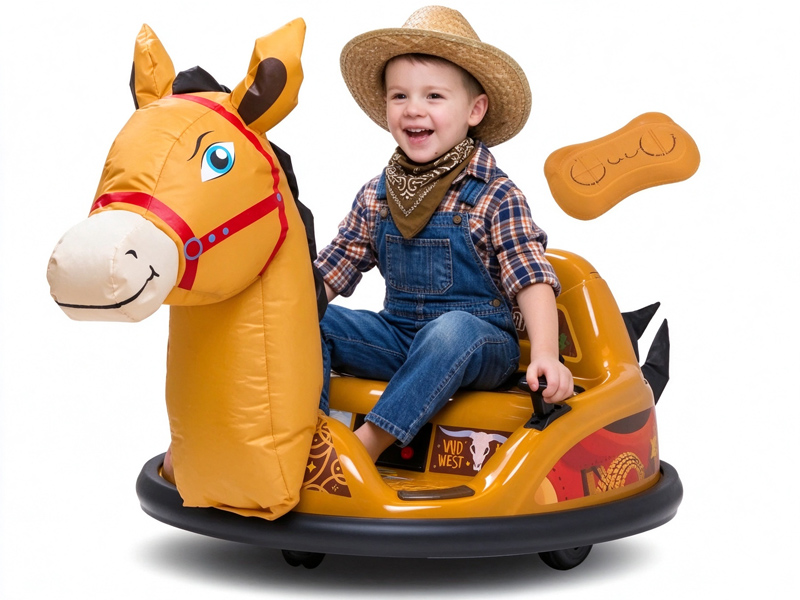
The modern store is barely recognizable from the pogo company of 2000. The About page describes growth from a lineup of twenty-five pogo sticks to more than five hundred products across fourteen categories, and the catalog confirms it: the full pogo ladder, Kid Trax ride-ons from a $79.99 FunPark bumper car to $129.99 glow and auto-inflating character bumper cars, Swurfer tree swings, scooters, sleds, and active-play gear. The Swurfer — a curved board that swings like a surfboard — is made by Flybar in Ellenville itself and has earned made-in-America gift-guide plaudits. Around the products sits real infrastructure: warranty registration, a replacement-parts page, returns, and a thirty-day no-fuss refund promise printed on its entry-level products.
Thirty dollars to four hundred, and the safety ledger
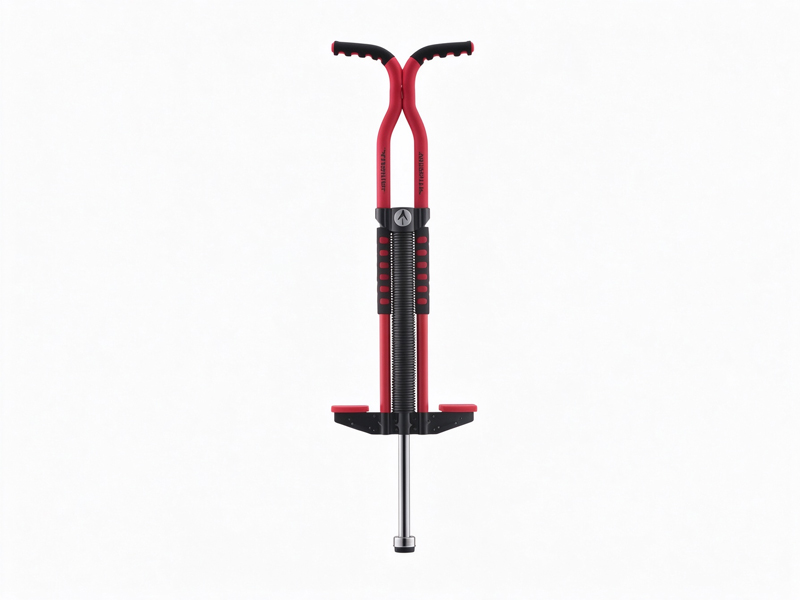
The ladder runs from a $17.99 My First Jump and Squeak — a foam-and-bungee jumper for three-year-olds that squeaks, will not scratch floors, and is rated to 250 pounds — through the $40 to $50 foam Maverick for ages five to nine, the $75 Foam Master for bigger kids, the Super Pogo 1505 with its open coil rated up to 210 pounds for teens and adults, and finally the air-spring Vurtego sticks past three hundred. Every serious buying guide adds the same ledger entries: match the rider's weight to the spring band, keep helmet and pads non-negotiable, respect the open-coil sticks' finger and clothing hazards, and expect a one-year warranty on the Master and Super Pogo lines. The honest caveats mirror the category's ceiling — budget sticks vary in quality control, the extreme tiers are priced for devotion, and no pogo, however legendary, is ever a hot toy.
The last bounce before dinner
Flybar's store sells a century compressed into a spring: the Burma legend, the Broadway chorus lines, the physicist's rubber thrusters, the rival's air cylinder, and a five-hundred-product catalog that now includes bumper cars and tree swings. Its trade-offs are the honest ones of a category with a hard ceiling — sales that peaked generations ago, extreme tiers priced for devotees, and budget lines where quality control varies by batch. But as the keeper of the pogo stick's entire history — and the unexpected peacemaker between rubber and air — this is the store where the bouncing starts and, for a few stubborn minutes each evening, never quite stops.