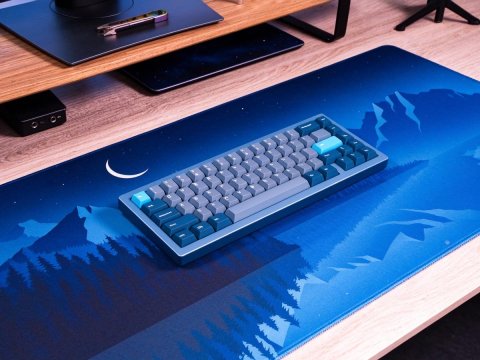
Epomaker review: the shenzhen keyboard brand stacking every spec at a budget price
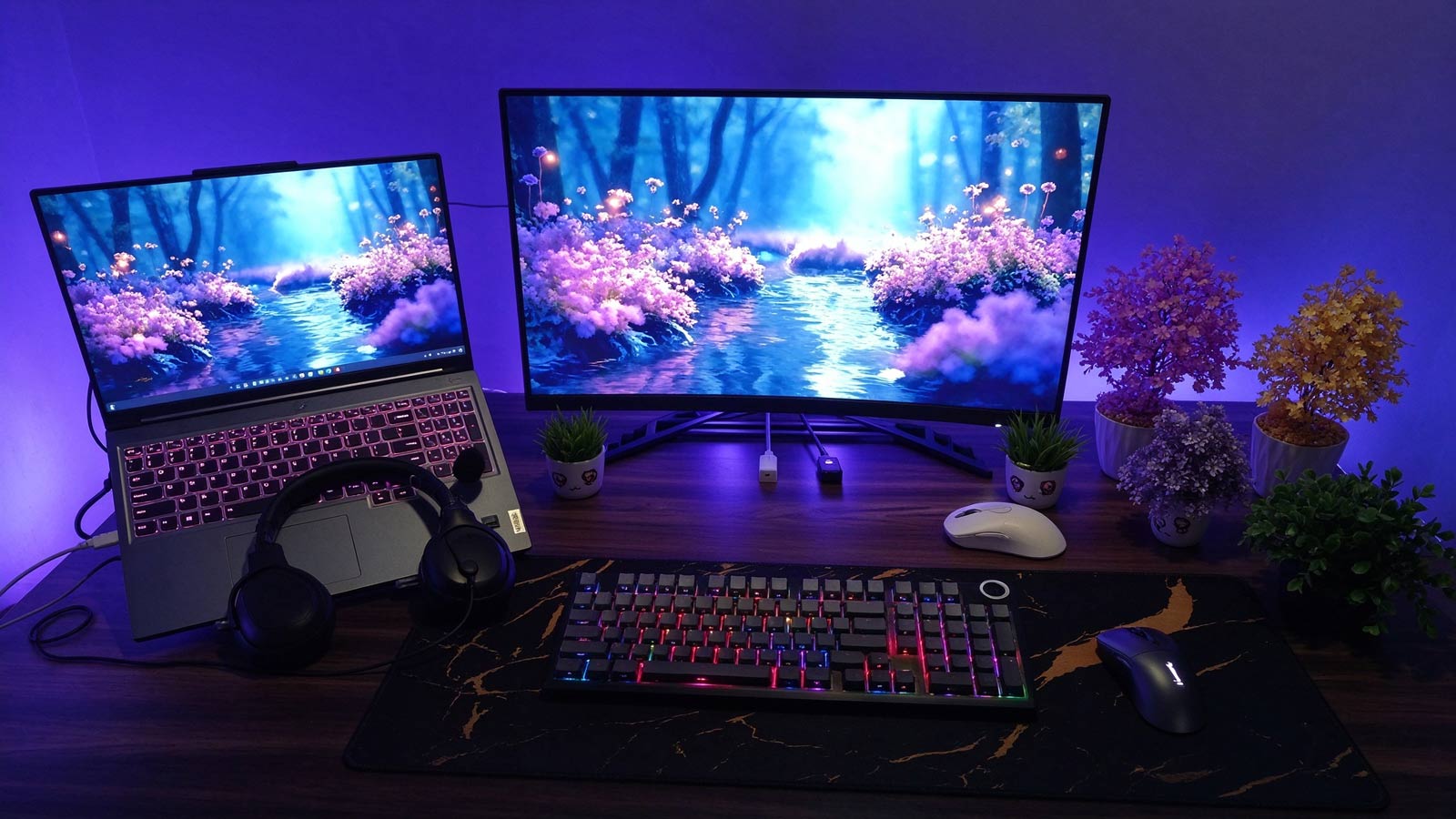
Official homepage:https://epomaker.com
Epomaker launched in 2019 with a single crowdfunded 68-key board whose specifications were assembled from enthusiast feedback, and within five years it grew into one of Amazon's top three keyboard brands, reporting roughly 350 million yuan in annual revenue for 2024. This review examines the Shenzhen company behind the "Crafted to sound right" slogan — its product lines, its much-advertised Sound Lab, the sister audio brands that shape its tuning philosophy, its software and support operation, and what the enthusiast community actually says after living with its boards.
From a crowdfunded GK68XS to a nine-figure yuan brand
Epomaker is a brand of Shenzhen Changyun Technology, a Nanshan District company founded in 2013 that runs a house of brands spanning HiFi IEMs (Linsoul, ThieAudio, Kiwi Ears, Tripowin, ZiiGaat) and mechanical keyboards (Epomaker, KiiBOOM, Mechlands). The name is short for "Epoch of Makers," and the founding team describes itself as a mix of gamers, software engineers, product designers, and keyboard enthusiasts. The first product, the GK68XS in 2019, was funded through crowdfunding with specs drawn directly from community feedback — an origin story the company still leads with.
The growth since has been steep. Chinese cross-border trade coverage credits Epomaker with hitting its goal of 350 million yuan in annual revenue in 2024, breaking into the top three of Amazon's keyboard category, and ranking 53rd on a Q4 2024 list of the hundred most influential Chinese cross-border e-commerce brands. For a store review, that scale matters: this is not a boutique group-buy workshop but a high-volume consumer brand with hundreds of thousands of units in the wild, sold through its own Shopify storefront and Amazon marketplaces across the US, Canada, the UK, Europe, and Australia.
Seven product lines and the co-brand machine behind them
The catalog is deliberately wide. The TH series covers mainstream wireless boards like the TH66, TH80, TH80 Pro, and TH80-X — 75% layouts with gasket mounts, knobs, tri-mode connectivity, and batteries up to 8000mAh. The Galaxy series, including the Galaxy100, pushes toward larger 96% and full-size formats. The ACR Pro line offers aluminum-case gasket kits for buyers who want a more premium enclosure, while the EK series and the RT/HE variants chase the gaming market with magnetic Hall Effect switches.
Two things distinguish Epomaker's shelf from Keychron's or Akko's. First, the co-brand machine: the store sells Epomaker-branded versions of partner manufacturers' designs — Ajazz's AK820 Pro and AK820 Max with TFT displays, boards tracing back to Skyloong's GK series DNA — plus its own switches (Flamingo, Wisteria, Creamy Jade) and keycap sets. Second, the gaming pivot: the G84 HE advertises 8000Hz polling, roughly 0.125ms latency, Rapid Trigger, SOCD snap-key cleanup, and DKS multi-action bindings — enthusiast gaming features at a fraction of what established esports brands charge. Mice, headsets, and desk accessories round out a store that wants to own the whole desktop.
What the spec sheets promise at these prices
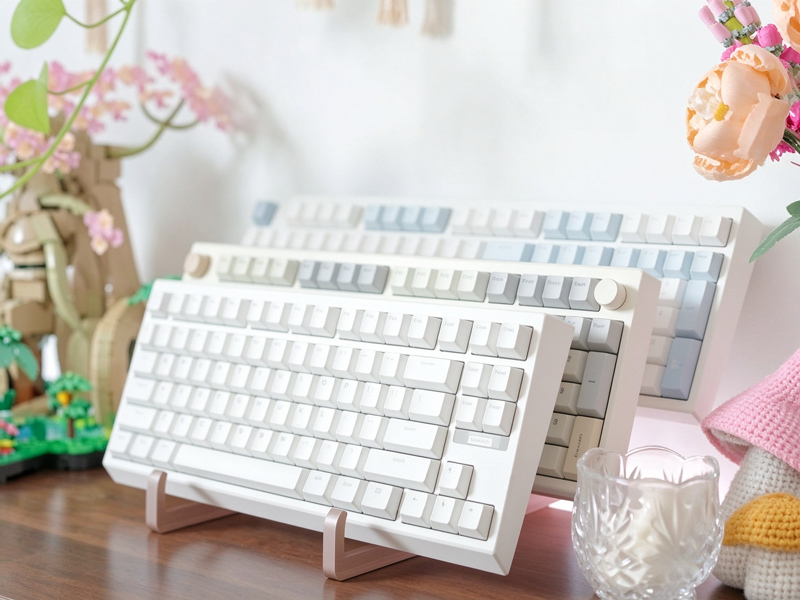
The core Epomaker pitch is spec density. At typical prices of roughly $50 to $150, boards combine gasket mounting with multi-layer foam damping (poron, IXPE, silicone, EVA), hot-swap sockets accepting both 3-pin and 5-pin switches, 2.4GHz plus Bluetooth plus USB-C tri-mode, and batteries that embarrass competitors — the TH80-X's 8000mAh cell drew praise from reviewers as a "battery life champion" in a market where 4000mAh is standard. Independent reviews of the TH80-X and TH80 V2 consistently note solid build quality, fast reconnection, and pleasant stock typing feel on pre-lubed switches.
The trade-offs are equally consistent across reviews. Several critics describe the stock sound as loud or slightly hollow despite the foam stack. Switching between Windows and Mac layouts on some models takes four presses through the knob menu rather than a single toggle. Uploading images or GIFs to the LCD requires a cable and patience, with slow file transfer. And a wedge-shaped, beveled aesthetic that reads casual and friendly to some looks unserious to others. None of these are dealbreakers at this price, but they are the honest edges of the value proposition.
Inside the Sound Lab and why acoustics lead the marketing
Epomaker's most distinctive marketing asset is its Sound Lab. The company says that when it analyzed community reviews, 52.6% mentioned sound first — before customization, value, or looks — so it built a shared acoustic engineering space where every product is measured, tuned, and professionally recorded before launch. Foam densities, plate materials, and gasket durometers are each tested for acoustic contribution, and the recordings are published on product pages and YouTube rather than kept internal.
What makes the lab credible rather than gimmicky is the corporate family tree: parent Changyun's other brands are IEM and headphone makers, so the keyboard line inherits acoustic engineering practices from in-ear monitor tuning — a cross-pollination few pure keyboard brands can match. Whether or not "Crafted to sound right" persuades you, it explains the product formula: sound-first tuning, published acoustic profiles, and an unusual willingness to let recordings rather than adjectives do the talking.
Software, firmware, and the VIA compatibility fine print
Here the picture gets murkier, and prospective buyers should read carefully. Epomaker's own driver software handles remapping, macros with timing control, RGB, TFT display management, and firmware updates. Reviews find it functional but unpolished — the interface is less intuitive than Keychron's or Logitech's, display customization sometimes takes several attempts, and the full-featured version is Windows-first, with macOS users pointed toward the open-source Vial tool on compatible models. On-board memory means configured profiles travel with the keyboard, which softens the blow considerably.
The fine print concerns open-standard compatibility. Epomaker has historically claimed QMK/VIA support on various models, and Australian outlet I'mTech — after otherwise praising the Galaxy100 Lite's typing experience — noted that user reports cast a negative view on those claims. The practical advice from long-term owners: treat VIA compatibility as model-by-model rather than brand-wide, verify the specific board's firmware support before buying, and expect firmware updates to run through Epomaker's own software rather than the open toolchain.
Shipping, warranty, and a four-person support desk
Epomaker ships worldwide from China, with free-shipping thresholds that vary by campaign and region; buyers in major markets can often dodge international shipping entirely by ordering through the brand's Amazon storefronts, at the cost of a narrower selection of switch and keycap options. The warranty is twelve months, standard for the category though short of Keychron's longer coverage on some lines.
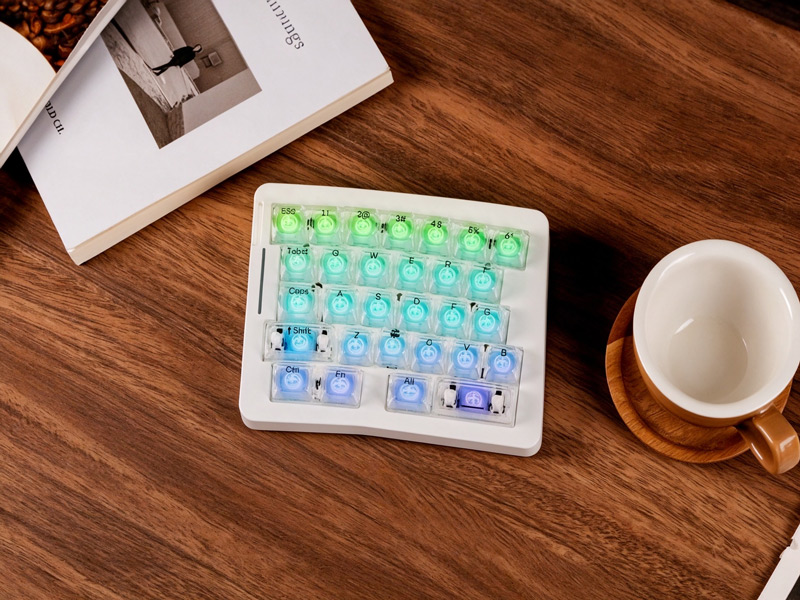
Support is email-only, but with an unusual transparency pledge: the store publishes actual median reply times (a claimed 12-hour median for support, updated monthly on a rolling 90-day window) alongside committed response windows for press, business, and creator inquiries. The FAQ reveals that the support team is four people in the same Shenzhen building as the Sound Lab, escalating to engineering when needed, and even specifies that a five-to-ten-second phone recording of an audio issue cuts diagnosis time by about 75%. It is a small operation for the volume it serves, and the published metrics read as a genuine attempt to keep it accountable.
The community ledger: praise, complaints, and caveats
Community trackers have recorded a clean file: kbd.news's vendor page for Epomaker notes no complaints in its recent window, and owner feedback clusters around a few repeated themes. The praise: stock switches that arrive pre-lubed and smoother than expected (the Ajazz Flying Fish line gets specific credit from owners who planned to re-lube and didn't), gasket-mounted comfort for typists migrating from tray-mounted boards, reliable 2.4GHz and Bluetooth with no perceptible gaming latency, and multi-week battery life in moderate RGB use.
The complaints are specific too. The software learning curve is the most common first-week frustration, particularly around TFT display setup. Longer-term owners note shine on ABS keycaps (the double-shot PBT models avoid this), a small but recurring number of spacebar stabilizer rattle reports that lubing fixes, and an early-generation reputation for quality control that the brand appears to have improved but not fully erased. Against Keychron — the default comparison — the consensus is that Epomaker wins on feature-per-dollar and bold design, while Keychron retains the edge in software polish, open QMK/VIA ecosystem, and long-term modding support.
Last word for buyers weighing features against polish
Epomaker is what happens when enthusiast group-buy culture gets industrialized: crowdfunded origins, community-spec'd products, a Sound Lab publishing acoustic measurements, and gaming-grade magnetic switch boards at mainstream prices. The Shopify storefront backs that up with scale — seven product lines, co-branded partner designs, own switches and keycaps, and a published support ledger that most larger rivals don't attempt.
Buy here if your priority is maximum features per dollar: big batteries, gasket mounts, Hall Effect gaming boards, and displays at prices that undercut established brands by a wide margin. Look elsewhere if you depend on flawless VIA support, polished cross-platform software, or the boutique build quality of a Mode or Keycult. For everyone in between — typists and gamers upgrading from a membrane board or a first mechanical — Epomaker's mid-range is one of the strongest value shelves in the category, provided you verify the specific model's firmware story before checkout.