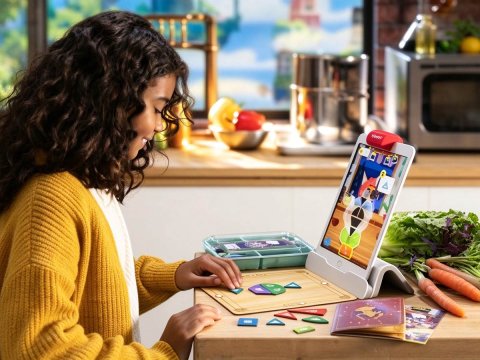
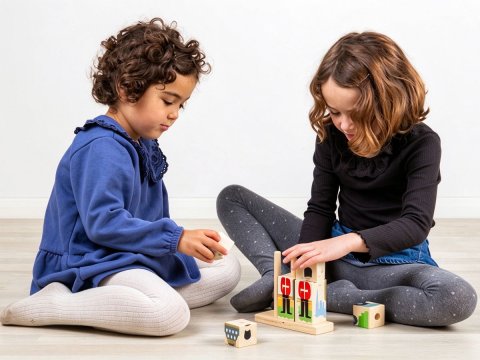
A neuroscientist rewrote playtime, and teachers are taking notes

Official homepage: https://juniorlearning.com/
Junior Learning is the rare toy brand founded not by a toymaker but by a brain scientist: Dr. Duncan Milne, an educational neuroscientist, started the company in 2009 with children's author Anna Kirschberg. Nearly two decades later, its boxed sets of phonics games, dominoes, and activity cards sit in classrooms and homeschool shelves around the world. Here is our review of its online store from several angles.
Educational Neuroscience Started This Brand, Not Toy Design
Junior Learning was established in 2009 by Dr. Duncan Milne, an educational neuroscientist, together with Anna Kirschberg, a children's book author. That pairing — a scientist who studies how young brains acquire reading and math, and a writer who knows how to hold a child's attention — set the tone for everything that followed. Rather than chasing toy trends, the family-owned company built its catalog on research from cognitive psychology: how memory consolidates, how letter-sound connections form, and how play sustains the attention that worksheets cannot. Distributors describe the brand the same way — every Junior Learning resource has been developed under Dr. Milne's neuroscientific approach — and that origin story is the most distinctive thing about the store you visit today.
Every Game Is Designed Around How Brains Actually Learn
The product philosophy is easiest to see in the flagship phonics line. Take the CVC Word Builders Activity Cards: forty-eight colorful cards built around consonant-vowel-consonant words like "cat" and "van," each color-coded by phoneme and marked with three difficulty levels via blue, orange, and violet borders. It looks like a simple flashcard set, but the structure maps directly onto how decoding is taught in evidence-based reading instruction — children blend individual sounds, check their work against the illustration, and progress through difficulty without an adult redesigning the lesson. Reviewers of homeschooling supplies have highlighted exactly this combination of rigor and low price. Across the catalog — speaking games, comprehension games, multiplication dominoes — the same pattern holds: a game mechanic wrapped around a specific, research-backed learning target.
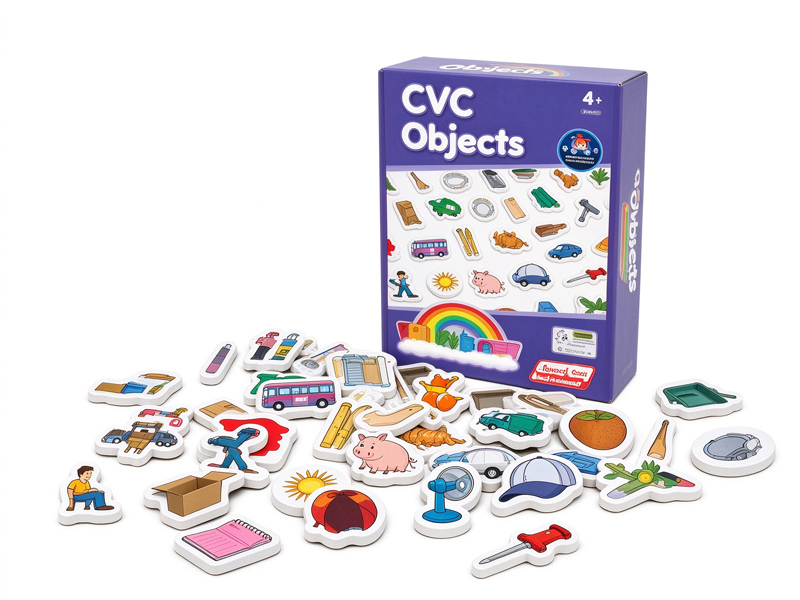
Six Games in One Box Became the Signature Format
Walk the store's aisles and one format appears again and again: the "6 Games" box, priced around $29.99. Each value pack bundles four board games, scenario cards, picture puzzles, counters, a die, and a spinner — six distinct activities around one skill, such as letter sounds or comprehension. It is a clever commercial answer to a teacher's real problem: a classroom needs variety for small groups, but budgets and storage space are finite. Around this anchor, the catalog spreads into lower-priced entry points — Multiplication Dominoes at $12.99, activity-card sets around $15, dice and flip-book games — so a parent can test one skill cheaply before committing to a full topic. Prices across the store sit firmly in the affordable middle of the educational toy market.
The Store Organizes Shopping by Curriculum and Grade
One of the most teacher-friendly touches is navigation. Instead of browsing by product type alone, shoppers can browse by curriculum, by grade, by age, or by the phases of the Letters and Sounds framework — the phonics progression widely used in UK and Australian schools and increasingly in US classrooms. There is even a dedicated Science of Reading section, reflecting the mainstream shift toward structured literacy. For parents who are not teachers, this removes the guesswork: find your child's year level, and the store filters the catalog to what is developmentally appropriate. For schools, there are school-order pathways and bulk options. It is a small thing, but most toy stores organize by character or color; this one organizes by pedagogy.
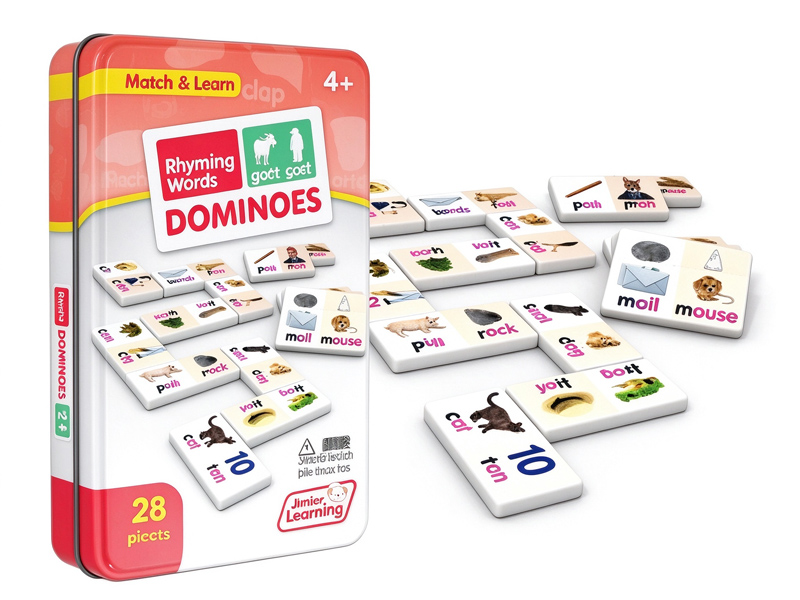
Free Printables and Manuals Extend the Store Beyond Checkout
The store keeps giving after the transaction. The Resources section hosts free printables, decodable readers through its Decodables.Net project, activity guides for the boxed games, and a Teaching Letters & Sounds Manual — genuinely useful downloads that let a parent trial the approach before spending anything. A teacher newsletter and blog round out the support. Shipping is straightforward, with free shipping on orders above $99 in the US storefront, and sister sites serve the UK and Australia with local pricing and phone support. The overall experience is that of a specialist supplier that treats educators as its core audience and parents as welcome guests.
Our Take After Comparing It With Bigger Competitors
Against flashier educational toy brands, Junior Learning trades spectacle for substance — and mostly wins on its own terms. The strengths are real: a neuroscientist-founded, family-owned pedigree; products aligned with structured literacy and evidence-based numeracy; curriculum-style navigation rare in this category; and prices that respect classroom and homeschool budgets. The trade-offs are equally plain: the designs are functional rather than beautiful, there are no licensed characters or electronic hooks to draw children in on their own, and shoppers outside the US, UK, and Australia have a thinner experience. For families and teachers who want play that teaches reading the way reading science says it should be taught, this store is one of the most credible corners of the educational toy web.