A $60 robot follows marker lines, not your wi-fi
Official homepage: https://ozobot.com/
In an educational toy market addicted to tablets, Ozobot went the other way: its robots read hand-drawn marker lines on plain paper. Founded in Redondo Beach, California, in 2014 by father and entrepreneur Nader Hamda, the company built a golf-ball-sized robot that teaches coding through color — no screen required to start. More than ten thousand schools adopted it, half a million units sold, and a modest $3 million funding round later, it is still one of the most affordable entries into real coding. Here is our review of its store from several angles.
A Father Wanted His Daughters Off the Screen
Nader Hamda's origin story mirrors the anxieties of every modern parent. A serial entrepreneur in children's technology, he watched his daughters — aged five and nine at the time — growing up with their faces in smartphones and "scrolling to nowhere," and decided the educational toys promising to fix it were either too expensive or too screen-dependent. His answer, incorporated as Evollve Inc. in 2014, was deliberately contrarian: build a coding robot that works on paper. The founding premise was that young children should touch, draw, and physically interact with code before they ever type it — and that affordability mattered, because expensive educational hardware excludes the very schools that need it most.
Color Sequences Replaced the Keyboard Entirely
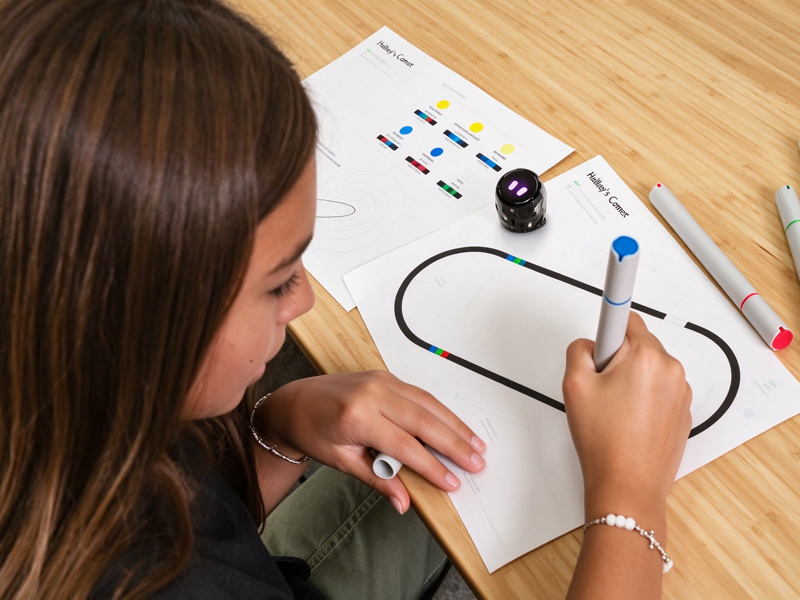
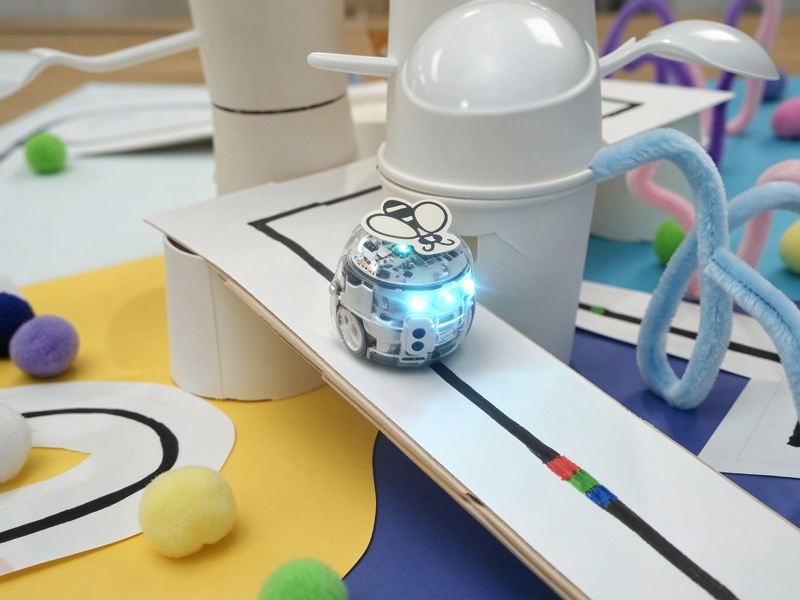
The invention that made it work is called Color Codes, and it is patented. A child draws a black line with a marker, then adds short color sequences — red-blue-red means pause, blue-green-red is a nitro boost, green-black-red turns left at an intersection. Place the golf-ball-sized Ozobot on the line, and its underside sensors read both the line and the colors, executing each command in order. There is no pairing, no app, no account, and no screen at all at the entry level. When children are ready for more, the same robot graduates to the OzoBlockly editor, where drag-and-drop blocks program movement, LED light shows, and sounds — and, on the Evo model, eventually to Python. The progression from marker to blocks to real text is the most graceful on-ramp in the coding-toy category.
Ten Thousand Schools Signed Up Before the Funding
Teachers found it before venture capitalists did. By early 2017 — three years in, with only friends-and-family money — Ozobot robots were already in more than 3,000 schools, and half a million units had sold across the original Ozobot, the Bit, and the newer Evo. TechCrunch's 2017 profile of the company noted that retail distribution reached Barnes & Noble, Toys "R" Us, and soon Best Buy and Target. The $3 million Series A that followed, led by Tribeca Venture Partners with angels including ZICO coconut water founder Mark Rampolla, was modest by edtech standards — and that was the point. The investor pitch was category creation through affordable hardware, and the classroom pull-through was already proven. By the company's later counts, adoption passed 10,000 schools worldwide, and classroom-first design remained the brand's center of gravity.
The Store Sells Entry Kits and Classroom Bundles
The storefront today is organized around that same ladder. For families, the Evo Entry Kit bundles the robot, markers, and activity materials; classroom bundles extend the same idea to twelve or eighteen robots with charging accessories and teacher materials. The catalog also sells the consumables — Color Code markers, stickers, and magnetic color-code kits — that keep the screen-free system running, a refreshingly honest product structure compared with competitors that hide recurring costs. Accessories include 3D-printable customization files, free to download, that turn an Ozobot into a bulldozer or bowling ball. Pricing has stayed near its founding promise: the starter kit sat around $60 in the company's early years, with the Evo starter bundle at $89 — squarely in the affordable middle of a category where rivals charge twice as much for their first meaningful kit.
Lesson Libraries Stay Free Even After Purchase
The support layer is where Ozobot's classroom DNA shows most clearly. The company maintains a substantial free lesson library spanning kindergarten through twelfth grade, with activities mapped to the CSTA and NGSS standards; teachers can follow pacing guides, from a weekly session across a school year to a semester unit, complete with student worksheets and wrap-up discussion prompts. Third-party educators have built entire curricula around the same material, confirming its classroom utility. For home users, the free resources mean a parent does not need a teaching degree to run a structured introduction to sequencing, cause and effect, and debugging — concepts that transfer directly to any programming language a child meets later. And the system still runs on plain white paper, which may be the most parent-friendly supply requirement in all of coding toys.
The Closing Word on Screen-Free Coding
Ozobot's place in the category is earned, not marketed. The strengths are specific: a patented screen-free coding language that genuinely works, a price point half of its better-known rivals, classroom scale that has been independently reported since 2017, and free standards-aligned curriculum that extends value long after the box opens. The weaknesses deserve equal clarity: the robots are genuinely small and easy to lose, color sensors can misread on glossy or colored paper, battery life sits around ninety minutes, and there is little physical building — children program a finished robot rather than construct one. But for families and classrooms who want a child's first code written in marker on a kitchen table, this store delivers the most accessible path we have found.