Viofo: the supercapacitor doctrine and the forum that polices it
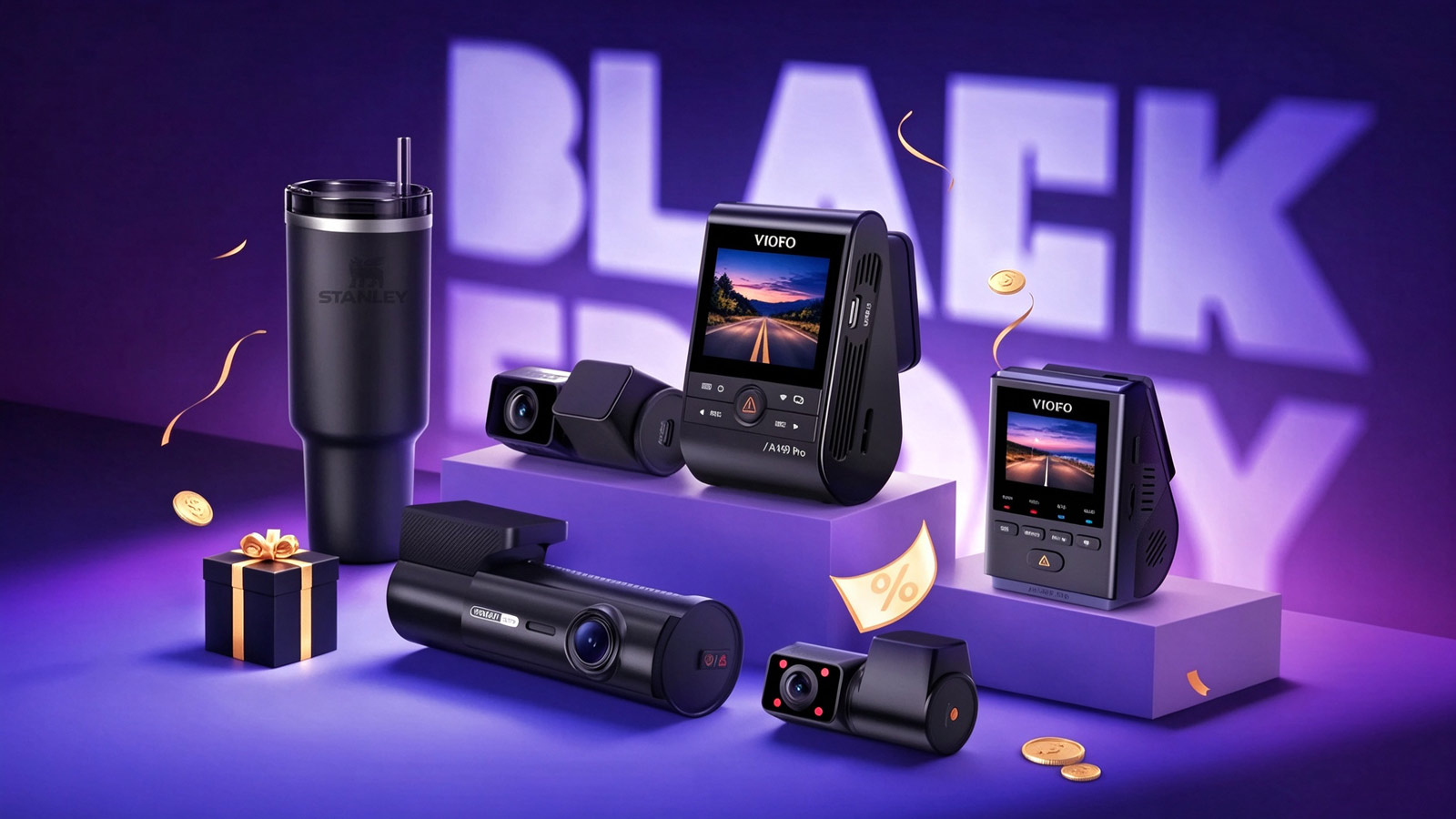
Official homepage: https://www.viofo.com
Viofo makes dash cams for drivers who read forums. The Shenzhen brand, founded in 2015, entered a market defined by three failures it set out to correct: suction-cup monstrosities that blocked the windshield, lithium batteries that swelled in summer heat and died mid-evidence, and video quality too poor to read a license plate. Its answers became the company's doctrine — discreet adhesive-mounted cameras, supercapacitor power that survives desert dashboards, and Sony sensors that keep recording when it matters. A decade later, Viofo counts ten million global users, dominates the enthusiast forums where dash cams are actually debated, and prices its hardware to undercut the premium Korean brands on specification rather than features. This review examines the storefront dimension by dimension: the doctrine, the community that polices it, the product ladder, and the honest arithmetic of buying evidence by the dollar.
A camera built to disappear into the car
The founding brief, printed on the company's About page, is a list of the category's sins at the time: bulky dashcams with big suction mounts, unreliable batteries, and poor video quality. Viofo's counter-design was to make the camera stop being a gadget — a device that feels like part of the car, as the company phrases it — mounting flush to the windshield on adhesive pads, recording invisibly, and producing footage that functions as evidence rather than souvenirs. The aesthetic argument is practical: a camera the driver forgets is a camera that records every mile, and evidence only exists for the moments nobody planned.
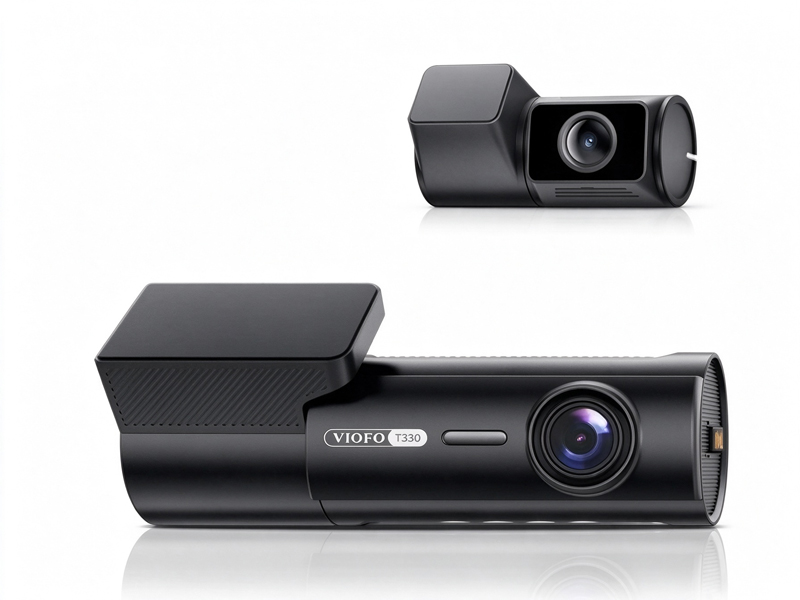
The engineering translation of the brief produced the brand's two signatures. First, the discreet wedge form factor — no suction cup, no dangling power brick, a two-inch screen you can ignore. Second, the supercapacitor: where the category's budget machines ran lithium batteries that expanded in parked-car heat, failed after a few summers, and could not finish saving a file when a collision cut the power, Viofo's models store energy in capacitors — components rated from minus ten to sixty-five degrees Celsius that hold just enough charge to write the final video to the card after the impact. The supercapacitor did not make the cameras cheaper; it made them finish the job.
The supercapacitor doctrine, and desert summers
The thermal argument deserves its own paragraph because it is the difference between footage and folklore. A lithium battery inside a windshield-mounted camera in a Phoenix summer operates at temperatures its chemistry was never rated for; the failure mode is gradual capacity loss, then swelling, then — in the worst documented cases across the category — rupture. The failure is invisible until the day the camera is needed and cannot deliver. A supercapacitor treats heat as routine: it tolerates the temperature range, cycles essentially forever, and — the detail that matters for the category's actual purpose — retains enough charge after a crash to close the current recording and save it to the memory card. BlackboxMyCar's long-term review of the A129 Pro frames the point exactly: in the event of a sudden loss of power, such as a collision, the supercapacitor will provide enough power so that the recorded file may be saved before the camera powers down.
Viofo pairs the power doctrine with a sensor doctrine: Sony Exmor R Starvis image sensors in front and rear cameras, wide-dynamic-range processing for the tunnel-to-sunlight transitions that wash out lesser footage, and an H.265 codec option that compresses 4K files to manageable sizes. The sensor list reads like the premium brands' spec sheets — because it is, at a meaningfully lower price.
The forum as an unpaid quality department
No dash cam brand is reviewed as hard as Viofo, because no brand's users congregate as densely. DashCamTalk — the enthusiast forum where the category's real reputation is made — hosts threads thousands of posts deep on individual Viofo models, and the pattern the archive reveals is instructive on both sides. The praise: value-for-money verdicts that have held for a decade — the A129 Pro was, in DashboardCameraReviews' verdict, hands down the best value 4K dash cam, trusted brand, reliable, top-selling. The criticism: firmware quirks documented thread by thread — the continuous-beeps-on-startup bug, video segments cut short by ten to thirty seconds, heat-throttled responsiveness, a G-sensor that did not trigger in parking mode on early firmware — and, in one widely read thread, the observation that although Viofo was aware of numerous reported problems, it did not share them with customers or indicate fix timelines.
The forum-as-quality-department dynamic has a second edge the review must record: shipping. Enthusiast consensus for years held that ordering from Viofo's own site meant slower delivery from China, while authorized resellers like Spytec and BlackboxMyCar shipped from American warehouses — an inversion of the usual direct-from-brand advantage that the company's own storefront terms only partially closed. The modern storefront now promises localized logistics, but the community memory persists.
From the A119 to the A329S
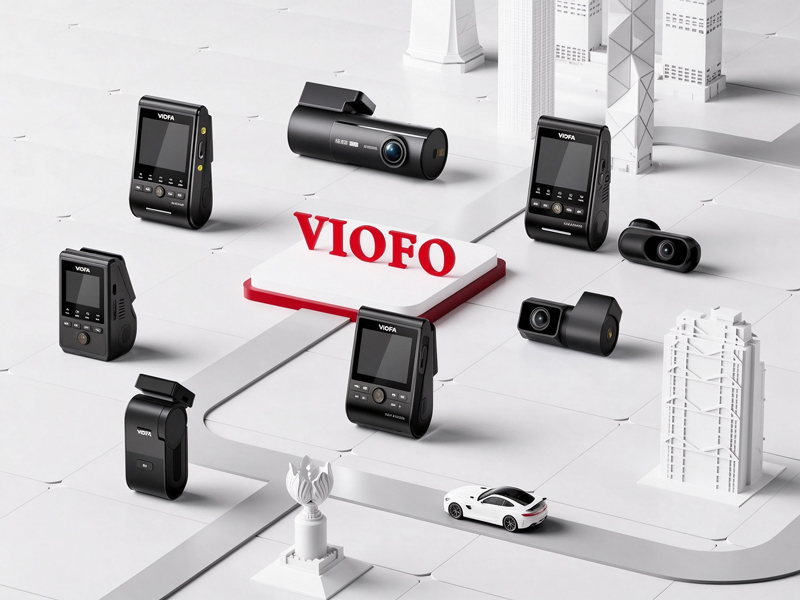
The product ladder is a masterclass in segment coverage. The A119, a single-channel wedge, became the value default for front-only buyers. The A129 Duo in 2018 brought dual-channel recording to the masses — front and rear on one system — and its variants mapped every use case: the Duo IR with infrared cabin cameras for Uber and taxi drivers, the Pro Duo that the company's own comparison page credits as the first 4K dual-channel dashcam, the Plus Duo refining the formula. The A139 added three-channel coverage; the MINI series shrank the footprint; the A229 modernized the platform with bigger screens and newer sensors; and the 2026 A329S flagship introduces the company's Hybrid Parking Mode with a Bluetooth-monitored hardwire kit that reports battery voltage to the app in real time.
The strategic logic across the ladder is constant: take the features the premium Korean brands — Thinkware, BlackVue — sell at flagship prices, and deliver them at mid-range prices with the sensor quality intact, conceding the cloud ecosystems and app-polish niceties that the forum community largely treats as optional. Viofo's own marketing states the positioning without apology: advanced functions applied by top dashcam brands with a better price.
Parking mode, engineered as a system
The parking-mode story illustrates the systems thinking. Viofo treats parked surveillance not as a settings toggle but as an install project: the camera needs a hardwire kit — an evolving family from the HK2 through the current HK6, each keyed to specific models — that taps the fuse box for constant power, detects ignition state, and protects the car battery with a configurable low-voltage cutoff from 11.8 to 12.4 volts. The kit ecosystem is documented with unusual completeness: connector compatibility charts, installation-time estimates of thirty to ninety minutes, fuse-tap guidance, and the honest acknowledgment that a hardwire kit is required if you want parking mode — no pretending the cigarette lighter will do.
The three recording modes come with a published power-consumption table and an engineering recommendation most brands would hedge: the company's own testing, across models, found the time-lapse mode the most stable and least power-hungry, and says so. Buffered event detection captures fifteen seconds before and thirty after a trigger; time-lapse trades detail for endurance; low-bitrate records continuously at reduced quality. The buyer chooses the trade-off with the wattage figures on the page — the kind of documentation that explains why the forums trust the brand's engineering while grading its firmware candor.
The economics of irrefutable evidence
The commercial terms complete the value file. The storefront carries a thirty-day money-back guarantee, a twenty-four-month warranty — extended beyond the category's customary twelve — professional customer service with a listed Los Angeles phone number, and the accumulated endorsement of ten million global users. The refurbished-program listings through authorized resellers extend the ladder downward, and the accessory catalog — CPL filters against windshield glare, Bluetooth snapshot remotes, GPS mounts with embedded antennas — prices the enthusiast's upgrades without gouging.
For the storefront reviewer, the warranty architecture matters more than usual in this category: a dash cam's value is realized in a collision, months or years after purchase, and a warranty that survives the wait is part of the product. Twenty-four months at this price point is a claim the forums periodically test — and the test record, like everything else about Viofo, is public.
The honest texture of a faceless brand
Four honest cautions belong in the ledger. First, the facelessness: Viofo is a Shenzhen manufacturer with no public founder narrative, no executive bylines, no origin story beyond the About page's problem-list — a brand that exists entirely in its products and its forum reputation, efficient and forgettable in equal measure. Second, the firmware candor gap documented above: the community's standing complaint is not that bugs exist but that the company fixes them quietly, without published timelines or changelogs that acknowledge the problems — the awareness is there, the communication is not. Third, the missing cloud: buyers who want live remote viewing, LTE uploads, and cloud evidence lockers belong with BlackVue's ecosystem; Viofo deliberately concedes that frontier, and the A129 Pro's review ledger lists no-cloud among its cons in a market where rivals have made it standard. Fourth, the direct-storefront logistics: the brand's own site has historically shipped slower than its resellers, a quirk of its China-centric fulfillment that persists in community memory even as localized warehouses expand.
None of these are contradictions; all four are the taxes on being the forum's value champion — a position earned by specification and held by honesty about hardware, with silence about software.
The verdict for the daily commuter
Viofo's storefront is the engineering-over-marketing thesis run for a decade: a Shenzhen brand that looked at suction cups, swollen batteries, and unreadable plates, built the doctrines of discretion, supercapacitors, and Starvis sensors, let the forums grade every firmware release in public, priced the premium brands' specifications at mid-range money, documented its parking-mode power budgets with engineering honesty, and accumulated ten million users without ever telling a founder story. The cons are the cons of the faceless: no narrative to love, firmware fixes shipped silently, no cloud ecosystem, and direct ordering that historically rewarded patience.
Buy here if your commute deserves a witness and your spreadsheet deserves a break, if supercapacitor heat tolerance reads as the safety spec it is, if the forum archive is your quality department and the published power-draw table your engineering review, and if evidence-per-dollar outranks app polish and live cloud views. Buy BlackVue or Thinkware if remote live viewing and polished ecosystems justify the premium. For the daily commuter who wants the best witness money can buy and reads the forums before the box, this Shenzhen storefront remains the category's most documented answer — one supercapacitor, ten million drivers, and the plate finally legible.