The chiropractor who strapped a foam ball to a jigsaw and built a recovery empire
Official homepage: https://www.therabody.com
On October 17, 2007, a chiropractor named Jason Wersland T-boned a Volkswagen Jetta on a Los Angeles freeway and woke up on the road with a nine-millimeter disc bulge and nerve damage that would keep him from moving for two months. Four months later, having found nothing in his own clinic's arsenal that could treat his pain, he strapped a foam ball to a Makita jigsaw and pressed it against his neck — and felt, in his words, instant relief. What he built from that garage prototype took eight more years and five generations to reach the market, but when the Theragun finally launched in 2016, it created an entirely new category: percussive therapy. A decade later, the brand had become a verb, the devices sit courtside with two hundred and fifty professional sports teams, and the company that rebranded as Therabody has wagered ten million dollars of its own money that science will keep it ahead of the fifty-dollar imitators its success invited. This review examines the storefront dimension by dimension: the accident, the eight-year prototype, the verb effect, and the honest arithmetic of premium recovery in a commoditized market.
Embezzlement, divorce, and chiropractic school
The founder's path to the garage ran through a demolition. Wersland grew up as the oldest of seven on a farm — his family immigrated from Norway, and the farm taught him to be self-sufficient with his hands — and at seventeen he found his calling through a neighbor: a chiropractor who worked with the Utah Jazz. He was certain by that age that chiropractic medicine was his life's work. But the first act went sideways — he built a company back home in Utah, went through a divorce, lost the business after being a victim of embezzlement, and found himself with two young children and nothing to his name. He packed his bags for Los Angeles and enrolled in chiropractic school, starting his practice in 2006.
The podcast retellings of this chapter matter to the review because the company that emerged is built on the founder's memory of being powerless — uninsured patients, failed treatments, a body that would not heal. The Theragun's eventual pitch, self-administered therapy as an alternative to surgery or pain medication, is the pitch of someone who once needed exactly that and could not find it.
The seventeenth of October, 2007
The accident is dated with the specificity of a founding document. On October 17, 2007, Wersland was splitting traffic on the freeway when a car came out of nowhere; he T-boned the side of a Volkswagen Jetta and woke up on the road. The damage: a nine-millimeter disc bulge in his neck and nerve damage that produced, in his telling, so much pain that he could not move for two months. The following January, on a plane, he fell asleep and could not move his neck when he woke — the airline called an ambulance. Examining his own pain with a clinician's training, he concluded that what he needed was a device that could deliver rapid pulses for deep-tissue treatment at home, on demand, between appointments.
By February 2008 — four months after the accident — he had developed the first prototype. The earliest version, as the founder interviews preserve it, was gloriously crude: a jigsaw, a foam ball, a towel wrapped around the blade. The mechanism was brutal and direct, but the physics worked — percussive force, delivered at the right frequency and amplitude, seemed to override the nervous system's pain signals and force the surrounding musculature to release. He used it on himself, recovered, and put it in a drawer.
A patient who was basically me
The drawer did not stay closed. A few months after his recovery, a patient came into the practice whose file read like a mirror: about the same age, an automobile accident, the same nerve injury in the neck, poor insurance, limited means — Wersland has said he knew that if he did not find a way to get this man out of pain, nobody would. He brought out the jigsaw contraption and treated him with it. The patient returned weeks later and told him the device had saved his life — and the founder, in the telling he has repeated on Shopify's own founder story series, felt something like the universe giving him a little punch in the chest, saying, here you go.
That moment converted a selfish recovery tool into a mission with a customer. The device stayed in the clinic, became a requested treatment by nearly every patient, moved into the hands of professional athletes starting in 2012 — he discovered its performance-enhancement applications training them — and by 2013, demand had outgrown any plausible definition of a side project. The first product was, in the founder's phrase, completely selfish. The company is what happened when the second patient made it impossible to keep it that way.
Eight years and five prototypes
The discipline between 2008 and 2016 is the part the mythology undersells. Wersland spent eight years refining the machine through five distinct versions — not because the jigsaw needed eight years of admiration, but because everything around the clever mechanism had to become a product: ergonomics, noise, durability, attachments, manufacturing, and above all credibility, in a medical-adjacent category where a chiropractor's garage prototype had to earn the trust of physical therapists and trainers. The early growth ran on word of mouth through exactly those gatekeepers — elite trainers and physical therapists who tried the device on their athletes and told their peers — a distribution model slower than advertising and far more durable.
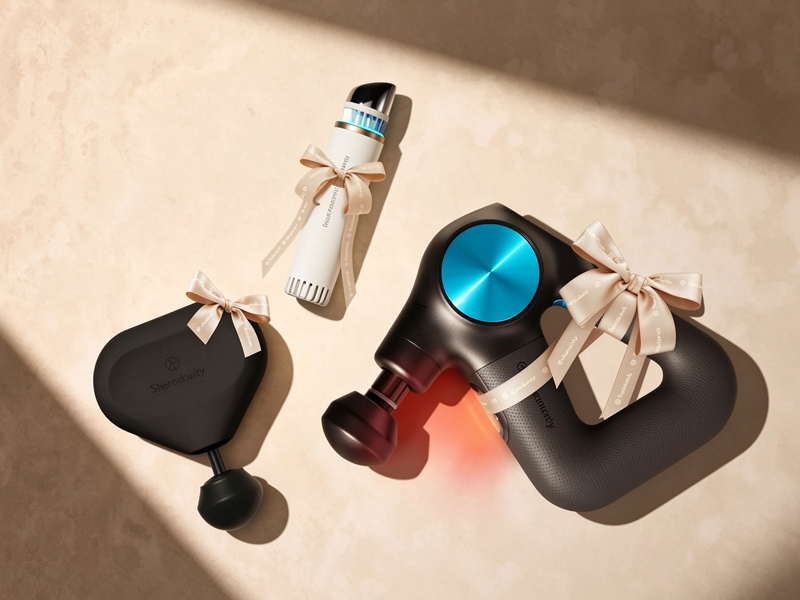
The commercial launch arrived in 2016: the G1, released with co-founder and chief executive Benjamin Nazarian, who supplied the business infrastructure to scale what had been a clinic legend. The G2PRO followed in 2017 and made the company the acknowledged leader in the category it had just invented; the G3PRO in January 2019 polished the platform; and the fourth generation — PRO, Elite, Prime, and the pocket-sized mini, launched in May 2020 — added QuietForce technology that cut operating noise by up to sixty percent without sacrificing power, plus Bluetooth app integration for guided routines.
When the brand became the category
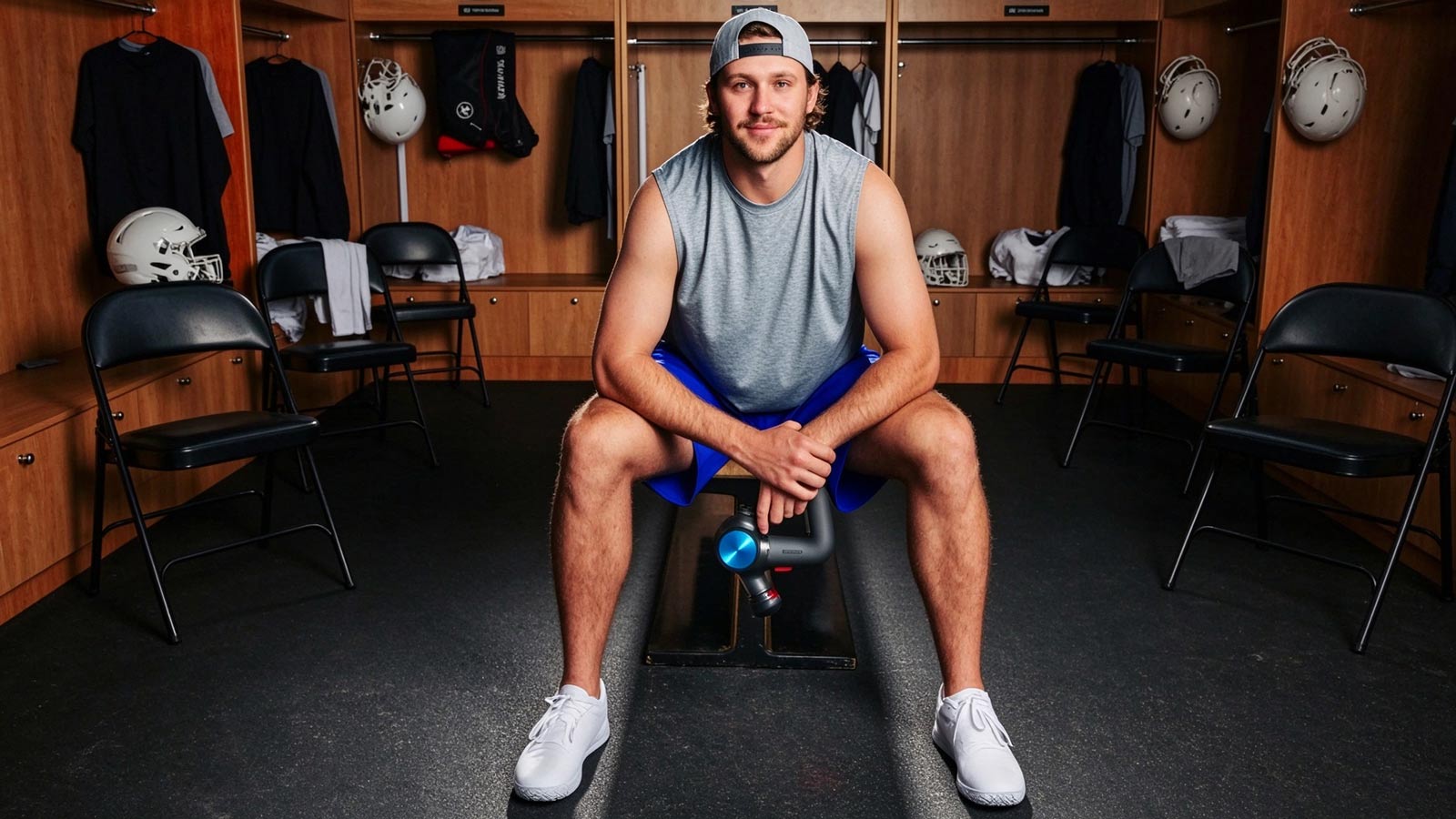
The commercial reward for inventing a category is that your trademark becomes its common noun, and the Shopify founder-story profile records the moment it happened to Theragun: Wersland started hearing people use it as a verb, or even a blanket term for any massage gun, the way a generation says Google for search and Kleenex for tissue. The adoption curve ran through visible muscle — Kyrie Irving reaching for one courtside, the CrossFit Games' fittest athletes using it in competition footage — and the institutional count settled at more than two hundred and fifty professional sports teams worldwide, physical therapists, trainers, and consumers across sixty-plus countries.
The 2020 rebrand from Theragun to Therabody marked the strategic thesis: the percussive device was the beachhead for an ecosystem at the intersection of fitness, recovery, and pain management — a thesis announced in the same month as the fourth-generation launch and the company's experimental TheraOne CBD line, which became the first to earn USDA Certified Organic status across its entire product range. Whether the ecosystem or the category leadership would carry the next decade was, at that point, the open question the imitators were asking loudly.
Ten million dollars on the science bet
The answer the company chose is science, at a price. In 2023 Therabody launched a ten-million-dollar research commitment, established a formal Scientific Advisory Board, and partnered with the American College of Sports Medicine — the kind of institutional relationship a category leader can buy and a fad cannot. The current ledger, per the company's materials: twenty-one completed studies validating its products and twenty-six more in progress, with the flagship Theragun PRO Plus folding six distinct therapies into one device. The founder's claim — that Therabody is the only massage-gun company that has science — is marketing, but the budget behind it is real, and independent systematic reviews of percussive therapy, while finding effects more modest than the marketing implies, broadly support short-term soreness and range-of-motion benefits over doing nothing.
For the storefront reviewer, the research wager is the differentiator that matters: the fifty-dollar Amazon imitators copy the motion but cannot copy the studies, the advisory board, or the professional-teams install base — and for a buyer purchasing a medical-adjacent device, the paperwork is the product as much as the motor.
From guns to boots to face masks
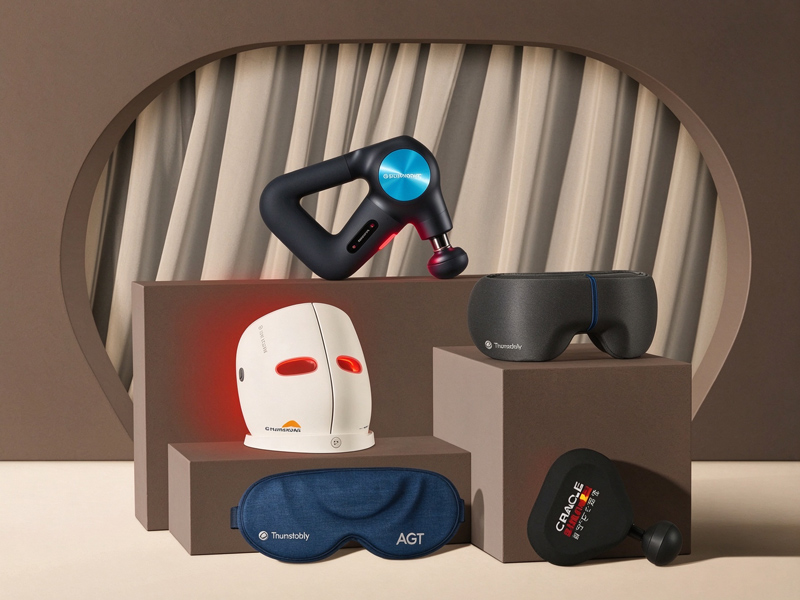
The ecosystem compounding filled every recovery modality the clinic logic suggested. RecoveryAir brought pneumatic compression boots — the leg-sleeve machines of professional locker rooms — to the home market; the Wave Roller gave foam rolling a vibration motor; PowerDot delivered neuromuscular electrical stimulation; TheraFace extended the brand into facial health with microcurrent and percussive attachments, followed by the TheraFace Mask; RecoveryPulse compression sleeves and SmartGoggles rounded the sleep-and-stress frontier. The celebrity-capital chapter arrived with Karlie Kloss, who became an investor and then an ambassador, framing her participation as democratizing access to wellness technologies through products and services — the mainstream-validation loop of a category that began with a jigsaw.
Each extension follows the same clinic-first pattern: a modality Wersland used on patients, productized for self-administration, wrapped in the research and app scaffolding. The storefront sells the system — device, attachments, app routines, and education content — with the gun still the hero SKU.
The honest texture of a commodity
Four honest cautions belong in the ledger. First, price against the imitators: the ladder runs from roughly two hundred dollars for the mini to six hundred for the PRO Plus, against a sea of fifty-dollar Amazon guns that deliver eighty percent of the perceived effect for a tenth of the money — the premium buys noise engineering, ergonomics, the studies, and the warranty, and the buyer who only wants a buzzing handle does not need any of them. Second, the verb paradox: becoming the generic term for a category hands the category's cheapest competitors free marketing, since every search for a Theragun surface forty clones. Third, the evidence nuance: independent systematic reviews find percussive therapy's benefits real but modest — short-term soreness relief and range-of-motion gains — and the storefront's prevention and treatment language outruns what the published literature comfortably supports. Fourth, the sprawl tax: guns, boots, rollers, stimulators, face masks, and goggles under one brand spreads the research budget and the support organization across a catalog wide enough that no single product line receives the focus the gun earned.
None of these are contradictions; all four are the taxes on inventing a category that anyone with a motor and a mold can now enter.
The verdict for the recovering athlete
Therabody's storefront is the necessity thesis run for eighteen years: a farm boy who followed a Jazz chiropractor into the profession, lost everything to divorce and embezzlement, rebuilt in Los Angeles, broke his neck on a freeway, healed himself with a jigsaw and a foam ball, treated the patient who was basically him, spent eight years perfecting the machine, launched the G1, watched his trademark become the category's common noun, and then bet ten million dollars that science — not speed to market — would keep the empire his pain built. The cons are the cons of the pioneer: premium prices against fifty-dollar clones, the verb paradox, evidence that trails the marketing, and a catalog spreading wider than the founding focus.
Buy here if your recovery routine is a practice rather than a purchase, if the quiet motor and the app-guided routines and the two-hundred-fifty-team install base justify the multiple over the Amazon gun, if the published-study library is your language of trust, and if a company founded by a clinician who treats patients weekly matches your idea of who should build medical-adjacent devices. Buy the fifty-dollar clone if relief is relief and the research is decoration. For the recovering athlete who wants the category the way its inventor practices it, this Los Angeles storefront remains the field's founding answer — one freeway, one jigsaw, and the foam ball still vibrating.