Roborock: the baidu engineer's vacuum that outcleaned xiaomi and roomba
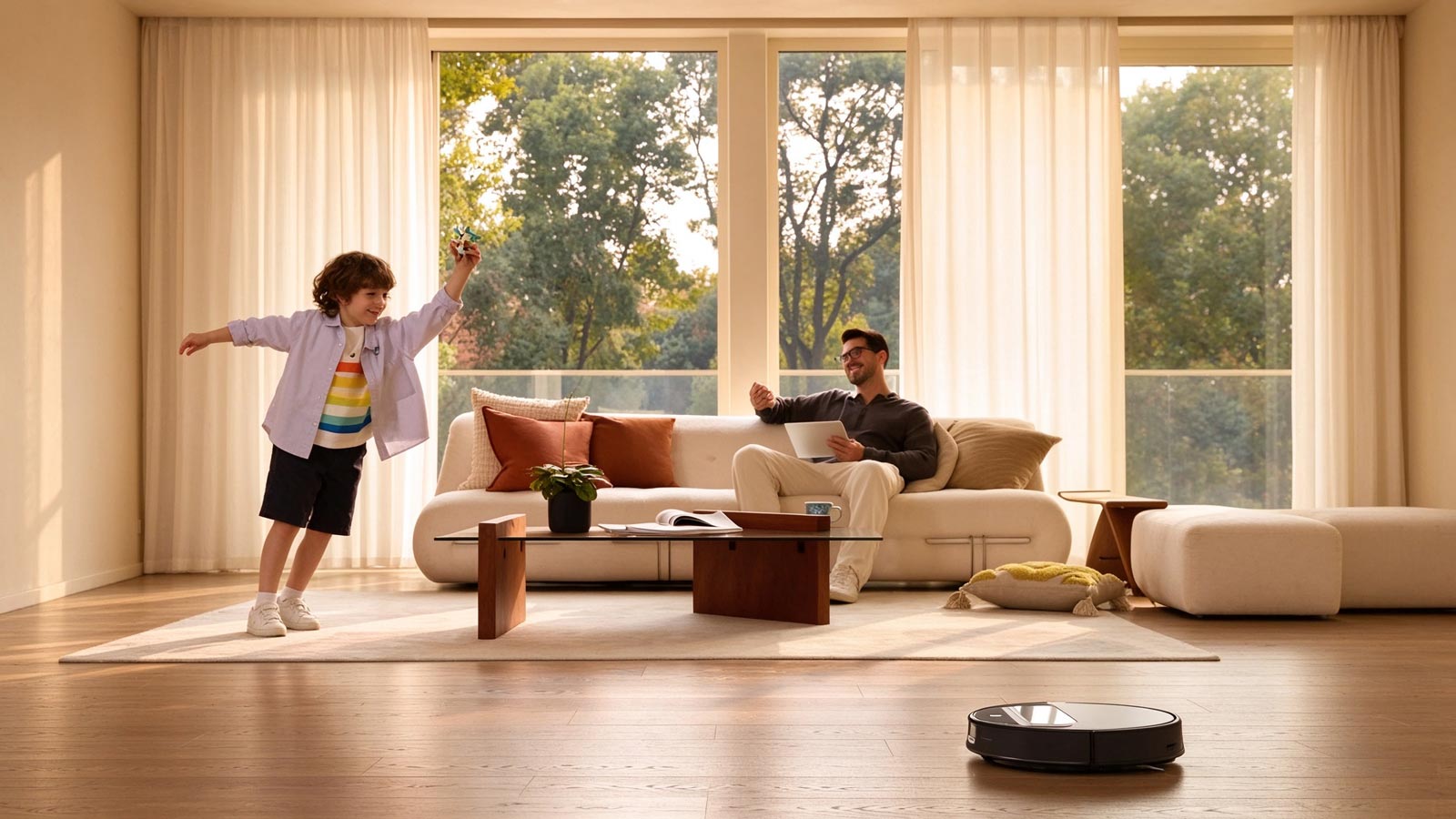
Official homepage: https://us.roborock.com
Chang Jing built his career on maps — Maxthon, Microsoft, Tencent, and finally Baidu, where the photo-editing startup he founded was acquired and folded into the search giant's mapping empire. Then, in 2014, he bought a robot vacuum, watched it wander aimlessly into furniture, and concluded that the mapping algorithms he had spent a decade learning could do better. The company he founded that July produced its first working demo in forty days, won Xiaomi's backing two months later, and shipped its first product under the Mi brand — a machine that brought laser navigation to a mass-market price and sold a million units in its first year. Seven years after that, Roborock went public in Shanghai, its founder became China's second robotic-cleaning billionaire, and the company began the slow separation from the patron whose brand had launched it. Today it is the world's number-one robotic-vacuum brand by shipment, its founder has since founded a car company on the side, and its newest vacuum has a robotic arm. This review examines the storefront dimension by dimension: the maps, the vacuum, the IPO, and the de-Xiaomi-ization.
Four employers and a maps app
The founder's résumé reads like a tour of China's internet golden age. Born in Yueyang, Hunan, in 1982, Chang Jing studied computer science at South China University of Technology — earning his master's in 2006 with national competition awards along the way — then joined the browser maker Maxthon as a technical manager. From there: a program manager seat at Microsoft, a senior product-manager role at Tencent, and in 2011 his first startup, a photo-beautification app called PhotoWonder, which Baidu acquired within the year, bringing Chang into the search giant as a senior manager on its mapping products — the Chinese equivalent of Google Maps.
The detour that changed the subject arrived inside his own home. Chang bought a robot vacuum expecting automation and got instead a machine that bumped randomly around rooms, missed dirt, and died under furniture — the category's reputation problem in one appliance. His diagnosis, as he later gave it to Android Police, was that the entire reputation of robotic vacuums suffered due to these failures — and his remedy drew directly on his day job: the mapping and navigation stack he had built for streets could plan routes across living rooms. In July 2014, at thirty-two, he and three friends founded Roborock in a Beijing office building, naming the company after the Chinese word for stone.
Forty days and a thatched cottage
The founding pace was a Silicon-Valley cliché executed in Haidian. Within forty days of registration, the team produced its first working demo — and in September 2014, two months in, Roborock won investment from Xiaomi's ecosystem fund and became a member company of the Xiaomi ecological chain, the hardware-incubator structure through which Lei Jun's empire seeded adjacent categories. The company's own milestone page preserves the sequence: founded July, Xiaomi money September.
The personnel coup mattered more than the money. With the founding team holding almost no hardware experience, Chang conducted what the Chinese business press calls a real-life Three Visits to the Thatched Cottage to recruit Wan Yunpeng — a project manager from Huawei's smartphone division — and the engineering gap closed. The arrangement that followed defined the company's first three years: Roborock would design and manufacture, Xiaomi would brand, warehouse, and sell, and the Mi Home Robotic Vacuum would launch in September 2016 at a disruptive 1,699 yuan — laser distance sensor and simultaneous localization-and-mapping navigation, previously the province of machines costing several times more. It sold over a million units in a year and broke the overseas incumbents' price monopoly, igniting the category in China.
The 1,699-yuan earthquake that shook a monopoly
The technology transfer was the story: Chang applied missile-path-planning thinking to floor cleaning, and the LDS-plus-SLAM stack — spinning laser on a turret, real-time room mapping, methodical coverage patterns — became the industry template almost overnight. Roomba, which had built the category on bump-and-run algorithms with optical tricks, suddenly faced a Chinese challenger whose navigation was simply better, at a fifth of the flagship's price. The Mi Robot became China's bestselling robotic cleaner and, per the company's milestones, its Taiwan launch sold fifteen thousand units in a month.
But the OEM arrangement carried the question every Xiaomi-ecosystem company eventually faces: stable margins producing someone else's brand, or a bet on your own. Chang chose the bet. In September 2017 the company launched its second product — the first under its own Roborock name — and the S5 crowdfunded more than ten million yuan in its first four hours. That December, Roborock went overseas, beginning the long conversion from Xiaomi's manufacturing arm into a global brand — a conversion the cap table would take another nine years to complete.
Betting the company on its own name
The de-Xiaomi-ization is one of the great corporate separations in Chinese hardware. At the 2020 initial public offering, Xiaomi-linked vehicles — Lei Jun's Tianjin Jinmi and the Shunwei fund he chairs — together held 24.7 percent of Roborock, the visible anchor of the relationship that had birthed it. Chang framed the early dependence graciously in his interviews: Lei Jun invested when the company desperately needed funds, and that support attracted the talent and supply-chain resources brand-building required. But the strategy ran the other way — premium self-branded flagships in Europe and North America, sold through Amazon, Walmart, and Target, with the S-series climbing from the S5 through the S5 Max's precision mopping, the S6 MaxV's dual-camera ReactiveAI avoidance, the S7's sonic vibration scrubbing, and the S8's dual rollers.
The cap table tells the outcome: by mid-2026, Xiaomi's remaining vehicle held 2.49 percent, Chang controlled the company with 20.97 percent as the largest shareholder and day-to-day chief, and more than thirty-two thousand public shareholders held the rest. The parentage that launched the brand had become a minority memory — and the company that emerged was fully its own.
The IPO that minted a second billionaire
February 21, 2020, was the validation. Roborock listed on the Shanghai Stock Exchange's STAR Market — ticker 688169 — raising roughly 4.5 billion yuan, about six hundred forty-one million dollars, and closing its first day up 84.5 percent at 500.1 yuan. Forbes recorded the milestone with a headline noting China had minted a second robotic-home-cleaner billionaire: Chang's holdings crossed $1.1 billion at listing, joining Ecovacs' Qian Dongqi in the club.
The public-market record since has compounded the case: revenue above ten billion yuan for two consecutive years by the mid-2020s, with 2024's books showing 3.45 million robot vacuums sold — 91 percent of total revenue — and a net profit near two billion yuan. In the first half of 2026 alone, revenue reached 10.08 billion yuan against a market capitalization around 29.7 billion yuan, roughly $4.4 billion, by September. The financial press notes the founder's ambition for a secondary Hong Kong listing has twice been filed and twice lapsed — the latest application expiring in June 2026 — a detail that suggests either patience or caution at the board level.
From Xiaomi child to self-made leader
The market-structure chapter arrived with the data. In 2024, the analyst firm IDC ranked Roborock the world's number-one smart-cleaning-robot brand, and the quarterly trackers through 2025 held the position: first-quarter 2025 shipments of 982,000 units, a 19.3 percent global share and 50.7 percent year-on-year growth, followed by a 32.76 percent share during China's mid-year shopping festival. The company counts more than fifteen million units sold across one hundred seventy countries, with Euromonitor certification as the global bestseller and category-leading share in Germany, the Nordics, and beyond.
The brand architecture completed the independence: the Q-series now carries the value tier that Xiaomi's channel once served, while the S-series and the Saros generation hold the premium frontier — a portfolio that no longer needs the parent's shelf space, even as it competes against the parent's own vacuum lines. The Shopify flagship that serves American buyers is the direct expression of that sovereignty: brand-owned storefront, brand-owned pricing, brand-owned customer relationship.
Robotic arms, lawns, and second acts
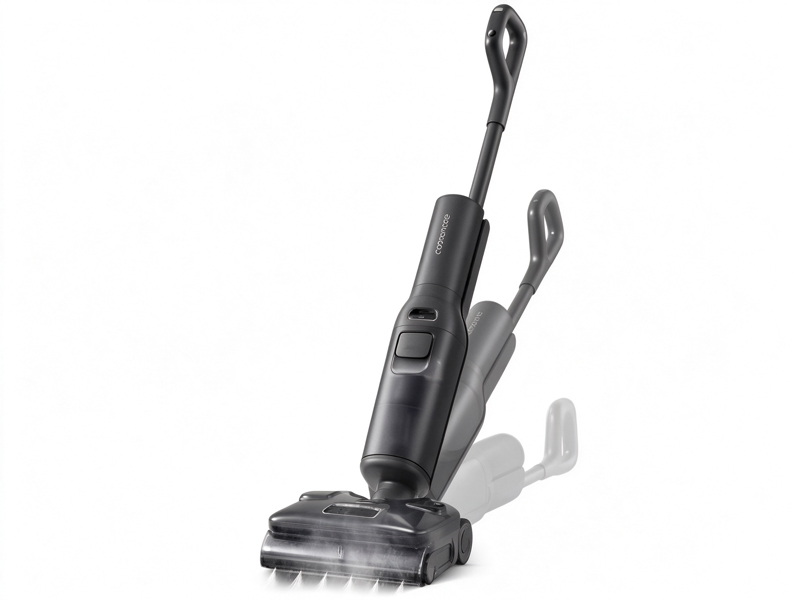
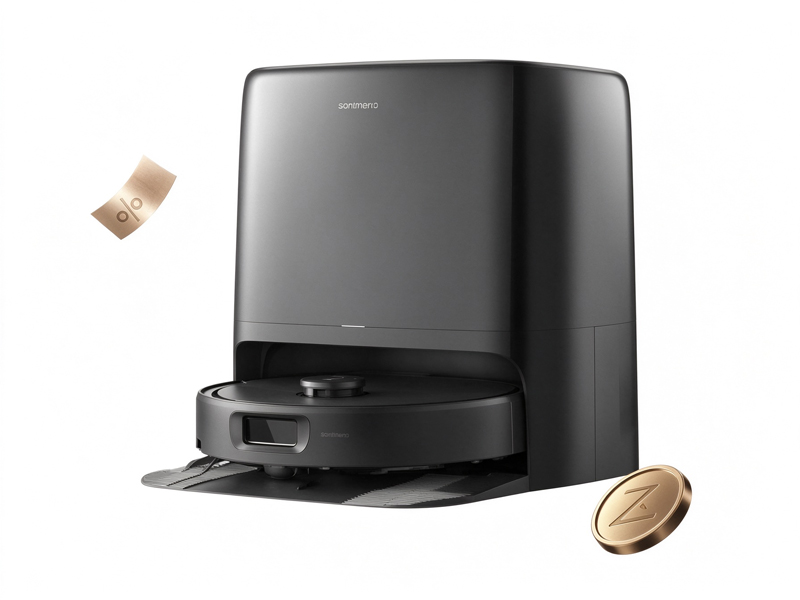
The innovation pipeline kept widening the definition of cleaning. The 2023 S8 MaxV Ultra brought ReactiveAI 2.0's structured-light obstacle recognition; the 2025 Saros Z70 became the first mass-produced robot vacuum with a robotic arm — the OmniGrip lifting socks and towels off the floor before it cleans beneath them, a genuinely new motion in a category that had iterated on wheels for a decade. At IFA 2025 the company unveiled robotic lawn mowers, the RockMow and RockNeo, and the catalog has since added wet-dry vacuums, the Zeo One washer-dryer, and the RockAqua pool robot — a floor-cleaning empire metastasizing into an every-surface one.
And the founder has a second act of his own: in 2021 Chang launched ROX Motor, an outdoor-oriented electric SUV company built with Bosch, CATL, and Continental suppliers, whose first vehicle reached the market while Roborock's market cap kept compounding. The parallel venture — an eighteen-hundred-person automotive startup run by the chairman of a public cleaning company — is either the portfolio of a founder with maps in his blood or a division of attention the vacuum business will eventually price in.
The honest texture of a Chinese champion
Four honest cautions belong in the ledger. First, the geography: a Beijing headquarters, Shanghai listing, and Chinese supply chain concentrate the geopolitical exposure every Chinese champion carries, now with American tariff cycles periodically testing the direct-storefront model. Second, the founder's split attention: the ROX Motor venture runs simultaneously with the chairmanship, and while the vacuum company's numbers have not yet suffered publicly, a second company of that scale is a key-person allocation the shareholder letters do not fully explain. Third, the 2025 layoff rumors: multiple trade outlets reported significant cuts in the washing-machine division, with employee accounts describing high ratios across product and overseas teams — the company's response that all operations progress as planned reads as the standard public-company reassurance the review must record rather than resolve. Fourth, the commodity squeeze beneath: Eufy and Dreame attack on price, Ecovacs on ecosystem, and the category's review consensus treats flagship vacuums as an annual-specification treadmill — the S-series cadence itself trains customers to wait for the next model, and the premium pricing that funds the research depends on a launch cycle the whole industry now shares.
None of these are contradictions; all four are the taxes on leading a category you invented twice — once in technology, once in price.
The verdict for the hands-off cleaner
Roborock's storefront is the navigation thesis run for twelve years: a mapping engineer who watched a vacuum wander, built a better one in forty days, borrowed Xiaomi's wings for three years, bet the company on his own name, shipped the laser-navigation earthquake that broke Roomba's pricing power, listed in Shanghai, shed his patron down to a 2.5 percent souvenir, became the world's best-selling brand with a fifteen-million-unit ledger, and put a robotic arm on the machine that started as a complaint about his own floors. The cons are the cons of the champion: Beijing and Shanghai geopolitics, a founder now also running a car company, layoff rumors the filings will eventually confirm or refute, and an annual-specification treadmill that punishes yesterday's flagship.
Buy here if your floors should be a solved problem rather than a hobby, if laser-mapped methodical coverage beats bump-and-run folklore, if the world's-number-one shipment ledger and the STAR Market's audited filings are your language of trust, and if a robotic arm that picks up the sock before it cleans under it is the correct next chapter in domestic automation. Buy the budget value lines if clean-enough floors at half the price close the argument. For the hands-off cleaner who wants the category's deepest engineering and its longest warranty conversation, this Beijing storefront remains the field's most mapped answer — one maps app, one million first-year vacuums, and the route still planning itself.