No monthly fees, a broken promise, and the 2026 off-cloud reckoning: eufy
Official homepage: https://www.eufy.com
Eufy built its name on a single sentence: local storage, no monthly fees. As the smart-home industry consolidated around subscription-dependent cameras and doorbells, Anker's smart home brand positioned itself as the escape hatch — footage stored on your own hardware, facial recognition processed on your own hub, nothing recurring on your credit card. Then, in November 2022, a security researcher proved that the cameras were uploading thumbnails and facial-recognition data to Amazon's cloud even with cloud storage disabled, and The Verge demonstrated that livestreams could be watched, unencrypted and unauthenticated, through an ordinary media player. A class action followed. Four years later, the company's answer arrived in hardware: MindBase, a local AI hub it bills as the off-cloud brain of the home. This review examines the storefront dimension by dimension: the manifesto, the breach of it, the documented repair, and the honest arithmetic of buying security from a brand that once promised the opposite of what it briefly delivered.
The quiet empire behind the badge
Eufy is the smart-home arm of Anker Innovations — the Shenzhen-founded accessories giant that Steven Yang, a former Google software engineer, started in 2011 with laptop batteries and built into one of Amazon's most trusted electronics brands. Anker's method — identify an overpriced or under-engineered category, apply Shenzhen supply-chain economics, and win the review aggregators — extended naturally into smart home, and Eufy launched in 2016 carrying the parent's operational DNA: aggressive pricing, strong review management, and a direct storefront beside the Amazon listings. The parent's scale gave Eufy something standalone startups lack — instant distribution into tens of millions of Amazon-trained households — and the brand grew into two halves that share little beyond the app: a security camera and doorbell line, and a robot-vacuum line.
The corporate architecture matters to this review because it frames every trust question that follows: Eufy is not an independent company with its own reputation to defend but a brand inside a larger one, operated alongside Anker's chargers and Soundcore's audio gear — and increasingly sold through the parent's consolidated storefronts, as Anker's own site announcements now fold eufy's catalog into one official store for every product across all three brands.
Local storage, and the war on monthly fees
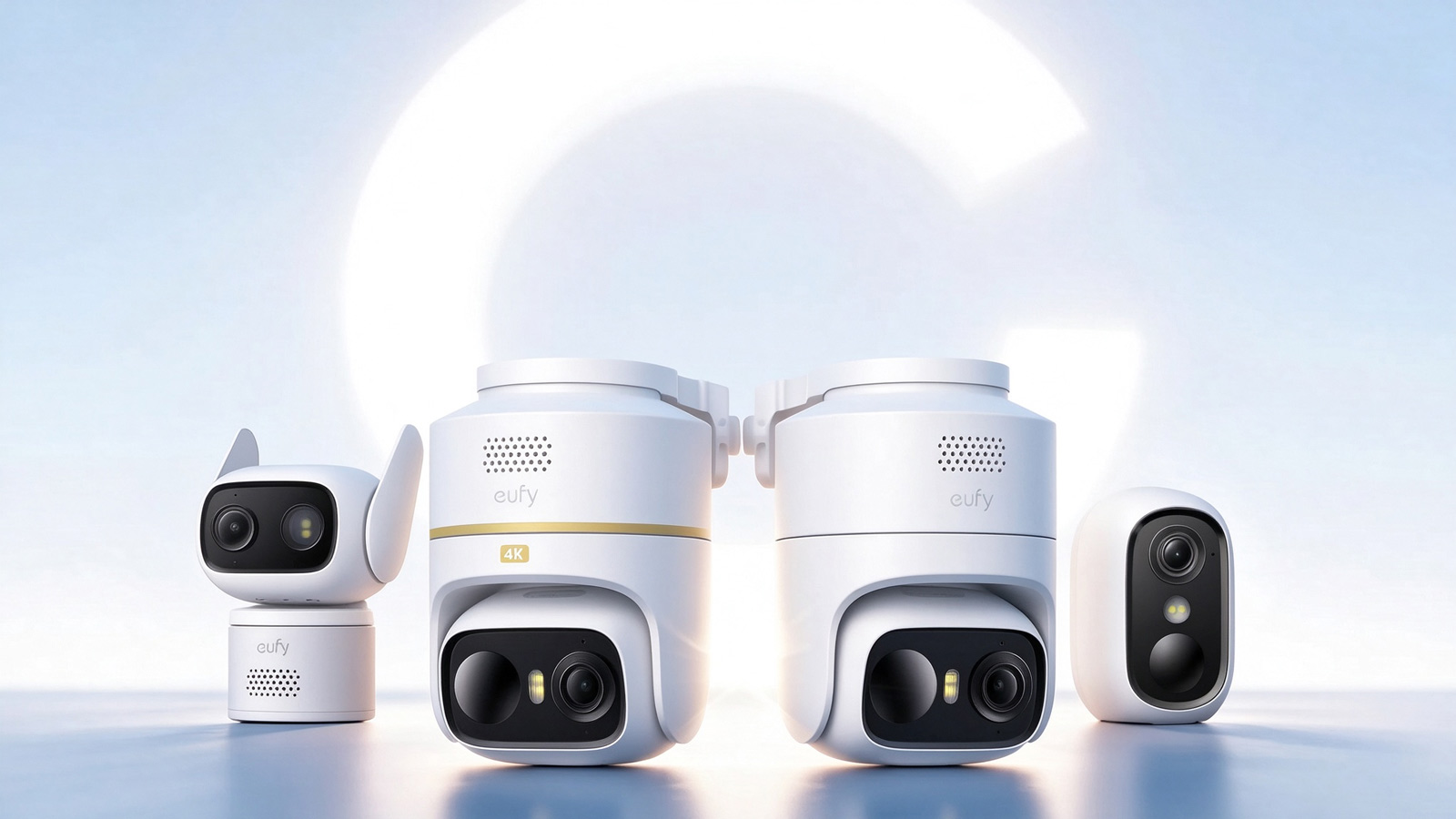
The founding manifesto was a wedge. While Ring and Nest built business models on mandatory cloud subscriptions — the monthly fee for the footage of your own front door — Eufy positioned its entire security line on the opposite architecture: video recorded to a HomeBase hub on your shelf — sixteen gigabytes built in, expandable to sixteen terabytes — or to a microSD card in the camera itself, with facial recognition processing locally on the hub's BionicMind engine. The product pages still open with the same two sentences: zero monthly fees, secure local storage — the savings calculated for you ($300 over three years, one page offers), the footage described as private and entirely under your control, encrypted to a bank-grade standard.
The vacuum half followed the same value logic: the RoboVac line, from the $200-class 11-series up through the self-emptying flagships, competed with Roomba on suction specifications and price rather than ecosystem polish. By the early 2020s the brand had become the default recommendation in both of its categories for buyers who wanted the subscription-free version of the future — which is precisely why the 2022 revelations landed as a betrayal rather than a bug.
November 2022: the cloud that wasn't
The integrity chapter must be told in full, because it defines the brand's trust ledger as completely as the manifesto does. In November 2022, security consultant Paul Moore published evidence that eufy cameras were sending thumbnail images of faces and associated user data to eufy's AWS servers even when cloud storage was disabled and local-only settings were engaged — and that the thumbnails remained accessible on those servers after users deleted footage from their own apps. The company's first response was legal rather than technical: Moore posted that he had had a lengthy discussion with eufy's legal department, and his public commentary went quiet.
Then The Verge escalated the story materially: its investigation found that eufy's camera streams could be accessed unencrypted and without authentication — played through a standard media player like VLC, from anywhere in the world — and that the problem extended beyond thumbnails to live video. Eufy publicly acknowledged parts of the controversy weeks later, disabling livestream viewing without portal login and admitting that thumbnail processing used cloud servers, while revising its privacy commitment page to remove the local-storage language that had been the brand's founding claim. A proposed class action followed in March 2023, naming Anker's operating entities and alleging that the privacy representations were patently false — the suit documents a plaintiff who had bought a dozen eufy devices precisely because of the local-storage promise. The Ars Technica community's verdict, echoed across the security press, was that the response read like a company managing liability rather than engineering.
The repair, documented in public
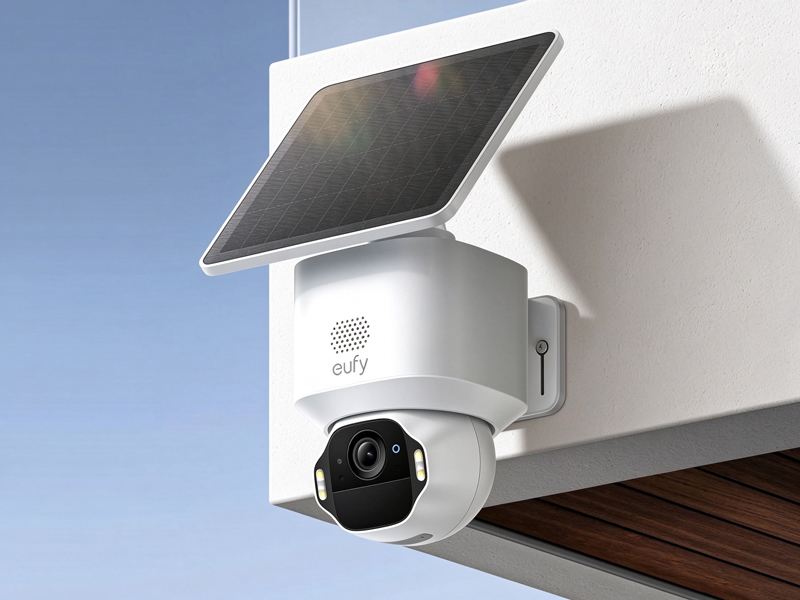
The aftermath is documented rather than claimed, which is why it belongs in the review. Eufy's current product pages and its own buying guides now specify exactly when the cloud is used: alert thumbnails are stored temporarily in the cloud only if the user chooses rich previews over the default text-only alerts; cloud backup is an opt-in for motion clips only; an Advanced Encryption option provides end-to-end encryption so videos can only be decrypted on authorized devices. The Mozilla Foundation's 2026 privacy review of the Indoor Cam S350 — the kind of third-party audit the brand now invites — still issues cautions: share-app analytics are on by default with the opt-out buried in the terms, E2E encryption is a separate setting rather than the default, and the reviewer's framing of the facial-recognition-on-device claim is, given what's documented in the track record section, you should make your own decision about how much confidence to place in that claim.
The repair is therefore real but incomplete: the architecture is now honestly documented, the defaults lean local, and the encryption option exists — but the default is not private, the opt-outs are buried, and the brand that once said no clouds now says, precisely and in fine print, which clouds.
MindBase: the 2026 off-cloud counterattack
The strategic answer arrived in September 2026. The Verge's reporting on MindBase describes Anker's new hub as an explicit answer to the trust problem the company helped expose: a central brain for the home that does the AI processing locally — package detection, facial recognition, the pattern-matching that subscription cameras monetize through servers — without shipping your living room to a data center. The framing matters as much as the hardware: MindBase speaks Matter, the cross-platform standard backed by Amazon, Google, and Apple, positioning the hub to orchestrate other brands' devices rather than lock buyers into eufy's own catalog — security as the entry point, broader home automation as the long game, and off-cloud as the marketing moral of the 2022 story told back to itself.
Whether the counterattack restores the manifesto's credibility is the open question the review cannot answer: the hardware is new, the track record is documented, and the buyer must decide whether a company that broke a promise once — and documented the repair — is a better or worse bet than one that never made the promise.
RoboVac, and the other half of the brand
The vacuum half of the catalog carries none of the security line's baggage and most of its value logic. The RoboVac 11S MAX archetype — two thousand pascals of suction, a hundred minutes of runtime, fifty-five decibels of operation, and deliberately no Wi-Fi dependency on its most basic configuration — targets the buyer who wants clean floors without cloud accounts, subscriptions, or app permissions, an almost retro pitch in a category racing toward ever-more-connected base stations. The higher G- and X-series add self-emptying docks and LiDAR navigation at prices that undercut Roomba and Roborock by meaningful margins, and the category's review consensus has long treated eufy as the value default.
The two halves share only the badge and the app, and the reviewer's ledger treats them differently: the vacuum line is a commodity-value story with no integrity asterisk, while the security line is a trust story whose asterisk remains the largest on this site.
The honest texture of a trust deficit
Four honest cautions belong in the ledger. First, the trust deficit itself: the 2022 revelations and the 2023 class action are not ancient history in a category where cameras watch children, and the repair — documented, partial, and led by legal response — is the context every purchase carries. Second, the default settings: as Mozilla's audit documents, the private configuration requires opt-outs and opt-ins the casual user will never find, so the no-cloud promise now lives in fine print rather than the box. Third, the parent architecture: Anker's Shenzhen base, the brand-within-a-brand structure, and the consolidation of storefronts mean the accountability chain runs through a large public company's quarterly logic, not a founder's reputation. Fourth, the competition on both flanks: Ring and Google own the polished-subscription extreme, local-first rivals like UniFi Protect own the engineered-trust extreme, and Roborock and Dreame out-innovate the vacuum line annually — eufy's wedge of cheap-and-local is contested territory held by price.
None of these are contradictions; all four are the taxes on being the value player's answer to the subscription economy.
The verdict for the fee-allergic buyer
Eufy's storefront is the manifesto and its reckoning on the same shelf: a no-monthly-fee security line that once uploaded the faces it promised to keep local, a class action that says patently false where the marketing said private, a documented repair that now discloses exactly which clouds touch your footage, a MindBase hub that bets the company's next decade on doing AI at home instead of in a data center, and a RoboVac line that quietly remains one of the best values in home robotics. The cons are the cons of the brand that broke its founding promise: a trust deficit the hardware alone cannot amortize, defaults that still lean permissive, a corporate parent whose accountability is distributed, and rivals at both extremes of every category it contests.
Buy here if the monthly-fee economy offends you and you are willing to spend twenty minutes in the settings menu earning the privacy the box advertises, if the MindBase architecture reads as a company that learned rather than one that lied, if the vacuum value math closes without the trust question attached, and if a large public parent with documented missteps matches your idea of acceptable risk. Buy UniFi Protect if engineered-trust is non-negotiable, or Ring if polish and subpoena-grade cloud security are. For the fee-allergic buyer who reads the fine print the box assumes you will not, this Shenzhen storefront remains the category's most instructive answer — no monthly fees, one broken promise, and the 2026 bet that doing it locally this time is enough.