The lvmh-backed compression brand built with an olympic institute
Official homepage: https://www.2xu.com
Every compression tight sold online today traces its lineage to a Melbourne garage office in January 2005, where an advertising executive, a former professional triathlete, and a sales director bet that a fabric most runners had never heard of — graduated compression — would reinvent performance apparel. They named the company for the promise: 2XU, Two Times You. Two decades, an Olympic institute partnership, and a $75 million investment from an LVMH-affiliated fund later, the brand sells across roughly fifty markets and remains the standard against which every compression copycat is measured. This review measures the operation across eight dimensions — from the PWX fabric's research pedigree to the fine print that starts the return clock at purchase, not delivery.
Melbourne, January 2005: an ad man and two triathletes
Clyde Davenport was an advertising executive and men's underwear manufacturer; Jamie Hunt was a former professional triathlete who had raced the world circuit; Aidan Clarke handled sales and marketing. What united them was a conviction that performance apparel was about to be reinvented by graduated compression — elastic garments engineered to squeeze harder at the extremities than at the core, with claimed benefits for circulation, muscle oscillation, and recovery. The science-first thesis became the brand's entire identity, and the compression category the company pioneered now faces a paradox: everyone sells it, which makes 2XU's institutional history either its strongest asset or a reminder that first movers get copied.
Two Times You becomes a compression empire
The empire was built through partnerships rather than advertising. 2XU's founding technical achievement was PWX, a proprietary fabric the company says it developed in conjunction with the Australian Institute of Sport and the Royal Melbourne Institute of Technology — a collaboration that led to 2XU becoming, by its own account, the exclusive Official Compression Supplier to the AIS, the institution behind some of Australia's most decorated Olympians. The credibility compounded across endurance sport: triathlon first, then running, then team sports, with deals across Australian netball, AFL, and NRL programs. While rivals sold spandex with marketing claims, 2XU sold fabric with an institutional research partnership behind it.
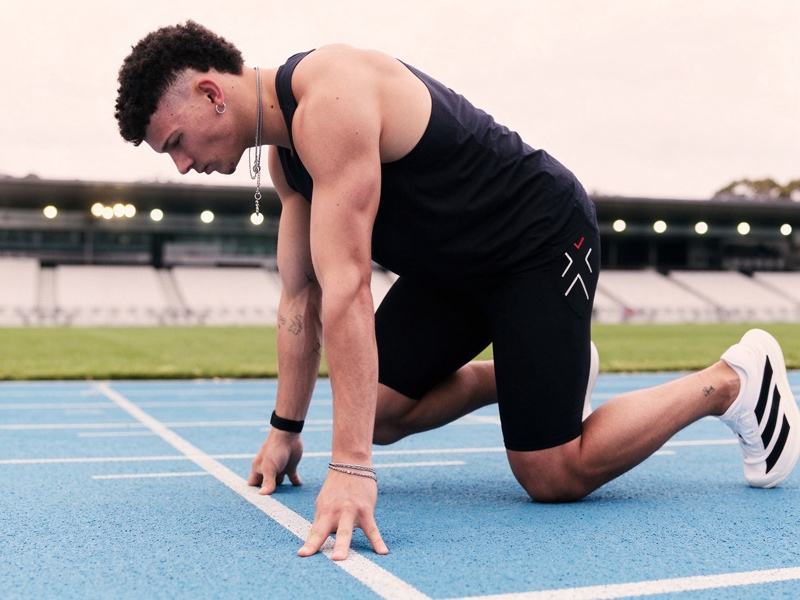
PWX fabric and the Australian Institute of Sport
The research lineage remains the brand's core differentiator in a category drowning in unverifiable claims. The AIS relationship gave 2XU something no marketplace brand can fake: a national sports science institution willing to attach its name. The compression quiz on the current site — steering buyers to the right garment class — is a small but telling detail of a brand that still leads with education, and the triathlon heritage shows in the product architecture, where compression is not an accessory line but the load-bearing wall.
An LVMH fund bought forty percent for seventy five million
The financial validation arrived from luxury's back door. In 2011, investment bank Lazard took a thirty percent stake for twenty-six million Australian dollars. Then in 2013, L Capital Asia — the private equity arm affiliated with LVMH — bought forty percent of 2XU for $75 million, valuing the then eight-year-old company at $166 million, roughly two and a half times its $65 million in sales. The deal signaled that compression had graduated from triathlon niche to global athletic category. Corporate data from 2026 lists the controlling entity as TriVantage Holdings, chaired by Harry Markl — the brand has passed from founders to financiers to a holding structure, as heritage brands do.
From calf sleeves to eight hundred dollar wetsuits
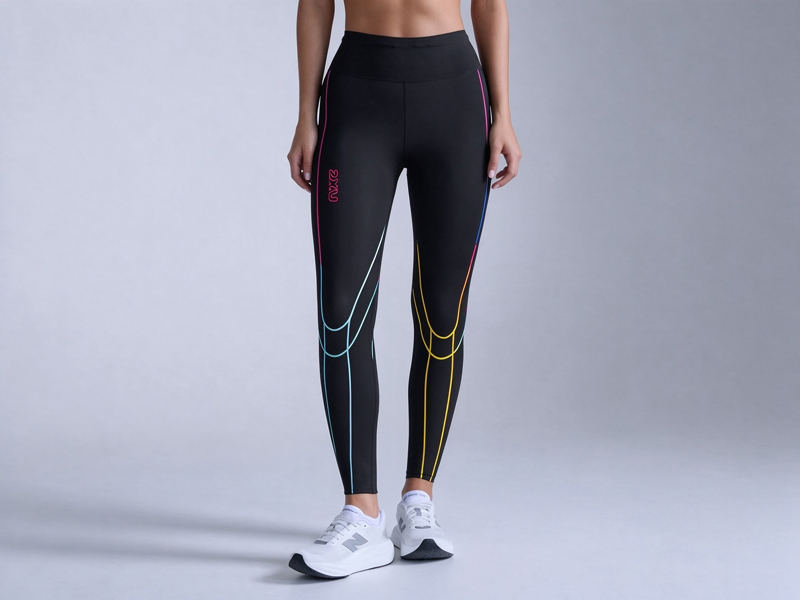
The catalogue is the widest in this review series' compression segment. Compression anchors the range — calf and arm sleeves, tights, shorts, and tops built on PWX variants — and accounts for roughly half of sales by most estimates. Around it sits a genuine multi-activity department: running apparel for men and women, gym and training lines, a full triathlon program including trisuits and buoyancy shorts, and wetsuits climbing to $800 for the top tier. Accessories fill the basket, an Outlet runs permanent discounts, and pricing runs from $60 tees to those $800 wetsuits, with the sweet spot in the $80–$150 compression band.
Thirty days, full price only, Australia Post returns
The purchase terms are strict in the Australian retail tradition. Change-of-mind returns run thirty days from purchase — not from delivery, a distinction worth noting — and apply only to full-price items bought on the site or at a 2XU Performance Centre, in original condition with tags attached, unworn, and excluding underwear and socks for hygiene reasons. Clearance and sale items are final sale. The store takes no responsibility for returned items lost or damaged in transit, requires returns to travel via Australia Post with no customer warehouse access, does not reserve exchanges until the return is in transit, and does not allow online orders to be exchanged in physical stores. Refunds process within seven to ten business days to the original account. The shape is a manufacturer-retailer protecting margins with firm conditions that still respect the statutory floor of Australian Consumer Law.
A fifty market footprint and an NCAA signing
The modern brand is trying to age gracefully into community. A 2022 Outside profile chronicled the reinvention: a mission to create a fitter, healthier world, community programs, and athlete stories including Olympic triathlon champion Gwen Jorgensen testifying that she trained through her entire pregnancy in 2XU compression. In 2021 the company signed an NCAA runner, extending its athlete roster beyond triathlon origins toward collegiate running. The fifty-market footprint remains, anchored by the Australian retail heritage, and the institutional credibility — AIS, PWX, LVMH-affiliated validation — continues to separate it from marketplace mystery brands.
Who should squeeze into 2XU
2XU in 2026 is for a specific athlete: the triathlete who learned the brand at a first race expo, the marathoner who wants research-backed compression rather than marketplace mystery spandex, the runner rebuilding after injury whose physio recommended graduated compression, and the team-sport athlete who wore it under an Australian program uniform. For that buyer, the brand offers genuine institutional credibility at mid-premium prices across a departmental catalogue. It is less suited to the deal-hunter or the flexible returner: sale items are final, transit risk is the buyer's, and the thirty-day clock starts at purchase rather than delivery. But in a category drowning in unverifiable claims, Two Times You remains the compression brand with a paper trail.