The mechanical engineer who sold his house to build a better foam roller
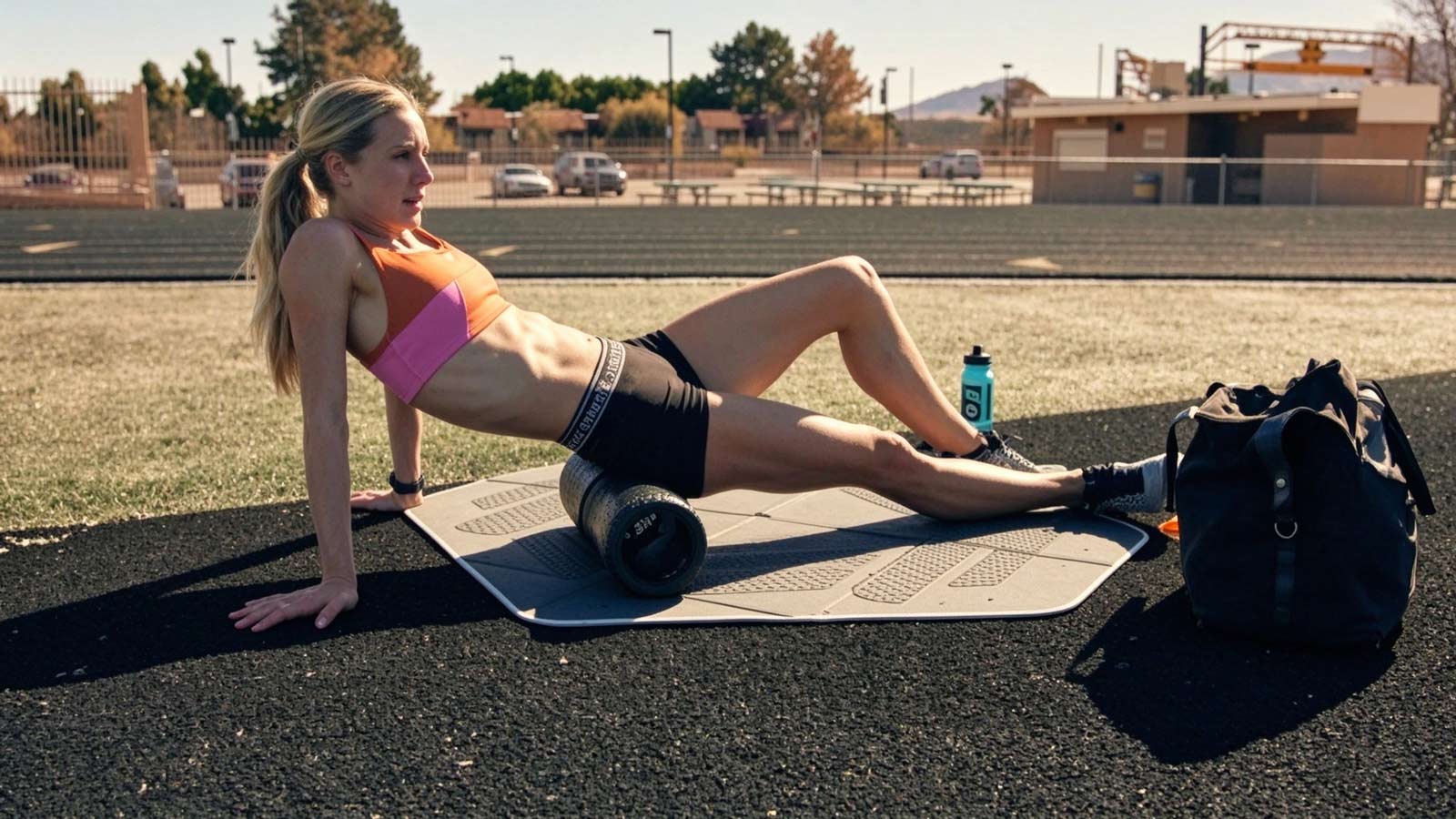
Official homepage: https://www.rollrecovery.com
Every running gear company claims its product was born from necessity. Roll Recovery is one of the few that can prove it — and the proof involves a garage in Boulder, a maxed-out stack of credit cards, a professional marathoner's aching legs, and a founder who sold his house to fund the first production run. Founded in 2011 by mechanical engineer Jeremy Nelson and his wife, Olympian Adriana Nelson, the company makes what many elite runners consider the best recovery tools in the sport, from the iconic R8 deep-tissue roller to a recovery footwear line launched in 2024. Fourteen years and 300,000 units later, this review measures the operation across eight dimensions — from the invention story to the fifteen percent fee hiding in the returns policy.
A garage, a maxed credit card, and a marathoner's legs
Jeremy Nelson was a mechanical engineer with Stanford credentials, not a product designer with a venture pitch. His wife Adriana was a professional marathoner — an Olympian — whose training demanded daily massage therapy the couple could not schedule, afford, or travel with. So in 2011, in their Boulder garage, Jeremy began building prototypes of a handheld roller that could replicate a massage therapist's hands on calves, quads, and hamstrings, with interchangeable tension and a mechanical spring-loading system the category had never seen. To fund production he did what founders rarely admit: he sold his house, sold his car, and maxed out his credit cards. The R8 launched in 2012. Per Running Insight's 2026 anniversary coverage, the gamble worked — the company has sold more than 300,000 R8 units, driven almost entirely by the word-of-mouth phenomenon Nelson describes: people try it, immediately understand it, and want to tell someone else about it.
Three hundred thousand runners swear by the R8
The original R8 was a contraption of rollerblade wheels and springs that looked like a jump scare on an expo table and felt like a revelation on a quad. Its signature innovation — the spring-loaded frame that opens around a leg and applies consistent pressure hands-free — solved the core failure of foam rollers, which require body weight, floor space, and a tolerance for discomfort that most runners lack. The R8 Plus refined the concept with adjustable tension dialed by a wheel, and reviewers at TrainingPeaks described the reaction testers still report: positioning it on the quads and having a holy-crap-this-is-awesome moment. The roller became a fixture at marathon expos, in pro locker rooms, and eventually in the hands of steeplechase gold medalist Emma Coburn, who posed with one for a Boulder holiday gift guide. Outside magazine named it Gear of the Year. NASA astronauts, per the company's own roster, use it in orbit.
From one roller to a full recovery ecosystem
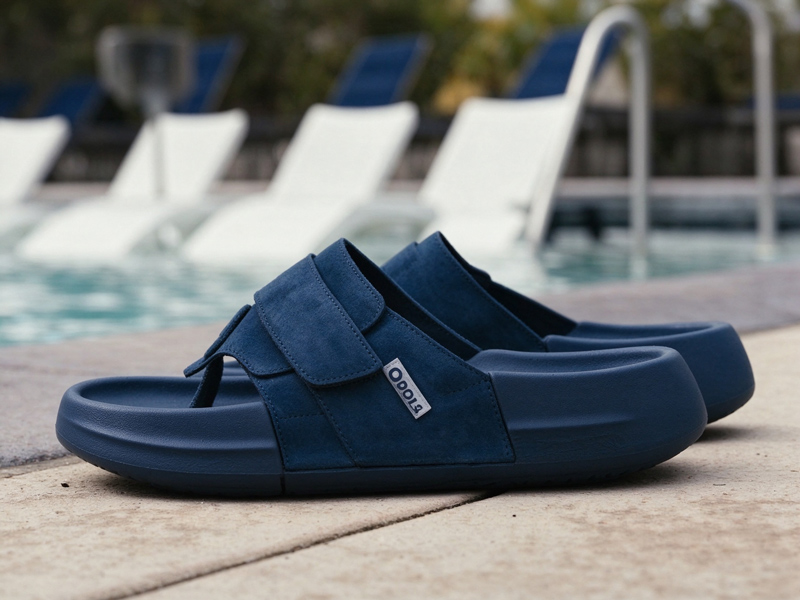
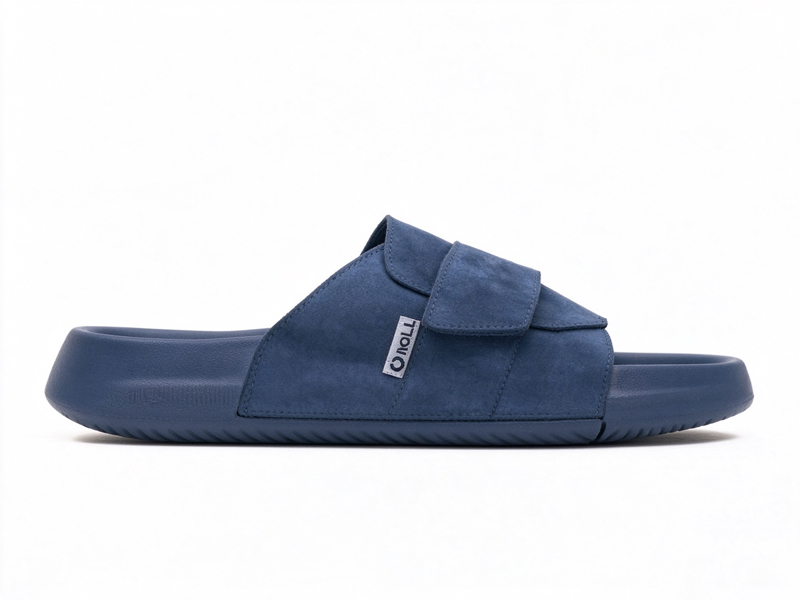
The catalogue now spans an entire recovery shelf. The R8 and R8 Plus anchor the line as deep-tissue massage tools. The R4 body roller brought the brand into traditional roller territory with a center groove specifically shaped to hit the calf muscles along the Achilles — a detail reviewers repeatedly single out as perfect. The R1 percussion massager entered the massage-gun wars, and the R3 orthopedic foot roller covers the plantar-fascia niche. In November 2024 the company launched recovery footwear — the Superplush Slide at $69, the closed-toe Solace at $110, and flip-flops — built around a CRADLE DESIGN structured footbed with algae-blended EVA foam from BLOOM technology, aimed squarely at the OOFOS-dominated post-run slide market. Several core tools carry FDA Registered Medical Device status, a certification almost no consumer recovery brand bothers to obtain, and the company maintains a dealer network through specialty run retailers rather than going Amazon-first.
FDA registered devices and physical therapist endorsements
The certification wall is where Roll Recovery separates from the gadget crowd. The R8 Plus, R4, and R1 are FDA Registered Medical Devices — tested and inspired by elite athletes, per the company's positioning, and recommended by top physical therapists. For a category saturated with unverifiable massage guns and mystery-brand rollers on Amazon, a registered device with a Boulder engineering pedigree and a patents-and-trademarks page carries real weight. The company's own story page leans on the athlete-founders narrative — founded, owned, and operated by athletes, with a small team that has included Olympians, All-Americans, and an NYC Marathon winner — and the professional validation shows in who gets photographed holding the R8: not influencers on contract, but Olympic medalists from the company's own town.
Free shipping over a hundred, thirty day guarantee
The consumer-facing terms are competitive. Shipping is free on orders over $100 — a threshold the R8 clears on its own. Every product carries a 30-day satisfaction guarantee and a one-year warranty, and the company explicitly brands its gear as built to last, backed by a repairs program with downloadable forms, maintenance videos, and replacement parts available for purchase. That last detail matters more than it appears: a company that sells you the parts to fix its own roller five years from now is a company confident the frame will still be worth fixing. Customer service runs through a Boulder phone line answered by people who, in this company's tradition, are probably runners themselves.
The fifteen percent fee hiding in the fine print
Returns, however, carry a catch that deserves daylight. The 30-day window applies only to unused items in original packaging; refunds come back minus shipping costs, which on a $139 roller is a real deduction. Items returned after the 30-day window, or not in original packaging, incur a 15 percent handling fee. And the policy explicitly does not apply to products bought through third-party retailers — buy an R8 on Amazon or at Rogue Fitness, and Roll Recovery's own guarantee disappears, leaving you to that retailer's policies. The structure is defensible for a hardware company with thin margins, but it means the satisfaction guarantee is really a satisfaction-from-the-manufacturer-direct guarantee, and the buyer pays the shipping both directions in practice.
Why Olympians and astronauts both roll Boulder
The reputation record is strong but asymmetric. There is no significant Trustpilot corpus — the company's headline stat, 97 percent five-star reviews, comes from its own storefront — which is standard for specialty gear brands but worth noting for verification purposes. What exists externally is consistent: product reviews across running and fitness media rate the tools highly, the TrainingPeaks and Garage Gym Reviews testers praised the engineering, and the brand has accumulated multiple gear-of-the-year awards over a decade. The founder story, verified across local business press and trade coverage, is the kind of bootstrap narrative that cannot be manufactured — sold house, maxed cards, garage prototypes. In a category where most competitors are private-label Amazon brands with no address, Roll Recovery's Boulder headquarters and decade-plus track record function as institutional proof.
Who should roll with Roll Recovery
Roll Recovery is for a specific runner: the one training hard enough that recovery is the bottleneck, the one who has watched foam rollers gather dust under the bed and wants a tool that works while sitting on the couch, the marathoner assembling a pre-race kit, and the gift-buyer who wants the item every serious runner already covets but has not bought. For that buyer, the R8 remains arguably the single best-recovery-tool purchase in the sport — FDA-registered, engineered by an actual mechanical engineer, backed by a one-year warranty and a repair program, and validated by the professionals who live in the company's own town. It is less suited to the casual jogger whose recovery needs end at stretching, or the Amazon-first shopper who values easy returns over direct support — the 15 percent fee and shipping deductions punish indecision. But fourteen years after a garage prototype and a desperate bet on a marathoner's legs, the verdict is in: this is what happens when an engineer builds the tool he needed, with everything he had.