Her key was in her sports bra, so she built the original running belt
Official homepage: https://spibelt.com
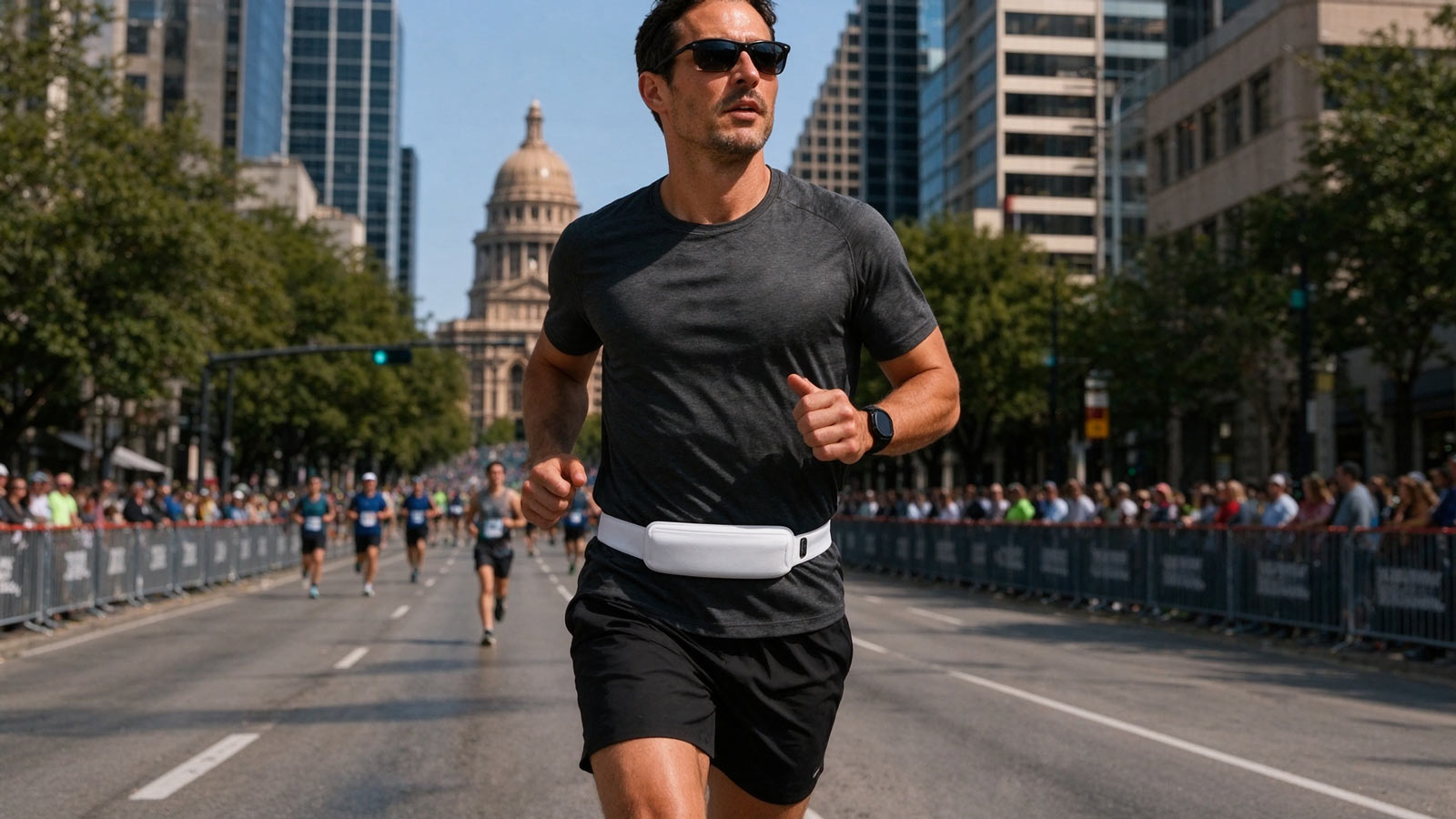
Every runner has lived the moment that started SPIbelt. On September 17, 2006, Austin trainer Kim Overton went for a jog with her house key tucked into her sports bra, found it exactly as uncomfortable as it sounds, and thought the thought that launches ten thousand companies: there has to be a better way. Unlike most, she went home and built one — assembling the first small personal items belt that day, in red. Officially launched at the Austin Marathon in February 2007, SPIbelt went on to become the original running belt — the design every competitor, including the better-known names, eventually copied. This review measures the operation across eight dimensions, from the bra-top origin to the diabetes mission its rivals never matched.
September 17, 2006: a key in a sports bra
Overton filed the patent and trademark a few months later, naming the product for what it carries: Small Personal Item belt. It was her second patent; her first idea, filed in New York, had gone nowhere, and she has said the lesson was to never get in her own way wondering whether something might be too expensive or too weird. The official launch came at the Austin Marathon in February 2007, out of Overton's downtown apartment — a handmade belt at a folding table, miles from the expo booths it would one day share.
Handmade in Austin, grown without investors
The growth was handmade in the most literal sense. Overton funded production from her own bank account, making belts one at a time and reinvesting as she sold — no bulk overseas order, no borrowed capital. When the running store RUNTexas asked for five hundred belts for the Austin Marathon, she enlisted friends with an assembly line of scissors, elastic, and buckles; their compensation, she has joked, was a six-pack of beer. She worked every event herself until growth forced bigger asks: her brother quit his job to join her, then came hires three and four. Headquarters stayed in Austin, where the belts are still handmade today, and the distribution grew past a thousand US retail stores and into more than forty countries — all without outside investors.
National television one year after launch
The inflection point came from television. Roughly a year after launch, Overton appeared on CNBC's The Big Idea with Donny Deutsch — an appearance she has described as the apparent mark of success, after which sales went crazy online and the press flowed in: CNN next, then The Rachael Ray Show. Forbes later included her in its survey of founders' aha moments, quoting the original bra-top frustration verbatim. The media sequence turned a local Austin invention into a national name almost overnight, and the company rode it into durable business rather than fad: sponsorships of hometown races, an ambassador program launched in 2016, and a loyalty program keeping the direct channel warm.
From one belt to a full carrying system
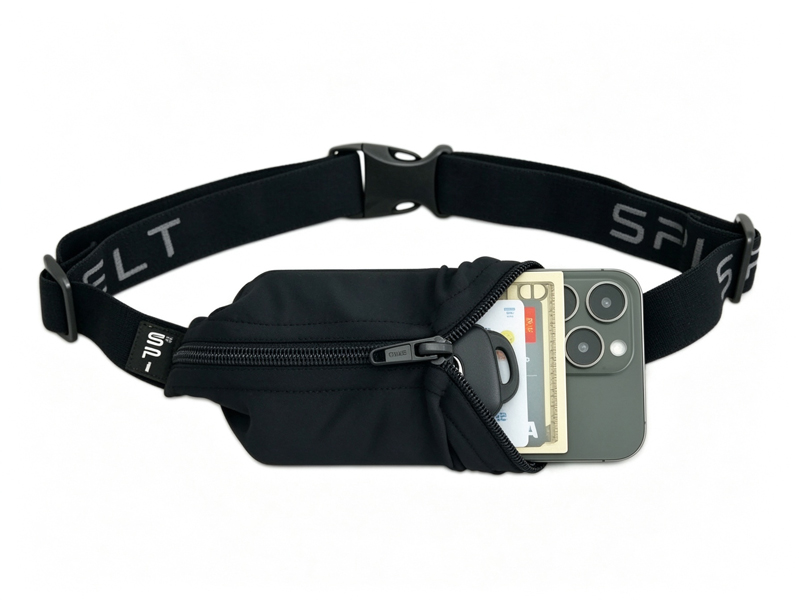
The catalogue grew from one expandable pocket into a carrying system. The Original SPIbelt remains the core: a slim, bounce-free elastic band with a stretchy pouch swallowing a phone, keys, cards, and gels. The Performance Series adds a larger pocket and race-bib toggles for marathoners. The SPI H2O Venture Series mounts small water bottles for long efforts. A kids line scales the concept down; travel accessories and messenger bags extend it beyond the waist; a Custom SPIbelt program serves teams and corporate buyers. In 2017 the company acquired Nite Beams' LED safety-gear running division, and for Earth Day 2024 it launched an Eco SPIbelt made from one hundred percent recycled materials. Pricing is accessible — most belts sit between twenty-five and fifty dollars — reflecting the trainer-founder instinct that gear should be cheap enough to actually use.
The diabetes niche nobody else wanted
The most distinctive chapter is medical. Early on, customers began writing in with an unplanned use case: wearing SPIbelts to carry insulin pumps and continuous glucose monitors. Rather than treating it as an oddity, the company built a dedicated diabetic belt line — secure, discreet, bounce-free carriers for insulin pumps, EpiPens, and other devices — and institutionalized the community with T1D ambassadors: people with Type 1 diabetes who run, race, and live with their hardware on their waists. For this niche the product is not convenience but continuity of care during exercise — a genuinely underserved market that a bra-top key invention accidentally unlocked, and a mission dimension its competitors have never copied.
Free shipping at forty nine, thirty day returns
The purchase terms are friendly at the front door. Shipping is free on all US orders over $49 — a threshold most single-belt orders clear — with orders placed Monday through Friday shipping the next business day and tracking sent on departure. The 30-day return window is described as hassle-free, processed against the packing slip at the Austin returns address. For a small manufacturer the cadence is professional: next-day processing during the week, Monday processing for weekend orders, standard delivery of five to eight business days after processing with a priority option at three to five.
The fine print: every shipping cost is yours
The deductions deserve the same daylight as the speed. If you are not satisfied within thirty days, the customer pays the return shipping — a trackable carrier suggested — and the refund covers merchandise and tax only. All shipping charges, outbound and return, are non-refundable, and the company is explicitly not responsible for packages lost in transit back to Austin. International shipping is available, but inquiries route through a dedicated customer service team rather than a published rate table. The pattern fits a small manufacturer protecting thin margins: generous enough to try the belt, strict enough that changing your mind costs the postage both ways.
Who should wear the original belt
SPIbelt in 2026 is for a specific runner: the person who has tried the bigger tube-style belts and wants the original minimalist one; the marathoner needing a race-day bib solution without a vest; the parent buying a kid's first belt; the traveler wanting a discreet under-clothes pouch; and, most of all, the person managing an insulin pump who wants to run without holding their hardware. For that audience, the brand offers something almost extinct in consumer goods — a founder with a name and face, a product still handmade in the city where it was invented, a forty-country distribution built without venture capital, and a medical mission no rival has copied. It is less suited to the buyer who wants a big-brand return experience: refunds subtract every shipping dollar and transit risk is yours. But the belt that started in a bra top has outlasted two decades of imitators, and the original is still the one they all copied.