The garage brand that put NASA circuit material between your ears
Official homepage: https://www.audeze.com
Audeze began in a Southern California garage beneath a poster for 2001: A Space Odyssey — the film that gave the company its name, pronounced like the hero's journey. The founders had discovered something NASA had developed for spacecraft: an impossibly thin, remarkably strong flexible circuit material that happened to be the ideal diaphragm for a type of headphone driver — planar magnetic — that the audio establishment had left to laboratories. Eighteen years later, the company's LCD series reset the reference standard for headphone accuracy, its factory in Orange County is the largest flexible-printed-circuit manufacturer in the United States, its gaming headsets won the professional circuit's trust, and in 2023 Sony's PlayStation division acquired the whole company — on a pledge that it would keep building for every platform. This review examines the storefront dimension by dimension: the NASA material, the forum earthquake, the American factory, and the honest arithmetic of headphones that demand amplifiers.
A NASA flex circuit and a movie poster
The founding cast assembled around a materials breakthrough. Sankar Thiagasamudram — an engineer with a USC master's in electrical engineering, then working in digital cinema — and Alexander Rosson, a mastering engineer at Technicolor who had spent nearly a decade preparing major releases for distribution, met an engineer named Pete Uka who was developing flexible circuit materials for NASA spacecraft. The material's properties were extraordinary: thinner than anything used in headphone drivers, strong enough to survive launch stresses, and agile enough to respond to the finest musical transients. To turn the material into a product they recruited Dr. Dragoslav Colich, a planar-magnetic specialist with three decades of driver design behind him, as chief technology officer.
The debut, the LCD-1, was a limited $400 proof of concept built in the garage. The name, per the company's own telling, came from the 2001: A Space Odyssey poster on the garage wall — Audeze pronounced like Odyssey — and the founding thesis was printed from day one: adapt space-age materials to high-resolution audio, whatever the incumbent headphone industry believed was possible.
The LCD-2 and the forum earthquake
The second product detonated the enthusiast world. The LCD-2, arriving in 2010 at roughly a thousand dollars, paired the NASA-derived diaphragm with Audeze's own chassis and proprietary magnet structures — and the community that would decide the company's future, the Head-Fi forums, responded in a way the site's founder has memorialized: he heard it at the 2010 Chicago CanJam, was absolutely blown away, and put in an order for two. The LCD-2 went on to become, in Head-Fi's retrospective judgment, the most discussed $500-plus headphone in the history of the forum — the product that made planar magnetic a household word among people who previously divided the world into dynamics and electrostats.
The flagship ladder climbed from there: the LCD-3 in 2012 refined ergonomics, the LCD-X and closed-back LCD-XC in 2013 brought a more forward studio-monitor sound, the LCD-4 in 2016 claimed the reference summit, and the LCD-5 in 2021 re-engineered the flagship around a smaller, lighter driver at four thousand five hundred dollars. Along the way came the portable and consumer-friendly attempts — the EL-8, the SINE, the iSINE in-ear planars that appeared in Apple Stores with a Lightning-cable DAC — the company's periodic efforts to carry its laboratory credibility into the mass market.
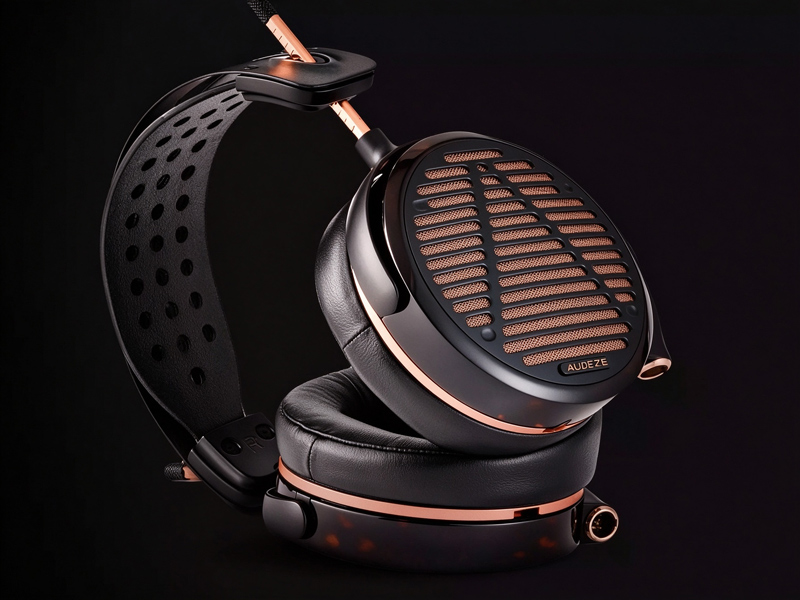
The largest flexible-PCB factory in America
The manufacturing claim is the one competitors cannot copy. Every Audeze planar magnetic and electrostatic driver is built in the company's own Orange County, California factory — and in building them, the company has become the largest flexible printed circuit board manufacturer in the United States, a distinction its marketing materials state plainly. Every headphone priced above $399 is hand-assembled and individually tested by the dedicated American team; the patent count stands at eleven and climbing; and the company calls itself, with the forum's indulgence, the most-awarded brand in premium headphones — a claim the trophy shelf of CES, Stereophile, and Digital Trends awards largely supports.
The professional studio chapter extended the credibility: the MM-500, developed with mixing engineer Manny Marroquin, translated the planar reference sound into the closed-back monitoring format mastering rooms actually use — the crossover from audiophile trophy to working tool that few headphone companies manage.
From studio to stadium: the gaming pivot
The second act belonged to gamers. The Mobius, launched in 2018, wrapped planar magnetic accuracy in head-tracked three-dimensional audio — Waves NX technology that rendered sound as a fixed point in space that moved as the player's head did — and reviews placed it among the best wireless headphones of any kind, gaming or not. The Penrose refined the formula for console play, and the Maxwell, arriving in 2022 at three hundred dollars, did something Audeze's audiophile line never had: it brought planar magnetic drivers and studio-grade tuning to a price the competitive gaming market would pay, winning best-gaming-headset verdicts across the professional review circuit. The 2025 Maxwell 2 added larger drivers, broadcast-grade microphones, and platform-specific tuning at $329 and $349 — the PlayStation and Xbox editions arriving, pointedly, after the acquisition.
The gaming line is the commercial engine beneath the audiophile halo: it monetizes the same driver technology at one-tenth the flagship price and recruits a generation of listeners who will someday want the LCD-5.
Sony calls, and the independence pledge
The 2023 chapter rewrote the ownership story. Sony Interactive Entertainment announced the acquisition of Audeze in August 2023, with terms undisclosed, and the press materials made two commitments the review must hold the company to: Audeze would continue to operate as an independent brand developing multi-platform products, and it would maintain its California offices and production facilities. The strategic logic was transparent — Sony's PlayStation 5 Tempest 3D AudioTech and Pulse headset line would absorb planar expertise — and the founder's statement framed the deal as scale without surrender: a unique opportunity to scale the business while continuing the mission to deliver best-in-class headphones to recording professionals, audiophiles, and gamers.
For the storefront reviewer, the acquisition is the question mark over every purchase: the independence pledge is printed in press releases, but Sony's history with acquired audio brands — and the platform-specific Maxwell editions now shipping — means multi-platform neutrality is a promise the next product cycles will either honor or quietly renegotiate. The California factory surviving the deal intact is the strongest evidence the pledge is real.
The amicable split, and the artisan sequel
The founder chapter is cleaner than most. At the end of 2015, co-founder and CEO Alexander Rosson resigned to start his own venture — the company framed it as a structural decision, with Rosson volunteering to leave his day job first back in 2013 to build the sales channels — and he departed as a shareholder with a manufacturing and distribution support agreement, the friendliest possible separation in an industry littered with lawsuits. His sequel, Rosson Audio Design, launched the RAD-0: an artisan planar headphone with resin ear cups cast around rocks, gems, and reclaimed materials, built in a Reseda facility he had originally constructed for Shinola — proof that the garage craft Audeze pioneered could sustain more than one workshop.
Thiagasamudram has remained CEO through the growth, the gaming expansion, and the Sony deal — the steady half of the founding pair, an engineer who still frames the company as a technology company at its core.
The honest texture of weight and watts
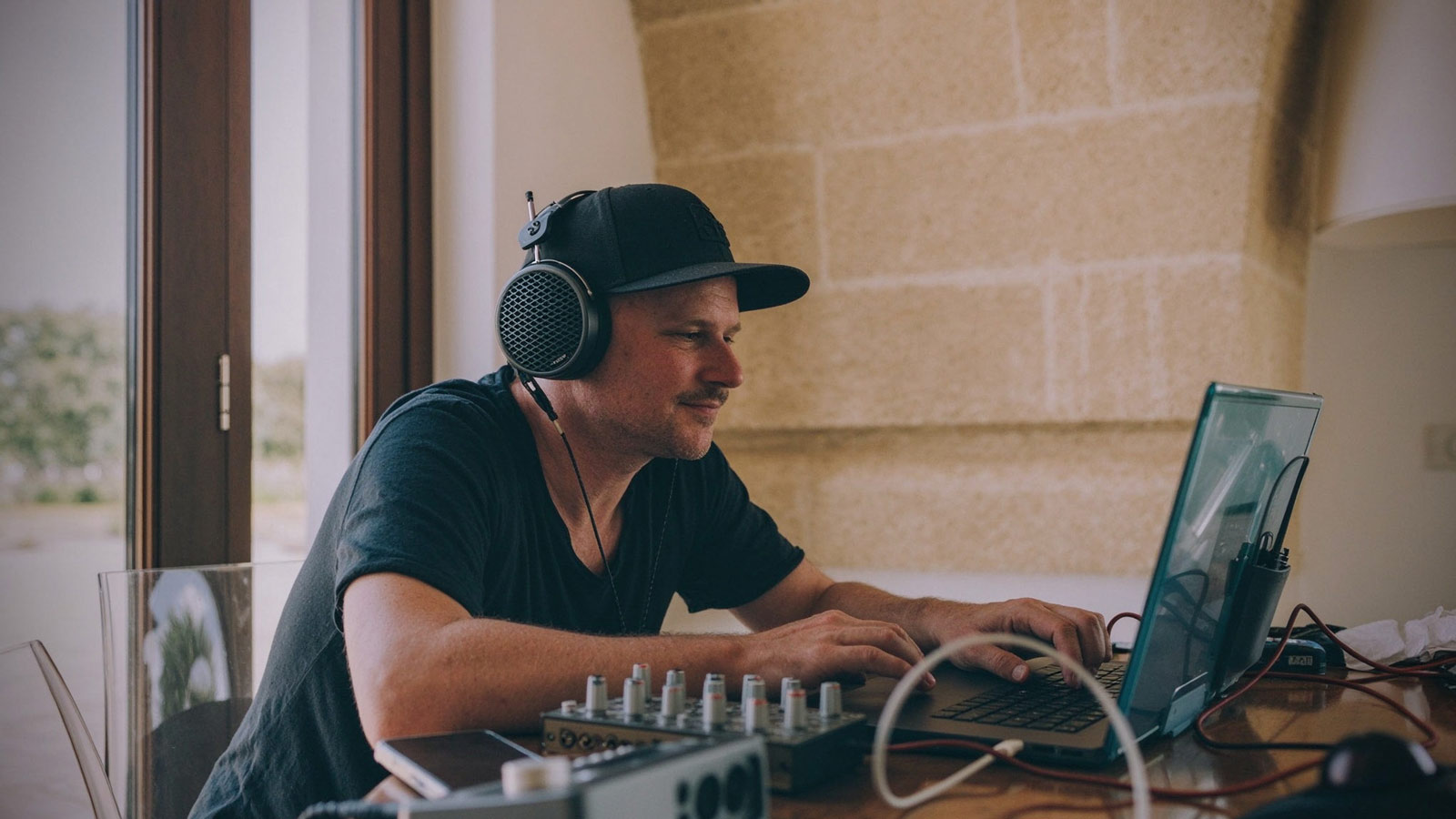
Four honest cautions belong in the ledger. First, weight: the planar magnetic formula that produces the sound requires large drivers and substantial magnet structures, and the LCD line is notorious among its fans for its heft — a full-size LCD on the head for a two-hour session is an endurance event some listeners never learn to love, and the lighter flagship LCD-5 exists precisely because the company heard the complaint. Second, amplification: planar drivers are power-hungry, and an LCD-series headphone plugged into a laptop jack will underperform its price by half — the true cost of entry includes an amplifier, sometimes a specialized one, which the product pages politely assume you own. Third, price and niche: the ladder runs from around four hundred fifty dollars for the entry audiophile models to four thousand five hundred for the LCD-5 — a category where the ceiling is a rounding error for the customer but the market is bounded by definition. Fourth, the Sony question: the acquisition brought capital and distribution, but also a parent whose incentives — platform exclusives, hardware margins, ecosystem loyalty — do not perfectly align with the audiophile community's, and the multi-platform pledge will be tested with every console generation.
None of these are contradictions; all four are the taxes on being the laboratory-grade option in a category that rewards convenience.
The verdict for the detail-obsessed listener
Audeze's storefront is the NASA-material thesis run for eighteen years: a garage, a movie poster, a flexible circuit that was never supposed to sing, the LCD-2 that detonated the forums, the largest flexible-PCB factory in America, eleven patents, a studio line trusted by Grammy-winning engineers, a gaming line that won the professional circuit, an amicable founder split that spawned an artisan sequel, and a PlayStation parent that swears the California factory stays. The cons are the cons of the laboratory: weight, wattage requirements, summit prices, a bounded audiophile market, and the independence question only Sony can answer.
Buy here if your listening is an event rather than a background, if the detail between the notes matters more than the convenience between meetings, if a hand-assembled driver from Orange County beats a mass-market transducer at any price, and if the gaming line's studio tuning appeals to ears that also game. Buy the dynamic-driver mainstream if weight, amplifiers, and four-figure ladders feel like the hobby eating its owner. For the detail-obsessed listener who wants to hear the recording the way the mastering engineer last touched it, this Costa Mesa storefront remains the category's most engineered answer — space-age film, garage craft, and the magnets still pulling.