From fnatic's bench to a million-dollar keyboard: the dygma story
Official homepage: https://dygma.com
Dygma was founded by a man who watched his players destroy their wrists. Luis Sevilla — Deilor to the esports world — went from professional poker to coaching Fnatic's League of Legends team to two European championships, and through five years of twelve-hour scrimmages he kept asking the same question: his players' necks, backs, and wrists were failing, sometimes irreversibly, and the keyboard at the center of it all had not been fundamentally redesigned in thirty years. In 2016 he quit the bench to build the answer, killed his first product after fifty prototypes because the learning curve was too steep, survived two years of manufacturing hell and a firmware bug that threatened every keyboard he had ever shipped — fixed, in the end, by a customer — and returned to crowdfunding four years later with a wireless columnar keyboard that raised a million dollars. This review examines the storefront dimension by dimension: the coach's diagnosis, the killed prototype, the hardware hell, and the community that debugged the product.
From poker tables to the Fnatic bench
The founder's path to ergonomics ran through two unexpected disciplines. Before esports, Sevilla was a professional poker player — a career that taught him pattern recognition, pressure, and the arithmetic of long sessions. He moved into coaching and climbed to the highest bench in European League of Legends: Fnatic, where he won two LEC championships and took the team to its competitive peak. It was on that bench, across thousands of hours watching elite players train, that he absorbed the problem his company would exist to solve: prolonged keyboard use was producing neck, back, and wrist injuries, sometimes irreversible, and the standard keyboard — a flat rectangle of staggered rows designed for typewriters in another century — had not meaningfully changed. His question, as the company's own history page preserves it: why hadn't anyone done anything to fix it?
After the second championship, he retired from coaching — the company's telling notes that no one expects a coach at his peak to walk away — and in 2016 started the project he framed as creating the world's most advanced mechanical gaming keyboard, one designed for performance, health, and comfort in equal measure. The audience he knew best, professional and serious gamers, would be the proving ground; the product he intended to build would outgrow them.
The Shortcut, and the discipline to kill it
The first design was radical to a fault. Called the Shortcut, it featured a columnar staggered layout that followed the natural arch of the fingers, thumb clusters redesigned for the strongest digit, and — the flourish — joysticks everywhere. Fifty prototypes were manufactured and shipped to testers, and the feedback was unanimous in the way that mattered: the keyboard was objectively better, and the learning curve was too steep for anyone but zealots. The company's own retrospective calls the choice that followed crucial — stick with a good product that might not succeed, or restart.
They restarted. The Shortcut was shelved — held in reserve rather than buried — and the team went back to the drawing board with the testers' verdict as the brief: build an ergonomic keyboard that is not too far off from a regular good old keyboard, so the learning curve stays climbable. The decision to kill fifty prototypes is the founder's most instructive act of discipline: in hardware, the sunk cost of a beautiful wrong design is the tax every young company pays, and Dygma paid it deliberately, early, and in public through its own storytelling — the retrospective culture that would later define the brand's relationship with its customers.
Two years of hardware hell, told honestly
The replacement product, the Raise, launched on Kickstarter in December 2017 and raised nearly half a million dollars across two campaigns — and then the company discovered what it had promised. A team of four, at times three, ran a hardware startup in which each person owned three or more departments at once. The campaign had promised shipping in six months; delivery took two years. The company's own blog chronicles the hell without varnish: a perfectionist founder obsessing over light distribution in the underglow and a 0.2-millimeter gap between the keyboard halves; a complete redesign of the central communication component; palm pads whose factory tooling had to be scrapped and re-purchased from a new supplier after the edges came out rough; a wholesale switch of circuit-board assembly factories in June 2019, weeks before ten thousand boards needed populating; repeated failures of electronics certification that forced cable redesigns and shielding iterations; delays that turned into refunds the company had to finance.
The apology took physical form: a free travel case bundled with every late keyboard. December 2019 finally brought mass production, overseen in China by the product manager in person, and the first batch — roughly two thousand units of a $300 keyboard — reached the backers who had waited two years. The Dygmates, as the community had named itself, stayed patient; the company never forgot the debt.
The Dygmates and the firmware rescue
The crisis that followed is the company's finest chapter, and it belongs to a customer. Raise keyboards began freezing — unresponsive until unplugged and replugged. The engineering team spent the better part of a year troubleshooting without an answer, facing the nightmare scenario the blog describes plainly: what if the freezing affects every Raise we've ever sold, and we have no better solution than replacing them all? Cable swaps, central-unit replacements, and PCB replacements all failed to cure it.
The fix came from sharing. Dygma opened the problem to the community, and a heroic Dygmate — the company's phrase — identified the true cause: electrostatic discharges, triggered by faulty cables or strong electromagnetic fields, interfering with the communication between the keyboard's central hub and its two halves. The remedy was a firmware update — no recall, no replacement program, a software patch delivered to every shipped unit. The company's retrospective draws the lesson it has operated on since: when the problem was shared with the community, the community solved it. For a brand whose product is precision hardware, the admission that its customers debugged its scariest bug is either the most dangerous sentence in the world or the strongest — Dygma printed it on its own blog.
The tenting kit and the listening ledger
The quieter chapters document the same posture. The Dygmates asked for a tenting kit to relieve the forearm pronation that long sessions cause; Dygma spent a year developing it and launched it in June 2021 — it sold out on the first day, and the company underestimated demand so badly it manufactured four batches in two years to catch up. When the pandemic spiked demand for home-office gear, the company ran out of stock and could not manufacture, and used the pause to keep improving — softer palm pads, a more compact travel case, redesigned keycaps, larger rubber feet, sound-dampening foam — bundling free cleaning cloths, brushes, extra switches, and O-rings as the delays stretched. Unable to fly to China for quality control, it rerouted every keyboard through Spain for final inspection before worldwide shipping, absorbing the added cost and time rather than releasing unchecked units.
The ledger of listening — tenting kit, free goodies, batch-by-batch refinements, the firmware rescue — is the retention mechanism: a premium keyboard is a considered purchase, and Dygma converts consideration into loyalty by publishing every mistake next to every fix.
The Defy, and a million-dollar second act
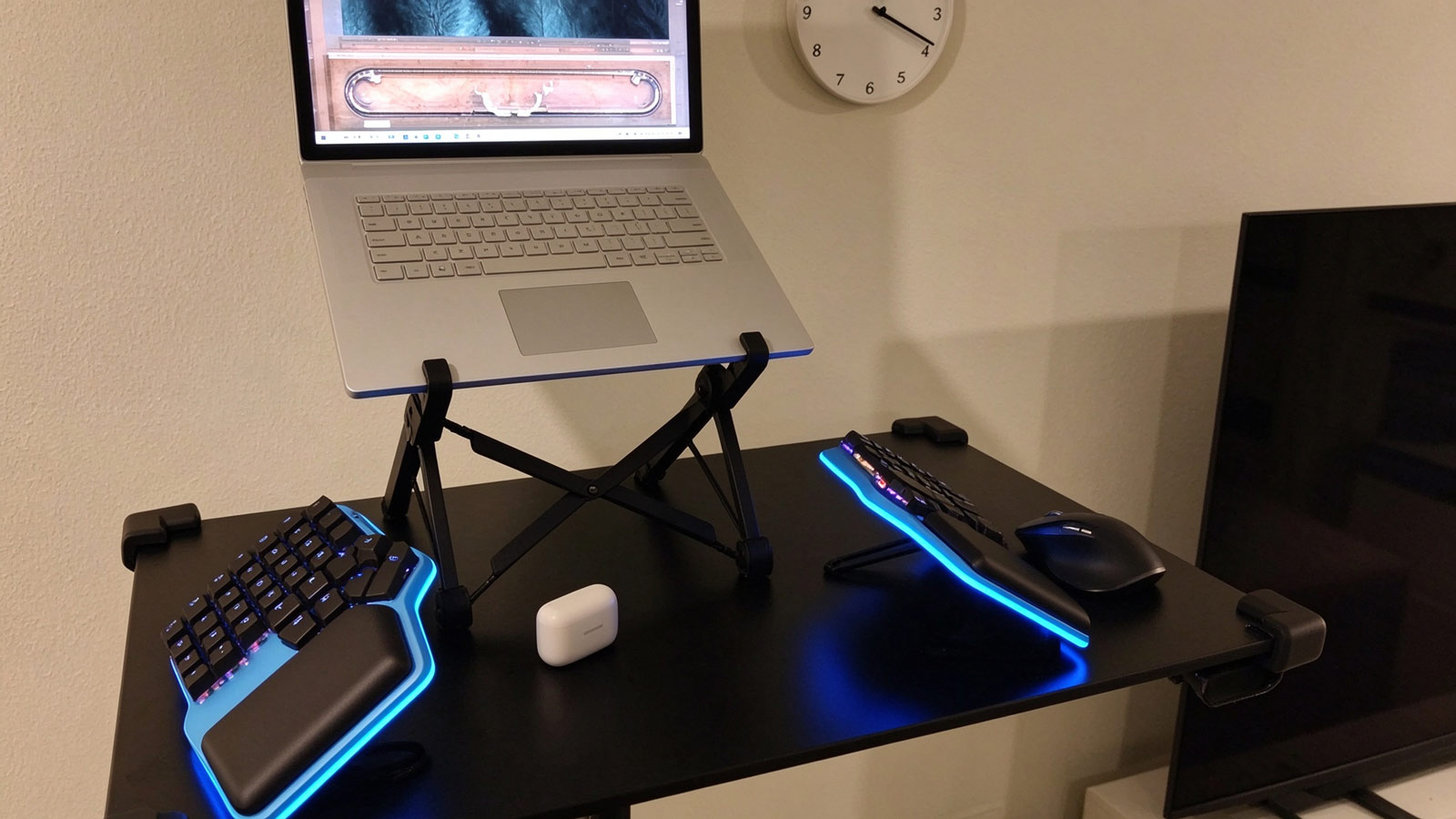
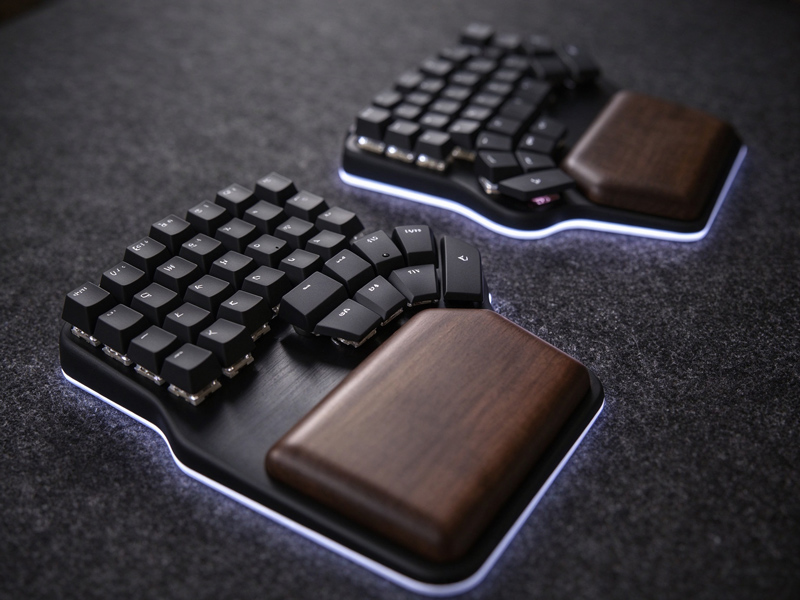
The second product arrived in June 2022 on the community's terms. After countless requests, Dygma returned to the columnar layout it had abandoned with the Shortcut — this time with the learning-curve lessons baked in — and launched the Defy: a split, wireless columnar keyboard with Bluetooth and radio-frequency connections running fully independent halves, built-in tenting at high angles with reverse tilting, integrated palm rests with magnetic detachable pads, hot-swappable switches, fully programmable layers, open-source software, per-key RGBW lighting, and a double-coated anodized aluminum body. The crowdfunding campaign raised almost a million dollars — and this time, the company had the team, the factory relationships, and the scar tissue to ship it on a recognizable schedule.
The Defy completed the arc the coach had sketched in 2016: an ergonomic system, not a keyboard. Split halves align the wrists with the forearms; columns follow the fingers' natural arch; the thumb cluster serves the strongest digit; tenting and reverse tilt address the pronation that damages typists over years. The gaming credibility that opened doors gave way to a customer base of programmers, writers, and office workers whose motivation is survival rather than frames-per-second.
The honest texture of a niche keyboard
Four honest cautions belong in the ledger. First, price and patience: a Dygma keyboard runs roughly three hundred to four hundred dollars, is manufactured through Chinese supply chains with Spanish final quality control, and has a documented history of crowdfunded delays measured in years — the modern products ship more predictably, but the company's own blog is the record of how hard that lesson was learned. Second, the learning curve: even the deliberately conventional Raise requires retraining muscle memory, and the Defy's columnar layout demands more — the CEO's own one-year transition review, published on the company blog, opens with the admission that this keyboard is not for everyone. Third, the niche ceiling: ergonomic split keyboards are a growing but bounded market, wedged between cheap conventional boards and free laptop keyboards, with competitors — ZSA, Kinesis, MoErgo, the custom keyboard community's group buys — serving the same converts. Fourth, the dependence on a founding perfectionist: a company whose culture was shaped by one detail-obsessed ex-coach carries key-person concentration in every campaign video and every blog confession.
None of these are contradictions; all four are the taxes on building a healthier keyboard for a market that did not know it was allowed to ask for one.
The verdict for the wrist-sore typist
Dygma's storefront is the coach's diagnosis run for eight years: a poker player turned championship coach who watched his players break and asked why the keyboard had never been redesigned; fifty prototypes of a radical design killed for the crime of being unlearnable; two years of supplier hell narrated without varnish; a freezing bug that the customers themselves diagnosed; a tenting kit that sold out in a day and took four batches to satisfy; and a million-dollar second campaign for a wireless columnar flagship that completes the system. The cons are the cons of the mission: premium prices, real learning curves, a bounded market, and a founder whose perfectionism is both the product's guarantee and its schedule risk.
Buy here if your wrists have started billing you for decades of flat keyboards, if a split, tented, columnar layout sounds like medicine rather than eccentricity, if a company that publishes its supplier disasters and firmware near-deaths matches your idea of credibility, and if hot-swappable switches and open-source software are your language of trust. Buy the conventional mechanical keyboard if three hundred dollars and a retraining month feel like too much honesty. For the wrist-sore typist who wants to keep typing for thirty more years, this Sevilla storefront remains the category's most confessional answer — a coach, a kill, a rescue, and the Dygmates still watching every batch.