The founder who got fired, then built the camera brand that refused to die

Official homepage: https://www.shopmoment.com
In January 2013, Marc Barros was fired as chief executive of Contour, the action-camera company he had founded in a garage at age twenty-two. The board replaced him; the company raised $5 million while its rival GoPro raised $80; and that August, Contour went bankrupt, leaving sixty people out of work. Barros spent nine months writing in Italy and Brazil before posting a short essay, I'm Back, and starting over. The company he built next — Moment — turned smartphones into better cameras through premium lenses and cases, funded every single product on Kickstarter even when it did not need to, built its own creator-powered media empire, pivoted into a pandemic marketplace that nearly broke it, and then de-ventured itself back to health. This review examines the storefront dimension by dimension: the firing, the thesis, the Kickstarter constitution, and the pivots that made Moment one of the few decade-old DTC stories still standing.
Fired from the company he started
The Contour chapter is the founding wound, and Barros has told it the same way for a decade. He and a college friend started the action-camera company in a Seattle garage when he was twenty-two, grew revenue from $150,000 in year one to $7 million by year four, and watched GoPro — which raised $80 million to Contour's $5 — take the category with national recognition, NHL partnerships, Shaun White, and Foxconn. His postmortem, delivered to the Seattle Times years later, is the second-founder's creed: we were running the company like we were No. 1, but we were No. 2 in the market — a lot was just not understanding what it meant to be a No. 2 company. Five million dollars was not the right amount of money to go build a category; our competition raised $80 million and we lost the category.
The board removed him as CEO in January 2013; the company folded that August; sixty friends lost their jobs. Barros's nine months of writing through Italy and Brazil produced the essay that became Moment's recruiting document, and a pledge he has repeated ever since: to lead differently, to be the best in the world at one thing, and to never again confuse a good idea with a funded one.
The second thesis: one phone, one camera
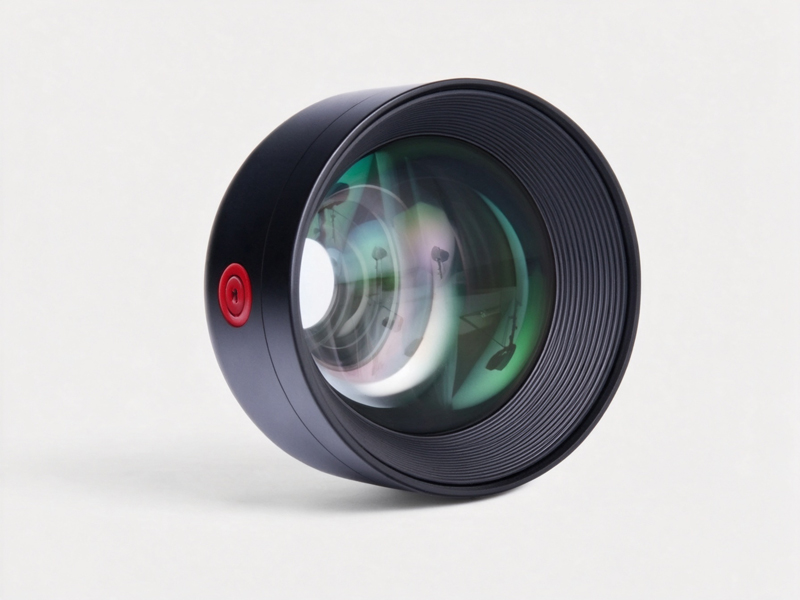
The market data chose the thesis. In 2013 and 2014, worldwide smartphone shipments grew 27 percent while digital camera shipments fell 31 percent — the camera the customer already owned was improving faster than the camera she was abandoning. Moment launched in August 2013 with four co-founders, including Erik Hedberg, a former Contour intern, and a product line built around a single promise: $100 lenses that attach to smartphones to improve picture quality and give different dimensions to shots, paired with a case that makes the phone act like a full-size camera and an app to complete the system. The mission line, printed on the early packaging in the community's memory — we believe the world is a better place with beautiful photography — has never changed.
Barros's discipline this time was the opposite of Contour's: no hyperspeed, no category-building on five million dollars, and as much customer research as possible before scaling — collecting data to determine whether mobile photography would be a niche or a market before letting it become a bet.
A Kickstarter constitution, even when flush
The operating principle that became famous in DTC circles: every new Moment product must be crowdfunded on Kickstarter — even when the company has the cash to manufacture without it. The logic, in Barros's words: you can spend four months prototyping, but if people don't want it or don't care, you're going to waste a lot of money on manufacturing. The record validates the doctrine: the January 2014 launch sought $50,000 and closed at more than $450,000 from 4,722 backers; the phone case a year later raised $693,435 from 4,833. Kickstarter became the validation layer, the marketing layer, and the community layer in one transaction — and the campaign structure let a tiny team ship hardware with confidence categories usually reserve for giants.
The constitution also shaped the catalog's honesty: products that failed to fund, or underwhelmed in early campaigns, simply never consumed manufacturing dollars — the anti-Contour discipline encoded in a platform.
Angel money only, then de-ventured
The capital structure is the quiet rebellion. Moment raised $1.8 million, largely from individual angels — Techstars' Chris DeVore, Concur's Steve Singh, Bonobos' Andy Dunn — people who knew Barros or cared specifically about mobile photography. The company grew faster than Contour had, on a fraction of the money, and when the venture era's gravity later pulled the business toward scale-at-all-costs, Barros's own retrospective on his founder's site describes the correction in one compound word: we de-venturized the business, built high gross margins, and have a small fantastic team — healthier than it has ever been.
The contrast with the Contour arithmetic is the reviewer's point: the first company raised $5 million and lost an $80 million race; the second raised $1.8 million, refused the race, and is still standing. The storefront's current state — a lean team, high margins, core products at stable prices, wholesale partners growing — is what de-venturing looks like when it works.
The vlog era, and the eighty-percent channel
The marketing chapter that defined the brand's middle years was built on an in-house creator team. Starting with one full-time creator on staff and growing to four distinct personalities — the crew that would later spin out as its own production company, Sunny Sixteen — Moment applied the mantra what would a creator do to every channel: killer photos, a simple voice, DIY-style ads. The company expanded into photo tours and built what it billed as the world's largest mobile film festival, connecting the audience to creators in person. By the end of the era, more than eighty percent of new customers arrived through YouTube — the channel itself or creators posting about Moment — an owned-media engine most accessory brands rent at auction prices.
The creator-first era also shaped the community's texture: Moment customers film their travels, and the brand's content returns the footage — a loop the Seattle Times called infectious passion, validated by investors' faith that smartphone photography was the future.
The marketplace whiplash of COVID
The pandemic chapter nearly broke the discipline. Before COVID, Moment had expanded from a product brand into what Barros describes as the premium online marketplace for creators — emulating REI with house goods, third-party gear, creator-led photography adventures through Moment Travel, and online courses when travel halted. The model ramped with the creator boom: revenue-share programs supporting hundreds of creators, new products launched with them, paid marketing scaling to meet demand. Then the supply chain snapped — at the peak, the company carried $5 million in annual refunds for cancelled orders, which instantly made the business unprofitable.
The whiplash was total: a brand constitutionally allergic to overextension had become a marketplace, a travel agency, a course platform, and an ad-funded growth story in eighteen months. Barros's retrospective names the error without varnish: the model was not sustainable, and the interest in being a content creator was already dying off.
The hard pivot back to products
The 2023 correction reads like the Contour lessons applied to itself. Moment turned off paid marketing entirely and focused on organic channels — SEO, articles, email — bringing paid back only in 2024 once the margin structure was fixed. It shrank to a small internal marketing team and replaced headcount with programs that let many creators participate: the Residency Program and TikTok Teams. It turned off discounting entirely, holding core bestsellers at stable prices so wholesale partners could grow. And it returned to launching products — most visibly Pro Camera, the app the company bills as its number-one-rated camera application — while doubling down on customer reviews and real-user stories.
The result, in the founder's own accounting: Moment is healthier than it has ever been — gone around the world from product maker to retailer and back to product maker, with the community that started on Kickstarter still intact. For the storefront reviewer, the arc is the rarest DTC story: a brand that used a near-death to re-found itself on the original discipline.
The honest texture of a shrinking category
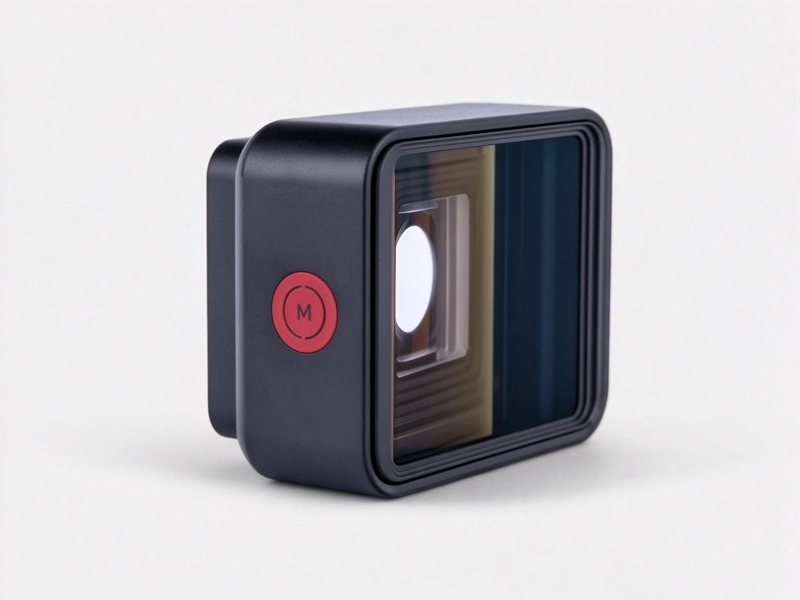
Four honest cautions belong in the ledger. First, the category risk that never left: smartphone cameras improve every release, and computational photography keeps eating the use-case for external lenses — the accessories that launched the brand are precisely the ones the phone itself is obsoleting, which is why the modern catalog leans on cases, MagSafe mounts, filters, and the app. Second, scale: de-venturing is a health claim, not a size one — the company is deliberately small, with revenue deliberately below its pandemic peak. Third, the creator-market volatility: Moment's demand rides the creator economy's moods, and the shift from creators to entertainers that Barros names as a headwind is a structural, not cyclical, uncertainty. Fourth, price: premium lenses and cases at $70 to $100-plus compete against a phone that includes an increasingly good camera in the price of admission.
None of these are contradictions; all four are the taxes on surviving a decade in a category the platform vendor keeps absorbing.
The verdict for the phone photographer
Moment's storefront is the second-founder thesis run for a decade: a man fired from his own garage company, a thesis chosen by market data rather than bravado, a Kickstarter constitution that refuses to manufacture hope, an eighty-percent owned media channel built from four in-house creators, a pandemic marketplace that broke the constitution, and a de-ventured return to health that most DTC brands never complete. The cons are the cons of the discipline: a category the phone keeps absorbing, a deliberately small scale, creator-economy volatility, and premium prices against a free bundled camera.
Buy here if your phone is your only camera and you want it to shoot like it is not, if a company that validates every product with backers before cutting steel matches your idea of honesty, if the creator-era content library is the education you actually want, and if a brand that walked itself back from a $5 million refund cliff deserves your trust more than one that never fell. Buy the phone maker's own accessories if convenience outranks optics. For the phone photographer who wants the shot the sensor cannot take alone, this Seattle storefront remains the category's most resilient answer — fired, bankrupt, and back for more.