How two diapers.com executives built a kids brand with no logos

Official homepage: https://www.primary.com
Primary sells nothing — and that is the entire product. The kids' clothing brand, founded in 2014 by two mothers who had scaled Diapers.com's parent company, built its catalog around a radical absence: no logos, no characters, no slogans, no gendered aisles, just vibrant color in simple, well-made basics for babies and kids. The founders' elevator pitch is the anti-pitch — we wanted a brand that stood for color in a way we couldn't find in the market, where color was for every kid — and the confession they bring to podcasts is rarer still: an on-the-record account of the supply-chain failure that nearly broke the company. This review examines the storefront dimension by dimension: the pedigree, the absence, the confession, and the honest arithmetic of selling nothing to a market trained to want everything.
Two mothers and a diaper.com pedigree
The founders arrived with the best e-commerce education in the industry. Christina Carbonell and Galyn Bernard had built their careers inside Quidsi — the parent company of Diapers.com, the subscription diaper retailer that scaled to hundreds of millions in revenue and was acquired by Amazon — where they learned the consumer-e-commerce playbook from inside its most demanding category: parents buying essentials for children on repeat. The frustration that launched Primary was personal and parental: shopping for their own kids meant choosing between character-covered tees and gender-prescribed palettes, between logos that advertised someone else's brand and construction that could not survive a single growth spurt.
The structure they chose was as unconventional as the product: two co-chief executives from day one, a partnership Bernard has described as a decision that made both founders better — the creative and commercial instincts braided rather than divided. They launched in 2014 with a small range of basics — hoodies, tees, onesies — and a premise the industry dismissed: that parents would pay for simplicity itself.
The brand that refuses to be a brand
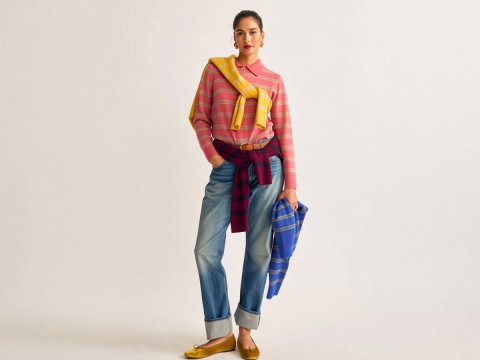
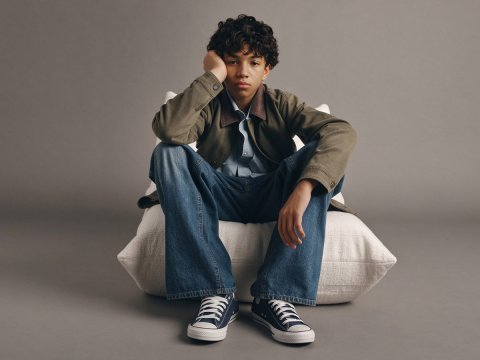
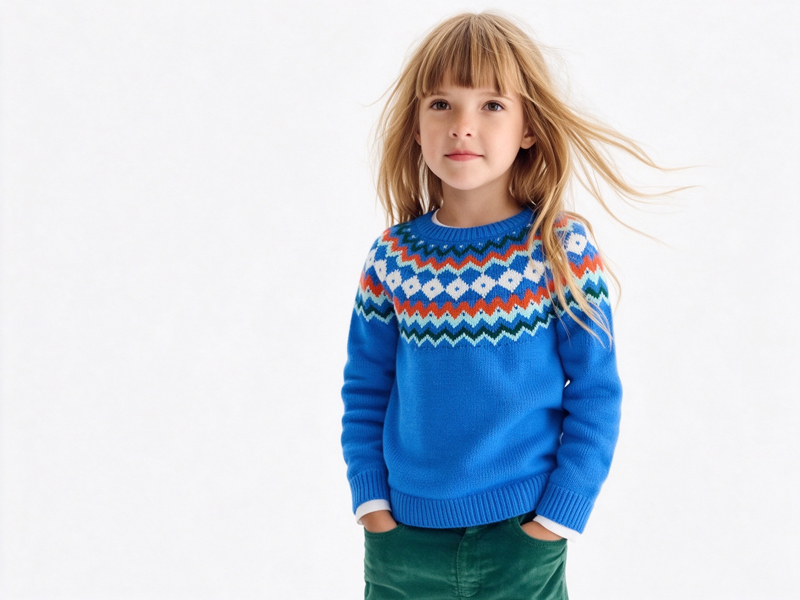
The merchandising doctrine is an exercise in subtraction. Primary's site has never had a boys' section or a girls' section — it is organized by baby and kids, by category and size — because the founders concluded that the pink-aisle-blue-aisle partition was a retail habit, not a child need. Every garment ships without a logo, without a character, without a slogan; the fabric's color is the design, and the color library is the brand. The evergreen strategy — the founders' word — means styles persist across seasons, so a family's third child can wear the same cut its first child did, and a hand-me-down travels across genders without a wardrobe negotiation.
The aesthetic bet was that parents were tired of their children being billboards — that the character economy running from Disney to Nickelodeon had taxed family laundry enough. The bet aged well: the anti-logo register that read as eccentric in 2014 became a mainstream parenting preference by the early 2020s, and Primary's early years of explaining the premise gave way to years of simply stocking it.
Color for every kid, not pink and blue
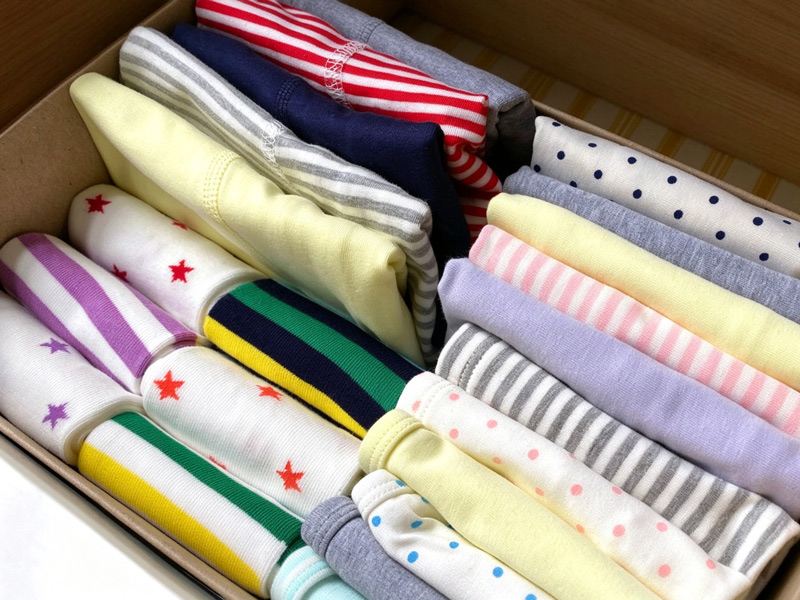
The color program is the storefront's quiet engine. Where the industry's default divided the palette by gender aisle, Primary built a single vibrant spectrum — mustard, berry, kelly, charcoal, seafoam — in which every color is for every kid, the founders' own formulation of the mission. The palette discipline does commercial work: mixing and matching across the spectrum is effortless, siblings' hand-me-downs never clash, and the photogenic color wall the catalog produces has powered the brand's organic social engine since the Instagram era.
The gender-neutrality is stated as design principle rather than marketing position: the founders frame it as removing friction from the parent's life — fewer decisions, longer wear windows, clothes that pass between siblings and between friends without negotiation. For a storefront reviewer, it is the rare doctrine that improves both the ethics and the unit economics simultaneously.
A supply chain failure, told on a podcast
The chapter the founders volunteer is the one most brands bury. On the Failure Factor podcast, Carbonell and Bernard named their defining mistake plainly: they believed they could take care of the supply chain themselves. The result was little product in stock and a lot of unhappy customers and investors — the archetypal DTC inventory crisis, self-inflicted, acknowledged on a public stage with advice for founders on managing supply chains and hiring with values in mind. The episode functions as the brand's scar tissue made useful: the confession converts a failure into credibility, and the operational rebuild that followed is why the catalog has been reliably in stock since.
For the reviewer's ledger, this is the same quality signal as the cookware brands' published failure rates and the pet-crate brand's waitlist transparency: a company that audits its own near-death in public is signaling that the current numbers can be trusted.
Two hundred styles, and a sock-color idea
The growth catalog tracks the founders' listening. From the hoodies, tees, and onesies of the launch, the assortment scaled to roughly two hundred styles — swim, outerwear, the first denim, and an activewear line branded per4orm — each extension following customer requests rather than trend forecasts. The signature anecdote the founders tell to illustrate the listening: customers suggested color-coding the accent on the socks by size, so parents sorting laundry could tell a size four from a size six at a glance — and the company implemented it.
The founder quoted in Forbes on the method: as we have grown, we have made a point of listening to our customers and their needs — and we get great ideas from our customers that we have implemented. The sock detail is the philosophy in miniature: the brand's product roadmap is the customer's margin note.
Growing to fifty million on basics
The financial arc ran without the venture accelerant most DTC brands burned. Early rounds were modest — a $3 million round in October 2015, an $8 million Series A in June 2016 — and the revenue trajectory carried the rest: $30 million by the Forbes accounting of 2019, and a podcast title in 2024 that compresses the journey for founders: scaled from one dollar to fifty million. The distribution strategy widened carefully beyond the flagship: partnerships with Stitch Fix, STORY, Neighborhood Goods, and Maisonette put the clothes where parents already shopped, on the theory the founders state plainly — once customers touch and feel the clothes, they fall in love.
The pitch to partners is the product itself: basics so well made and so honestly priced that wholesale partners treat them as traffic rather than margin. In a category dominated by Carter's at one end and Amazon Basics at the other, Primary's eleven-year survival at the premium-middle is the argument.
The honest texture of a logo-free niche
Four honest cautions belong in the ledger. First, competition: children's apparel is the most contested category in the industry — Carter's scale, Old Navy's price, Amazon's logistics — and a $50 million independent occupies a profitable niche rather than a defensible moat; the barrier to copying no-logo basics is zero, and the brand's defense is quality and palette discipline rather than anything proprietary. Second, the sustainability file is generalist: soft fabrics and lasting construction are claimed, but the named-factory, certification-wall documentation of this category's audited leaders is absent from the public record. Third, the basics ceiling: the logo-free register that is the brand's identity is also its aesthetic boundary — parents wanting prints, characters, or occasion-wear formality will shop elsewhere, by design. Fourth, scale friction: the supply-chain failure the founders confess was not a one-time event but the symptom of a small company's structural fragility — inventory depth, size-run completeness, and promotional cadence all remain dependent on operational discipline that larger rivals automate.
None of these are contradictions; all four are the costs of choosing subtraction in a category built on addition.
The verdict for the anti-logo parent
Primary's storefront is the subtraction thesis run as an eleven-year business: two Diapers.com executives who concluded that parents were tired of logos, a catalog organized without a single gendered aisle, a color spectrum in which every color is for every kid, an on-record supply-chain confession that converted failure into credibility, a product roadmap written by customer margin notes like the size-coded sock, and a growth arc from one dollar to fifty million on the radical bet that nothing — well-made, colorful nothing — was what the market wanted. The cons are the cons of the niche: brutal competition, a generalist sustainability file, an aesthetic boundary, and structural fragility that scale has eased without eliminating.
Buy here if your child's wardrobe is a hand-me-down pipeline rather than a billboard, if color without characters is the design language you want, if one catalog for all your children beats two aisles sorted by gender, and if a brand that confessed its near-death on a podcast matches your idea of honesty. Buy the category's giants if price or character fidelity rules. For the anti-logo parent who wants the laundry simplified and the palette unified, this New York storefront remains the category's most consistent bet — eleven years of nothing, done extraordinarily well.