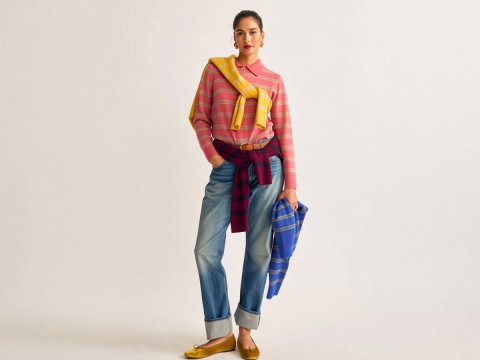
Hatch: the maternity brand that refuses to let mothers disappear
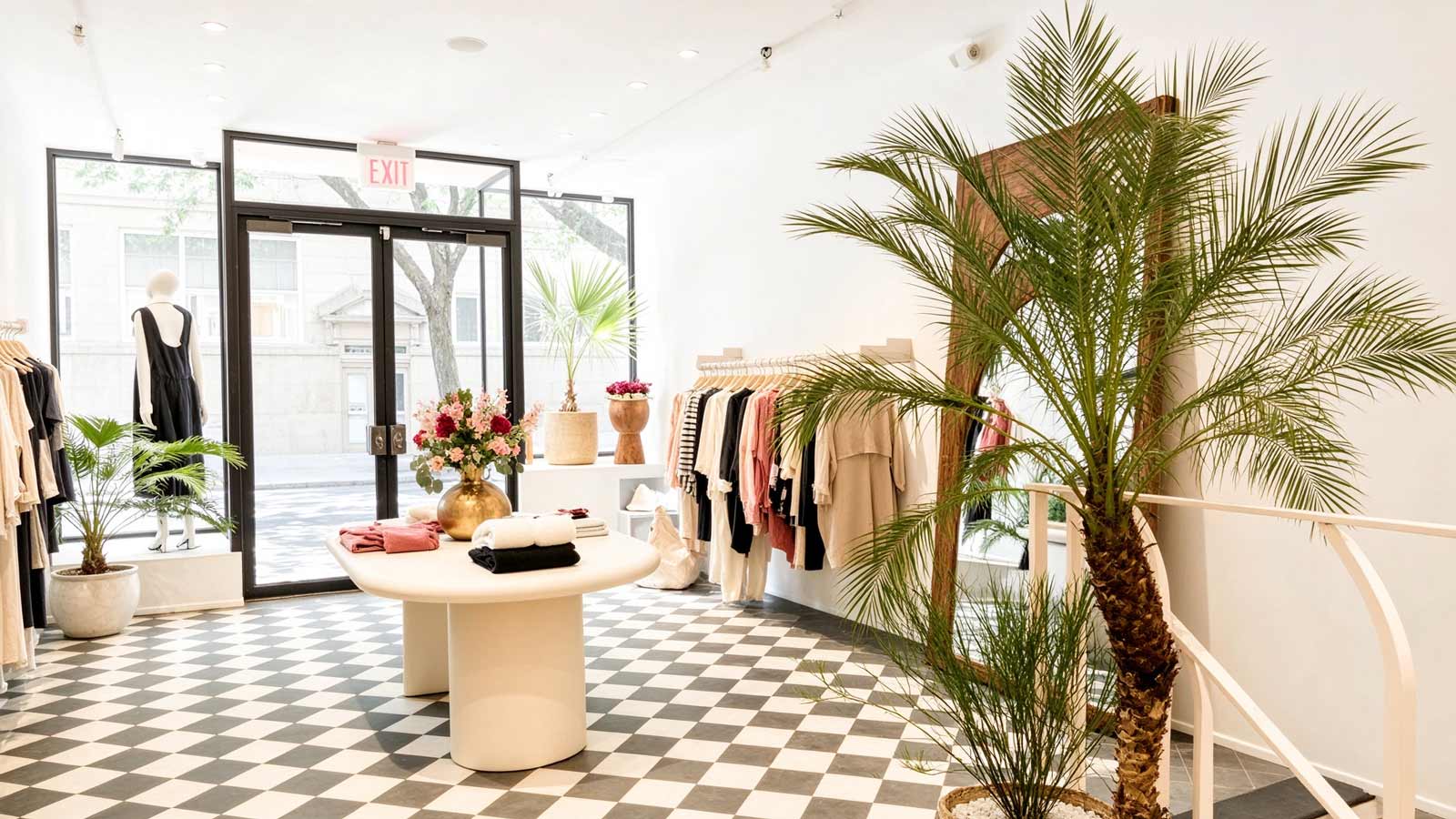
Official homepage: https://www.hatchcollection.com
Ariane Goldman spent eight years climbing the corporate ladder at American Express before a bridesmaid-dress frustration sent her to her West Village apartment to cut fabric. Four years after that first company succeeded, she found herself pregnant, standing in a maternity aisle she describes as frumpy and disposable, and feeling invisible in the one season of her life when she most wanted to be seen. In 2011 she launched Hatch to end that invisibility — clothing engineered to work before, during, and long after pregnancy, sold inside stores that host doula seminars and birth-coaching sessions, and backed since day one by a charity that fights for mothers the world's systems forget. This review examines the storefront dimension by dimension: the founder's two-act career, the before-during-after doctrine, the community machinery, and the 2023 gamble that unified four legacy maternity brands under one roof.
Eight years on Wall Street, then bridesmaids
The founder's first act was corporate. Goldman studied business administration at the University of Michigan and spent roughly eight years in American Express's marketing department, climbing through four or five roles before admitting the creative work was not happening there. The exit, when it came, was classic entrepreneurial collateral: planning her wedding, she could not find bridesmaid dresses that made four friends with four different body types feel beautiful without bankrupting them — so she found fabric, had the dresses made, watched the reaction, and quit her job to start twobirds New York from her apartment. The one-size, multiway wrap dress that could be worn after the wedding — killing two birds with one stone, hence the name — became a quiet success, and Goldman calls it the perfect entrée into entrepreneurship: a great product, cash coming in, a beautiful business model.
The second act arrived with her first pregnancy, in 2010. Where the bridesmaid gap had been about a single event, the maternity gap was about an entire season of a woman's life — and the market's answer, in her telling, was buying regular clothes several sizes too big and wearing vintage mumus, because what she found for pregnant women was disposable at best.
Pregnant, and invisible in the aisle
The founding frustration is preserved in Goldman's interviews with unusual emotional specificity: she was feeling beautiful in a new way, and there weren't any clothes making her want to celebrate this time. Maternity clothes felt frumpy and had no longevity. She has also named the deeper wound — when I was pregnant, there was no one speaking to me, so I wanted to start the conversation — the brand born, in Vogue's phrasing, because its founder didn't want to buy maternity clothes at all. Following the birth of her daughter Charlie, Hatch launched in 2011 as a capsule of drapey, breezy pieces — jumpsuits, batik prints, even leather tuxedo leggings — that read as contemporary fashion rather than maternity costume, the reviewer's test at the time being that a non-pregnant editor could wear every piece long after giving birth.
The celebrity file formed early and stayed: Meghan Markle, Natalie Portman, Amy Schumer, Emily Blunt, Gwen Stefani, Jessica Alba, and Brooklyn Decker appear across the brand's press history — a roster that signals the thesis landed where it was aimed, at women who refused to suspend style for nine months.
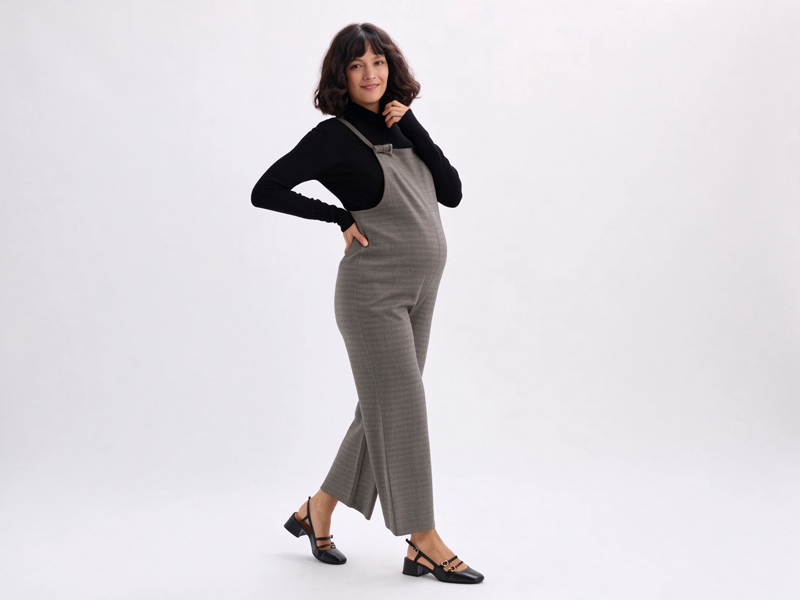
Before, during, and long after
The product doctrine compresses to a three-word register: before, during, after. Every piece is engineered to enter the wardrobe early, expand through pregnancy, and remain afterward — the Wedge feature in the denim that grows with the bump and recovers after; nursing and pumping bras that actually stand the test of time; dresses whose drape forgives without announcing. The brand's own materials state the longevity promise plainly: you deserve things that will be with you from the first trimester to their third birthday. The assortment widened into Hatch Mama — non-toxic, mama-safe beauty products that help as you stretch, from nipple balm to belly oil — treating the pregnancy body as a skincare constituency the industry had ignored.
The La Ligne resort collaboration extended the doctrine to a partner's first maternity capsule — boyfriend shirt, maillot, trouser, smock dress at $168 to $395 — proof that the before-during-after cut could be licensed like a platform rather than confined to a label.
Community as the second product
The community machinery is the storefront's least imitable asset. Hatch's New York and Los Angeles stores host regular events — doula seminars, birth-coaching sessions, mommy-and-me classes, nothing off limits, in the founder's phrase — converting retail square footage into a mother's living room. The Babe content platform carries the conversation online: Q-and-As with medical experts fused with lifestyle content, first-person essays from the community, and style stories for every stage. Goldman has described the mission as building a trusted resource women could turn to for advice, information, and even friendship — the brand explicitly positioned as a breather, a support system, a reminder that no one is alone in this.
The community's scale — a social following counted in the hundreds of thousands — functions the way the certification walls do for this site's supply-chain brands: not proof of garment quality, but proof that the company holds an audience's trust between purchases, which in maternity — a category whose customers graduate — is the entire retention problem solved.
A coffee date with Christy Turlington
The philanthropy chapter began with a phone call and a coffee. Reading about Christy Turlington's work founding Every Mother Counts — the organization working to make pregnancy and childbirth safe for every mother, everywhere — Goldman asked a mutual friend for an introduction and got a coffee meeting. There is not a kinder woman out there, she has said of Turlington, and the partnership has run since Hatch's launch: the brand gives to Every Mother Counts and shares the message across every channel it owns. The fit is doctrinal — a maternity company funding maternal health — rather than the generic charity tie the category favors, and it joined a longer list of mother-focused partners including the Alliance of Moms.
For the storefront reviewer, a charity whose mission literally mirrors the customer's journey — from the safely delivered pregnancies of the brand's audience to the unsafe ones the charity fights — is the deepest form of values coherence the category produces.
Unifying the legacy maternity aisle
The 2023 chapter is the strategic gamble. Goldman took the chief executive role of Hatch Collective — unifying Hatch with Motherhood Maternity, A Pea in the Pod, and Destination Maternity into one of the largest unified maternity retailers in existence, with the editorial platform Babe carrying the combined content strategy. The logic, as she laid it out on retail podcasts: the brands cover different price points and sensibilities — Hatch the premium lifestyle destination, Motherhood the accessible workhorse, A Pea in the Pod the specialty luxury — so a customer can enter the portfolio at one brand and graduate through the others, with operational efficiencies shared across the combined entity. The turnaround arithmetic is real and unglamorous: legacy mall brands carry lease obligations and demographic erosion that no amount of community can fully offset.
The bet's symmetry deserves noting — the founder who launched Hatch because the aisle failed her now owns the aisle, with the obligation to fix it.
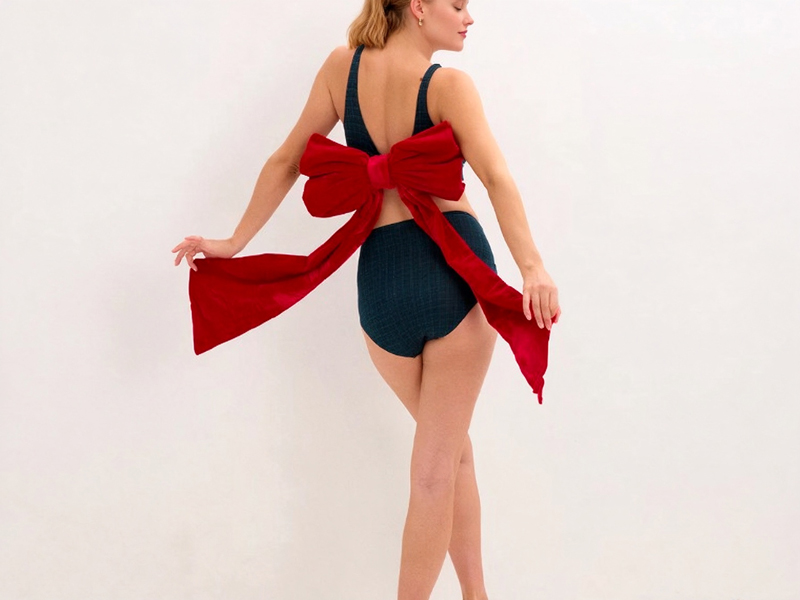
The King's Road, and a modest ledger
The expansion ledger runs international and modest. A London flagship opened on the King's Road — a dream of ours for so long, Goldman told a founders' community in 2025 — carrying the brand's first European beachhead, with the stated next chapter of deepening authority in pregnancy and postpartum through product innovation and community. The financial file is boutique: roughly $7.6 million raised across rounds including a $5 million Series A led by Silas Capital with M3 Ventures in 2019, third-party revenue estimates near $25 million, and a team counted around a hundred. The founder's own advice to women building while raising families reads like the company's operating system: you can build it slower and still build it well; longevity beats urgency; ruthless calendar discipline; there is no universal timeline.
The modesty is strategy as much as constraint — a category whose customers graduate every nine months rewards lifetime-value economics over land-grab scale, and Hatch's portfolio model is the lifetime-value play extended across brands.
The honest texture of a seasonal customer
Four honest cautions belong in the ledger. First, price: the collection runs from around fifty dollars for basics to four hundred for outerwear and specialty pieces — accessible-luxury territory that prices out the very mothers the Every Mother Counts partnership champions. Second, the seasonal-customer ceiling: maternity is the only apparel category whose customer base completely turns over, and retention means cross-selling postpartum essentials or passing the customer to the portfolio's other brands — an elegant answer that still caps lifetime value per pregnancy. Third, integration risk: the legacy brands Hatch Collective absorbed carry mall-era obligations, and turnarounds of that scale have broken stronger operators. Fourth, celebrity dependency: the Markle-Portman-Schumer anecdotes that built awareness are borrowed attention, and the founder's founder-led social presence — which she resumed personally during the pandemic, filming try-ons for 138,000 followers — concentrates trust in one person.
None of these are contradictions; all four are the costs of building the anti-disposable brand inside the most disposable-intended category in apparel.
The verdict for the mother who refuses to vanish
Hatch's storefront is the invisibility thesis run for fourteen years: a Wall Street marketer who quit over bridesmaid dresses, a first pregnancy spent in vintage mumus, a brand that engineered the wardrobe to enter before the bump and stay after the baby, stores that host doulas, a content platform that answers the questions the aisle never did, a charity partnership that mirrors the customer's own stakes, and a 2023 gamble that put the founder in charge of the very legacy aisle she set out to replace. The cons are the cons of the category: premium pricing, a graduating customer base, turnaround math, and borrowed celebrity attention.
Buy here if your pregnancy wardrobe should celebrate rather than conceal, if one dress that works at month two and month twenty-two beats three you will donate, if a store that teaches as it sells beats one that only racks, and if a brand that funds safe motherhood worldwide matches your idea of what commerce owes its customers. Buy the portfolio's accessible brands if price rules, or the resale platforms if nine months of wear argues against buying new. For the mother who refuses to disappear into the bump, this New York storefront remains the category's most insistent answer — before, during, after, and not invisible for a single month of it.