From ski bums to the meateater empire: first lite's eighteen-year hunt
Official homepage: https://www.firstlite.com
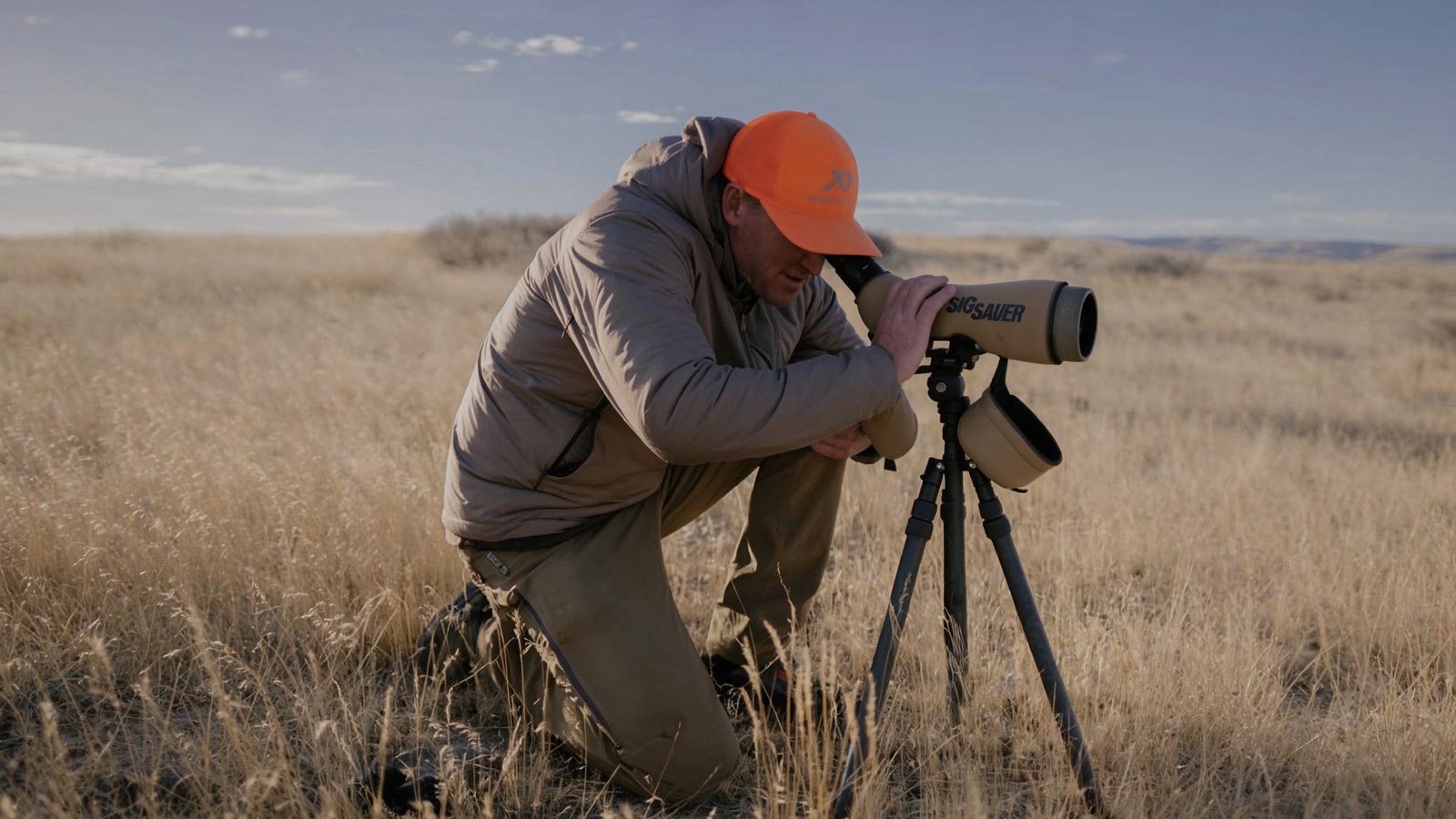
First Lite exists because two friends could not find camouflage that did not smell. In the mid-2000s, Kenton Carruth and Scott Robinson — ski-town transplants who had built careers in photography and eyewear in Ketchum, Idaho — began wearing bright-colored merino wool base layers on their archery hunts, and the fabric performed miracles: warm on freezing mornings, cool at midday, odor-free for weeks. The only problem was the color — blaze orange and black do not blend into elk country. In 2007, after eighteen months of experimentation to print camouflage on merino without ruining it, they launched the first camo-merino hunting apparel company in the world. Eighteen years later, the doctrine they printed — sell people fewer products that do more — built a conservation operation, a women's line, a proprietary camo pattern, and an acquisition by the hunting media empire they had sponsored since day one. This review examines the storefront dimension by dimension.
Two ski bums, twenty years of friendship
The founders' Ketchum origin is the classic mountain-town accident. Carruth and Robinson arrived in the Wood River Valley in 1993 and 1994 — right after college, intending, in Carruth's words, to ski for a winter and never leaving. Robinson had been a CPA in Seattle before the move, spent a decade in Ketchum financial-management roles, then three years at Nike, returning in 2004 to run international business and protective eyewear at Smith Optics. Carruth built a photography business shooting for Smith and Scott USA from the same small town. The friends hunted together through those years, and when the New Zealand merino company Icebreaker set up its American operation in Ketchum, the two were early converts — wearing the bright base layers for skiing, biking, and then, experimentally, for hunting.
The performance data accumulated across seasons: the fabric kept them warm in the cold mornings, cool as the day heated up, and — the property that hunting apparel had never offered — completely odor-free day after day. The two soon wore merino from September to January, bow season through the end of waterfowl. The gap was purely visual: the colors were wrong, and nobody was printing camouflage on wool.
Eighteen months to print on wool
The technical barrier was real. When the founders began researching, they found exactly one company in the world printing on merino — for the Australian military — and licensing the technology was only the beginning. Eighteen months of experimentation followed before they had a process that kept the wool soft and the print colorfast; when they were ready to choose a camouflage license, they called both ASAT and Predator, and ASAT called back first. The launch, in 2007, was five pieces: a 170-weight long-sleeve crew that is still in the line, a 230-weight three-quarter zip — the Chama, still a bestseller — plus boxers, long johns, and a balaclava.
The go-to-market was equally austere. The founders kept their day jobs, spent nothing on advertising, and tagged along in ASAT's booth at the ATA and SHOT trade shows — and sold everything they made the first year. Carruth's own summary of the launch discipline has governed the company ever since: they try to grow as fast as they can afford to grow, buy everything they can afford, and sell out of it every year — the anti-inventory-bloat model in a category famous for it.
The radical doctrine of selling less
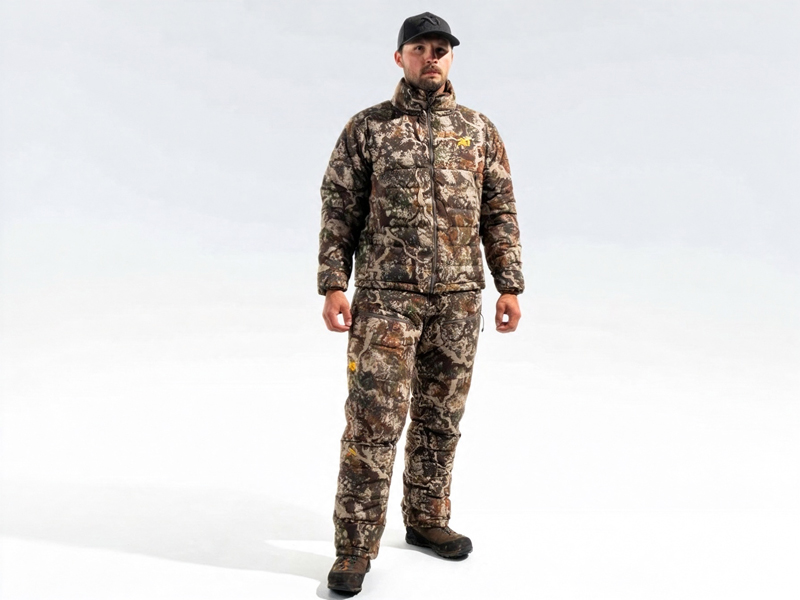
The product philosophy is the reviewer's favorite file, and the founders state it in the negative: virtually everybody in this industry is trying to sell people more stuff; we want to sell people fewer products that do more. The Fusion camouflage program embodies the doctrine — three years of development with a military-pattern designer to solve Idaho's specific problem, grass-and-sage south slopes and dark-timber north slopes in a single day, producing a pattern that works close and far, open country and under a tree, so one kit covers a hunter's entire season. The waterproof-breathable program made the same trade deliberately: where Gore-Tex pushes waterproofing to 25K at the cost of breathability, First Lite chose 37.5 membrane technology at 20K waterproof and 20K breathable — because western hunters, the founders argue, soak their layers from the inside far more often than the sky soaks them from the outside.
The quality doctrine underneath is a sentence every technical brand should steal: they are not a theory-based company but a tested-based company — nothing ships until the team has worn it in the field, and if that costs an extra year, so be it. The company does not guinea-pig its customers.
The office where game hangs before work
The culture chapter is documented by journalists who keep asking to visit. The Ketchum headquarters — sixteen employees at the 2018 count — contains reloading benches, multiple gun dogs on any given day, snowmobiles, and hanging setups for game killed before the workday begins; the founder can see chairlifts from his office window, and the team's round-table product meetings include every employee regardless of role, because the new person who says I just got cold matters more than the industry veteran taking design elements for granted. The Campfire blog carries the same egalitarian texture — first kills and meat bucks alongside trophy hunts, the 90 percent view of what hunting actually is.
The geography is strategy as much as scenery: excellent elk and mule deer hunting three miles from the office, antelope thirty minutes away, and a founder who switched to a recurve and describes a tagless season as the best antelope season he ever had — the brand's authenticity is not content marketing but commute.
A conservation department, not a donation
The conservation file is operational rather than philanthropic. First Lite employs a Director of Conservation and Public Relations — Ryan Callaghan held the role through the period the conservation press documented — and runs a Round Up for Conservation program that lets customers add a donation at checkout, which the company doubled for National Public Lands Day in partnership with the Theodore Roosevelt Conservation Partnership. The founders' framing, quoted in the conservation press, is that hunters carry an obligation to give back to wildlife and wild places beyond the bare minimum of buying a license — a doctrine the Theodore Roosevelt Partnership cited in naming First Lite an industry leader for public lands, wildlife, and sportsmen's access.
For the storefront reviewer, a conservation line item with a named director and a checkout mechanism is the difference between a values claim and a values department — the same distinction the certification walls of this category's audited brands make on the labor side.
The acquisition that inverted the playbook
The 2019 chapter inverted the standard influencer-brand arithmetic. Steven Rinella's MeatEater — the media company built on Rinella's hunting shows, podcasts, and cookbooks — announced its expansion from content into commerce by acquiring First Lite, a brand that had sponsored the MeatEater television show from its very first season. The press release's own framing captured the inversion: while apparel and gear brands routinely work with respected influencers to drive awareness, our situation is unique in that we are an influencer-led company acquiring a respected, established gear brand. Rinella's personal testimony — a devoted First Lite consumer for almost a decade, loyal since the show's beginning — is the rare endorsement that predates the transaction by twelve years.
The structure preserved the founders: Carruth and Robinson continued as co-presidents running day-to-day operations from Ketchum, while Kevin Sloan — formerly president of Sitka Gear — took charge of the combined company's strategy. The deal gave the product line a guaranteed content engine and gave the media company a vertically aligned retail arm — the closest thing the outdoor industry has produced to a Patagonia-meets-Marvel Studios model.
The honest texture of a hundred-dollar tee
Four honest cautions belong in the ledger. First, price: the founder defends the hundred-dollar merino tee with the doctrine itself — I don't feel nearly so bad about selling a hundred-dollar t-shirt if he can wear it in all these different environments — but a hundred-dollar tee is a hundred-dollar tee, and the total-kit math for a new hunter climbs into four figures fast. Second, the niche ceiling: the hunting-apparel market, however devoted, is bounded by participation rates — a fraction of the outdoor industry's hiking base — and growth means either converting non-hunters or expanding into adjacent outdoor categories where Patagonia and Arc'teryx already rule. Third, merino care: the fabric that never smells demands gentle washing and air drying to preserve its shape; the durability of ultrafine wool in briar country is the perennial trade-off the founders themselves acknowledge when they discuss who beats up their pants where. Fourth, integration risk: a media-owned brand must keep serving the audience that trusts it as editorial while selling to it as retail — the two mandates can strain, as every influencer-commerce venture eventually discovers.
None of these are contradictions; all four are the taxes on being the anti-consumption brand inside the most gear-hungry sport in America.
The verdict for the public-lands hunter
First Lite's storefront is the ski-bum thesis run for eighteen years: two friends who wanted camo that did not smell, eighteen months of wool-printing experiments, five launch pieces sold from another company's booth, a doctrine that sells fewer things on purpose, an office where the game hangs before the standup meeting, a conservation department with a checkout button, and an acquisition by the media empire it had sponsored since day one — the influencer playbook read backward. The cons are the cons of the doctrine: premium prices at the tee level, a bounded hunting market, wool's care demands, and the editorial-commerce tension of media ownership.
Buy here if your hunting calendar runs September to January and your base layers currently come from the ski rack, if odor control and temperature swings matter more than fashion, if a brand that tests every piece in its own zip code before selling it beats one that tests it on you, and if conservation with a named director and a round-up button is your language of trust. Buy the broader outdoor giants if one jacket must serve the trailhead and the tailgate alike. For the public-lands hunter who wants fewer, better layers and a company that hunts where it works, this Ketchum storefront remains the category's most tested answer — eighteen years, five launch pieces, and still selling out.