From a tahoe beach to friday at 5: how chubbies sold america on short shorts
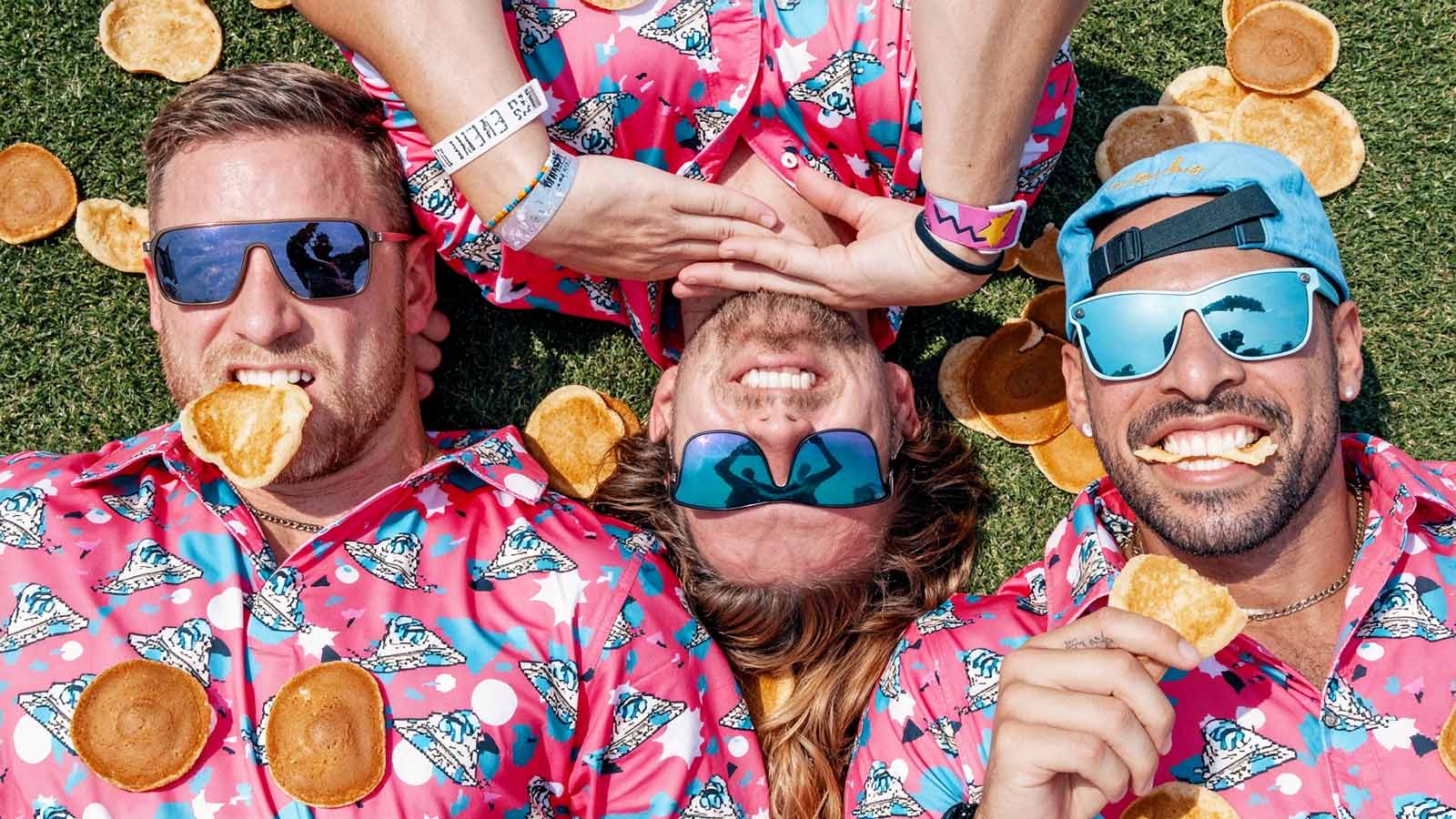
Official homepage: https://www.chubbies.com
Chubbies began as a uniform. In the late 2000s, four Stanford friends — Kyle Hency, Rainer Castillo, Preston Rutherford, and Tom Montgomery — wore the retro short-shorts they found in thrift stores and inherited from their fathers, and discovered the garment's strange social physics: if you had a really cool pair of shorts, people would talk about it. In 2011 they quit their jobs, sewed twenty pairs, and took them to a Fourth of July party at Lake Tahoe — where they sold every pair on the beach and learned the brand's central truth: the shorts were polarizing, and polarization is marketing. Fourteen years later, Chubbies owns a moment — Friday at 5 — manufactures in nineteen California factories from Georgia cotton, and does a million dollars in a single summer day. This review examines the storefront dimension by dimension: the beach test, the fraternity distribution machine, the absurdity engine, and the honest arithmetic of a brand built on bro humor.
Four Stanford grads and a thrift-store uniform
The founding wardrobe was inherited, not designed. Through college, the four friends wore retro short-shorts found in thrift stores and handed down from dads and uncles — the kind of garment that carried, in the founders' own analysis, a specific social charge: if you had a really cool pair of shorts, people would talk about it. The post-graduation years took the four in different directions — traditional finance, the startup world, corporate retail — but the shared frustration grew: there was no modern version of the shorts they loved, and the boardshort industry's uniform was a knee-length synthetic sack. In 2011, in Montgomery's phrase, they all had the mindset of wanting to run something themselves and wanting to do something that was a little more meaningful and a little more fun.
The product thesis that emerged was unglamorous and precise: the original Chubbies — named, as the founders explain, for the elastic waistband — were a throwback to the kind of bottoms and swim trunks your father wore while having a drink or grilling on the beach, a fit that recalled the seventies without the polyester, in cotton grown and sewn in America. The September 2011 website launched out of Castillo's apartment, where he was working his day job at Levi's, and sold out immediately.
The Fourth of July beach test
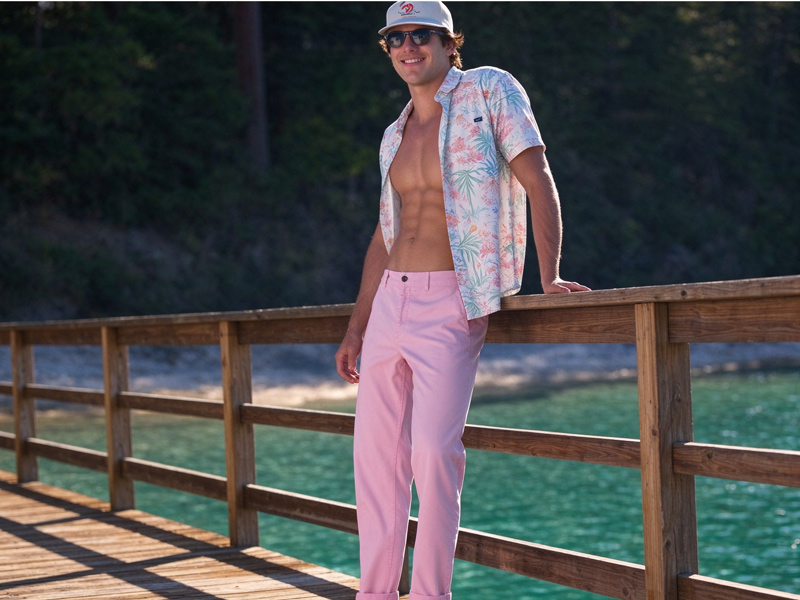
The market validation happened in one afternoon, on a beach, with twenty friends. The founders made a few pairs of shorts and brought them to an annual Fourth of July celebration at Lake Tahoe, where twenty friends in red, white, and blue hit the sand. The reaction range, preserved in Montgomery's retelling, is the brand's founding text: from good lord, those shorts are the greatest things I've ever seen, to get off of my beach, men's legs belong under layers of fabric. The founders sold every pair they had brought, right there on the beach, and went home understanding two things at once: the product had fantastic resonance, and the polarization was the resonance. The shorts struck the same emotional chord with other people that it struck with the founders — it reminded us of our dads; it reminded us of the weekend.
The launch that followed kept the same scrappy texture: a couple hundred more pairs, a website in September, and an immediate sellout — complete strangers purchasing without being told, the founders' earliest evidence of the talkable, shareable notion the brand would organize around.
Fraternity presidents as a distribution channel
The growth engine was invented in a dormitory network. In the first winter, with the launch season ending, the founders emailed fraternity presidents and heads of social groups on college campuses to seed the spring — and the presidents' replies, in Montgomery's delighted retelling, invariably ran: hey, I know a guy who's interested, and it happens to be me. The ambassador program that grew from those emails plucked more than a hundred college guys who spread the word on campuses nationwide, generating, by the Digiday accounting of the era, nearly a hundred and fifty pieces of user-generated content a day — a free media machine built on the observation that a pair of shorts is just a pair of shorts until all your college friends are wearing them.
The early social campaigns monetized the same observation with stunts like the Choose Your Koozie giveaway — free beer koozies for Facebook likes and newsletter signups, at less than the going rate of a like — which grew the page from twenty thousand to fifty thousand likes in two weeks. The lesson the founders drew is the brand's media doctrine: bridge the digital and the real, empower people to share offline, then bring them back online.
Owning the Friday at 5 moment
The brand's deepest asset is a time of day. We're constantly building this brand around the weekend and the feeling you get around Friday at 5 p.m., Montgomery has said — when a guy throws them on, the stress and rigors of the work week can be put on hold for a bit. Owning that moment is a marketing claim competitors cannot contest without sounding desperate, and it compounds: the Fourth of Julyber Monday — a summer Cyber Monday the brand invented — has crossed a million dollars in a single day, and the Union Street store in San Francisco sees customers flying in Thursday and Friday for weekend trips, the retail staff watching men buy shorts on the way to the airport. The few brands going after the Friday at 5 mindshare — Vineyard Vines is the name the press always supplies — are preppy cousins rather than rivals; the moment is, for practical purposes, Chubbies'.
The brand's steady growth curve since launch, in Montgomery's phrase, has never depended on a single channel: the community — a couple million people across social and email by the mid-2010s — carries the calendar: spring break, July 4th, lake season, homecoming.
Georgia cotton and nineteen California factories
The manufacturing chapter is the one the founders are most serious about, and the least expected from a shorts joke brand. From day one, the company's cotton is grown in Georgia, and the shorts are cut, sewn, and dyed across nineteen factories in California — a deliberately domestic supply chain the founders frame as founding mission rather than marketing: from day one, a conversation for us was, what can we do that's good with this company, and one of the big things was saying, we can create American jobs here in America. The shorts carry price tags between roughly fifty and sixty dollars — a premium over the mall's forty-dollar boardshort that the domestic supply chain, the elastic-waist construction, and the made-in-America label together justify.
The military thread runs through the file: the founders describe the military as a big component and supportive from day one, with patriotic Americans-flag shorts among the catalog's permanent fixtures and customer photos arriving from Texas, Minnesota, Kentucky, and Colorado — and from service members abroad.
The absurdity engine: puffer shorts and tear-aways
The product development doctrine is engineered nonsense, executed seriously. When a tear-away basketball pant from childhood proved memorable, the team made a tear-away short that rips away to reveal a Speedo underneath. The outerwear program extended the joke to its logical extreme: a rain-jacket short, a puffer short, a sherpa short — items Castillo describes as outrageous, but our customer knows they're going to find them nowhere else. The Nutter Hawaiian shirt and the expanding shirt line carry the same register: nostalgic silhouettes, stretch fabrics, patterns that behave at a barbecue. The innovation brief, in the merchandising chief's formulation, is to take items of clothing people are familiar with and turn them into shorts.
The discipline underneath the absurdity is real: the riffs are nostalgic rather than random, the fabrics get technical (four-way stretch, quick-dry), and the brand's review wall — more than eleven thousand collected reviews by the platform's case-study count — confirms the customer's read: the joke lands because the garment works.
Karate lessons, and eleven thousand reviews
The service chapter produced the brand's most retold story. A high-school customer wrote to say his Chubbies had been stolen from his school locker by bullies; the team sent him karate lessons. Hency's summary — we do a lot of those types of things to go above and beyond for our guys — is the customer-service doctrine in one anecdote, and it rhymes with the founders' guiding light, quoted in the platform case study: getting feedback from our customers. As marketers, we could talk about how stretchy our shirts are, or how comfortable our shorts are, but those are just words until you get validation from your customers — eleven thousand-plus reviews later, the validation is the marketing.
For the storefront reviewer, the service legend and the review wall perform the same function as the certification files of this category's more serious brands: they convert claims into social proof, one karate lesson and one five-star review at a time.
The honest texture of a frat ceiling
Four honest cautions belong in the ledger. First, the frat ceiling: a brand built on bro humor and campus ambassadors ages with its customer — the sophomore who bought Americans shorts in 2012 is a father of two in 2026, and while the Friday at 5 register transcends the dorm room, the humor's edge dulls as the audience matures; the brand's longevity depends on whether the moment, not the joke, is what customers keep buying. Second, polarization as a strategy cuts both ways: the beach reactions that built the brand — from the greatest things I've ever seen to men's legs belong under layers of fabric — are a permanent ceiling on the addressable market, by design. Third, seasonality: shorts are a five-month product in most of America, and the year-round program — the Nutter shirts, the puffer shorts — is the arithmetic answer to a calendar the brand cannot edit. Fourth, competition and price: the fifty-to-sixty-dollar American-made short sits above Old Navy and below boutique, in a category where the mall giants copy silhouettes within a season; the supply chain patriotism defends the premium, but only if the customer cares.
None of these are contradictions; all four are the taxes on building a brand out of a feeling — the feeling of Friday at 5 — and refusing to apologize for it.
The verdict for the guy who owns Friday
Chubbies' storefront is the beach-test thesis run for fourteen years: four Stanford friends who wore their fathers' shorts, twenty pairs on a Fourth of July beach, a fraternity president network that volunteered itself, a made-in-America supply chain nobody asked for and the founders built anyway, an absurdity engine that turns nostalgia into puffer shorts, a service team that answers locker-room theft with karate lessons, and a brand that owns a time of day the way Disney owns a castle. The cons are the cons of the register: the frat ceiling, the polarization, the seasonality, and a premium the mall undercuts annually.
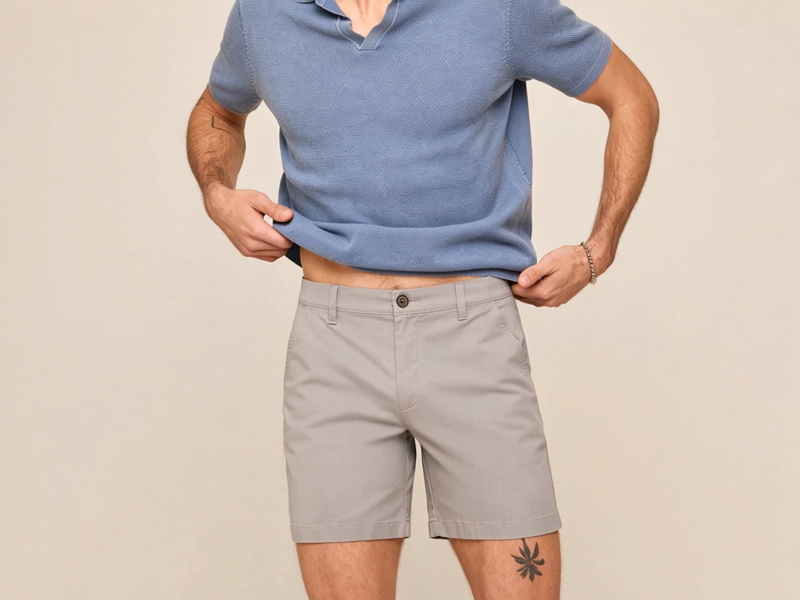
Buy here if your weekend starts Thursday at five and your shorts should say so, if an elastic waistband and a five-and-a-half-inch inseam feel like a manifesto, if made-in-America cotton sewn in California justifies the price of admission, and if a brand that answered a bullied customer's stolen shorts with karate lessons matches your idea of who deserves your money. Buy the mall's forty-dollar boardshort if the joke is not worth the premium. For the guy who owns Friday at 5, this San Francisco storefront remains the category's most relaxed bet — fourteen years, one beach, and the legs are still out.