Jackery at fourteen: the solar generator that went from campsite to IPO
Official homepage: https://www.jackery.com
Jackery's own About page says the company was founded in California in 2012. Its parent company's Shenzhen stock-exchange prospectus tells a different story: the parent was founded in Shenzhen in 2011, and the Jackery brand was acquired into it in stages between 2016 and 2018 from shareholders who were also the parent's actual controllers. Both stories are true, and the tension between them is this review's most instructive finding — because the brand beneath the mythology is real: the first lithium portable power station in the world in 2016, the first portable solar panels in 2018, a Solar Generator category it created and still defines, two million units sold by 2022, eight million users by 2026, and an initial public offering that made its parent the first portable-energy stock in China. This review examines the storefront dimension by dimension: the two birth certificates, the category creation, the audited numbers, and the honest arithmetic of buying power by the kilowatt-hour.
A brand with two birth certificates
The mythology is printed where customers look. The Jackery About page states the company was founded in Silicon Valley in 2012 with a vision to offer green energy to everyone, everywhere — a clean California origin that matches the brand's adventurous imagery. The corporate record, filed with Chinese securities regulators ahead of the parent's 2022 listing, is more complicated: the parent company was registered in Shenzhen in July 2011 by two founders with half a million yuan of capital, spent its early years as an anonymous power-bank ODM, acquired the domestic Chinese brand in December 2015 for ten million yuan, and then acquired the Jackery United States and Cayman entities in June 2016 — with the seller of record being one of the parent's own actual controllers — before completing full ownership of the money-losing American unit for a nominal one dollar in 2018.
The reviewer's point is not accusation but calibration: Jackery is a Shenzhen manufacturer-to-consumer company wearing a California brand, a structure common in the category and legal in every respect — the prospectus describes it plainly, which is more than most brand mythologies allow. The customer who knows which story they are buying can evaluate the warranty, the patents, and the scale on the real facts.
From anonymous power banks to a category
The parent's early business was the least glamorous rung of the electronics ladder: designing and manufacturing power banks for other people's brands — international ODM work with no consumer identity at all. The pivot came in 2015, when the company concluded that portable energy storage — a battery big enough to run a laptop, a drone, or a camping refrigerator, small enough to carry — was the higher-value category its engineering could reach. The company calls the resulting model M2C, manufacturer-to-consumer: research, production, brand, retail, and service under one roof, selling through its own storefronts and the major marketplaces directly rather than through distributors.
The timing was fortuitous in two directions at once: lithium cells were falling in price fast enough to make kilowatt-hours portable, and the outdoor-lifestyle boom was creating a customer who needed wall-outlet power miles from any wall. The ODM years supplied the discipline — the company's filings cite power-management electronics as its cumulative technical moat — and the brand years supplied the margin.
Two world firsts, and a category created
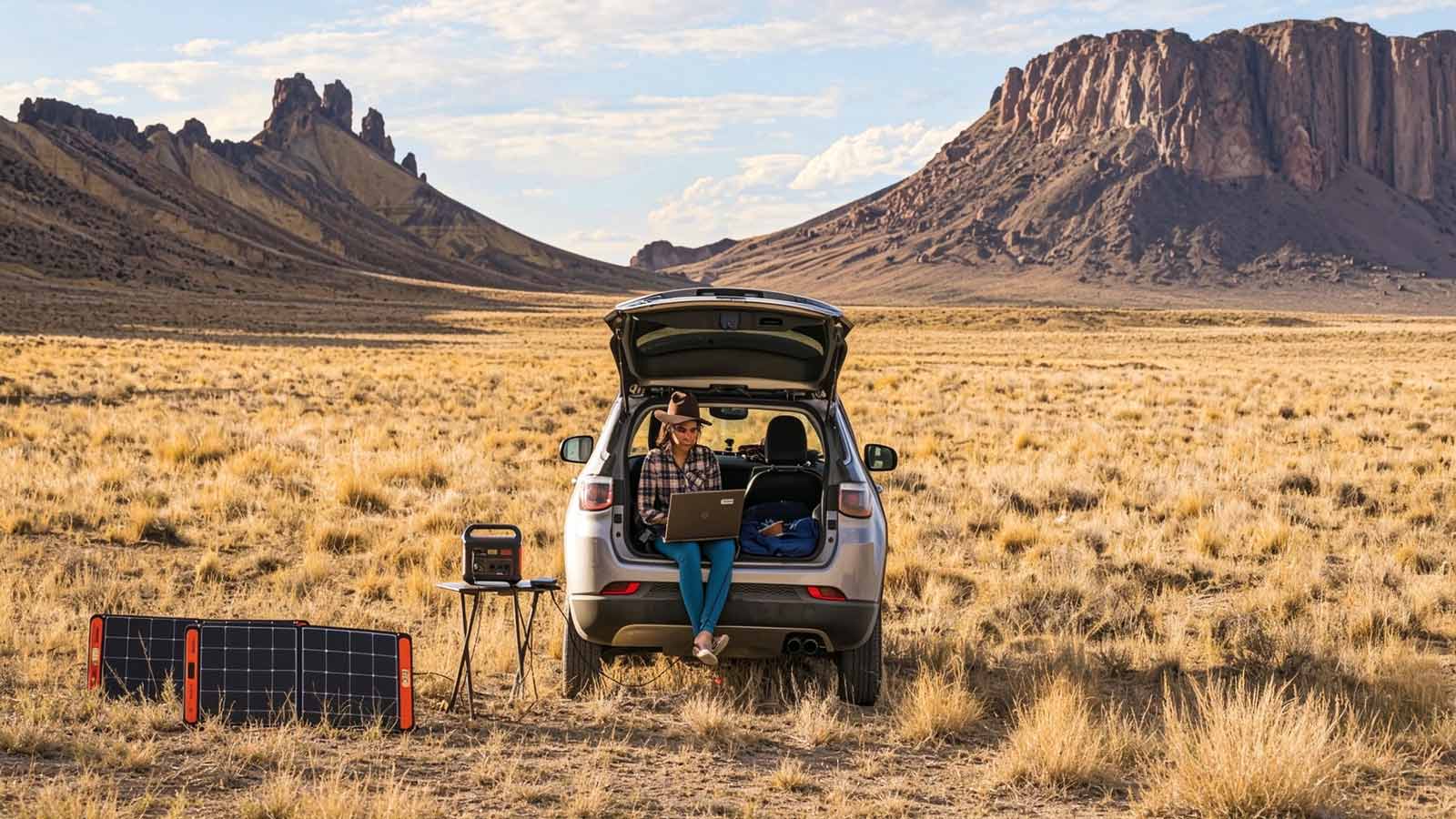
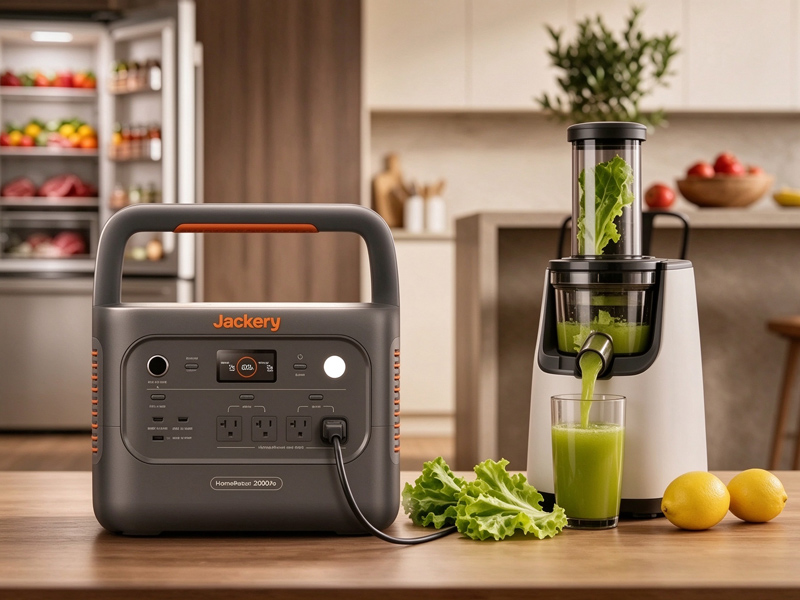
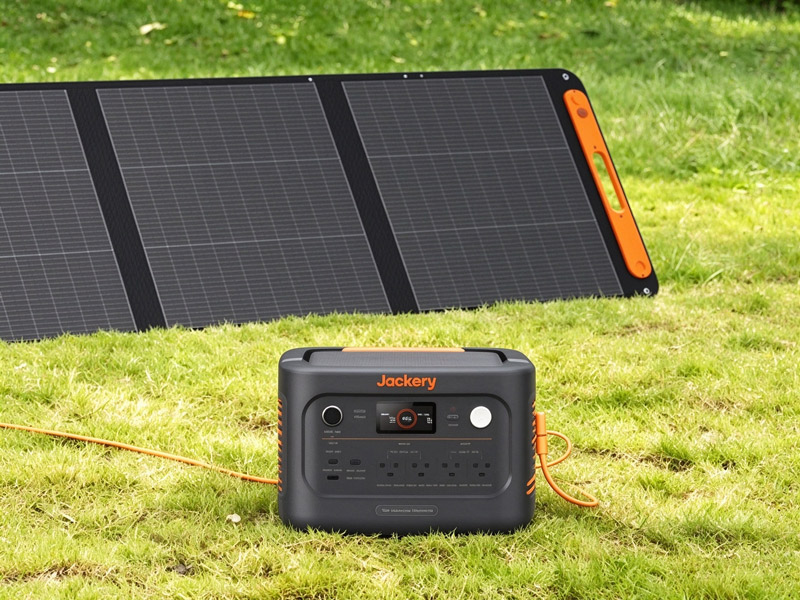
The product history is a sequence of claims no competitor has contested. In 2016, Jackery launched the Explorer series — billed in the company's own timeline as the world's first lithium portable power station, battery and inverter integrated into a carried unit with AC, USB, and car outputs. In 2018 it followed with the SolarSaga series, the world's first portable solar panels designed to mate with the stations — and in pairing them, Jackery coined the category name that reorganized the market: the Solar Generator, a phrase that now describes an entire shelf at every outdoor retailer. The awards compounded along the way — Red Dot and iF design honors beginning in 2016, CES innovation awards from 2018 — and by 2020 the brand was the top-selling outdoor power name in both the United States and Japan, the latter endorsement extending to the Japan Disaster Prevention Association's recommendation.
The category creation matters beyond marketing: before the Explorer, portable power meant gasoline generators or car batteries; the Solar Generator reframed the product as consumer electronics — quiet, fumeless, solar-fed — and the entire competitive field, EcoFlow, Bluetti, Anker's Solix line, organized itself against Jackery's vocabulary.
The Explorer ladder and SolarSaga panels
The catalog architecture is the category's reference. The Explorer ladder runs from pocketable 240-watt-hour units through the 500, 1000, 1500, and 2000 Pro flagships to the 3000 Pro — capacities spanning phone-charging to refrigerator-running, with outputs from a hundred watts to two thousand two hundred. The SolarSaga panels scale in parallel — 60, 100, and 200-watt units that chain together, including an 80-watt model that became the world's first photovoltaic product to earn TÜV SÜD's certification. The integration is the selling point: a Solar Generator kit arrives as one purchase, station and panels matched, cables included, the pairing pre-engineered rather than improvised — the anti-DIY convenience that justified the premium over assembling the parts separately.
The third-party safety architecture supports the promise: UN 38.3 transport testing on every lithium pack, international certification regimes documented in the parent's filings, and a disaster-endorsement in Japan where the association's recommendation carries real weight with a population that plans for earthquakes by habit.
Going public, with audited numbers attached
The 2022 listing converted a brand story into a financial one. The parent listed on Shenzhen's ChiNext board on September 19, 2022 — ticker 301327 — as what the Chinese financial press called the first portable-energy stock, raising capital for capacity expansion, research centers, and brand infrastructure. The audited history behind the prospectus explains why investors bought: portable-storage revenue growth of 290 percent in 2019 and 257 percent in 2020, a trajectory that took cumulative global sales past two million units by 2022.
The 2026 ledger, from the parent's own materials, extends the scale: more than eight million cumulative users across fifty-plus countries, over ten thousand retail storefronts worldwide — Home Depot, Costco, Target, Best Buy, Walmart, and Japan's Bic Camera among them — more than sixty branded web storefronts, a patent portfolio counted at 3,143 filings, and a green-energy arithmetic the company publishes against its own sales: 292 megawatts of cumulative installed solar, 1.88 billion kilowatt-hours of generation, and 1.88 million tons of carbon avoided, framed as the equivalent of planting 1.28 million trees.
From campsite to rooftop, via COP29
The mid-2020s chapter points the brand at a different roofline. Having defined portable power, the parent announced the ambition to define whole-scene home green energy: balcony and courtyard solar systems, an XBC curved solar roof tile the company claims as a global first with certification from TÜV and SGS, and a Solar Gazebo concept that took three iF design awards in 2025. The company has presented at the United Nations climate conference for two consecutive years and collected Hong Kong Quality Assurance Bureau carbon-neutral management honors — the sustainability stagecraft of a company that intends to graduate from campsite accessory to household utility.
For the storefront reviewer, the home-energy pivot is the strategic tell in both directions: it extends the Solar Generator logic — matched, pre-engineered, branded power — into the largest consumer energy purchase there is, and it drags the brand into competition with rooftop installers and utility programs, a field where the campsite-halo marketing meets building-code reality.
The honest texture of a brand myth
Four honest cautions belong in the ledger. First, the two birth certificates: the California founding story on the About page and the Shenzhen acquisition structure in the prospectus are both printed by the same corporate family, and the customer deserves to know the warranty, the engineering, and the support all answer to a Shenzhen-listed parent — which is neither scandal nor secret, but it is not the campfire story. Second, the category now has teeth: EcoFlow and Bluetti ship comparable chemistry with aggressive pricing and faster charge architectures, and the world's-first claims, while historically accurate, buy nothing against this year's specification sheet. Third, the capacity math punishes optimism: a 1,000-watt-hour station runs a refrigerator for a day, not a week, and the marketing's grid-down comfort requires arithmetic the product page will not do for you. Fourth, the home-energy sprawl risks diluting the very clarity that built the brand — solar tiles and gazebos and balcony systems are different businesses with different failure modes than a power station, and a public company under quarterly discipline has incentives to fill every shelf.
None of these are contradictions; all four are the taxes on inventing a category and then having to defend it annually.
The verdict for the outage-prepared camper
Jackery's storefront is the category-creation thesis run for fourteen years: a power-bank factory that bought a California brand and earned it, the first lithium power station and the first portable solar panels, a vocabulary — Solar Generator — that the competition now speaks, two million units by the IPO and eight million users after, ten thousand storefronts, a three-thousand-patent wall, and a rooftop pivot announced under stock-exchange discipline. The cons are the cons of the incumbent: a mythology that outruns the prospectus, a competitive field that caught up, capacity arithmetic that requires homework, and a home-energy sprawl that tests the brand's focus.
Buy here if your camping trips or outage plans need quiet wall-outlet power with a matched solar panel in one box, if the category inventor's warranty network and retail ubiquity beat this year's spec-sheet challenger, if the Japan disaster-association endorsement reads as the certification it is, and if a Shenzhen-listed parent's audited filings are your language of trust. Buy the challengers if charging speed or price-per-watt-hour rules your spreadsheet. For the outage-prepared camper who wants power that arrives pre-engineered, this Silicon-Valley-branded, Shenzhen-built storefront remains the category's founding answer — first to the campsite, first to the exchange, and still selling sunlight by the watt.