Elegoo at eleven: the $250 printer that democratized an industry
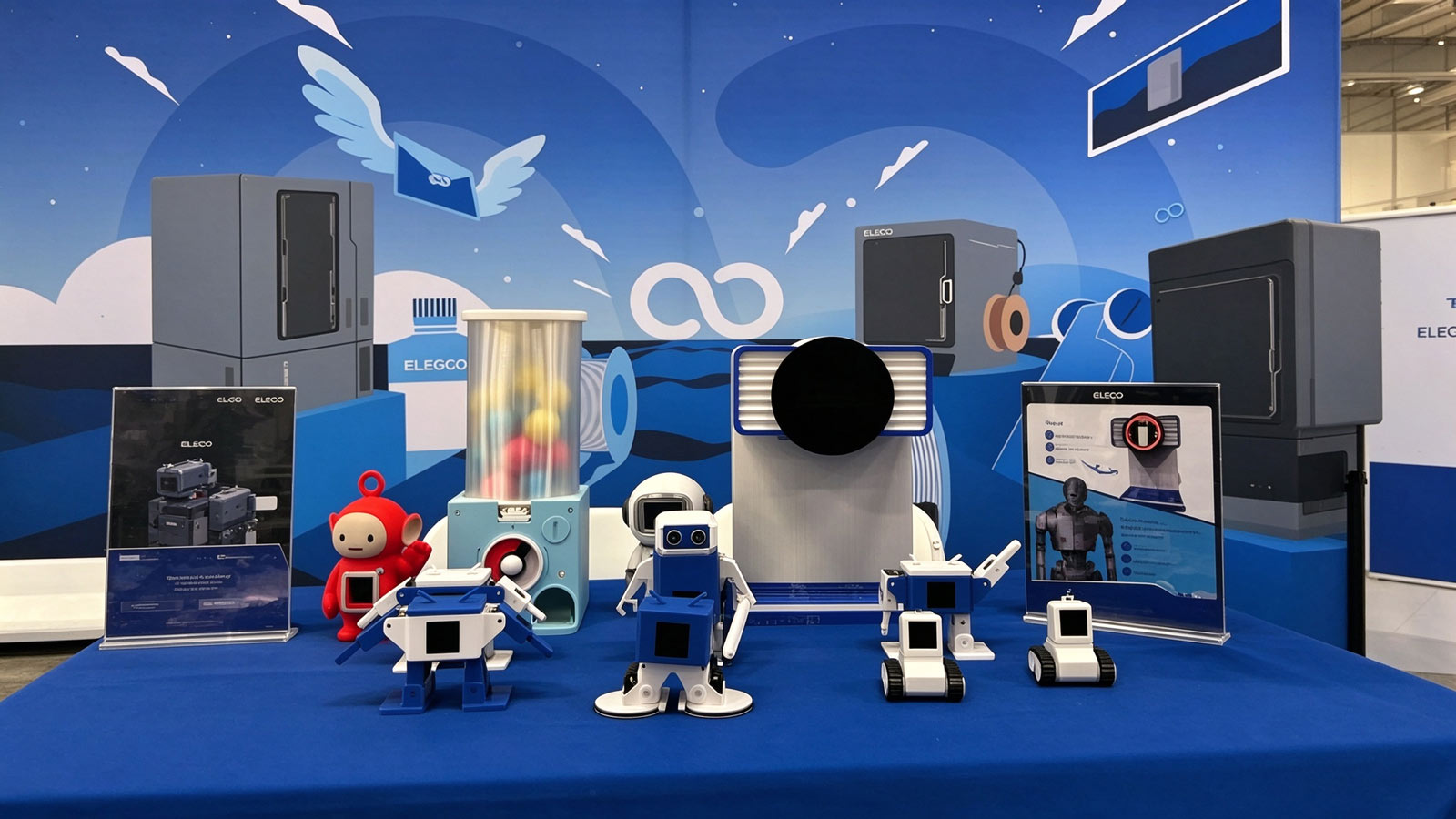
Official homepage: https://www.elegoo.com
Elegoo's name is a promise about infinity: electronic plus googol, the number one followed by a hundred zeros, chosen to symbolize the infinite possibilities the founders saw in putting creative tools in everyone's hands. The company began in Shenzhen in 2015 selling Arduino education kits — by 2018 it was Amazon's bestselling Arduino brand — before making two pivots that reshaped an industry. The first brought high-resolution resin 3D printing down from four thousand dollars to two hundred and seventy. The second carried the same price disruption into conventional filament printing, where the company's Centauri Carbon now wins design awards at three hundred dollars. Eleven years in, Elegoo ships more LCD resin printers than anyone on earth, shares roughly ninety percent of the global entry-level market with three rivals, and closed a five-hundred-million-yuan funding round in 2026 backed by Meituan and DJI. This review examines the storefront dimension by dimension: the two pivots, the funding constellation, the oligopoly, and the honest arithmetic of a democratizer racing its own obsolescence.
A name from a googol
The founding details are a study in Shenzhen arithmetic. Chris Hong — an engineer who still leads the company as chief executive — registered Elegoo in 2015 in the city the industry calls China's Silicon Valley, choosing the name as a portmanteau of electronic and googol, the ten-to-the-hundredth that stands for the infinite models a maker might print. The first products were not printers at all: they were STEM education kits — Arduino-compatible electronics, sensors, motors, robotics components — sold to students, educators, and the veteran-geek end of the maker community.
The kits business taught the company its enduring strengths: how to document products for self-taught users, how to price for classrooms and hobbyists simultaneously, and how to let a global community teach itself through forums and shared projects. By 2018, Elegoo was the top-selling Arduino kit brand on Amazon — a credential that sounds modest until you notice it means the company had already learned, before it ever shipped a printer, how to own the beginner's first purchase in a technical category.
The Arduino years, and the Amazon crown
The kit years also produced the insight that redirected the company. In conversation with its users, Elegoo noticed the overlap between the STEM community and an adjacent one forming around desktop fabrication: the same makers, educators, and creators were circling 3D printers, but the machines on offer were either expensive, complicated, or both. The interview the co-founders gave on the company's tenth anniversary names this the first of three great turning points — the observation that STEM and 3D printing attracted the same global audience, and that the audience was being priced out of the better technology.
The strategic reading mattered more than the observation: resin printing — the masked-stereolithography kind that cures photopolymer layer by layer through an LCD, producing the jewel-like detail miniature painters and jewelers need — was dominated by machines like Formlabs' Form 2 at roughly three thousand five hundred euros. Elegoo concluded the manufacturing cost of a capable MSLA printer had fallen far below its market price, and that a company with Shenzhen's supply chain could close the gap.
Pivot one: the 270-euro resin revolution
The Mars series, launched in 2018-19 at around two hundred and seventy euros — thirteen times cheaper than the category's reference machine — became the cheapest credible path into high-resolution resin printing the hobby had ever seen. The market's response established the pattern that still defines the brand: the first Saturn, arriving in 2020, sold three thousand units in three minutes of pre-sale. By the company's accounting, Elegoo now ships more LCD resin printers than any manufacturer in the world, and the Mars line has run through six generations — from the original through the 2, 2 Pro, 3, 4, 5, and 5 Ultra — each refining the formula of cheap, reliable, high-resolution printing for miniatures, dental models, and jewelry casting.
The community scaffolding carried the democratization: thousands of tutorials, firmware mods, and troubleshooting threads on Reddit, Thingiverse, and YouTube, many produced by users rather than the company — the same self-teaching ecosystem the Arduino years had seeded. When reviewers describe Elegoo as the beginner's default, they are describing a support infrastructure as much as a product line.
Pivot two: FDM, Neptune, and the Centauri Carbon
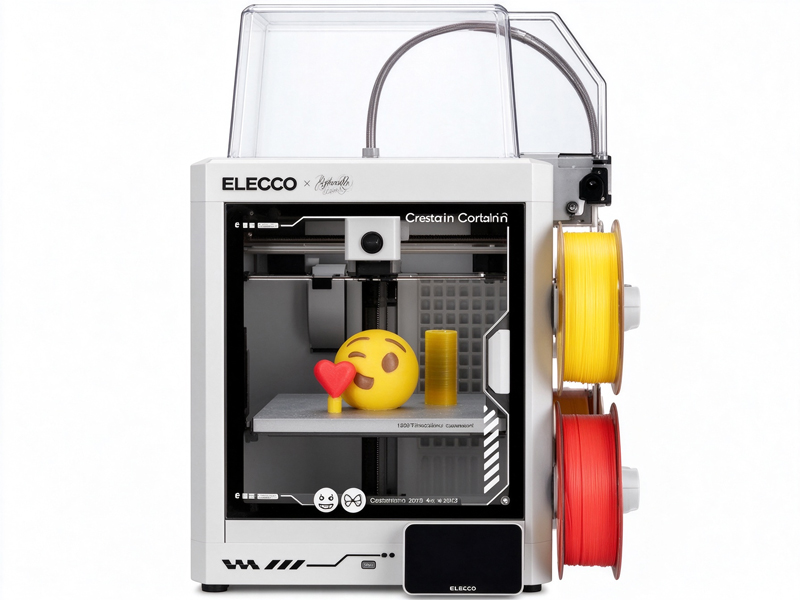
The second pivot addressed resin's ceiling. Resin printing demands ventilation, post-processing, and chemical handling — friction that keeps it from the everyday home use cases where filament printing, laying down molten plastic layer by layer, is simply more livable. The Neptune series, launched in 2022, applied the Mars formula to FDM: reliability and value, starting with the Neptune 3 generation, which reviewers credit with mainstream-ready dependability at budget prices. The line scaled through the 4 and 4 Plus, and the 2025 Centauri Carbon closed the loop on ambition: a fully enclosed CoreXY machine printing at five hundred millimeters per second out of the box, with multicolor capability, winning an iF Design Award 2025 at roughly three hundred dollars — consumer-grade performance at a price that would have been impossible five years earlier.
The press materials frame the Centauri Carbon as a milestone rather than a model — the moment Elegoo's FDM lineup matched its resin reputation. The Jupiter line, meanwhile, holds the large-format frontier, with the 2026 Jupiter 2 pushing a fourteen-inch sixteen-K LCD toward dental labs and professional studios that started as hobbyists on a Mars.
Meituan, DJI, and the five-hundred-million-yuan round
The capital constellation assembled in 2026 tells its own story. Elegoo closed a Series B-plus round exceeding five hundred million yuan — roughly seventy million dollars — led by Meituan, the Chinese delivery-and-technology giant, with DJI, the drone manufacturer, among the investors. The strategic logic documented by the trade press is straightforward: Meituan brings consumer-scale distribution thinking, DJI brings precision manufacturing and supply-chain discipline, and both bring the capital for a global-leader campaign. Chief executive Chris Hong used the company's 2025 annual meeting to state the ambition plainly: to become the global leader in consumer 3D printing.
The revenue base justifies the ambition's scale: company statements put 2023 and 2024 revenue above two hundred million dollars, with roughly seven hundred employees across some thirty thousand square meters of offices and manufacturing, selling into more than ninety countries. The round's structure — strategic Chinese tech giants rather than western venture funds — also concentrates the company's governance and supply chain inside the same ecosystem, a fact with consequences for the geopolitical ledger below.
The four-company oligopoly, and the resin crown
The market structure has crystallized around four names. Elegoo, Bambu Lab, Creality, and Anycubic together control roughly ninety percent of the global entry-level market, per the industry's tracking — an oligopoly of Shenzhen-adjacent manufacturers whose competition is the hobby's engine and whose price wars define the category's economics. Within the quartet, the positions have sorted: Bambu owns the premium-polish and ecosystem-experience conversation, Creality owns the deepest legacy community, Anycubic trades as Elegoo's most direct value rival — and Elegoo holds the resin crown, the volume shipments, and the beginner's first purchase. The fourth line of competition, software and slicers, runs through open source: Orca Slicer, the community-built tool most serious users prefer, lists Elegoo machines prominently in its compatibility tables.
For the storefront reviewer, the oligopoly is the context every purchase decision sits inside: the machine you buy today is one of four ecosystems, and the price you pay is set by the other three.
The honest texture of rapid obsolescence
Four honest cautions belong in the ledger. First, obsolescence speed: six Mars generations in as many years means a printer bought at launch is a legacy model by the time its warranty matures — the democratization that lowered the entry price also lowered every machine's resale value, and the used market prices tell the story. Second, the resin ceiling: odor, post-processing, and chemical handling keep resin printing a hobby-with-a-workflow rather than an appliance, and the company's own pivot toward FDM acknowledges the limit — buyers should choose the technology for their tolerance, not the brand. Third, the China concentration: Shenzhen headquarters, Shenzhen manufacturing, and strategic investors from the Chinese tech ecosystem concentrate the supply chain and governance in one geopolitical basket, whatever the quality of the engineering. Fourth, support variance: the European warehouse and WhatsApp-based support earn genuine praise in the review record, but global coverage varies by region, and the budget-tier service expectations that make a $250 printer possible are also the service you receive when something goes wrong a year in.
None of these are contradictions; all four are the taxes on democratizing a technology on Shenzhen's terms.
The verdict for the miniature painter
Elegoo's storefront is the two-pivot thesis run for eleven years: an Arduino kit seller that noticed makers and printers were the same customers, built the two-hundred-seventy-euro resin machine that broke the industry's pricing, watched three thousand Saturns vanish in three minutes, pivoted to filament when resin's friction became visible, shipped a design-awarded CoreXY flagship at three hundred dollars, and closed a Meituan-and-DJI round on the way to declaring itself the world's consumer-printing leader. The cons are the cons of the democratizer: generational obsolescence, resin's workflow ceiling, China concentration, and support that varies with your continent.
Buy here if your tabletop shelf needs twenty miniatures with faces visible from across the table and your budget is a Mars, not a Formlabs; if the cheapest credible machine beats the most polished expensive one for a first printer; if open firmware and a ten-thousand-thread community are your technical-support model; and if a company that pivoted twice on user observation rather than analyst decks matches your idea of attention. Buy Bambu if ecosystem polish and out-of-box serenity rule, or Prusa if open-source provenance is a creed. For the miniature painter who wants gallery-detail plastic on a hobbyist's budget, this Shenzhen storefront remains the category's most democratizing answer — a googol of possibilities, priced at two hundred and fifty dollars, and still falling.