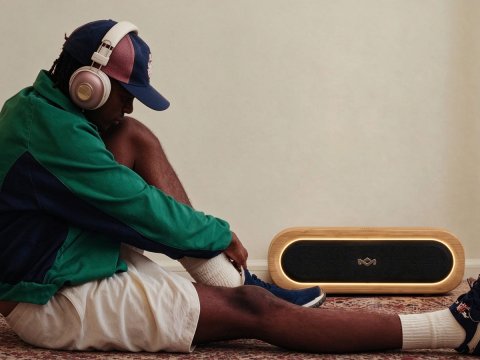
The artist who wanted headphones that felt like his guitar, and built them from walnut

Official homepage: https://mezeaudio.com
Antonio Meze was an artist first, a businessman never, and an industrial designer by training — and the company he named after himself began, in his own telling, as a game of make-believe that got out of hand. In 2009, traveling constantly between design agencies in Los Angeles, New York, Amsterdam, Prague, Bangkok, and London, he went looking for a pair of headphones he could relate to the way he related to his Fender Stratocaster, and found nothing on the market with an instrument's soul. So he hand-carved wooden ear cups in a Romanian garage, spent three years learning headphone engineering from scratch, and in 2015 launched the 99 Classics on Indiegogo — a walnut-and-steel headphone whose cups take forty-five days to finish and whose assembly uses no glue at all. The experiment detonated. A decade later, Meze Audio sells reference-class planar flagships co-engineered with a Ukrainian driver legend, still operates from the Carpathian mining town of Baia Mare, still employs a boutique team, and still follows one rule: do it once, do it right. This review examines the storefront dimension by dimension: the garage, the walnut, the bet, and the honest arithmetic of craft at boutique scale.
A Stratocaster as the sound benchmark
The founder's self-description is the brand's compass: I happen to specialize in industrial design, but in terms of my approach and the way I think, I would say I am more of an artist than a designer. Antonio Meze came up through art middle school and art university in Romania, then spent 2005 to 2013 working design agencies across six world cities — Los Angeles, New York, Amsterdam, Prague, Bangkok, London — the itinerant life of a young industrial designer for hire. The catalyzing dissatisfaction was auditory and emotional at once: on the road constantly, he wanted headphones that connected him to music the way his Fender Stratocaster did — an object with personality, life, and a story of its own — and the market offered him anonymous plastic appliances.
The first experiments, beginning around 2009, took the road less traveled literally: while every competitor built from polymers, Meze carved prototype earcup housings from wood, sourcing parts from different suppliers and tweaking without any actual knowledge of headphone design, as he later admitted. The material choice was instinct before it was acoustics — and it became the brand's identity before it had a product worth selling.
Three years in the garage
The company's own history calls the first three years garage conditions, and the founder confirms it: it was definitely garage based, for the first three years — mostly exploring out of fun and curiosity, getting parts and pieces from different suppliers, tweaking and playing without any actual knowledge. The experimental platforms were numbered like a workshop log: the 55 Classics, 66 Classics, 73 Classics, and 88 Classics — the numbers referring to the diameter of their wooden ear cups — short production runs that let the team teach itself acoustics and ergonomics one prototype at a time. In 2011 the project formalized as Meze Headphones, later Meze Audio, in Antonio's hometown of Baia Mare — a picturesque Carpathian mining city in northwest Romania, gold and silver country since the Middle Ages, home to a famous artists' colony around the turn of the twentieth century.
The partnership that completed the team arrived early: Mircea Fănățan joined as managing director and took charge of everything sound related, and the two settled into a product first, business second doctrine — Antonio brings the obsession with form and detail, Mircea the discipline, and every decision is made together. The founder's own assessment of the arrangement is characteristically self-aware: I am trained as an artist, not a businessman, so my lack of focus and extreme obsession with certain details would have probably messed it up.
Forty-five days of walnut, no glue
The 99 Classics, launched on Indiegogo in 2015, were the first headphones Meze developed entirely from the ground up — and the manufacturing process remains the brand's signature argument. The walnut is seasoned for eighteen months, then each pair of cups takes eight hours of shaping between hand and CNC work, then forty-five days of sanding, lacquering, additional seasoning, and polishing before assembly. The wood is harvested from mature trees that have reached the end of their life cycle, certified by origin. The assembly itself is the quietest rebellion in the catalog: nuts and bolts, no glue — making the 99 Classics one hundred percent user-serviceable, every piece replaceable by the owner with a small tool. The self-adjusting headband and 260-gram weight complete a comfort story that reviewers repeatedly call exceptional for a wooden headphone.
The launch exceeded every expectation. The 99 Classics were an experiment for us, and we never imagined that they would receive so much recognition in such a short time, Antonio later said — and the recognition compounded: the A' Design Award Golden winner, the VGP lifestyle honors, InnerFidelity's Wall of Fame, What Hi-Fi's delectation at £269. The company went from semi-garage startup to recognizable manufacturer almost overnight, and the Indiegogo money financed everything that followed.
The Ukrainian bet that could have burned everything
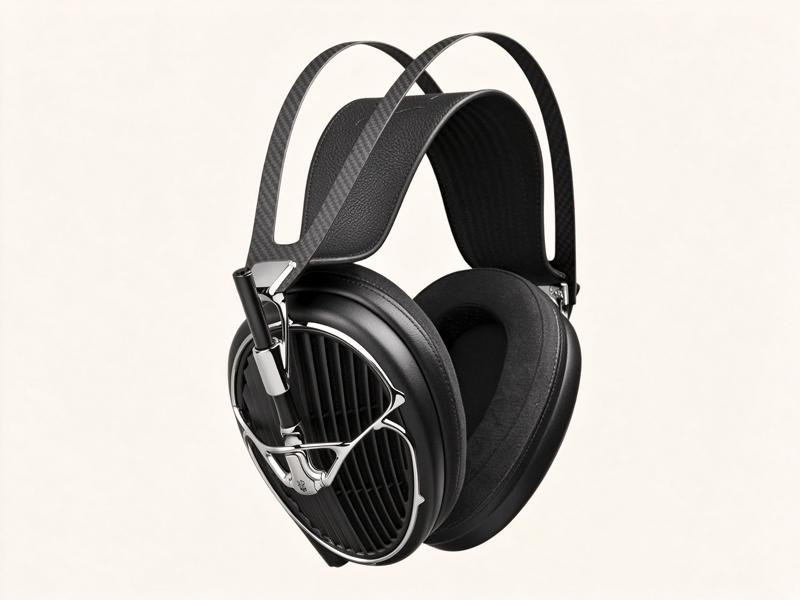
The jump from artisan dynamics to the planar flagship was a bet the founder describes in fire terms. Meze met Rinaro Isodynamics — a Ukrainian firm quietly developing planar magnetic technology since the 1980s — at a tradeshow, and Rinaro's not-yet-demonstrated technology seemed to be the thing we needed to make a hyper headphone. Antonio has said he jumped at it knowing very well that the risk was so high and would have burned us to the ground if it didn't work out well. The multiyear co-development produced the Isodynamic Hybrid Array — the world's first planar magnetic transducer with a dual, hybrid voice-coil configuration, different coil geometries optimizing low and high frequencies separately — and the Empyrean, launched in 2018 at $2,999.
Gear Patrol's verdict on launch was that the Empyrean sent shock waves through the hi-fi industry — among the most expensive headphones on the market, demand exceeded expectations, and reviewers praised a planar that finally solved the category's weight and ergonomic compromises while delivering the natural, coherent, rich sound that became the Meze house signature. The same driver architecture powered the Elite and the Liric in 2021 — the latter the first closed-back hybrid-array planar, reengineered for portable use — and the Empyrean II in 2023, with the open-back dynamic flagship 109 Pro winning EISA honors in 2022.
Do it once, do it right
The operating philosophy is printed in the brand's materials and visible in its catalog: do it once, do it right. Where the industry runs annual cycles, Meze evolves — the 99 Classics have stayed in production for a decade, refreshed as a second generation in 2025 rather than replaced; the Liric waited several years before its sequel; the Elite never forced the Empyrean's retirement. New products appear infrequently but are always carefully considered, and the company's own telling states the doctrine plainly: Meze does not push older products aside to make room for new ones — it expands its catalog by complementing existing models.
The scale has stayed deliberately boutique. By one 2019 account the company employed exactly fifteen people — the founder and managing director deciding together, acoustic engineer Alex Grigoras shaping new models, and the Baia Mare team imagining, creating, and assembling the headphones day by day. The 2025 fifteenth-anniversary materials celebrate the same posture: a Romanian brand with soul and technical know-how that does it all out of pure love for sound and art.
The fine art of now, in Baia Mare
The brand's philosophy page carries a name that reads more like a gallery exhibition: The Fine Art of Now. The copy argues that being present is a state of mindful awareness of what's right in front of us — that only when we allow ourselves to be in the moment do we discover what listening really means. The design language follows three words the company repeats like a liturgy: timeless, original, purposeful — beautiful products, meticulously engineered, that evoke timelessness and longevity. It is, as positioning goes, an unusually contemplative stance for a hardware company, and it explains both the loyalty of the community and the impatience of buyers who want a spec sheet instead of a sermon.
The Baia Mare identity does real work in the story: a mining city turned artists' colony, nestled in the Carpathians, hosting the Mineralogy Museum — the Romanian press has treated Meze as a national-technology pride story, the little company from the provinces that built world-class headphones without moving to Bucharest or Berlin.
The honest texture of a boutique
Four honest cautions belong in the ledger. First, the scale: a boutique team shipping flagships to four thousand dollars means support and logistics run on family bandwidth — the standard warranty runs one year in most markets, below the premium norm, and the review record treats the service experience as good but personal rather than industrial. Second, the house sound is a choice: the warm, bass-forward signature that made the 99 Classics beloved divides analytical listeners, and the tuning across the catalog stays deliberately musical rather than reference-flat — the wrong first Meze is the one bought on looks alone. Third, the connectivity austerity: wired-only across the flagship range, no noise cancellation, no app ecosystem — the Liric's closed-back isolation is the one concession to the modern commute, and even it assumes a cable. Fourth, the partner risk: Rinaro's Ukrainian location puts the planar program's engineering inside an active war zone's logistics, a dependence no amount of Baia Mare craftsmanship controls — and the founder's own candor supplies the footnote, that he wishes he had not named the company after himself, a game of make-believe that turned into a personal image he now has to play.
None of these are contradictions; all four are the taxes on making objects the way the company does — slowly, in wood, in a mountain town, with a partner an air-raid siren away.
The verdict for the design-first audiophile
Meze's storefront is the instrument thesis run for fifteen years: an artist who wanted headphones that felt like his Stratocaster, three garage years numbered in earcup diameters, forty-five days of walnut and a no-glue promise, an Indiegogo experiment that became a classic, a Ukrainian bet that could have burned everything and instead built the planar flagship, and a philosophy of doing it once and doing it right that has kept a decade-old design in the catalog while rivals ship annual refreshes. The cons are the cons of the craft: boutique support at flagship prices, a warm signature that picks its listeners, wires in a wireless decade, and a war-zone engineering partner the mountain town cannot replace.
Buy here if your headphones should be an instrument — an object with a soul you can feel in the walnut, if forty-five days of finishing and eighteen months of seasoning are the manufacturing story you want your money to fund, if the closed-back Liric or the walnut 99 Classics match the listening you actually do, and if a fifteen-person company answering from the Carpathians matches your idea of where audio objects should come from. Buy the mainstream flagships if wireless features and industrial support rule the spreadsheet. For the design-first audiophile who believes a headphone should be loved the way a guitar is loved, this Baia Mare storefront remains the category's most soulful answer — one Stratocaster, one garage, and the walnut still seasoning.