Grado at seventy-three: the family that never advertised and never left brooklyn

Official homepage: https://gradolabs.com
Grado Labs has not advertised since 1964. The Brooklyn company that invented the stereo moving-coil phono cartridge at a kitchen table in 1953 still operates from the same Sunset Park townhouse — bought by the family patriarch in 1918, when it housed a fruit store — where three generations of the Grado family have cut plastic pieces for a penny apiece, swept the floors, and hand-built some of the most revered headphones in audio. While the industry races through annual product cycles, Grado has released three headphone generations in thirty years, tunes every design in a listening room calibrated by the same fifteen-second fragments of Duke Ellington and Ella Fitzgerald for two decades, and answers to no board, no investor, and no trend. This review examines the storefront dimension by dimension: the watchmaker's kitchen table, the buyout, the listening room, and the honest arithmetic of a family that sells exclusivity by never chasing it.
A watchmaker's kitchen table, 1953
Joseph Grado left vocational high school at sixteen, at the top of his watchmaking class, and went to work for Tiffany & Company — crafting precision instruments by day and teaching watchmaking by night. High fidelity caught his ear in the early 1950s; he visited Saul Marantz for help improving his own system, Marantz was impressed by his ear and sent him to Sherman Fairchild's struggling hi-fi division, and Joseph promptly landed a top position. As soon as he had a viable design, he went out on his own — scraping together two thousand dollars and starting production of phono cartridges on his kitchen table in 1953, over the family's Brooklyn fruit store.
The founding details compound into legend: the watchmaker's precision applied to electromagnetic transduction; the 1959 patent for the stereo moving-coil cartridge, which converted a stylus's vibrations into electrical signal through tiny coils vibrating in a magnetic field; a career total of more than forty-eight patents — more innovations in cartridge design than any other single person, by the audio press's accounting — and induction into the Audio Hall of Fame in 1982. In 1955 he moved operations into the building his Sicilian-born father had bought in 1918. The fruit store is long gone. The building remains the company.
A penny a piece, starting in 1965
The succession story begins with child labor, lovingly told. John Grado's first official day was July 3, 1965, age twelve: cutting the little plastic pieces that protected cartridges in shipping, paid a penny per piece. He cut seven hundred the first day, caught on quickly, and cut seven thousand the next. The job was the first of many — sweeping floors, learning the machines, training under his uncle — before joining full-time after college and taking over day-to-day operations in 1975. Through the seventies and eighties the company prospered on cartridges alone, peaking at ten thousand units a week in the mid-1980s.
Then the compact disc arrived, and the floor fell out. By 1990 — the year John bought the company from his uncle — annual cartridge production had collapsed to twelve thousand units for the entire year, one-seventh of a good week's output at the peak. The company was on the brink of closing. John and his family were living on the top floor of the Brooklyn building, and the rescue he mounted from that building's workbenches would turn out to be one of the great pivots in American audio.
The 1990 buyout, and a workbench
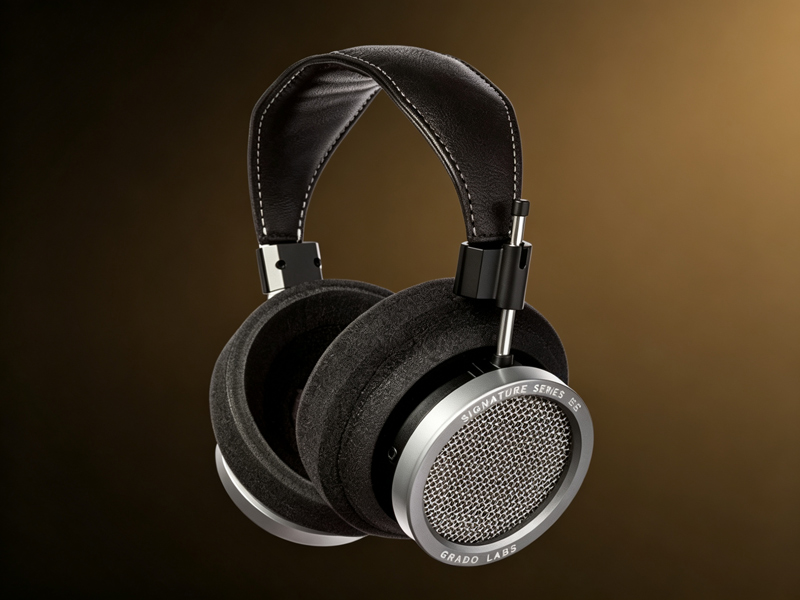
The rescue was headphones, built at a workbench with his wife, Loretta, in the first half of the 1990s. The reasoning was electromagnetic kinship: cartridges and headphones are the same physics — a vibrating diaphragm in a magnetic field — and the family's half-century of transducer craft would translate. Nobody at Grado saw the iPod coming; the company thought the future of headphones would be students at laptops. What arrived instead was the HP-1000 in the early 1990s — the first true high-end dynamic headphone, astonishing reviewers with performance previously attained only by full-range speaker systems — and the accidental birth of what the company's own About page calls the Audio Quality Headphone market.
The first line followed, and with it the distribution method that still defines the company: no advertising, ever, but John at audio shows around the world, building a distributor list across multiple countries — then, when the list was sufficient, stopping the shows entirely to spend more time with his family. Even the famous Grado Towers — ceiling-tall speakers built from headphone drivers — never survived past five pairs; the headphones were simply too successful to justify the detour. In 1994 came the first wooden headphones, in 1996 the first wooden cartridge and the first headphone amplifier.
A listening room tuned by three songs
The tuning ritual is the company's soul, preserved in The Distance's classic profile: when John Grado listens, he sits in a comfortable chair in a darkened top-floor room, sometimes eyes closed, listening for the distinctive xylophone tones in Duke Ellington's Malletoba Spank, for the sound of individual applause as Eric Clapton strums the opening of a live Signe, and for Ella Fitzgerald in A Night in Tunisia — he's been using the same fifteen-to-twenty-second snippets for two decades to calibrate every headphone the family ships. The room's dark blue walls carry paintings by John's father; one depicts founder Joseph Grado performing Othello — the founder was a watchmaker, inventor, and tenor.
The material philosophy follows from the listening: mahogany ear cups from a New Jersey woodworking shop whose sole customer is Grado — John thought of using wood in the middle of the night and was prototyping by morning — because wood's resonant frequencies can be dampened to work together rather than distract. His governing quote, attributed to Henry Ford, is printed in the profiles: you can paint it any color, so long as it's black. Every product we make is a reflection of us — we put out what we like, and we're fortunate that people like what we make.
Three generations, and three driver refreshes
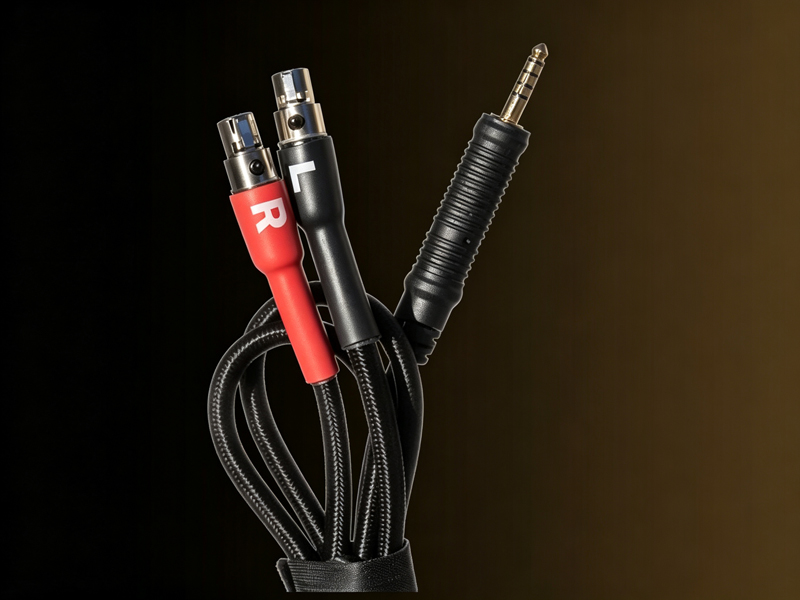
The generational math is a rebuke to the industry. Grado's headphone drivers refreshed three times in twenty-five years — the i series in 2008, the e series in 2014, the x series in 2018 — each release arriving only when the family felt the improvements were meaningful, not when the calendar demanded. The company's own page restates the discipline in April 2026 terms: the Prestige, Reference, and Statement families consolidated into the Classic Series, the cartridge lines advanced to a /4 generation, and the Signature Line — launched 2024 with the HP100 SE — brought the first detachable cables and redesigned headbands in company history.
The third generation arrived the way the second did: through the side door. Jonathan Grado was originally embarrassed about the family company — he entered as a sophomore in college, started the Grado Facebook and Twitter pages as a hobby, became social media director by graduation, worked at Sonos, then returned full-time, becoming vice president of marketing in 2014 with, as the profiles note, a zero-dollar ad budget. Mashable and American Express named the company one of America's eight most social small companies that year — for a brand whose last advertisement ran before the Moon landing. The family table now includes John's brother Richard, who took the lead in 2023, and Jonathan and Matthew learning to run an international consumer electronics company — dozens of spouses, cousins, nieces, and neighborhood friends filling out a payroll that has never needed to be large.
Sandy trees, whiskey barrels, and hemp
The limited editions turned materials into storytelling. In late 2013, Grado's first large collaboration built an experimental headphone from Bushmills Irish whiskey barrels — Gizmodo called the sound warm and clear, with a sweet-spot right in the mid-range, as Grado products are known, and The New York Times praised them while noting they might not fit every budget. The 2015 Heritage Series used wood from trees that fell across Brooklyn during Superstorm Sandy — the borough's storm casualties becoming headphone housings. The 2020 Hemp Headphone used hemp wood, and the company's own retelling cannot resist the joke: no, you couldn't toke them, but the headphones are smoking. Cocobolo — introduced with the GH2 from Brazil — went on to anchor the flagship GS3000 line.
The one concession to connectivity came late and characteristically: the GW100 in 2018 was the first open-back Bluetooth headphone on the market, and the GT220 in 2019 entered true wireless — both existing, per the reviewers' consensus, for listeners who wanted the Grado house sound without the wire, not for feature competition. Even here the doctrine held: open-back everything, because the family tunes for rooms, not airplanes.
The vinyl resurrection, and the /4 generation
The analog side of the townhouse got its own second act. The vinyl revival carried Grado's cartridge production from the 1990 trough of twelve thousand a year to sixty-five thousand by 2015 — made to order, no inventory, the basement's secondhand 1953 injection-molding machine still running parts. The modern Timbre and Lineage cartridge families earned the Golden Note Award for analog design — the most significant advancement in analog reproduction, per the citation — and in April 2026 the entire cartridge range advanced to a fourth generation, assembled in Brooklyn as ever. The company that thought the CD would kill it now serves a vinyl market larger than the one that birthed it.
For the storefront reviewer, the two product lines form a coherent whole no competitor replicates: the same ears that tune cartridges tune headphones, the same building houses both, and the buyer of a flagship GS3000x is purchasing the output of a transducer workshop that has iterated on the same physics for seventy-three years.
The honest texture of an open back
Four honest cautions belong in the ledger. First, the open-back doctrine: Grado's headphones leak sound in both directions — no isolation, no privacy — which makes them glorious in a quiet room and useless on a commute, in an office, or beside a sleeping partner; the company does not make a closed-back flagship, by philosophy rather than oversight. Second, the fit: the supra-aural, on-ear designs that define the house shape divide listeners — the Prestige Series' simple foam pads are beloved and blamed in equal measure across the review literature, and long-session comfort is a known question mark the Signature Line's redesigned headbands only partly answer. Third, the feature austerity: no active noise cancellation of consequence, no app ecosystem, no codec arms race — the GW100 and GT220 aside, Grado sells wired headphones in a wireless decade, and the buyer who needs travel features is simply not the customer. Fourth, the scale: a staff in the dozens, family bandwidth as the constraint on support and supply, and a 2023 leadership transition whose contours — John turning to brother Richard, the third generation learning the ropes — are described by the family itself in the gentlest possible terms, leaving the governance picture politely opaque.
None of these are contradictions; all four are the taxes on being the family that never advertised — the exclusivity the Wirecutter's headphone editor diagnosed as the point: a club and a family you get to be part of when you purchase their product, down to the welcome letter in every box that says congratulations and thanks from us, the Grados.
The verdict for the seated listener
Grado's storefront is the seventy-three-year thesis run on a single block of Brooklyn: a Tiffany watchmaker's kitchen-table cartridges, a twelve-year-old cutting pieces for a penny, a near-death buyout rescued by a workbench, a listening room tuned by Ellington's xylophone and Ella's moon, three headphone generations in thirty years, wood from a storm and a whiskey distillery and a hemp field, zero advertisements since 1964, a vinyl resurrection nobody planned, and a fourth generation of Grados learning the machines. The cons are the cons of the doctrine: open backs that demand a quiet room, on-ear fits that divide, features declined, and a family scale that makes every support conversation personal and occasionally slow.
Buy here if your listening is a ritual — chair, low light, a record or a file played whole — if the sound of individual applause in a live recording is the detail you chase, if a hand-built Brooklyn headphone with a welcome letter from the family matches your idea of what an object should be, and if the absence of an app is a feature rather than a gap. Buy the closed-back mainstream if the subway is your listening room. For the seated listener who wants the last family-owned audio house exactly as it has always been, this Sunset Park storefront remains the industry's most patient answer — one building, three generations, and the door still open since 1918.