The 1916 finnish brand that sold adidas the three stripes
Official homepage: https://us.karhu.com
Some shoe brands have heritage. Karhu has a museum's worth. Founded in a Helsinki birch workshop in 1916, the company outfitted the Flying Finns who dominated Olympic distance running, sold its three-stripe trademark to Adidas for what legend says was two bottles of whisky, patented air cushioning before Nike existed, earned Arthur Lydiard's verdict as the maker of the best training shoe in the world, and faded — only to be resurrected in 2019 by a Camper-family-backed holding company with a dual identity as performance running brand and premium retro streetwear label. This review measures the hundred-and-ten-year-old operation across eight dimensions, from the Olympic spikes to the $29.95 shipping fee.
A birch workshop in Helsinki, 1916
Karhu began in a small downtown Helsinki workshop in 1916, when Ab Sportartiklar Oy started crafting locally sourced Finnish birch into skis, javelins, and discuses; the company officially adopted the name Karhu — Finnish for bear — in 1920. The running shoes arrived quickly. At the 1920 Antwerp Olympics, Finnish athletes took all three javelin medals using Karhu javelins, while the Flying Finns took five track golds in Karhu spikes. Four years later in Paris, Paavo Nurmi won five gold medals in conspicuous white Karhu spikes on his way to nine career Olympic golds, many earned in Finnish footwear. The 1924 Games also made Karhu the official Finnish Olympic equipment provider.
Flying Finns and nine Olympic golds
The interwar decades established the pattern that still defines the brand: equipment for athletes who win. The army contracts came during the Winter and Continuation Wars — camouflage suits, tents, skis — but the glory stayed on the track. By 1952, Karhu's shoes carried a reinforcing design of three diagonal stripes that would soon become the most famous trademark in sportswear history.
Two bottles of whisky and the Adidas stripes
At the 1952 Helsinki Olympics, fifteen athletes won gold in Karhu gear — three of them, in a single Games, on the feet of Emil Zatopek, who won the 5,000, 10,000, and marathon. Riding that triumph, Karhu sold its three-stripe trademark to a then little-known German company called Adidas. The famous version of the story says the price was two bottles of good whisky and roughly 1,600 euros; sneaker historians note Karhu has never confirmed the exact consideration, and the legend should be enjoyed as legend. What is documented is the replacement — the M-symbol, registered in the 1960s, from the Finnish word Mestari: champion.
Air cushioning before Nike and Lydiard's favorite shoe
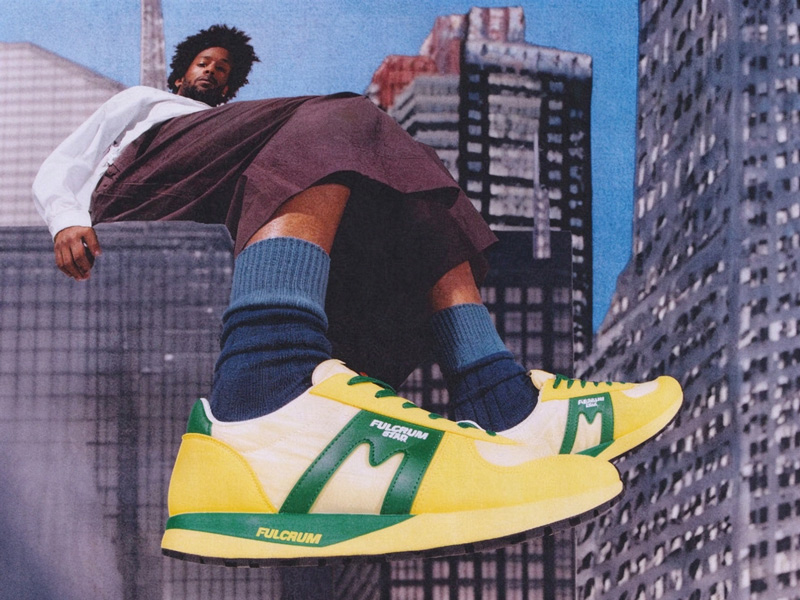
The innovations were anything but mythical. In 1968 Karhu launched the Trampas training shoe, praised by legendary New Zealand coach Arthur Lydiard after a factory visit as the best training shoe in the world. In the 1970s — before Nike popularized visible air — Karhu developed the first patented Air Cushion midsole in running footwear, the technology that inspired decades of air-based cushioning across the industry. The 1980s brought Fulcrum, a biomechanical system developed with the University of Jyvaskyla: rather than merely cushioning, the Fulcrum geometry places a pivot in the midsole that rolls the foot forward through the gait cycle, converting impact into propulsion. That line remains the technical heart of the modern performance range.
Fulcrum technology and the University of Jyvaskyla
By the 1980s the brand was struggling — it sold its outdoor shoe line to Merrell and faded from the conversation it had owned. The resurrection came in two steps: a 2012 acquisition by the former president of Asics Europe, then a 2019 purchase by Strong Outdoor, the Camper-family-backed holding company, which relaunched Karhu globally with a dual identity most brands cannot pull off — performance running and premium retro streetwear at once.
Ikoni, Fusion, and the sneakerhead second life
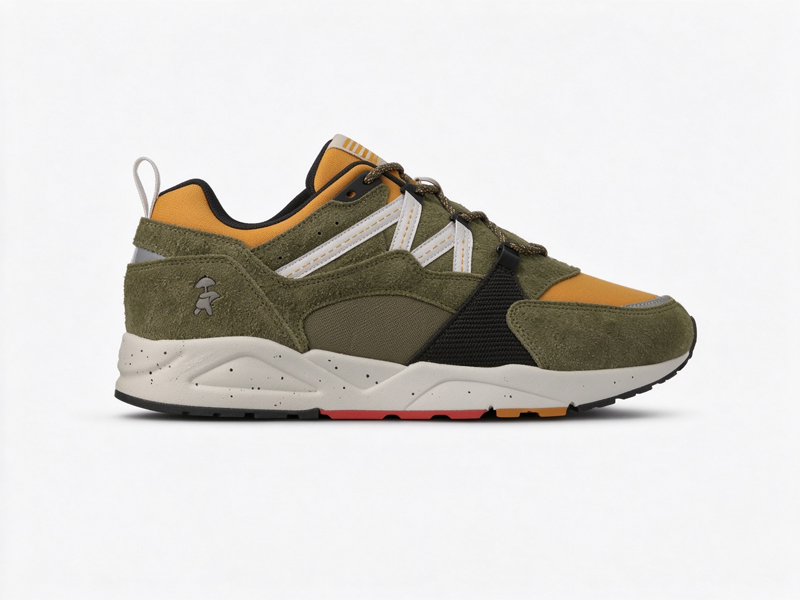
The current lineup reflects both halves. For runners: the Ikoni road line and Ikoni Trail apply the modern Fulcrum platform across training distances, with Fusion XT and Fusion XC adding rugged outdoor angles. For sneaker culture: the Fusion 2.0, Legacy 96, Aria 95, and Mestari 76 — the last named for the first air-cushioned model from 1976 — trade at $110 to $175 in colorways inspired by the Finnish landscape, earning a devoted following among connoisseurs who prefer quiet Nordic quality to hype.
Twenty nine ninety five shipping and own site reviews
The shopping experience carries distinctly European economics. US shipping runs a flat $29.95 per order regardless of size — steep by American standards, partially offset by promotions and a ten percent newsletter discount. Returns run through a dedicated policy page with a brand-specific size guide reflecting Karhu's European lasts. The social proof, however, lives almost entirely on the company's own storefront: a reviews widget displays 4.6 out of 5 from more than 3,300 reviews — healthy and plausible, but proprietary. There is no meaningful Trustpilot presence for the US store, and independent coverage skews toward sneaker media celebrating the heritage rather than service journalism testing fulfilment. For a heritage brand with fourteen regional storefronts across four continents, the review infrastructure is surprisingly thin outside its own walls.
Who should run a hundred year old brand
Karhu in 2026 is for a specific runner: the one bored of the same five brands at the expo, the history-minded athlete who wants the shoe company that taught the industry how to cushion, the sneakerhead who wants Nordic colorways with a 1916 birth certificate, and the trail runner curious whether a Fulcrum rocker belongs in the rotation. For that buyer, the brand offers something no startup can manufacture — a hundred and ten years of documented firsts plus modern ownership with the resources to keep the lights on. It is less suited to the buyer who shops on shipping costs or crowdsourced service reviews: the flat $29.95 delivery fee stings, and the review record is the brand's own. But the company that outfitted nine-gold Nurmi, sold the world's most valuable stripes for whisky money, and patented air before Nike existed has earned the right to charge for the story. The story, at least, ships free in the telling.