Switchbot: the robot finger that outsmarted the wall switch
Official homepage: https://www.switch-bot.com
SwitchBot began with a light switch that was three meters too far away. In 2015, an engineer named Connery Lee was reading in bed when he realized he could not turn off the bedroom light without getting up — and that every smart-switch solution on the market required replacing the wall switch itself, which his rental agreement, like most rental agreements, forbade. His answer was a small robot that presses buttons: a forty-two-gram device that sticks over any rocker or push button and physically operates it on command. A decade later, that robot finger has grown into a global smart-home ecosystem — curtains that motorize existing rods without a single screw, locks, sensors, cameras, and a forty-million-dollar acquisition of Nanoleaf in 2026 — built on a doctrine the industry had dismissed: retrofit what people own, do not replace it. This review examines the storefront dimension by dimension: the origin, the battery-and-mesh engineering, the retrofit manifesto, and the honest arithmetic of a private company with big ambitions.
A light switch beyond arm's reach
The founding frustration is told the same way across the company's own bios and the hardware press: Connery Lee, an engineer who had spent years working on IoT and smart home technology — including a stint with a smart-home company in Singapore before returning to China — was reading in bed one night when he reached for a switch that was not there. The next morning, he and his team surveyed every smart switch on the market and found the same flaw in all of them: installation meant replacing the wall switch, with improper installation carrying an actual risk of electrical hazard — and renters, the majority of urban dwellers in the markets he knew best, were contractually barred from touching the wiring at all.
The idea that arrived was deliberately physical. Rather than replacing the switch, why not build a small robot — the founding team has invoked R2-D2 in the telling, with the self-aware caveat that a droid should not be expected to fly an X-wing on its first night — that presses the existing button? The first SwitchBot Bot, as the device was named, was a useful, simple, convenient mechanism to operate a rocker or button, nothing more. The category thought it was a joke; the renters thought it was an answered prayer.
Two hundred units over two sleepless nights
The launch was handmade. According to the company's founding chronology, Lee assembled the first two hundred units himself over two sleepless nights, and the Bot launched on Kickstarter — where it became an immediate darling of the exact audience the wiring-replacement industry had ignored: renters, dorm dwellers, and the DIY smart-home community that threads discussions on Homey and Hackster about whether the objects around us were getting smarter but certainly not simpler. The Bot's mechanical simplicity was its commercial genius: it worked with the coffee maker's button, the desk lamp's rocker, the old air conditioner's panel — any physical interface, no matter how dumb, became controllable by app, schedule, or voice.
The Kickstarter validation converted instantly into a product line, and the renter-friendly positioning became the brand's permanent identity — the smart home for people who cannot drill, rewire, or persuade a landlord.
Twenty months of battery, and a private mesh
The engineering file is deeper than the toy-like exterior suggests. The Bot runs on a single CR2 battery for approximately twenty months — a figure the component maker Nordic Semiconductor documented in its own case study, crediting the ultra-low-power nRF SoC and the company's software discipline. The engineering choices documented in that study are revealing: SwitchBot built its own Bluetooth mesh protocol using on-demand routing rather than the broadcast-flooding most mesh implementations rely on, chosen specifically to keep battery draw minimal across large device counts. When the founder discusses semiconductor vendors in the case study, he praises technical support quality — the priorities of an engineering-led company rather than a marketing one.
The battery doctrine matters commercially: a smart-home device that needs its battery changed every few months trains owners to abandon it; a device that runs for nearly two years fades into the infrastructure of the home, which is where the retention lives.
Retrofit, don't replace: the manifesto
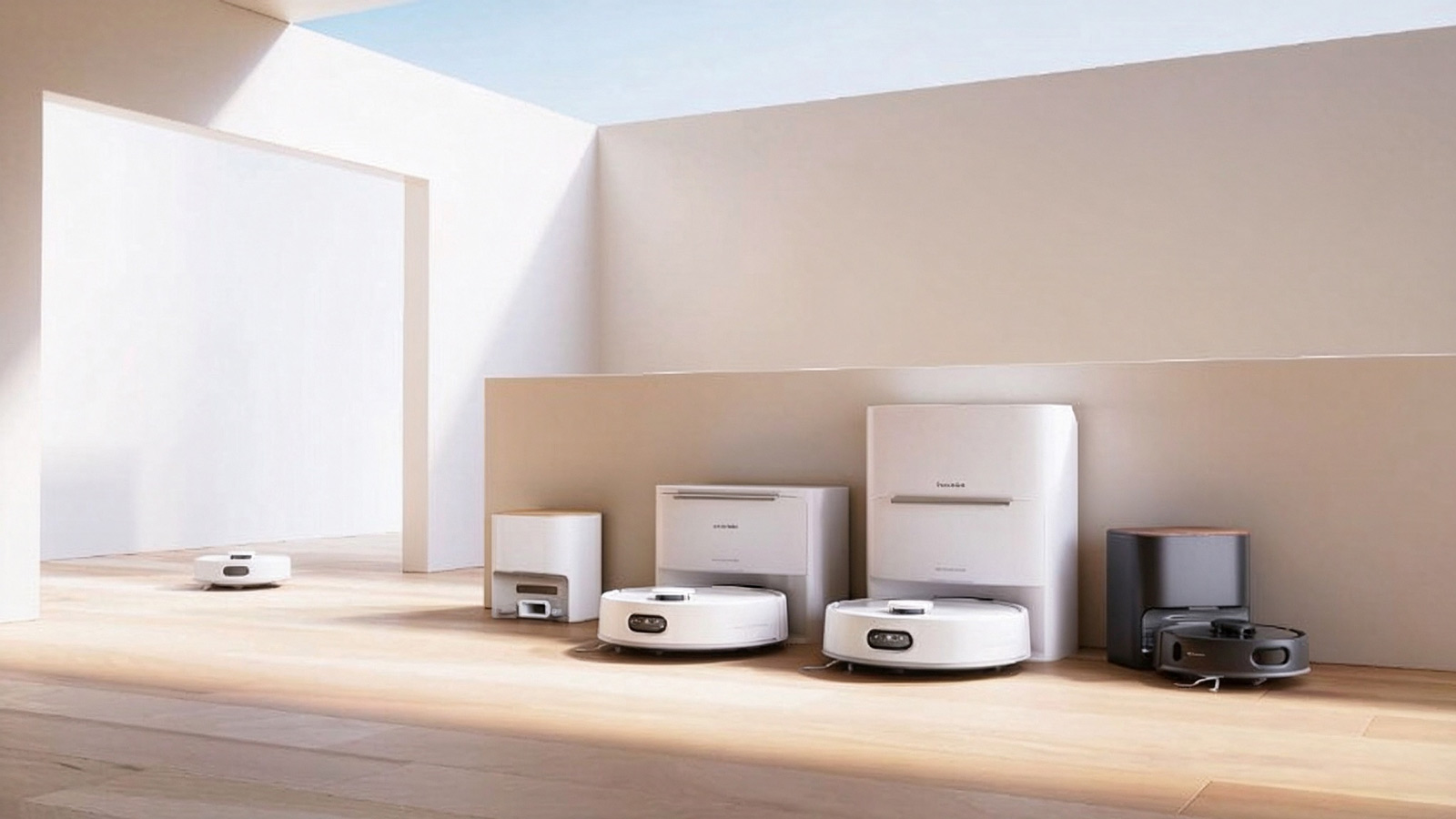
The product line extended the retrofit principle outward. The SwitchBot Curtain, launched in 2019, motorizes an existing curtain rod — no tools, no drilling, no replacing the curtains — and became the line's second signature product. The hub connected the Bluetooth devices to Wi-Fi, Alexa, and Google Assistant; Matter support arrived as the standard matured; sensors, smart locks, cameras, and cleaning robots filled the perimeter. The positioning, stated against the category's dominant alternative: where an Aqara-style system asks you to replace switches and sensors throughout the home, SwitchBot asks you to attach a device to what you already own — the comparison the enthusiast press consistently frames as retrofit versus rebuild.
The manifesto's market logic is the same as its renter logic: the majority of the world's households will not rewire, and the company that serves them owns a market the incumbents architecturally cannot address without cannibalizing their own installation models.
Nanoleaf, and a forty-million-dollar light show
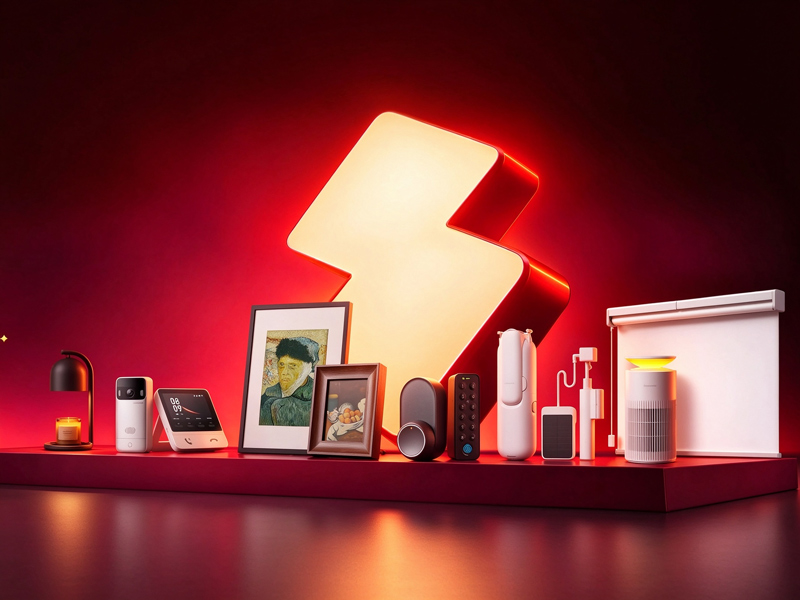
The 2026 chapter announced ecosystem adulthood. In June 2026, SwitchBot acquired Nanoleaf Canada — the lighting company famous for its modular wall panels — for forty million dollars in cash, a transaction whose price tag and payment method signal both ambition and financial footing for a private company. The same year brought the Lock Vision, a smart lock with a built-in camera, and an all-in-one smart home display — the product breadth of an incumbent assembled in eighteen months. The Nanoleaf deal in particular changes the storefront's character: SwitchBot is no longer the clever retrofit specialist but an ecosystem consolidator, buying design-led lighting brands the way larger players buy camera or thermostat companies.
For the storefront reviewer, the acquisition is the strategic tell: the retrofit niche was always going to be a beachhead, and the company's own roadmap — hub, lock, camera, display, and now acquired lighting panels — reads like the standard smart-home consolidation playbook, executed from Shenzhen with a global storefront.
Shenzhen to Tokyo, and a Shopify storefront
The corporate map explains the storefront's character. Research and development anchor in Shenzhen, with a Hong Kong international office, a Houston, Texas operation for American customer service and logistics, and a Tokyo subsidiary serving Japan — a geography that mirrors the product philosophy of serving dense urban rental markets across three continents. Third-party estimates place annual revenue between fifty and one hundred million dollars, though as a private company nothing is audited in public. The storefront itself — the Shopify flagship — runs the global direct playbook: multi-currency, regional shipping from the Houston and Tokyo nodes, and the subscription-tinged app ecosystem that monetizes the hub.
The distribution breadth is the quiet achievement: a renter-first gadget brand from Shenzhen with American warehouses and Japanese offices competes in the same storefront real estate as Amazon's own devices, and wins on the no-drill premise alone.
The honest texture of a private company
Four honest cautions belong in the ledger. First, opacity: as a private company, SwitchBot publishes no audited financials — the revenue estimates are third-party guesses, the valuation is unknown, and the Nanoleaf price tag tells us more about its cash position than any filing does. Second, headquarters: Shenzhen-based research and development places the company inside the same geopolitical supply-chain exposure that shadows every Chinese hardware brand, whatever the quality of the engineering. Third, the cloud dependency: the retrofit magic runs through SwitchBot's servers — the button pusher presses even without the internet, but the scheduling, voice control, and Matter bridging that justify the purchase are services, and services can be repriced or sunset. Fourth, the competition and the ceiling: Aqara builds deeper systems for owners, Govee owns the lighting aisle, and Amazon's own smart plugs undercut on price — the retrofit gimmick that opened doors must keep converting into ecosystem loyalty before the giants copy the form factor, and some reviewers already treat the Bot as a gateway drug whose novelty wears off.
None of these are contradictions; all four are the taxes on the cleverest niche entry the smart-home category has produced in a decade.
The verdict for the renter's smart home
SwitchBot's storefront is the bed-light thesis run for a decade: an engineer who could not reach his switch, two hundred hand-assembled robots, a twenty-month battery and a private mesh protocol, a curtain that motorizes without a screwdriver, a manifesto that retrofits instead of rebuilds, a global map from Shenzhen to Houston to Tokyo, and a forty-million-dollar Nanoleaf acquisition that announces the niche graduate's arrival. The cons are the cons of the private consolidator: opaque finances, geopolitical supply chains, cloud dependencies, and a form factor the giants can copy.
Buy here if your landlord owns your walls and you own your gadgets, if a robot that presses buttons beats an electrician you cannot hire, if curtains that open on schedule justify the hub, and if the Nanoleaf deal suggests a design future worth joining early. Buy the incumbent ecosystems if you own the walls and can rewire them, or the budget plugs if a single outlet is all you need. For the renter who wants the smart home without the security deposit, this Shenzhen storefront remains the category's most considerate answer — one robot finger, ten years of ecosystem, and the switch finally within reach.