Reuzel: a dutch word for lard, a global name for pomade

Official homepage: https://reuzel.com
Reuzel is the grooming store that grew out of a barbershop queue. In Rotterdam, two barbers who called themselves the Bearded Bastard and the Bloody Butcher built a shop where the wait ran five hours and the sign in the window read 'Men, dogs — no women.' When no commercial pomade met their standards, they formulated their own in the shop kitchen — nearly burning the place down — named it after pig fat, and accidentally built the world's most recognizable barber brand. This review traces the scumbags, the tins, and the color system that taught men to speak pomade.
The Bearded Bastard and the Bloody Butcher
Leen and Bertus started cutting hair at fourteen — Bertus has joked that his earliest free haircuts for skateboarding friends probably delayed their romantic lives rather than helped. Decades later, on a working-class Rotterdam street, they opened Schorem Haarsnijder en Barbier, styling themselves with characteristic menace as The Bearded Bastard and The Bloody Butcher. The shop's name is a pun only Dutch delivers: 'Schorem' means riffraff or scumbags, and, as the founders delight in pointing out, also happens to read as 'I shaved him.' The aesthetic was rock and roll, kustom kulture, and 1950s barbering — pompadours, flattops, contours — executed with a seriousness that made the pair the most referenced barbers in Europe. Fans took to calling themselves scumbags as a badge of honor, and the brand kept the joke: its products are certified cruelty-free under the slogan that no pigs were harmed in the making of Reuzel.
Five-hour waits and a sign about men and dogs
Schorem ran on an anti-reservation philosophy that turned waiting into theater. During renovation, with the windows still papered, the duo hung a sign reading 'Men, dogs — no women,' and the neighborhood talked of nothing else until opening. Two weeks in, waits hit five hours; on some days customers queued from six in the morning for a ten o'clock opening. The drill became legend: no appointments, swap stories over beer or what regulars call the best coffee in the city, and surrender to the chair when your name comes up. The duo trained a generation through free YouTube tutorials and, when demand outgrew the internet, opened the Old School Barber Academy across the street. The shop remains the spiritual home of the brand and, by multiple accounts, the test bench for every new formula — while the modern brand has visibly broadened its embrace, its product pages now featuring models of every style and gender.
A kitchen, a near-fire, and an American Crew legend
The product line began as a supply problem: nothing on the market could hold a proper pompadour the way Leen and Bertus required. Their own kitchen experiments failed, and one session nearly burned the barbershop down — a story the brand now tells proudly. The breakthrough came through kustom-kulture connections: David Raccuglia, the founder of American Crew and a professional photographer, came to shoot the shop, heard the problem, and helped develop the formulas; Reuzel Inc was born shortly after. The name was chosen with equal irreverence — 'reuzel' is Dutch for lard, a wink to the era when pomades were rendered from animal fat and perfumed with apples, which is precisely where the word 'pomade' comes from: the French 'pomme,' apple. The first tins, Red and Green, carried a rustic hog on the label and the promise that this modern grease contained none of its namesake.
Colors as a language: pink, green, red, blue
The range reads like a hold-and-shine periodic table. Pink and Green are the oil-based greases — Pink a heavy 9-of-10 hold built for thick and curly hair, Green a softer medium classic — both demanding a committed wash-out ritual. Red and Blue brought the same barbershop finish to water-based formulas that rinse clean: Red medium, Blue the strong-hold, high-shine favorite barbers reach for most. The matte era followed — Fiber for light texture, Clay Matte, the reworkable Concrete Hold at 10-of-10, and Extreme Hold Matte at a self-aware 11 — alongside the Grooming Tonic Bertus calls his favorite, a pre-blow-dry shine lotion that mixes with everything. Tins list at $19.95, reviewers praise the price-to-performance ratio, and the honest notes are consistent: the grease feels greasy until you learn it, the butterscotch-blue scent divides opinion from 'perfect' to 'smells like candy,' and oil-based pomading is a lifestyle commitment, not a whim.

The degrease trio and the cocktailing culture
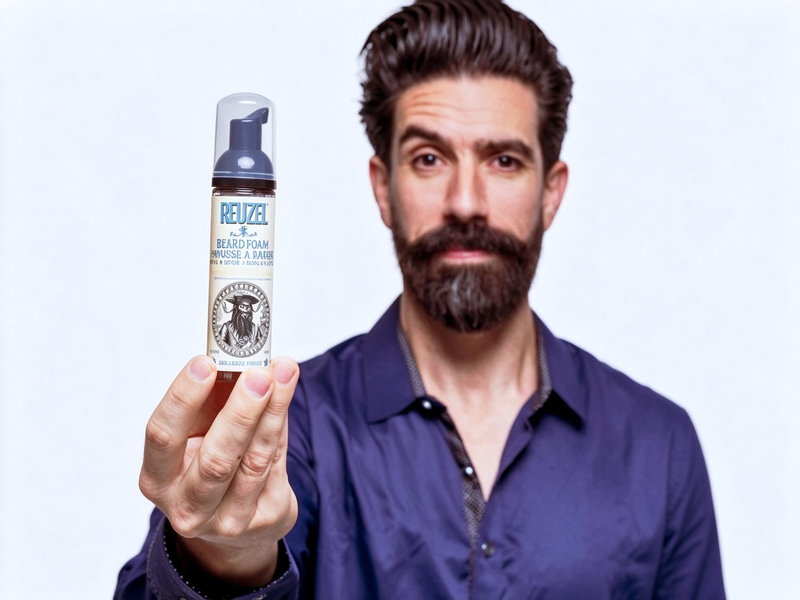
Reuzel's system thinking shows in the rituals it sells around the tins. Grease users get the Degrease Trio — daily conditioner worked through dry hair, scrub shampoo, then a final cleanse — the canonical washout routine printed on every oil-based product page. Stylists are taught to cocktail: layer Green with a knuckle of Pink for hold where it matters, or blow-dry the tonic and finish with Concrete. The storefront mirrors the barbershop pedagogy with how-to videos, a tips library, bundle builders, rewards, and Shop Pay installments, with free continental shipping at forty dollars. Recent shelves hold a full beard-and-shave line, scalp care, tattoo balm, and collaborations like the Liquid Death Severed Head pomade — apple-salsa scented, naturally.
Barber academies in Denver and Rotterdam
What separates Reuzel from the celebrity grooming brands is the professional channel it never abandoned. The storefront runs a wholesale portal with login and application, supplying barbershops worldwide, and the education arm operates academies on two continents — classes listed in Denver and in Rotterdam, where clipper work and classic cutting are taught under the same scumbag ethos. Press pages collect the magazine covers; the shop remains the laboratory. Distribution claims reach ninety-plus countries. The model is circular in a way few brands manage: barbers create the products, the academy trains barbers to use them, the wholesale portal stocks their shops, and the retail tins let the rest of the world take a piece of Schorem home.
The last scoop from the pig tin
Reuzel's store sells the most credentialed barber culture on this tag — products born at the chair, tested on five-hour queues, and taught in academies on two continents, at twenty dollars a tin. Its trade-offs are the honest ones of grease: oil-based pomading demands a washout ritual and a learning curve, the signature scents polarize, and the brand's founding-exclusive swagger has softened into something broader and less dangerous. But for the man who wants his pompadour held by the same hands — figuratively — that hold Rotterdam's most famous queue, this is the tin the barbers themselves would hand you, with a wink and a warning about the lard.