Llamas from craigslist and a 61-year warranty built this outdoor brand
Official homepage: https://cotopaxi.com
Cotopaxi launched in April 2014 with five backpacks, a website, and two llamas purchased from Craigslist and towed around Utah college campuses in a trailer. The llamas were there to promote Questival, a 24-hour adventure race that doubled as the company's launch event — and the warranty, which most brands use as fine print, Cotopaxi uses as arithmetic: sixty-one years, the average life expectancy in the developing world, printed on every product as a reminder of the inequality the company exists to fight. Founded by Davis Smith, Stephan Jacob, and CJ Whittaker in Salt Lake City, the company has grown from $3 million in seed funding to a nine-figure revenue business while keeping 1% of all product revenue flowing to its own foundation. This review examines the store where the warranty is the mission statement.
Growing Up in Latin America Set the Mission
The founder's biography is the brand's founding document. Davis Smith was raised across Latin America — Ecuador, Bolivia, Peru, the Dominican Republic — where his father's construction work moved the family, and where he absorbed a lesson he has repeated in every major interview: the difference between himself and the children he saw living on the street was largely an accident of birthplace. Before Cotopaxi he had already built and sold companies, including Baby.com.br, named Brazil's startup of the year in 2012. Returning to Utah, he gathered Wharton classmates Stephan Jacob and outdoor-industry veteran CJ Whittaker, raised $3 million, and launched in April 2014 with a deliberately contrarian thesis: a digitally native outdoor brand whose cause was people rather than landscapes, because, as he put it, millennials wanted stories and meaning, not just things. The name came from an Ecuadorian volcano — and its resident llamas became the mascot.
Questival Turned Marketing Into a Participation Sport
The launch mechanic became the brand's signature. Questival — a 24-hour, team-based adventure race mixing peaks, trash cleanups, soup kitchens, and llama selfies — drew nearly five thousand participants at the inaugural Salt Lake City event in April 2014 and generated thirty thousand social posts in a single weekend. Participants received backpacks; winners received humanitarian trips; local charities received the proceeds. The formula scaled to dozens of North American cities, passed one hundred thousand cumulative participants, and earned the company a distinction few startups achieve: customers made their own Cotopaxi shirts and hats before the brand sold any, a spontaneous display of affiliation on launch day that Smith cites as the moment he knew the brand had something real. After a quieter period, Questival returned in a 2024 college-campus format, keeping the activation pointed at the youngest cohort of buyers.

Del Día Makes Every Pack One of a Kind
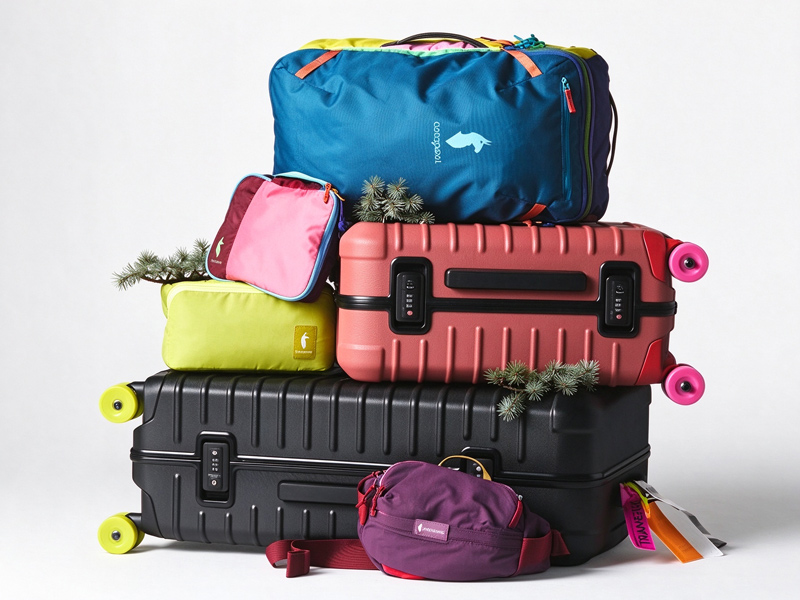
The product identity that distinguishes the store is built on remnants. The Del Día collection is sewn from deadstock — high-quality leftover fabric that original manufacturers did not use — with factory partners hand-selecting color blends so no two packs are alike. The model is not merely aesthetic: deadstock products carry an estimated thirty percent smaller carbon footprint than equivalent virgin fabric, and the company's deadstock usage jumped from roughly 101,000 yards in 2024 to about 841,000 in 2025. By 2024, Cotopaxi reported meeting its 3Rs materials goal — one hundred percent of products using repurposed, recycled, or third-party certified materials — and the Del Día one-of-a-kind logic remains the most Instagrammable expression of the supply-chain philosophy.
Sixty-One Years of Warranty as Poverty Arithmetic
The warranty is the brand's most quoted detail, and it is deliberately uncomfortable. Sixty-one years is the average life expectancy in underdeveloped countries — roughly the difference from the developed world's eighty-plus — and the number appears on products as what Smith calls a reminder that the gap exists and that the company intends to do something about it. Around the number sits the machinery: certified B Corporation since 2015, a public benefit corporation structure, 1% of annual product revenue directed to the Cotopaxi Foundation for poverty-focused grants, Fair Trade audits of production facilities, and — in a detail customers frequently photograph and share — more than two hundred refugees employed at the Utah operation, many of them women, who pack orders and hand-write thank-you cards placed in every shipped box. The corporate structure was, in fact, a first: the company incorporated as a benefit corporation from inception while raising institutional venture capital, a combination previously considered incompatible.
The Store Sells the Whole Equation, Not Just the Pack
The Shopify storefront renders the model in commerce. Product pages carry material provenance and impact language alongside technical specs; the catalog spans packs, apparel, sleeping systems, and accessories at price points that sit below technical-alpine incumbents and above fast-fashion outdoor; bundles, referral rewards, installment plans, and free shipping over ninety-nine dollars lower the friction for the mission-minded buyer. The Del Día assortment functions as the discovery engine — shoppers browse one-of-a-kind colorways the way they browse art — while the foundation's grant partners give the purchase a named beneficiary. It is a store engineered for the buyer who wants the transaction to mean something, and the site's every element, from refugee-packed boxes to the warranty arithmetic, is arranged to deliver that meaning.
The Honest Frictions of Doing Good at Scale
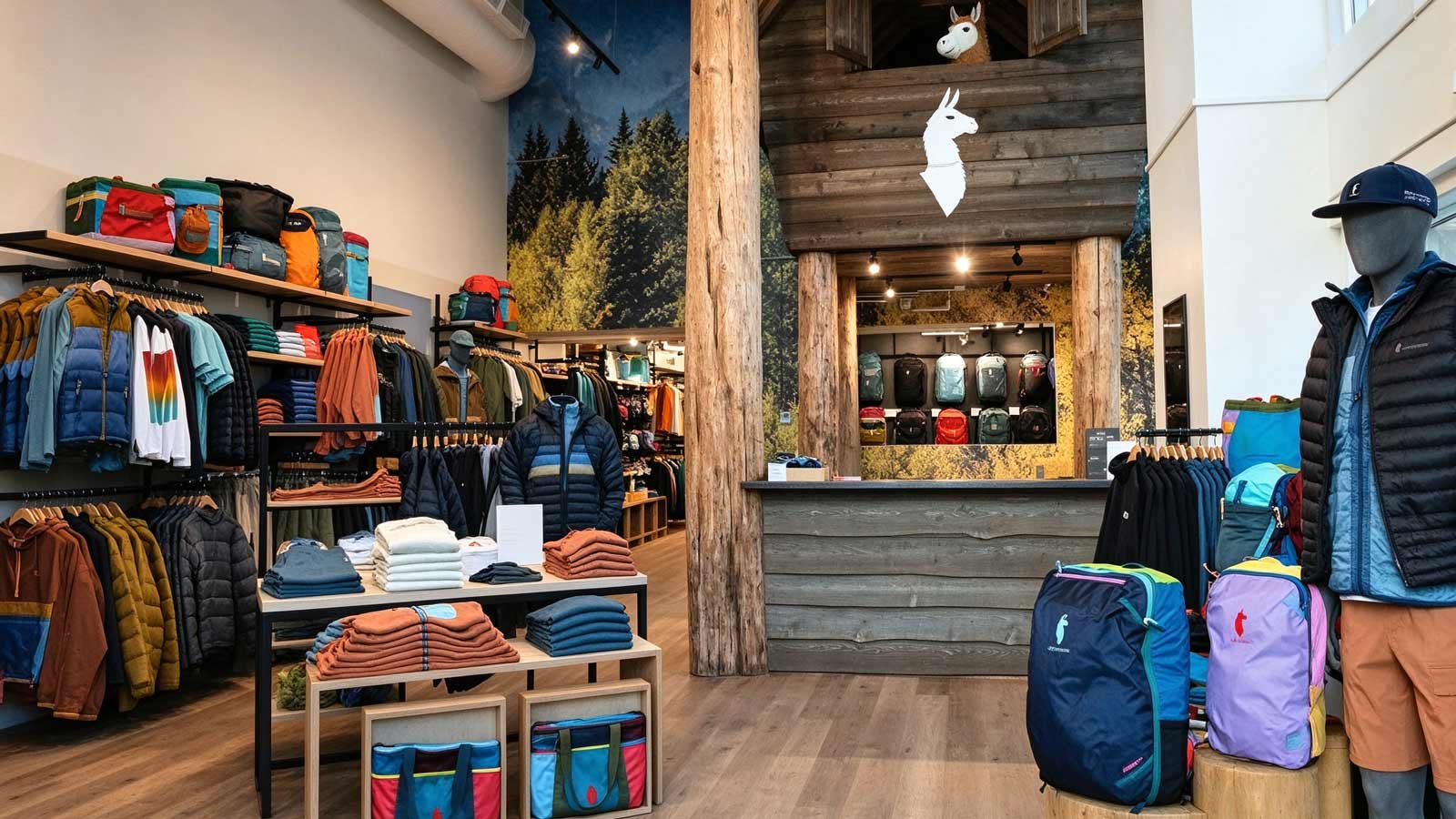
Mission-led growth has friction points a skeptic should note. Cotopaxi is a venture-backed business whose revenue — reported at roughly $104 million in 2022 and about $160 million in 2023 — depends on selling more gear every year, and the company has opened its own brick-and-mortar stores alongside wholesale channels, a scale path that sits in some tension with the anti-consumerist currents of its own story. Smith stepped down as CEO in 2023, with leadership passing through Damien Huang to Lindsay Shumlas, meaning the founder-era narrative now runs on institutional continuity rather than personal charisma. The colorful, casual aesthetic skews lifestyle more than technical, so buyers planning serious alpine objectives will find the catalog lighter on expedition-grade gear than the marketing's adventurous imagery implies. And the one-of-a-kind Del Día model, while charming, means buyers cannot always get the colorway they saw advertised — the nature of remnants.
A Volcano, Two Llamas, and a Number That Won't Go Away
Cotopaxi's store works because every element — the volcano name, the Craigslist llamas, the deadstock packs, the sixty-one-year warranty, the refugee-packed boxes — points at the same uncomfortable arithmetic and offers the purchase as a small correction to it. Whether one reads the model as sincere disruption or as mission-flavored marketing, the structure is unusually coherent for an outdoor brand: the story, the supply chain, the warranty, and the foundation all say the same thing. Buyers who want their pack purchase to arrive with a handwritten thank-you card and a reminder of global inequality have very few alternatives — which is exactly the point.