From Amazon cables to the world's first 500-watt charger: ugreen's IPO decade
Official homepage: https://www.ugreen.com
Ugreen spent its first decade being excellent at the least glamorous job in electronics: cables. Founded in Shenzhen in 2012, the company built its name as an Amazon marketplace workhorse — hubs, adapters, and charging accessories that earned it Amazon's Most Popular Brand Seller recognition two years running — before anyone in the industry thought of it as a brand at all. Then the gallium-nitride era arrived, and Ugreen rode it harder than anyone: the first 300-watt charger in 2023, the first 500-watt charger in 2025, a six-and-a-half-million-dollar Kickstarter for a home server that became the most-funded NAS campaign in the platform's history, and an initial public offering in 2024. This review examines the storefront dimension by dimension: the cable decade, the watts race, the IPO, and the honest arithmetic of a commodity-brand graduation.
Ten years of cables and Amazon pages
The founding decade was a grind in the least romantic category of consumer electronics. Ugreen launched in Shenzhen in 2012, in the years when the cable and adapter market was being carved up by anonymous factories and American brands that outsourced everything. The company's route around anonymity was operational: consistent quality at volume, and an Amazon-native distribution model that let reviews compound. The recognition arrived in 2018 and 2019, when Amazon named Ugreen its Most Popular Brand Seller for two consecutive years — an award whose criteria blend review quality, sales velocity, and customer service, and which, in the company's own timeline, marks the moment the cable seller became a brand. Power banks arrived in the 2016-17 window, research and design investments scaled through the late 2010s, and global supply-chain partnerships expanded across the same period.
The texture worth noting is what the decade did not produce: there is no garage origin myth, no named founder on the About page, no cult community. Ugreen's story is the opposite of the DTC playbook this site has documented — the slow accumulation of operational competence in a category everyone else was fleeing, until a technology shift made that competence the whole game.
GaN, and the race to five hundred watts
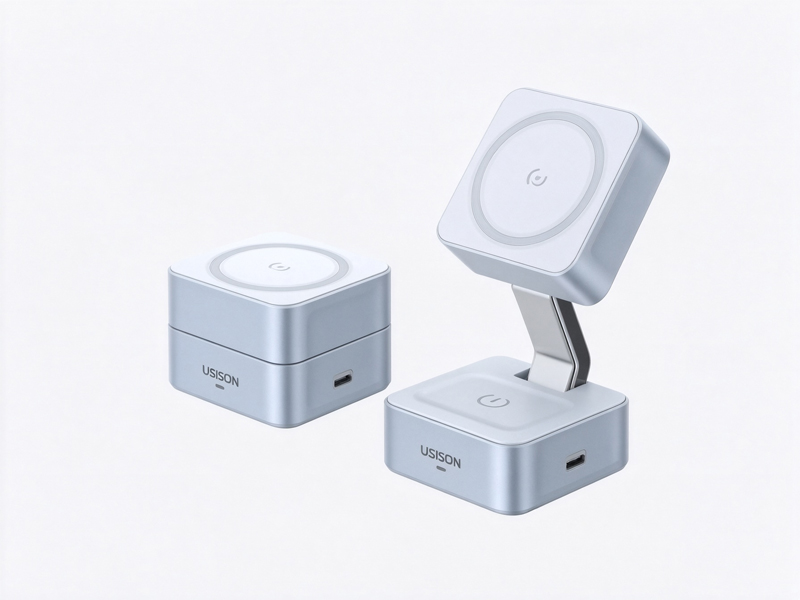
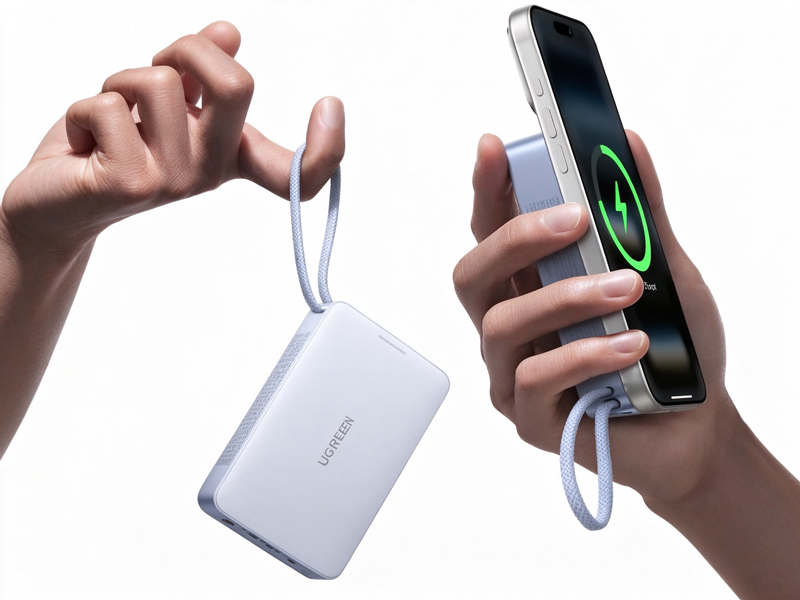
The technology shift was gallium nitride. Where silicon chargers waste energy as heat and bulk, GaN switches faster, runs cooler, and shrinks everything — the enabling technology of the multi-port high-wattage era. Ugreen's Nexode line, launched in 2022, committed the company to GaN early and aggressively: the Nexode 100W brought four ports and dynamic power distribution in a chassis a fraction of the size of its silicon ancestors. The line's documented engineering stack reads like a spec-sheet war: the proprietary Power-X distribution system that routes exactly the wattage each connected device negotiates, the Thermal Guard system that scans temperature eight hundred times per second, and the cascade of wattage records that followed — the world's first 300-watt charger in the 2022-23 window, a 140-watt travel variant that can push a sixteen-inch MacBook Pro past half charge in thirty minutes, and the world's first 500-watt desktop charger in 2025, six ports feeding a full desk from one wall outlet.
The watts race is the company's marketing: in a category where the incumbent compliment is fine cables, being first to a power ceiling that nobody else has shipped generates the press that specs alone cannot.
Going public, and staying in Shenzhen
The 2024 chapter changed the company's reporting obligations forever. Ugreen completed its initial public offering in 2024 — a Shenzhen listing that turned the former Amazon seller into a public company, with quarterly financials now governing the strategy that was previously a founder's call. The about page marks the year tersely: IPO completed, NASync launched, GaN leadership consolidated. The public-company structure matters to this review for two reasons: it means the numbers behind the storefront are audited and published for the first time in the company's history, and it means the capital for the NASync and AI-NAS bets is shareholder money, with the quarterly-return discipline that implies.
The location matters too: a Shenzhen-listed, Shenzhen-headquartered public company carries the geopolitical exposure every Chinese electronics brand carries, with the added visibility that stock-listing brings.
Six million dollars for a home server
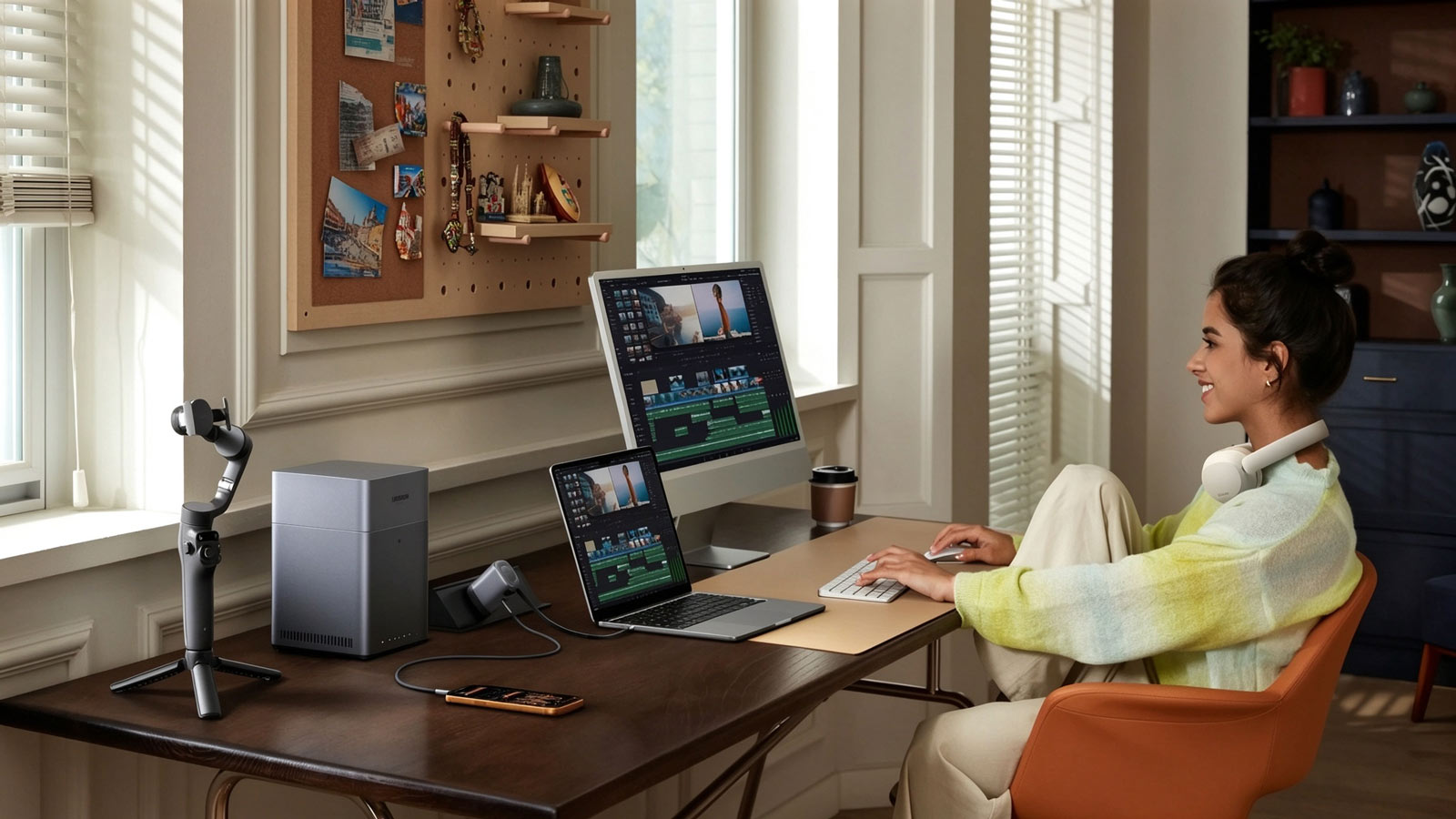
The most surprising chapter arrived in March 2024. Ugreen launched the NASync DXP series — network-attached storage for home users, the category that Synology and QNAP had owned for two decades — on Kickstarter, and raised more than $6.6 million, becoming the highest-funded NAS campaign in Kickstarter's history. The campaign's logic was Ugreen's classic: take a category with entrenched incumbents and aging software, attack on price and hardware specification, and let a passionate niche community validate the demand before manufacturing. The DXP units paired Intel processors with an operating system Ugreen built — UGOS — and reviewers split predictably: hardware excellent, software young.
The 2025 chapter extended the bet to AI. At CES 2025 the company unveiled the NASync iDX6011 and iDX6011 Pro, running Intel Core Ultra processors with integrated large-language-model capabilities — home servers that answer natural-language questions about the files they store. The company's own timeline states that Ugreen NAS achieved a strong market share by 2025, a claim the NAS press treats as plausible in units if not yet in software maturity.
Amazon, the flagship, and ten thousand stores
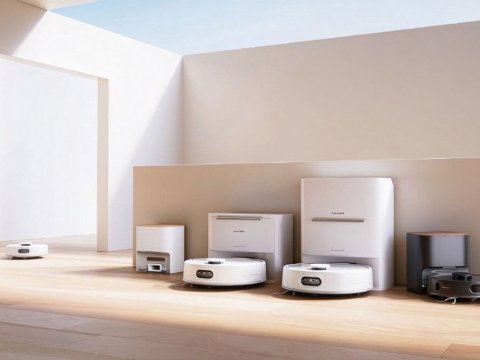
The distribution map is the decade's quietest achievement. Ugreen operates on three rails simultaneously: the Amazon marketplace that built it, the direct flagship storefront that owns the brand experience, and a physical retail network the company expanded past ten thousand offline stores worldwide in the 2022-23 window. The omnichannel posture is unusual for a category native: most Amazon-born accessory brands either abandon the marketplace or never escape it; Ugreen kept both, letting the marketplace absorb commodity demand while the flagship carries the Nexode flagships, the NASync line, and the brand's increasingly design-forward presentation.
For the storefront reviewer, the three-rail map is the model's strength and its complication: the same customer can buy the same charger at three prices on three channels, and the brand's consistency across them — pricing discipline, warranty handling, counterfeit policing — is the operational test that commodity brands usually fail.
The honest texture of a commodity
Four honest cautions belong in the ledger. First, the commodity ceiling: cables, chargers, and hubs are categories where white-label factories and rival giants — Anker, Baseus, and the anonymous Amazon storefronts — race the same components to the same bottom, and today's 500-watt record becomes next year's baseline; the about-page language of warmth and responsibility is a brand claim, not a moat. Second, the China base: a Shenzhen-listed public company carries the supply-chain and geopolitical exposure common to the category, now with shareholder governance layered on top. Third, the NAS software gap: UGOS is years behind Synology's DiskStation Manager in maturity, and the early-adopter community that funded the Kickstarter has been candid about it — the hardware-for-the-money argument is real, but a NAS is a software purchase wearing hardware clothes. Fourth, the founderless story: for a company this large, the public record is remarkably devoid of a founding narrative or named leadership — the brand speaks in timelines and awards, which is efficient and forgettable in equal measure.
None of these are contradictions; all four are the taxes on being the best operator in the category everyone else left for dead.
The verdict for the one-bag traveler
Ugreen's storefront is the commodity-graduation thesis run for a decade-plus: a cable seller that won Amazon's popularity award twice, pivoted into GaN fast enough to hold two world wattage records, took itself public, crowdfunded a home-server line past six million dollars, and stacked ten thousand physical stores onto the Amazon-and-flagship rails that built it. The cons are the cons of the category: commodity ceilings, Shenzhen exposure, young NAS software, and a brand story told in timelines rather than people.
Buy here if your carry-on has more devices than outlets and one charger to rule them all is the goal, if a hundred-watt four-port brick that actually fits in a coffee-shop socket beats a drawer of white cubes, if the NASync hardware-for-the-money proposition outweighs software youth in your risk ledger, and if a public company's audited filings beat a crowdfunded promise in your language of trust. Buy the incumbents' flagships if ecosystem polish and a decade of NAS software maturity rule. For the one-bag traveler who wants one brick for everything, this Shenzhen storefront remains the category's most watt-dense answer — ten years of cables, two world records, and the watts still climbing.