A credit-card cable, chicago leather, and the anti-white-label stance: nomad

Official homepage: https://nomadgoods.com
Nomad began as a cable the size of a credit card. In 2012, two friends met in Santa Barbara with a shared frustration — every charging cable they owned lived at the bottom of a bag — and a shared aesthetic, adventure and minimalism in equal measure. Their first product, the ChargeCard, fit a full USB cable into a wallet slot; its Kickstarter tripled its goal and drew the New York Times inside a year. Fourteen years later, Nomad is the accessories brand for people who buy leather goods the way they buy boots: Horween leather from a Chicago tannery founded in 1905, Kevlar-reinforced cables, a public refusal to white-label anything, and a climate-neutral ledger since 2020. This review examines the storefront dimension by dimension: the wallet-sized origin, the materials doctrine, the anti-white-label stance, and the honest arithmetic of premium accessories made partly in Shenzhen.
A cable the size of a credit card
The founding product solved an annoyance so ordinary nobody had thought to charge money for it. Dentzel and Hahn — who met in Santa Barbara in 2012 — wanted a charging cable that was discreet and portable enough to actually carry, and the answer they designed was the ChargeCard: a full USB cable engineered to the footprint of a credit card, slipping into a wallet beside the plastic it would never be confused for. The Kickstarter launched July 18, 2012 with a $50,000 goal, tripled it, and closed at $161,897 — media attention from the New York Times, AppleInsider, the Huffington Post, and Mashable arriving before the first units shipped the following March.
The founding trio's framing — adventure and minimalism — set the register the brand still speaks: charging, per the early product line that followed, as something that should disappear into your carry until the moment you need it. ChargeKey shrank the cable to a keychain; NomadPlus turned an Apple wall brick into a portable battery. The accessories were never the point; the point was that the phone — the tool — should never be dead when you reach for it.
The sword and the shield doctrine
The company's most quoted piece of self-description is its strangest: the smartphone, per the About page, is the twenty-first century equivalent of the sword — a tool everyone can wield and change the world with — and Nomad builds products to ensure the sword is there whenever you reach for it. The metaphor does real work: it justifies the obsession with materials and the refusal of disposability, because a tool you depend on absolutely cannot be the weak link in your day. The three values printed beside the metaphor — world-class materials, durability, and attention to detail — are the entire brand in one line.
The 2022 ten-year letter from Dentzel closes the doctrine's loop: a wild journey involving hundreds of innovative products, a global team of talented Nomads, and customers stress testing products around the world — we exist because of you. The community-as-founder acknowledgment is the Kickstarter-era habit of treating backers as constituents, still intact after a decade of conventional retail.
Horween, Kevlar, and the anti-white-label stance
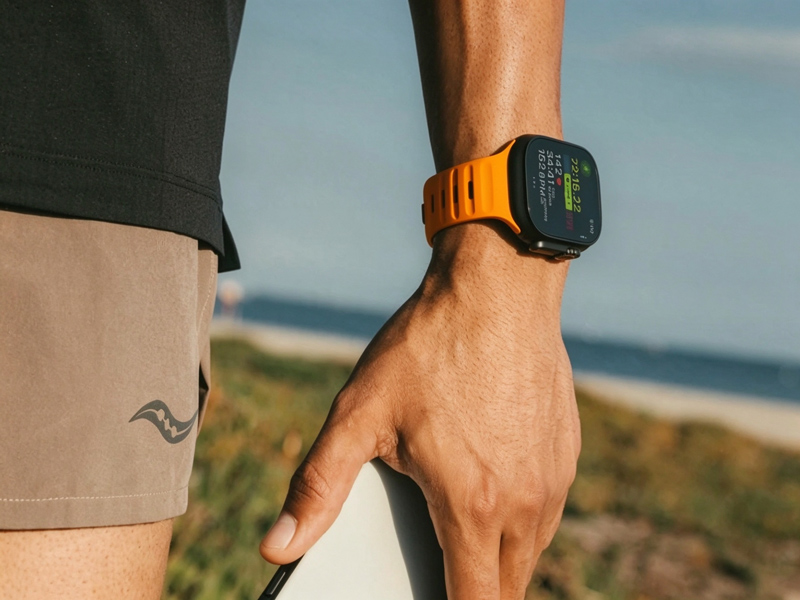
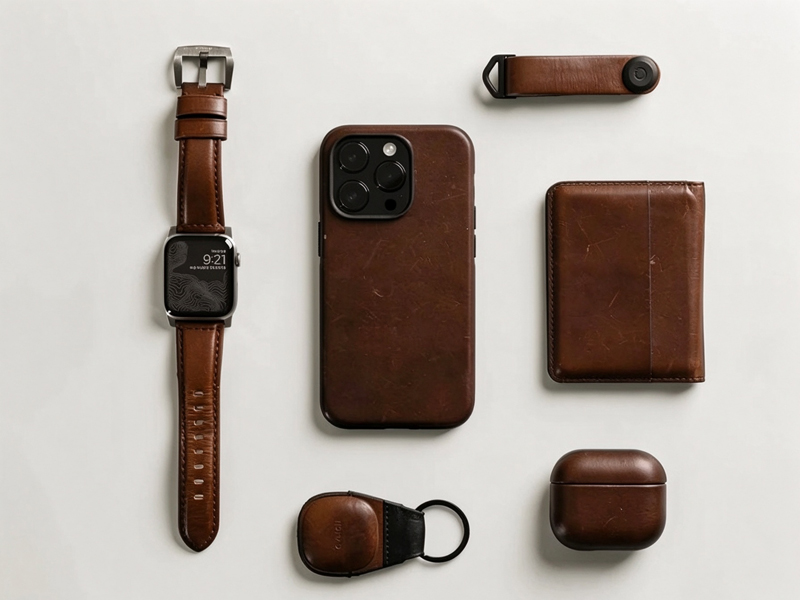
The materials file is where Nomad separates from every other accessories brand. The leather is Horween — the Chicago tannery operating since 1905, whose full-grain hides are the same stock American heritage-boot makers use — wrapped around cases, folios, Apple Watch straps, and wallets. The cables are braided with Kevlar, the aramid fiber of bulletproof vests, because a cable that fails is a sword that snaps mid-swing. The stance around the materials is stated by co-founder and head of product Brian Hahn in language no white-label operation would print: Nomad designs all concepts from the ground up rather than white labeling existing products — it costs more to do so, but the cost isn't as important as the value.
The distinction matters commercially: the accessories market is drowning in identical Alibaba-sourced cases with different logos, and the customer who can tell the difference is exactly the customer Nomad prices for. The retail partners who carry the line — the official-reseller pages repeat the values verbatim — are buying the stance as much as the SKUs.
From cables to a full carry system
The catalog grew along the doctrine's logic. Cables became chargers and power banks; chargers became wireless pads and stands; the phone begat cases; the case begat the Apple Watch strap, the AirPods case, the AirTag holder; the whole ensemble begat wallets, bags, and travel accessories — a full carry system for the person whose phone is the organizing object of their life. The iPhone 17 lineup, launched in September 2025, functions as a case study in how the doctrine compounds: modern leather cases at $55 to $85 in Horween or Ecco hides, a traditional leather case carrying an iPhone Air variant, rugged leather at $75, folios at $75 to $119 — with recycled aluminum buttons, fifty percent recycled polycarbonate in the chassis, an integrated glass camera button, and a recessed anchor for a new wrist strap woven through the case family.
The details are the argument: leather inside and out on the folio with no microfiber liner, because the liner is where cheap cases go to die; a camera button machined from glass rather than stamped plastic, because the camera is the phone's reason for being; recycled content in the parts you cannot see, because the doctrine does not exempt the hidden components.
Climate Neutral since 2020, and honest geography
The sustainability ledger predates the industry's scramble. Nomad earned Climate Neutral certification in 2020 — measuring, offsetting, and reducing the footprint across operations — and the materials file doubles as the environmental file: Horween leather from the United States, designed lifespans long enough that replacement is the exception, and a repair-and-patina culture in which a worn case is a used case, not a dead one. The geography is stated with the same plainness as everything else: products ship from Shenzhen and Hong Kong, where they are manufactured, with the American leather exported to meet the American-designed hardware.
For the storefront reviewer, the honest two-country ledger is the trust anchor: the company neither hides the China manufacturing nor overclaims the American leather, and the Climate Neutral certification — third-party audited, renewed annually — gives the environmental claims the paperwork the category usually renders as adjectives.
The honest texture of premium leather
Four honest cautions belong in the ledger. First, price: premium is premium — fifty to one hundred twenty dollars for a case, forty dollars for a screen protector, comparable figures across the carry system — a multiple of the mall kiosk that the materials and longevity justify on paper but that the budget buyer will feel at checkout. Second, manufacturing geography: the leather is American and the assembly is Chinese, and the customer who treats provenance as a binary will find the blend unsatisfying in both directions. Third, the ecosystem boundary: the catalog speaks iPhone fluently and Android in fragments — a Pixel Buds case and scattered support exist, but the design attention, the release cadence, and the camera-button integrations are Apple-first, and the Android loyalist will feel like a guest. Fourth, leather's nature: full-grain Horween develops patina — scratches and darkening that the faithful read as character and the finicky read as damage — and a brand built on a living material is a brand whose products visibly age, which is either the point or a flaw depending on the buyer.
None of these are contradictions; all four are the taxes on building accessories for the buy-it-once customer in a category optimized for annual replacement.
The verdict for the buy-it-once accessorizer
Nomad's storefront is the wallet-cable thesis run for fourteen years: two friends in Santa Barbara who shrank a charging cable to the size of a credit card, a Kickstarter that tripled its goal and drew the Times, a doctrine that calls the phone a sword and builds sheaths accordingly, Chicago leather and Kevlar cables in an industry that white-labels everything, a climate-neutral ledger that predates the fashion for one, and an iPhone 17 lineup whose recycled aluminum and glass camera buttons show the doctrine still compounding. The cons are the cons of the craft: premium prices, honest two-country manufacturing, an Apple-first catalog, and leather that ages in public.
Buy here if you buy boots by the welt and cases by the leather, if a cable braided with bulletproof fiber is the correct response to a drawer of dead cables, if a company that refuses to white-label is worth the multiple at checkout, and if patina is a feature in your vocabulary. Buy the mall case if the phone is a tool you replace on a schedule rather than a sword you keep. For the buy-it-once accessorizer who wants the carry to age better than the phone, this Santa Barbara storefront remains the category's most material answer — one credit-card cable, fourteen years of leather, and the wallet slot still full.