Jack black: the men's skincare pioneer named on a flight from dallas
Official homepage: https://www.getjackblack.com
Jack Black is the establishment answer on this tag — the brand that created the American men's prestige skincare shelf before the DTC rebels were born. Founded in Dallas in 2000 by a Mary Kay executive, her husband, and a colleague, it named itself on a commercial flight, sold first through golf clubs and a Dallas luxury store, became the number-one brand in US men's prestige skincare per NPD, and sold to Edgewell — the Schick parent — for roughly ninety million dollars in 2018. This review examines the flight, the blue bottles, and the honest value question its own fans keep asking.
Seventeen years at Mary Kay and a Dallas-to-New York flight
Curran Dandurand spent seventeen years at Mary Kay Cosmetics, rising to executive vice president for global marketing, before leaving in 1998 with the conviction that the personal care aisle had forgotten half the population. On a flight from Dallas to New York, she kicked around millennium-themed names until one stuck: Jack had to be easy to remember and not embarrassing for a man to say out loud — 'Jack is American,' she recalled — and the rhyming surname wrote itself. The company, launched in 2000 with her husband Jeff Dandurand and Emily Dalton, insists the name owes nothing to the actor, who would only become globally synonymous with the words later. The founding brief, per D CEO's profile, was to make a man feel masculine without hype or fluff — approachable, comfortable masculinity, as her marketing chief put it — starting with ten products mixed at a Carrollton, Texas industrial-park headquarters that still anchors the made-in-USA identity.
Golf clubs first, then Stanley Korshak
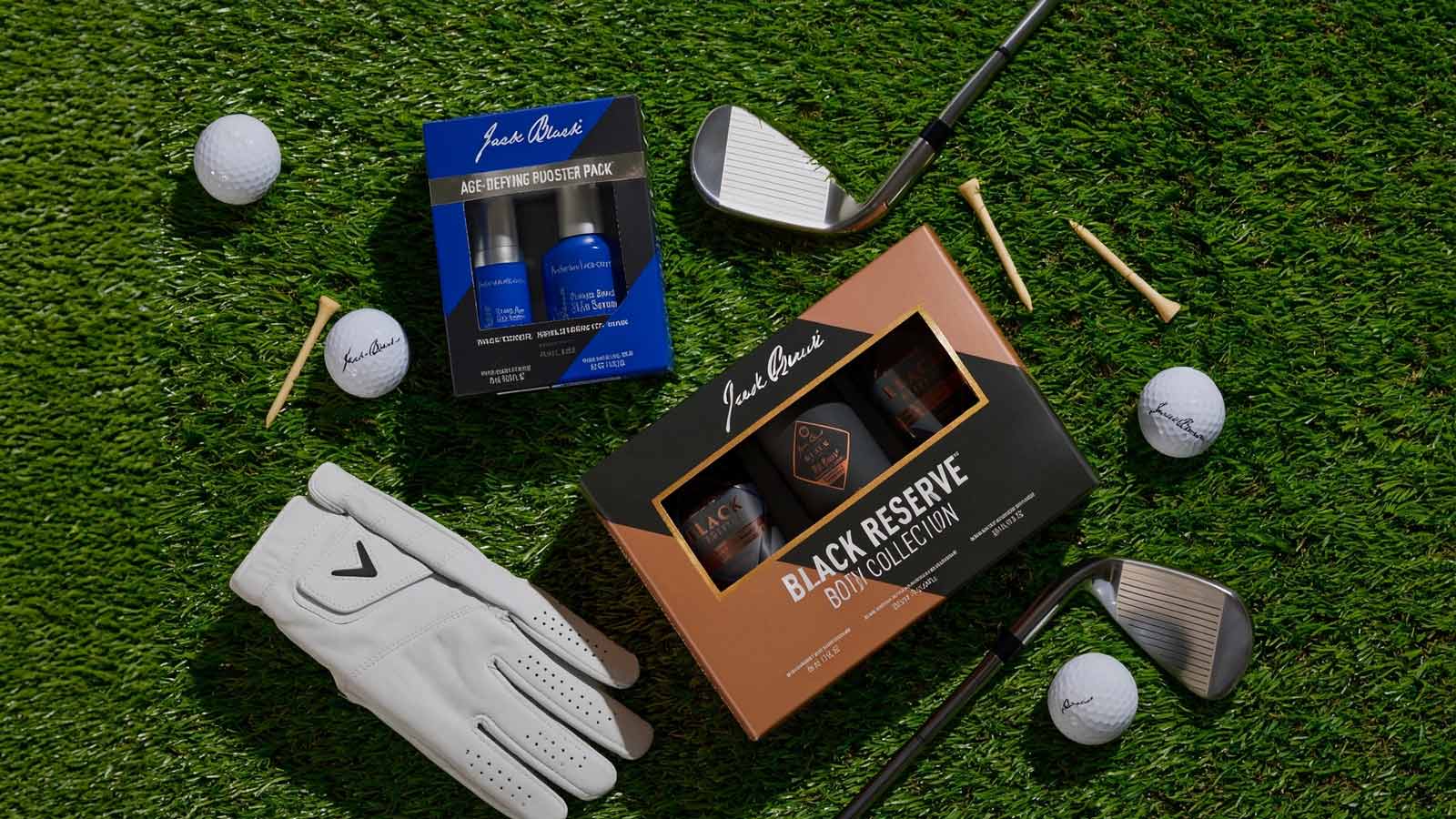
The go-to-market ladder was as un-DTC as it gets. Jack Black began by supplying cleansers and lotions to golf and country clubs, courting the active, affluent man where he already stood; the first true retail partner was Stanley Korshak, Dallas's luxury department store, followed by a single Nordstrom location, then the prestige cascade — Sephora, Ulta Beauty, Neiman Marcus, Bloomingdale's, Dillard's — with Amazon Luxury Beauty and the direct store rounding out the map. By 2012 the company counted some fifty products, roughly thirty employees full-time, and close to thirty percent growth in a year when even the Great Recession had not dented its low-double-digit pace. The walls of the headquarters, the profile notes, carry the celebrity receipts — a Stephen Colbert note telling Jack Black to stay brave, an Ashton Kutcher joke claiming the brand had kept him beautiful since birth.
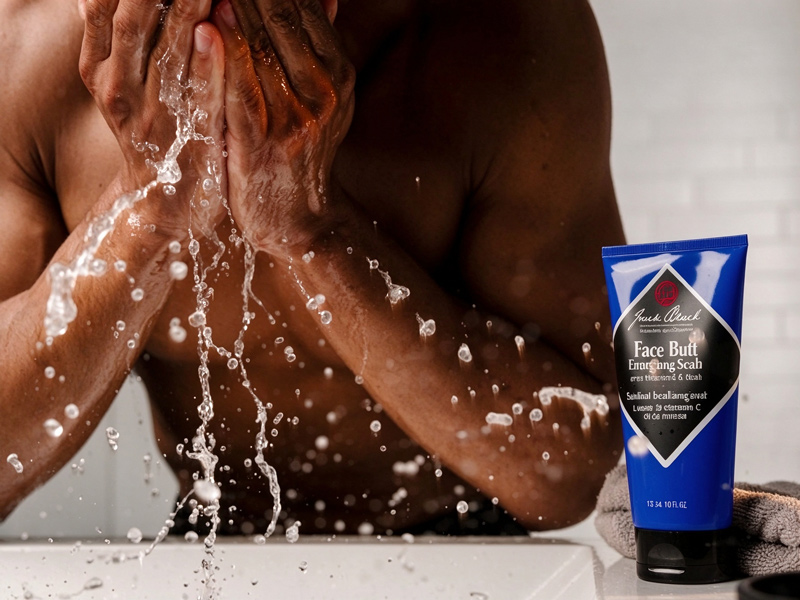
Approachable, comfortable masculinity, zero hype
The formulation doctrine predates the clean-beauty wave by two decades. Every product is fragrance-free or honestly scented, colorant-free, cruelty-free, sulfate-free, and dermatologist-tested; the copy promise printed everywhere is 'nothing complicated, nothing cosmetic, just superior skincare.' The icons earned their status through utility rather than ritual theater. Beard Lube, at seventeen to thirty-five dollars, is the brand's signature — a non-lathering conditioning shave cream that needs no brush or bowl and turns the morning rush into something tolerable, beloved by wet shavers precisely because it does not pretend to be traditional. Turbo Wash runs hair and body in one bottle; Pit Boss handles the underarm with an aluminum-conscious formula; the Double-Duty moisturizer carries SPF 20; the Intense Therapy lip balm became an accidental bestseller; and the portfolio runs all the way to protein-booster serums, a Blue Mark eau de parfum at over a hundred dollars, and a Nighttime BAK-up retinol alternative.
Number one in prestige, per NPD
The market research firm NPD Group certified the rise: by 2016, Jack Black was the number-one brand in US men's prestige skincare by retail dollar sales — the shelf-space king of the very category the DTC subscription rebels on this tag would later attack from below. The direct store reflects that establishment polish: free shipping from fifty dollars, two free samples with every single order, holiday gift-with-purchase codes like JETSET that add a travel bag and four mystery minis, and a full taxonomy across skincare, shave and beard, body, hair, and gifts. It is the anti-chaos catalog: every blue bottle photographed the same way, every claim hedged like a legal department wrote it — because one did.
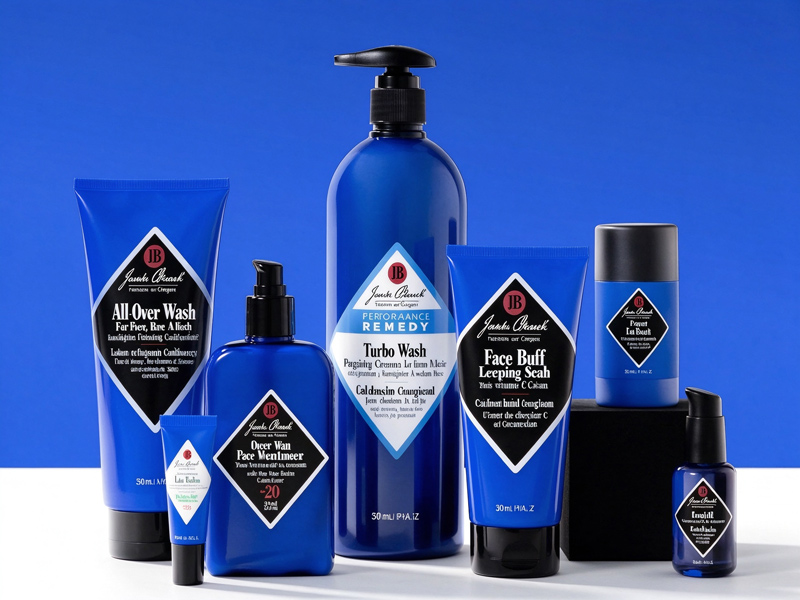
Ninety million dollars and a Schick in the family
Edgewell Personal Care — the St. Louis company behind Schick, Wilkinson Sword, Edge, and Bulldog skincare — announced the acquisition on January 18, 2018, closing that March; reported figures put the price near ninety million dollars net of cash. The irony writes itself: the pioneer of men's non-cartridge grooming now sits inside the house of the cartridge, a year before Edgewell would announce its own ill-fated, regulator-termininated purchase of Harry's. The Dandurands' statement at the time was gracious — an excellent home, superior products that work as advertised, never tested on animals — and the brand has continued as the prestige jewel of a mass shaving portfolio, its blue bottles unchanged by the ownership, its distribution deepened by the parent's shelf-space muscle.
Fine products at twice the drugstore price
The honest verdict comes from the community that has used it longest. Veteran Badger and Blade threads land on a consistent consensus: Jack Black products are fine — genuinely good formulations, paraben- and sulfate-free, pleasant to use — but they are not obviously twice as good as the half-priced pharmacy staples, and several longtime users say they prefer Kiehl's equivalents in the same bracket. The EWG's Skin Deep database rates much of the line 'moderate hazard' on ingredient transparency grounds, as it does most mass skincare. The counterweights are real: the sample generosity, the travel-ready formats, the SPF discipline, and the sheer reliability of a twenty-five-year-old formula library. The correct framing, as the forum old-timers put it: if you have the money, not a horrible investment; if you would rather save it, the drugstore aisle forgives you.
The last dab of the blue tube
Jack Black's store sells the category's grown-up: a twenty-five-year-old formula library in signature blue, built on a flight, proven at NPD, and now parked inside the Schick parent's portfolio. Where this tag's rebels sell disruption, Jack Black sells the establishment done right — samples with every order, SPF where it belongs, and Beard Lube in every gym bag. Its trade-offs are the honest ones of the incumbent: prices that invite the drugstore comparison, corporate ownership, and formulations that aim for reliable rather than revelatory. But for the man who wants his skincare to work, travel well, and never embarrass him in a Nordstrom bag, this remains the blue standard the category was built around — and the name, as promised, is easy to say.