How tribit made $50 speakers that rival JBL — without selling you a logo
Official homepage: https://www.tribit.com
Tribit's founding observation was a gap with nothing in it. In 2017, the portable-audio market split cleanly in two: cheap speakers that were easy to buy and sounded like it, and premium speakers with impressive technology and equally impressive price tags. The team of acoustic, electronic, and mechanical engineers who founded Tribit in that year asked the question that became the company: why couldn't people get genuinely good sound without spending a fortune? Nine years later, the answer sits on shelves from Amazon to AliExpress — StormBox speakers that professional reviewers rank against JBL and Bose at half the price, an XSound line that rewrote the sub-fifty-dollar category, and a parent company that just listed on the Beijing Stock Exchange. This review examines the storefront dimension by dimension: the gap thesis, the do-re-mi philosophy, the ladder, the reviewer consensus, and the honest arithmetic of value audio from a company that has never once asked you to pay for its name.
The gap between cheap junk and premium logos
The company's own nine-year retrospective tells the founding story as a market failure it set out to fix. When Tribit began in 2017, the portable-audio shelf was bifurcated — inexpensive speakers that were easy to buy, and premium speakers with impressive technology and equally impressive price tags. The founders, a team the parent company describes as professional acoustic, electronic, or mechanical engineers from diverse audio fields, concluded the middle was unoccupied: nobody was building speakers that were fun to use, easy to take anywhere, and — most importantly — sounded better than their price suggested. The founding question became the brand: why couldn't people get genuinely good sound without spending a fortune?
The brand name encodes the answer. Tribit decodes music with the notes do, re, mi: do epitomizes do the best; re is derived from rely-on; mi symbolizes musicians' music mix. The formula — engineering first, reliability next, the music mix as the point — has produced a product family that the company's parent describes as recommended hundreds of times by well-known overseas media, with the StormBox Micro's CNET Editors' Choice for 2020 as the early breakout validation.
Great beats to the masses, minus the logo tax
The philosophy the brand prints on its birthday pages is a direct challenge to the category's economics: more sound, more technology, more of what matters — without making you pay for a name. The line is the entire positioning. Where JBL, Bose, and Ultimate Ears price in decades of marketing and retail presence, Tribit prices in components: the money goes into driver configurations — dual passive radiators, Class-D amplifiers, custom DSP — that the spec sheets document model by model. The proprietary tuning the company calls XBass, a DSP bass-boost algorithm paired with app-accessible nine-band EQ, is the acoustic signature across the range.
The trade-offs are equally stated, and the honest ledger must carry them: no high-resolution Bluetooth codecs like LDAC or aptX Adaptive on most models, Bluetooth versions that vary by generation, and no built-in voice-assistant microphones beyond basic call pickup — the engineering budget went to drivers and batteries, not to features the logo brands use to justify their premiums. For the buyer who listens rather than badges, the exchange rate is favorable.
From the $33 XSound Go to the $300 Blast
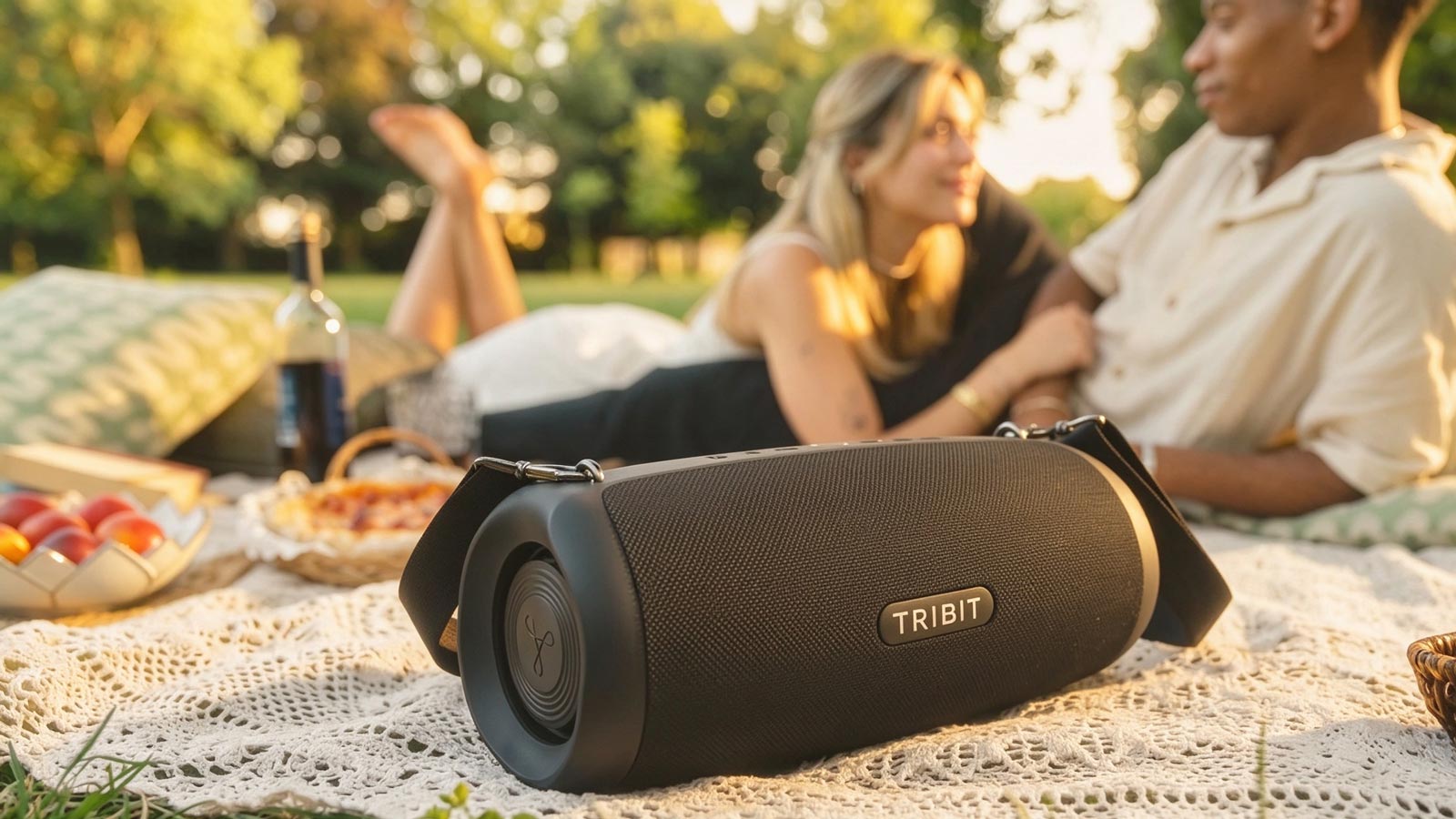
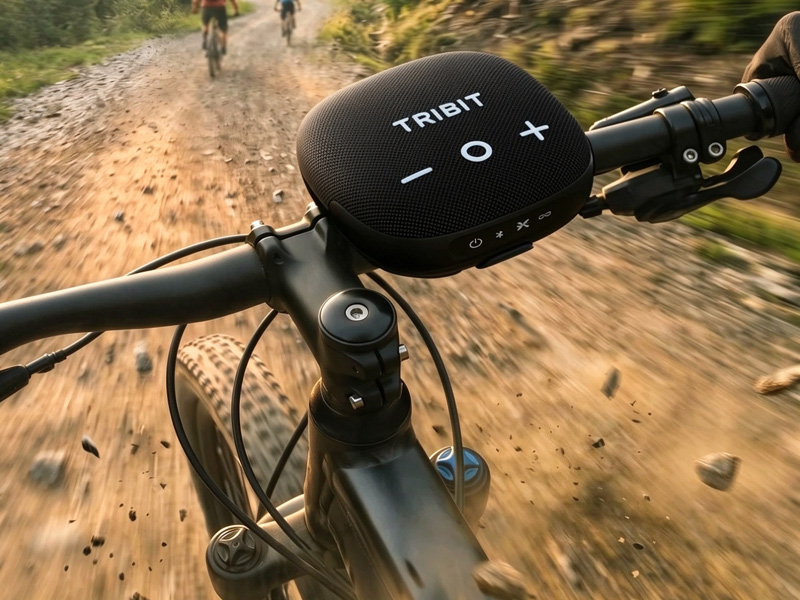
The ladder spans the entire use-case map at prices that undercut the logo shelf at every rung. The entry: the XSound Go, a sixteen-watt stereo unit with twenty-four-hour playback under fifty dollars — the model that the brand's retrospective names as the beginning. The middle: the StormBox Micro 2 and 3, the Flow and Lava, IP67-and-better portables in the seventy-to-one-hundred-thirty-dollar band with TWS stereo pairing and shoulder straps. The party end: the StormBox Blast and Blast 2 — the latter a two-hundred-watt beast with a dedicated subwoofer, dual quarter-inch karaoke jacks, customizable LED lighting, and thirty hours of battery at a list price of three hundred dollars that frequent sales pull toward two-fifty.
Around the speakers orbit the FlyBuds earbuds and the accessory program, and the distribution runs everywhere a value brand should: the company's own Shopify storefront, Amazon, AliExpress, and regional distributors — the India storefront operates as a separate legal entity, and the European expansion has been deliberate, with product-content syndication through Icecat dating to 2021 and retail reach widening since.
The reviewer consensus, shelf by shelf
The professional verdicts form one of the most consistent review stacks in the budget category. PCMag's StormBox Pro test found it coming very close to outperforming the $179.95 JBL Charge 5 and the $149.99 Sony SRS-XB33 at a notably lower $119.99 — while adding stereo, speakerphone, and Siri access the Charge 5 lacked. TechRadar's StormBox Blast review scored value five out of five, calling it simply unbeatable value — a stone-cold sound-per-pound steal at roughly half the price of the Ultimate Ears Hyperboom class, with the sound quality score also five. Tom's Guide's 2026 portable-speaker coverage concluded that the fifty-dollar StormBox rival performed against big names like JBL and Bose, naming the new StormBox Micro 3 a sub-seventy-dollar JBL rival.
The honest caveats repeat across the stack: TechRadar's Blast verdict warned that the XBass mode is not recommended in most situations and noted the unsubtle design; Trusted Reviews' StormBox 2 found the default tuning bass-light and requiring manual EQ work where JBL's best sound right out of the box — the budget price buys the hardware, and the buyer spends ten minutes in the app earning the sound. The reviewer consensus is not that Tribit beats the logos unconditionally; it is that the gap is smaller than the price gap, by a wide margin.
The parent company lists on the exchange
The corporate chapter arrived in 2026 with little Western attention. Tribit's ultimate parent — Qian'an Technology, the Chinese firm operating under the Thousandshores umbrella that also owns the Ohuhu art-supplies, Sportneer sports, and iClever accessories brands — completed its initial public offering on the Beijing Stock Exchange in July 2026, ticker 920065. The prospectus-level structure the public filings reveal: a portfolio of clearly positioned consumer brands, each with distinctive market positioning, run through Shenzhen operations with manufacturing contracted to ODM partners — a common structure among non-fabless audio brands, where the company owns acoustic tuning, enclosure design, and Bluetooth-stack optimization while sharing certain driver configurations with mid-tier OEMs.
For the storefront reviewer, the listing matters as an accountability upgrade: a public parent means audited financials, a governance structure, and a brand that is one of several in a portfolio rather than a lone operation — stability and anonymity in equal measure.
One measurement project dissents
No honest review of a value-audio brand can skip the dissenter. An independent Japanese measurement project that publishes scientific-validity scores for audio brands rated Tribit 0.2 out of 1.0 — measured performance significantly below transparent levels, with the flagship XSound Go showing frequency-response deviations of plus or minus five decibels and high frequencies described as thin and fragile in the project's testing. The same project's score for the mid-range StormBox Flow was a more middling 0.5, with no independent third-party measurements available to verify manufacturer specifications.
The dissenter is one project, and the reviewer's weighing is simple: the professional listening reviews and the measurement project are answering different questions — how it sounds in a room versus how flat the response curve measures — and the buyer who cares about the second question is not the buyer Tribit is built for. But the 0.2 score belongs in the ledger precisely because the brand's own marketing makes engineering claims; value is a claim that cuts both ways.
The honest texture of value audio
Four honest cautions belong in the ledger. First, the facelessness: beyond the do-re-mi philosophy and the founding-year gap thesis, Tribit publishes no founder narrative, no named leadership, no garage legend — the brand is its spec sheets and its reviews, a structure the Shenzhen-ODM model produces efficiently and forgettably. Second, the codec and feature ceiling: no LDAC or aptX Adaptive on most models, no voice assistants, no multi-room ecosystem — the value bargain explicitly declines the premium feature list. Third, the tuning labor tax: several reviews note that the best sound requires manual EQ work in the app, where the logo brands tune correctly at the factory — the buyer's ten minutes is part of the price. Fourth, the crowded value shelf: EarFun, Soundcore, and a dozen Amazon-native rivals occupy the same gap Tribit identified, and the differentiation runs on review scores rather than moats — a strong position in a contested shelf, held by consensus rather than by lock-in.
None of these are contradictions; all four are the taxes on selling better-than-the-price sound to people who read before they buy.
The verdict for the logo-weary listener
Tribit's storefront is the gap thesis run for nine years: a team of audio engineers who saw the shelf split between junk and logos, built the do-re-the-mi doctrine around driver budgets instead of marketing budgets, shipped a thirty-three-dollar speaker that the professional press ranks against JBL, scaled the StormBox ladder to a two-hundred-watt three-hundred-dollar party machine with karaoke jacks, collected Editors' Choice awards and a Red Dot, expanded from Newark to Bengaluru, and watched its parent list on the Beijing exchange while never once asking a customer to pay for the name. The cons are the cons of the value model: facelessness, codec ceilings, tuning labor, and a shelf where every rival claims the same arithmetic.
Buy here if your ears outrank your badge preferences, if a five-out-of-five value score from three professional outlets beats a logo on the grille, if you will spend ten minutes in the EQ app earning the sound the price implies, and if the StormBox Micro 3 in a bike bottle cage at under seventy dollars is the correct answer to the JBL question. Buy the logos if out-of-box tuning, codec support, and resale value rule the spreadsheet. For the logo-weary listener who wants the review stack without the marketing budget behind it, this Shenzhen storefront remains the value shelf's most documented answer — one gap in the market, nine years of better beats, and the name still free.