From cable modems to the desk hi-fi: kanto's receiver-less revolution
Official homepage: https://www.kantoaudio.com
David Reid learned consumer electronics by designing cable modems — the unloved black boxes of the broadband era — and selling the company that made them to an American telecom giant. What he brought out of that apprenticeship was not fame but fluency: how to design in Canada, manufacture in Asia, and ship quality at scale for companies whose logos were not his own. In January 2007 he turned the fluency on itself, founding Kanto in Toronto, and the brand's first hit was an award-winning Apple docking station. But the thesis that defined it arrived with the YU series: genuine hi-fi without a receiver, a rack, or the usual fuss — powered speakers that put real stereo on desks and shelves at prices the passive-plus-amplifier establishment could not match. This review examines the storefront dimension by dimension: the OEM apprenticeship, the docking-station beachhead, the YU thesis, and the honest arithmetic of quiet Canadian value-hi-fi.
An apprenticeship in other people's electronics
The founder's first career was invisible by design. David Reid grew up in a house where his father tinkered, bought and sold audio gear, and filled the rooms with music — the origin of the passion, per his own interviews — but his professional education came in telecommunications. He led the design and manufacturing of cable modems for several large Canadian cable companies, learning the two disciplines that consumer audio rarely combines: industrial design and offshore production. The company he grew was eventually sold to a large U.S.-based telecom, and the exit supplied both the capital and the blueprint for what followed.
The Kanto founding in January 2007 was, per the company's own materials, a vision to build quality products with style and offer excellent value to customers throughout their life cycle — the phrase life cycle betraying the OEM engineering background, where products are designed for manufacturability and longevity rather than launch-week glory. Many years designing and manufacturing OEM products for large consumer electronics companies gave the founders, as the company's press boilerplate puts it, the passion and understanding to create a new brand with outstanding potential.
The docking station that opened the door
The first product out of the gate mapped the strategy in miniature. Kanto's debut hardware was an Apple docking station — an accessory category where design discipline and manufacturing cost control decide who wins, and where the company could compete on the exact skills its founder had just spent a decade honing. The dock won awards and, more importantly, relationships: Apple-adjacent retail placement, accessory-buyer credibility, and a template for what the company calls its signature combination of Canadian design and Canadian-and-Asian logistics.
The docking market's lesson was the category's oldest: the products people attach to their beloved devices inherit the affection, and the maker who nails the industrial design of the accessory wins a loyalty the device makers themselves rarely achieve. Kanto's subsequent expansion — into powered speakers and the mounting hardware around them — followed the same logic: find the place where the customer's existing love needs a better object, and build the object with the discipline of a contract manufacturer and the eye of a design studio.
The YU thesis: hi-fi without the receiver
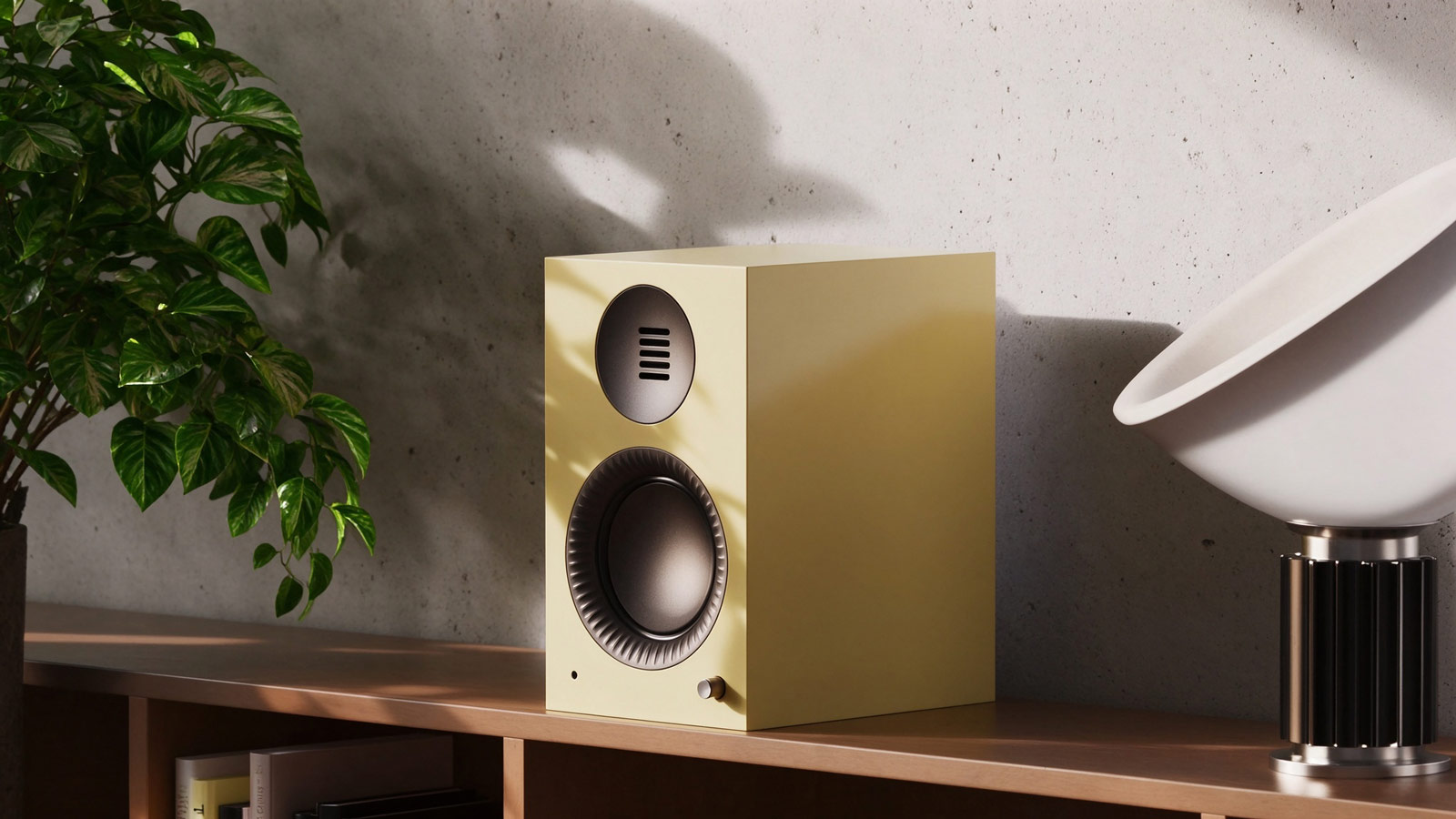
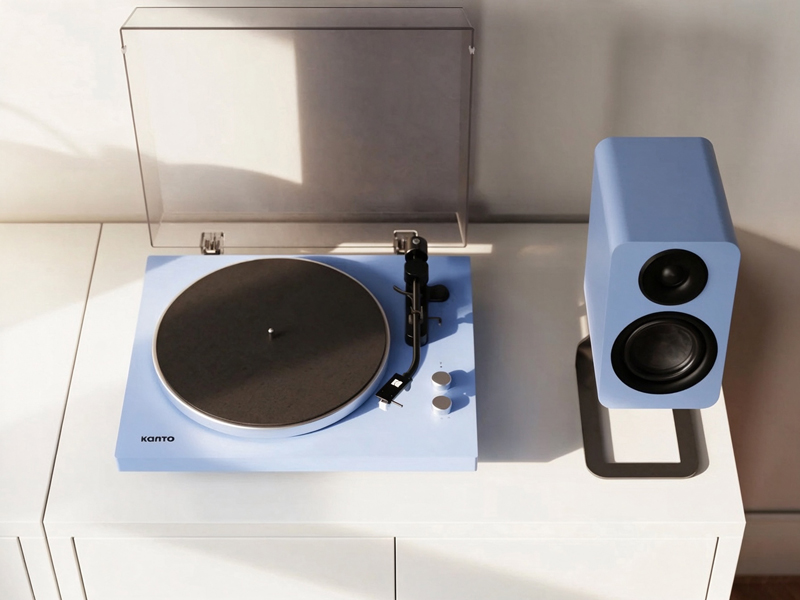
The YU series, launched in the early 2010s and iterated through the compact YU2, the mid-size YU4, and the room-filling YU6, carries a thesis the company's About page states plainly: genuine hi-fi without a receiver, a rack or the usual fuss. The powered-speaker format — amplifiers built into the speaker cabinet, inputs for every source from turntable to Bluetooth — eliminates the component stack that had gated entry-level stereo for decades. The buyer of a YU4 gets phono, optical, Bluetooth, and auxiliary inputs plus a subwoofer output in a single pair of boxes, at a price where the passive equivalent would not yet have bought the amplifier.
The review record validates the democratization case. Audio Advice's comparison of the YU line praised the sound-per-dollar across all three sizes; Positive Feedback's long-form audition of the YU6 — driving the speakers from an iPad over Tidal — reported a soundstage and imaging that had the reviewer immediately taken aback, with acoustic guitar extending well beyond the physical placement of the speakers and vocals liquid and centered, adding that monitors five times the cost had not provided that level of soundstaging. The powered format's quiet revolution is exactly this: the performance conversation moved from the amplifier rack to the speaker cabinet, and Kanto was early to the shift.
The TUK flagship, and the accessory orbit
The top of the ladder is the TUK, the flagship that pushes the powered format toward audiophile credibility: USB digital input with a built-in DAC, Bluetooth aptX HD, an expanded feature set, and the industrial-design polish that justifies the premium over the YU line. Around the speakers orbits the accessory catalog Kanto built from its mounting heritage — height-adjustable stands, the SUB6 and SUB8 subwoofers sized to pair with each YU model, wall mounts, and cables — turning a speaker purchase into a system purchase with the same completeness that powered formats promise.
The ecosystem logic is the quiet differentiator against the Amazon-value competition: a buyer who chooses the YU6 and the matching SUB8 has a room-filling system engineered to work together, not a speaker plus whatever sub happened to be cheapest. For the desk and near-field listeners who form the category's core, that completeness — stands, subs, and inputs designed as one system — is the argument that a no-name box cannot answer.
Canadian design, offshore manufacturing honesty
The geography is stated without varnish: Canadian design and engineering, Asian manufacturing, and the logistics to serve both hemispheres. The honesty matters in a category where rivals variously overclaim their provenance or hide it entirely; Kanto's materials name the arrangement as a strength — the design sensibility and QA discipline of a Toronto studio paired with the manufacturing economics that make the YU price points possible. The OEM years show in the details reviewers praise: clean fit and finish, thoughtful input placement, and the reliability record of a company that used to build things for companies that do not tolerate failures.
The absence of mythology is itself the texture: no garage legend, no celebrity investor, no crowdfunding page — a company that got good at electronics inside other people's logos and then put its own name on the box, quietly and without a launch spectacle.
The honest texture of a quiet brand
Four honest cautions belong in the ledger. First, the story's modesty: Kanto offers no founding myth, no famous backers, no headline-grabbing milestones — the brand story is competence, and competence is a harder thing to love from a distance than a narrative. Second, the crowded flanks: the powered-speaker shelf holds Audioengine above in polish, Edifier below in price, and Fluance beside in Canadian value-hi-fi — the buyer's comparison shopping is real and the differentiation runs on details rather than category ownership. Third, the ceiling of the format: powered speakers amortize their amplifiers inside the box, meaning a failed amp ends the speaker's life where a passive system's amp could be swapped — the convenience has a longevity trade the product pages do not lead with. Fourth, the scale: a private, founder-controlled company with no public financials and a support organization sized to its volume — good, personal, and finite.
None of these are contradictions; all four are the taxes on being the quiet company in a loud shelf.
The verdict for the near-field listener
Kanto's storefront is the OEM-to-own-brand thesis run for eighteen years: a cable-modem engineer who learned manufacturing inside other people's logos, a Toronto studio that won an Apple-dock award as its calling card, and a powered-speaker line that put genuine hi-fi on a desk without a receiver, a rack, or the usual fuss — iterated patiently through the YU2, YU4, and YU6, scaled up the TUK flagship, surrounded by stands and subwoofers designed as one system, and sold with the unglamorous honesty of Canadian design and Asian manufacturing printed on the page. The cons are the cons of the quiet: no myth, crowded flanks, the powered format's longevity trade, and boutique-scale support.
Buy here if your desk or shelf deserves real stereo and your closet deserves none of the component-stack clutter, if the YU thesis — phono in, Bluetooth in, sub out, done — matches the listening you actually do, if a Canadian design studio's take on value-hi-fi beats the Amazon no-name at only a modest premium, and if eighteen years of quiet competence is the company biography you trust more than a launch spectacle. Buy Audioengine if the polish premium is worth it to you, or Edifier if the spreadsheet rules. For the near-field listener who wants the receiver-less revolution in its most honest Canadian form, this Toronto storefront remains the category's most quietly competent answer — one cable modem, one docking station, and the desk finally singing.