Henson shaving: a mars rover parts shop takes on the razor racket

Official homepage: https://hensonshaving.com
Henson Shaving is the grooming store run like an aerospace machine shop — because it is one. For two decades the Ontario facility machined components for the OneWeb satellite constellation and the ExoMars rover, parts that could never come back for repairs, and in 2020 two of its machinists turned that obsession with longevity on the humble safety razor. The result holds a blade to tolerances of five ten-thousandths of an inch, sells a lifetime of shaves for pennies a week, and refuses subscriptions on principle. This review examines the geometry, the economics, and the complaints its perfect engineering cannot silence.
Parts for Mars that can never come back
The company's About page opens with its credentials rather than its product: twenty years making parts for large aerospace projects, including critical components for the OneWeb constellation and pieces for the ExoMars rover. The paragraph that follows explains the philosophy those projects drilled in — when parts cannot return to the shop for repairs, they simply have to work for decades — and why a razor, the most disposable object in the bathroom, became the obvious next product. Two machinists, the site's origin story says, looked at the multi-blade cartridges and traditional safety razors on the market in 2020 and saw the same flaw in both: wiggling blades. Skating on loose blades or cutting carrots with a flexing knife gets the job done without accuracy or safety; the cartridge industry's answer, they concluded, was to sell blades rather than support them.
Aluminum thirteen, machined to five ten-thousandths
The engineering answer is the AL13 — aluminum being, as the site notes, the thirteenth element — machined at the same Ontario facility to the AS9100 aerospace quality standard, with critical dimensions held to plus or minus five ten-thousandths of an inch through machining and anodizing. That rigidity kills what wet shavers call chatter, the microscopic blade vibration that produces razor burn and ingrown hairs, and the head geometry fixes the blade at the optimum thirty-degree shaving angle so no technique is required to find it. A channel in the threads traps grit so the handle never binds, exit channels flush hair and lather to prevent clogging, and the Type II anodized finish resists scratching rather than flaking. Aggression is chosen at purchase, not adjusted: mild at a 0.68-millimeter blade gap, medium at 0.85, and aggressive at 0.98 — the last, in an endearing quirk, available only in gray.
Half the width of a human hair
The number Henson leads with is almost absurd in its smallness: blade exposure of approximately 0.0013 inches — thirty-three microns, roughly half the width of a human hair. Every cartridge razor exposes more blade and calls the resulting irritation a feature; Henson's argument is that exposure is a geometry problem with a correct answer. At thirty-seven grams the razor is light enough to steer with fingertips, which keeps pressure low and consistent — the second half of the irritation equation. Reviewers across the shaving press land on the same conclusion: Cool Material calls it the best shave ever and a bargain at twice the price, Sharpologist documents the chatter-free engineering, and long-form hands-on reviews praise the knurled grip and the near-absence of learning curve for cartridge converts.
A dollar a month, no subscription required
The economics are the manifesto. Standard double-edge blades cost ten to fifteen cents each, the company notes — you do not need to buy them from Henson, and the razor accepts any brand — working out to roughly two or three dollars a year for most shavers. There are no subscriptions, no proprietary refills, and no planned obsolescence: the lifetime warranty promises a razor to pass down, the packaging is entirely plastic-free, and the site tallies the environmental ledger with a blunt statistic — more than two billion disposable razors and cartridges reach landfills every year. HSA and FSA eligibility, a hundred-day money-back guarantee, and free US shipping over one hundred twenty-five dollars round out a policy stack that reads like a rebuttal of everything the cartridge aisle stands for.
The Ti22 and the 940,000th razor
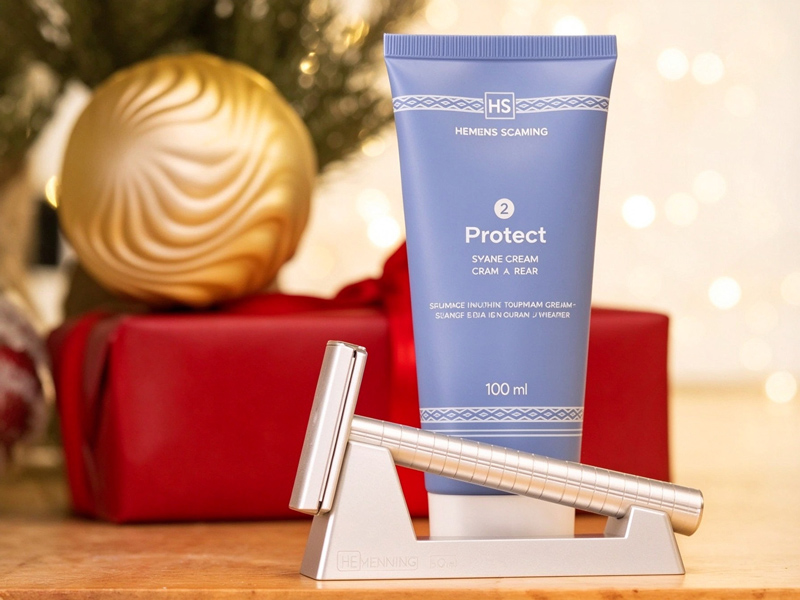
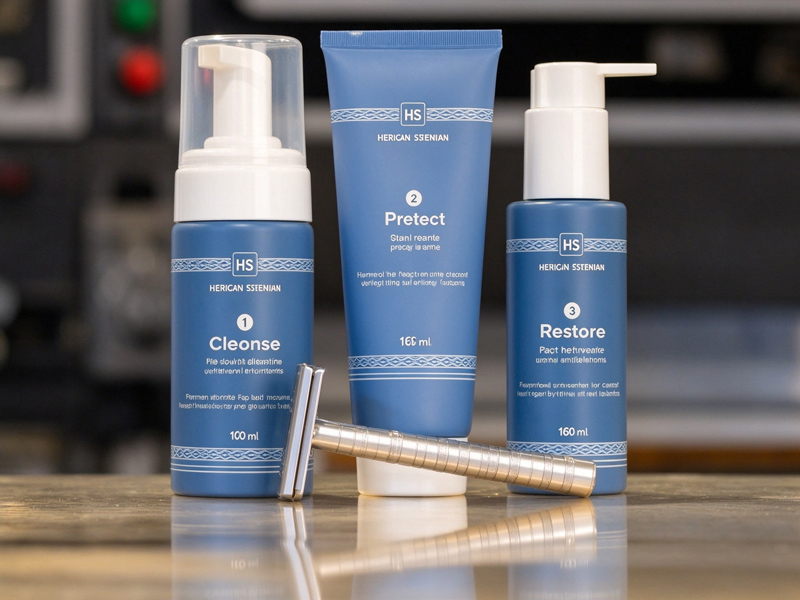
The catalog has grown past its aluminum debut while keeping the same logic. The AL13 arrives in Jet Black, Steel Blue, Copper, Tan, and Aircraft Aluminum; the Ti22 upgrades to titanium for those who want more heft; a single-edge variant serves straight-razor converts; and Henson's own RK blades — manufactured to match the razor's exact dimensions — sell alongside the company line that any blade works. Around the razors sit a small accessory ecosystem: a thirty-dollar stand, a leather head cover, Protect shave cream, and bundled shave systems discounted up to thirty percent. The storefront now reports more than nine hundred forty thousand razors sold, ships from regional US, UK, and Japan stores, and delivers in roughly five to seven days by published shipping estimates.
Blades that rust in twenty-four hours, and spam
The honest ledger lives on Trustpilot, where the rating sits at a mediocre 3.2 out of five — a striking contrast to the uniformly glowing press. The complaints are specific: one reviewer calls the razor cheap aluminum sold at a silly premium and claims the included blades rusted within twenty-four hours; another describes a return request bouncing as undeliverable after paying ninety-five dollars; several others accuse the company of aggressive retargeting emails after they abandoned a cart. None of these surface in the shaving-press reviews, which are typically seeded with free product — the gap between curated enthusiasm and unprompted customer experience is the review ecosystem's oldest story, and Henson is its current case study. The engineering appears genuinely excellent; the service and marketing machine around it, several owners report, is not.
The last pass of the aerospace razor
Henson's store sells the most honestly engineered razor on this tag: a blade held to spaceflight tolerances, at a purchase price under eighty dollars, with running costs measured in pocket change and a lifetime warranty behind it. Its trade-offs are equally legible: the fixed geometry means choosing your aggression at checkout rather than dialing it, the featherweight aluminum feel will not satisfy heavy-handle traditionalists, and the Trustpilot record says the service experience sometimes fails to match the machining. But for the cartridge-weary shaver who wants the shortest path to a chatter-free morning — and resents a subscription for the privilege — this is the engineering answer, built by people whose day job was making sure things work for decades where no one can fix them.