A food runner, a wooden prototype, and $60 million of backers: the peak design story
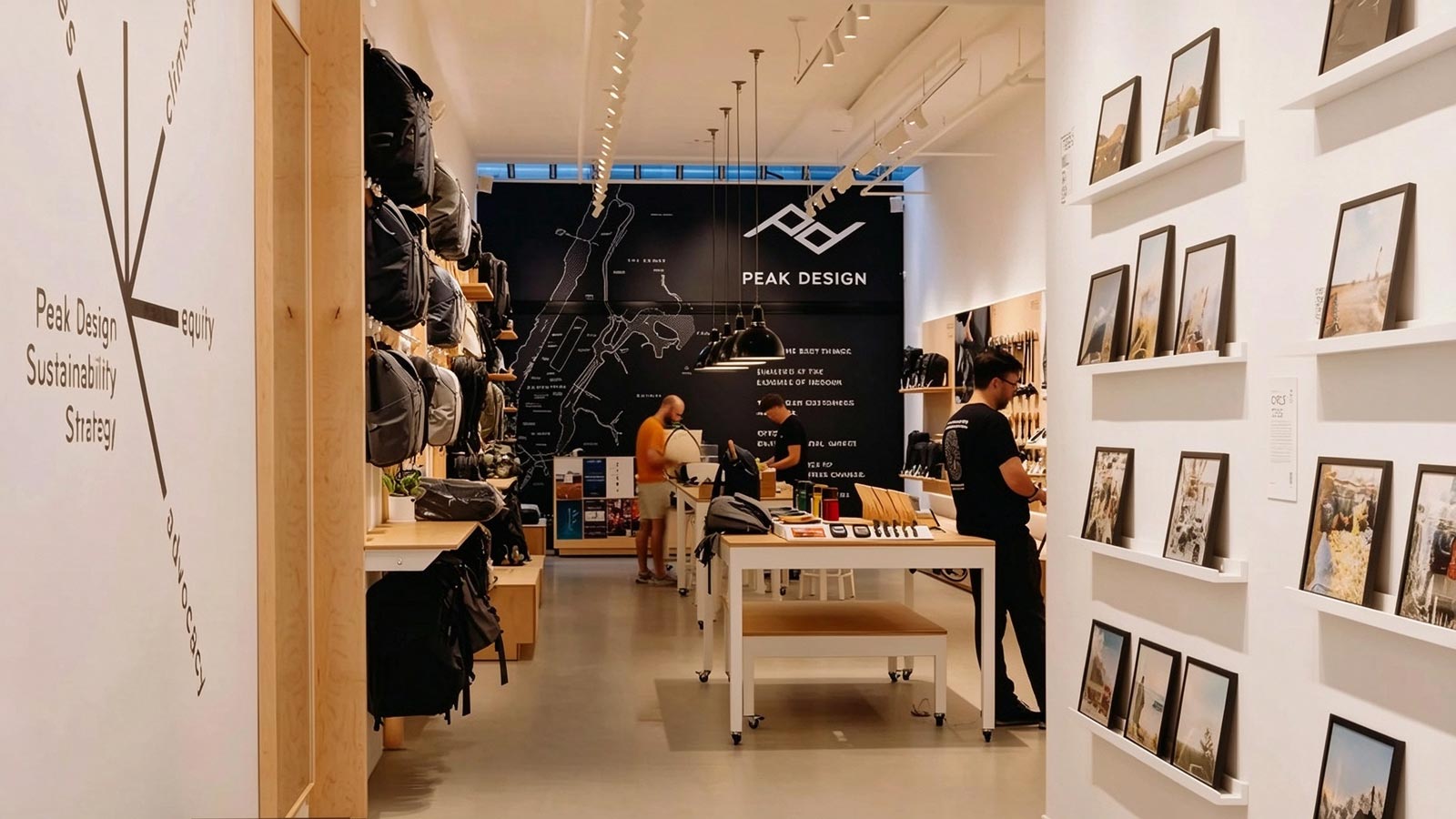
Official homepage: https://www.peakdesign.com
Peter Dering ran out of money building his first product and took a job as a restaurant food runner — the lowest position in the building — while his girlfriend was pregnant and his prototype was still a piece of wood. Two years later, his company had raised more money on Kickstarter than any active company in the platform's history, and it has repeated the trick fifteen times since — more than $60 million from over a hundred thousand backers — without ever accepting a dollar of outside investment. Peak Design, the camera-carry and travel-gear company Dering founded after a four-month trip around Asia, now makes everything from camera clips to carry-on luggage, pays its staff through a fairness doctrine that has produced zero full-time resignations, and guarantees every product for life. This review examines the storefront dimension by dimension: the wooden prototype, the crowdfunding constitution, the fairness doctrine, and the honest arithmetic of premium gear sold to a crowd it treats as owners.
A food runner with a wooden prototype
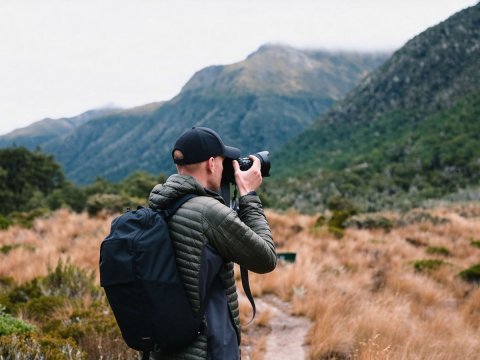
The origin begins with a leave of absence. In 2008, Dering — an engineer by training — took time off from his job to travel Asia for four months, camera in tow, and discovered that carrying a DSLR was the worst part of every good day. The camera swung from the neck, banged on the chest, and had to be re-secured to the backpack strap with a carabiner every time the terrain changed. Home again, he quit his job and spent ten months designing a rigid clip that would holster the camera on any strap — the first prototypes carved from wood, built with no idea how one actually brings a product to market, made up as he went along.
The money ran out first. Dering has told the story on podcasts without varnish: he was out of funds, working twenty hours a week as a food runner at a restaurant — the lowest job in the building, he notes — with a baby on the way and a relationship under the strain of both. The breakthrough came on a cross-country hike when he met Dave Stoltz, a machinist, whose metal prototype of the clip, in Dering's phrase, just worked — it worked so much better than I could have ever dreamed of. The cost to make was $13.48; the selling price would be $50.
Gizmodo made the company in a day
The launch mechanism was almost an accident of timing. Around the time Dering was searching for a way to market the clip, a friend's Kickstarter campaign for an iPod wristband raised nearly a million dollars, and three people mentioned it to him in the same week — he realized Kickstarter was the missing piece of the puzzle. The Capture Camera Clip campaign launched in May 2011 with a $10,000 goal and closed at $364,698 from 5,258 backers, the second most-funded design project the platform had seen. The inflection point came on May 3, when a Gizmodo article ran; the campaign gained roughly $70,000 that day, and Dering, doing the math on a $13.48 cost against a $50 price, concluded he had a profitable business after two days of selling.
The first year set the operating pattern the company still follows: grow as fast as you can afford to grow, buy what you can afford, sell out, and let the crowd fund the next product rather than a bank.
The second campaign, and its crisis of conscience
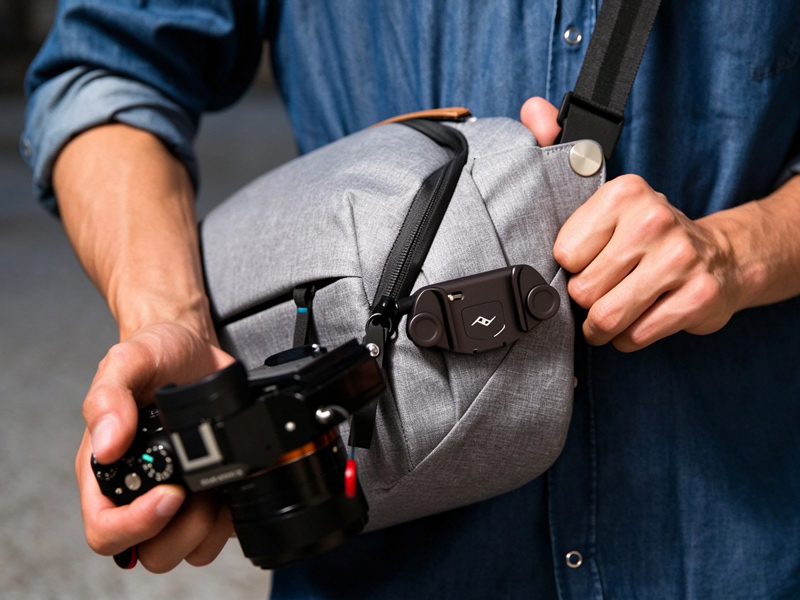
The second Kickstarter nearly did not happen — out of conscience. The platform in 2012 was understood as a place for independents and dreamers, and a company running a second campaign risked looking like a tenant refusing to leave the starter apartment. The founders reached out to Kickstarter itself for guidance, got no definitive answer — nobody willing to say yes, nobody willing to say no — and went ahead anyway, dedicating a full twenty percent of the campaign video to explaining why they had returned. The backers voted with their wallets: $215,721 for the Leash and Cuff, and a precedent that turned into the company's constitution.
The reasoning Dering gave then still governs the storefront: Kickstarter was ten times more potent than any other selling technique, the backers genuinely cared, and taking outside investment instead would have been letting those earliest supporters down — there are people who know how special it is not to have investors. Fifteen campaigns later, the crowd has become the company's board of directors, its marketing department, and its cash-flow engine in one.
Sixty million, without a dollar of investors
The capital structure is the industry's cleanest. No venture capital, ever — the prototyping was funded with Dering's own savings and a small short-term loan from his parents, and every subsequent product has been pre-sold to the crowd. Dering owns every share, and the company has been profitable since the first campaign. The Kickstarter ledger compounds into absurdity: the Everyday Messenger took $4.87 million in 2015, the Everyday Backpack $6.57 million in 2016, the Travel Line $5.2 million in 2018, the Travel Tripod $12.14 million from 27,168 backers in 2019, and the 2025 Roller Pro luggage $13.41 million from 24,219 backers — the most-funded product-design project in Kickstarter history. Across fifteen campaigns the total passes $60 million.
The independence is the point, not the byproduct: no investors means no growth mandates, no exit pressure, and no board room where the mission gets negotiated down. The company makes the products it wants to make and runs itself the way its founder believes a company should be run — the sentence printed on its own mission page.
A fairness doctrine, and employees who never leave
The people system is as engineered as the products. Dering pays himself a salary sized to food, rent, and life; any profit distribution beyond that is paid as a dividend, of which he keeps 72 percent and distributes 28 percent to staff through a phantom-stock program — not equity, but a share of the profits, calibrated so that a million-dollar distribution puts $720,000 in his account and $280,000 across the team's. He calls it a fairness doctrine: I live a super happy, easy, stress-free life; I want to extend that to my employees; when we're all in this together, I like to be at the front lines. The proof metric is the one no tech-adjacent company can fake: no full-time employee has ever quit, and the product return rate runs under one percent.
The company's six rules, printed since the early years, read like a constitution rather than a poster: make the best things; succeed at the expense of nobody; treat our customers as peers; offset our environmental impact; use our voice to inspire positive change; and prioritize happiness over growth — the last rule the rarest in an industry that reverses it by default.
One catalog, one argument: carry better
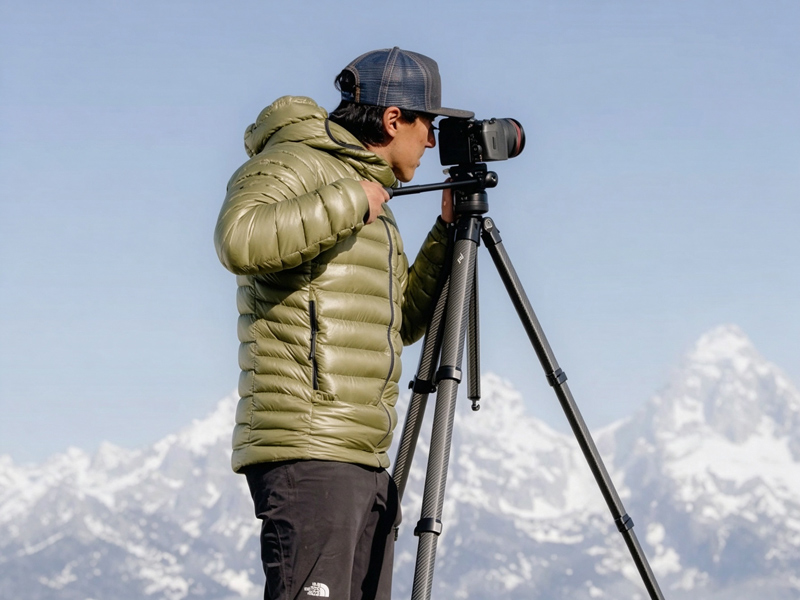
The product line is a single thesis told across categories, and the founder planned the breadth from the start: he called the company Peak Design rather than anything with 'photography' in it — the initials P and D were his own, and the intentional absence of the category word meant the camera clip was the beachhead, not the boundary. From Capture the catalog marched through straps and hand grips, into the Everyday bag line with the 2015 Messenger, through the 2018 Travel Line, the record-breaking Travel Tripod, the 2020 Mobile MagSafe system, the 2024 Outdoor Line, motorcycle mounts, and finally luggage — each expansion announced to the same crowd, each inheriting the same lifetime warranty. The tripod is the engineering emblem: the company trained its own factory, and the founder notes with mixed pride that if you walk into competing manufacturers today, it smells like Peak Design in there — the industry followed the innovation it could not stop copying.
The 2025 chapter runs through adventure photographer Jimmy Chin, whose wish list for an expedition-grade Pro Tripod the company spent years fulfilling — if we could fulfill Jimmy's wish list, the reasoning went, we'd land on a tripod for almost every photographer on the planet.
The warranty, the B Corp, and the Amazon fight
The sustainability and integrity file is as engineered as the gear. Every product carries a lifetime guarantee — not a limited warranty but a standing promise to repair or replace forever, which converts the premium price into amortized decades. B Corporation certification arrived in 2019; Climate Neutral certification covers the footprint; one percent of profits goes to environmental nonprofits, with more than half a million dollars given by the company's accounting; and the Everyday bags run on one hundred percent recycled post-consumer fabric. The integrity chapter that made headlines arrived in 2021, when Amazon launched an Amazon Basics bag named, with unusual directness, the Everyday Sling — a near-clone of Peak Design's best-seller. Peak Design named it publicly, the internet noticed, and Amazon renamed the product.
The episode functions as the reviewer's stress test: a company that will publicly shame the largest retailer on earth over a copycat bag is a company whose brand equity is the product — the copies can match the features but not the covenant.
Records as a habit, and the fatigue question
Four honest cautions belong in the ledger. First, price: premium positioning is real — two hundred and sixty dollars for an Everyday Backpack, comparable figures across the line — justified by the warranty and the amortization math, but a genuine filter on who shops here. Second, Kickstarter fatigue: fifteen campaigns is a historic run, and the model depends on the crowd's enthusiasm holding; every campaign is a referendum, and the day one underperforms, the cash-flow engine coughs. Third, manufacturing geography: the products are made in Vietnam, including the self-trained tripod factory — responsible by the company's labor claims and Fair Trade-aligned factory standards, but Asian production nonetheless for a customer base that often assumes otherwise. Fourth, expansion gravity: luggage, motorcycle mounts, and outdoor lines each move the brand further from the camera crowd that built it, and the carry category is crowded with well-funded rivals who watch the campaigns closely.
None of these are contradictions; all four are the taxes on being the most successful crowdfunded hardware company in history.
The verdict for the buy-once photographer-traveler
Peak Design's storefront is the crowdfunding constitution at industrial scale: a food runner who carved wood prototypes, a Gizmodo article that minted a company in a day, a second campaign conducted with a public apology, sixty million dollars raised without a dollar of investors, a fairness doctrine that has never seen a full-time resignation, a lifetime warranty that converts price into decades, a B Corp file with real money behind it, an Amazon fight it won, and a luggage launch that broke the platform's product-design record. The cons are the cons of the model: premium prices, campaign fatigue risk, Vietnamese manufacturing, and the gravity of expansion.
Buy here if you subscribe to the buy-once-cry-once doctrine and want the warranty in writing, if a company that treats its customers as peers and its staff as partners matches your idea of capitalism done properly, if the carry system — clip, strap, bag, tripod, sling, suitcase — appeals as one designed organism, and if you would rather back a product on Kickstarter than rent it from a venture-backed marketplace. Buy the mall's clone at two-thirds the price if the features are all you need. For the buy-once photographer-traveler who wants the last bag they will have to think about, this San Francisco storefront remains the category's most crowdfunded answer — fifteen campaigns, zero investors, and still selling out.