A teacher lost a friend to melanoma, then built sunscreen's biggest brand
Official homepage: https://www.supergoop.com/
Supergoop! did something the beauty industry considered impossible: it made people actually want to wear sunscreen. Founded in 2007 by a former third-grade teacher and harpist after a close friend's melanoma diagnosis, the San Antonio brand turned SPF from a seasonal chore into an everyday skincare ritual — then sold a majority stake to Blackstone at a reported $600-plus million valuation. Here is our review of its store from several angles.
Classroom Sunscreen Pumps Hit a Legal Wall
Holly Thaggard was a San Antonio schoolteacher and professional harpist with no beauty background when, in 2005, a close friend was diagnosed with melanoma at age twenty-nine. Her research turned up two facts that changed her life: skin cancer is the most common cancer in the world, and it is largely preventable with daily sunscreen use. As a teacher, she thought of her third graders on shadeless playgrounds and resolved to put sunscreen pumps in schools. But state regulations classified sunscreen as an over-the-counter drug, and most public schools fell under drug-free-zone rules — the original plan was dead on arrival. Limited to a handful of private schools in Texas and Louisiana, Thaggard pivoted from institutions to retail, bootstrapping formula development with a maxed-out credit card and a stubborn requirement: a chemical sunscreen that was genuinely clean, with no oxybenzone, parabens, or synthetic fragrance. She called her in-progress formulations "goop," and the one that finally worked was "super."
A Phone Number Printed on the Packaging Paid Off
The retail breakthrough has become an industry legend. Thaggard printed her own phone number on Supergoop packaging, and a Sephora buyer who discovered the brand in a luxury children's boutique called it. Rather than accept seasonal endcaps, Thaggard negotiated for a smaller footprint in a premium, year-round position — a bet that sunscreen could be a daily beauty product, not a summer one. To fuel the pitch, she spent twice the company's annual sales on a publicist, earning coverage in People and Redbook; Sephora and Nordstrom both began stocking the line in the summer of 2011. The trajectory from there was steep: tennis star Maria Sharapova joined as co-owner in 2013, growth capital arrived from Encore Consumer Capital in 2017, and revenue hit roughly $40 million by 2018, with direct-to-consumer sales reportedly multiplying fortyfold over the following five years.

The 2018 Gel That Made SPF Invisible
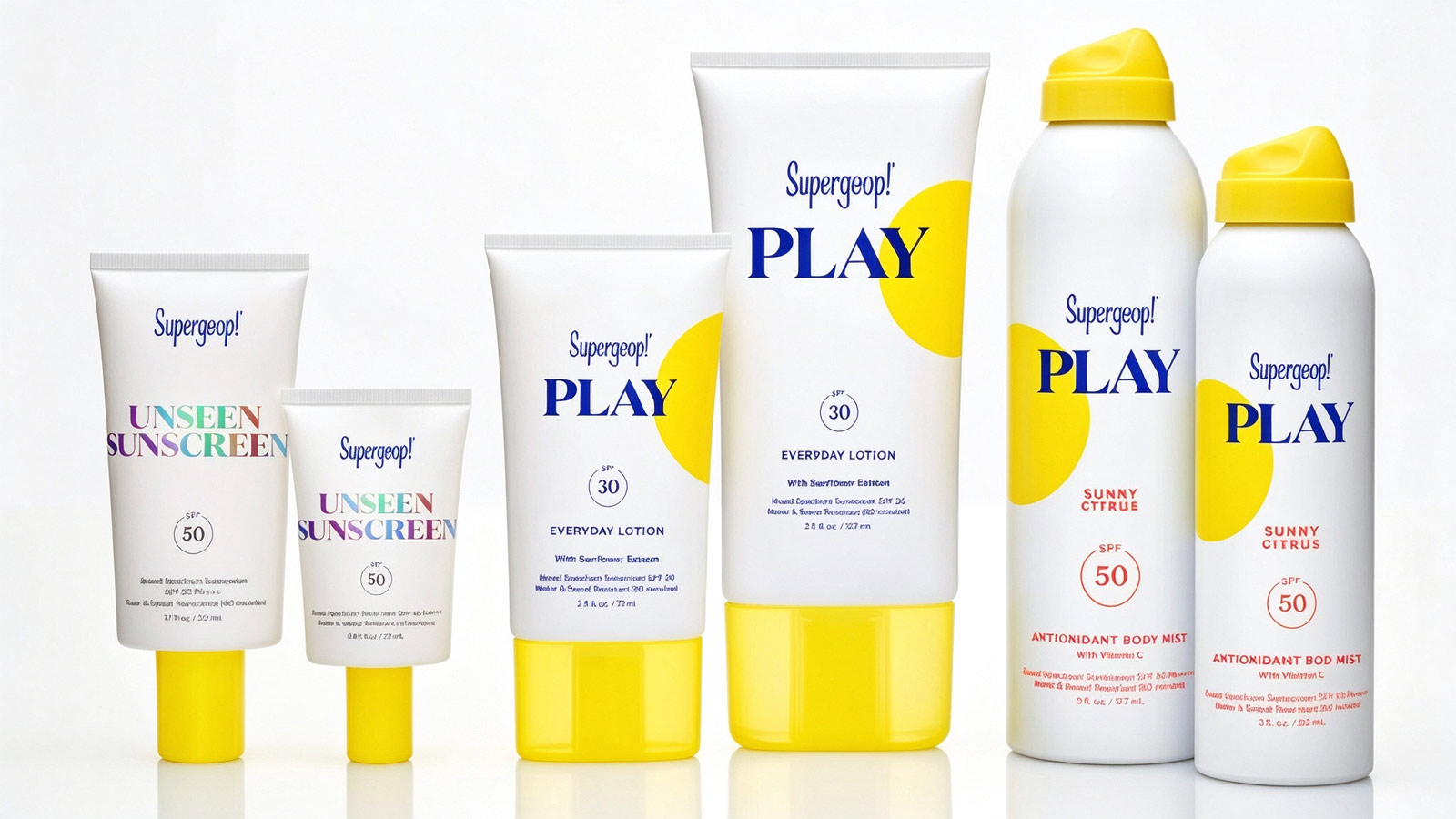
The product that converted skeptics was Unseen Sunscreen, launched in 2018: a weightless, scentless, colorless SPF 40 with the texture of a makeup primer. It solved the three complaints that kept adults from daily SPF — white cast, greasiness, and heaviness — and became the company's top seller, an Allure Best of Beauty winner, and arguably the most influential sun-care product of its decade. The lesson Thaggard drew from it is now the brand's design doctrine: the barrier to daily sunscreen was never awareness, it was experience. Every subsequent launch, from Glowscreen's illuminating finish to powder sunscreens designed for reapplication over makeup, attacks a specific friction point between intention and habit. It is a rare case of a brand engineering behavior change through texture rather than messaging.
Blackstone Paid Six Hundred Million for Sunshine
Institutional validation arrived at scale. In December 2021, Blackstone Growth agreed to acquire a majority stake in a deal reported at a $600 to $700 million valuation, completed in March 2022; Thaggard retained a minority stake and stayed involved. The numbers behind the deal explain the price: Supergoop! reached about $250 million in sales in 2022, up 65 percent year over year, and industry projections had it surpassing $400 million in annual retail sales by 2025. Thaggard and then-CEO Amanda Baldwin had already collected the EY Entrepreneur of the Year National Overall Award in 2022. The private-equity era has brought professionalization — Baldwin departed in 2023, international expansion accelerated through Sephora's European stores — and the mission program kept pace: the Ounce by Ounce initiative had donated more than 4,300 SPF pumps to over 1,600 schools and youth organizations by 2023, the school-dream made practical within regulatory reality.
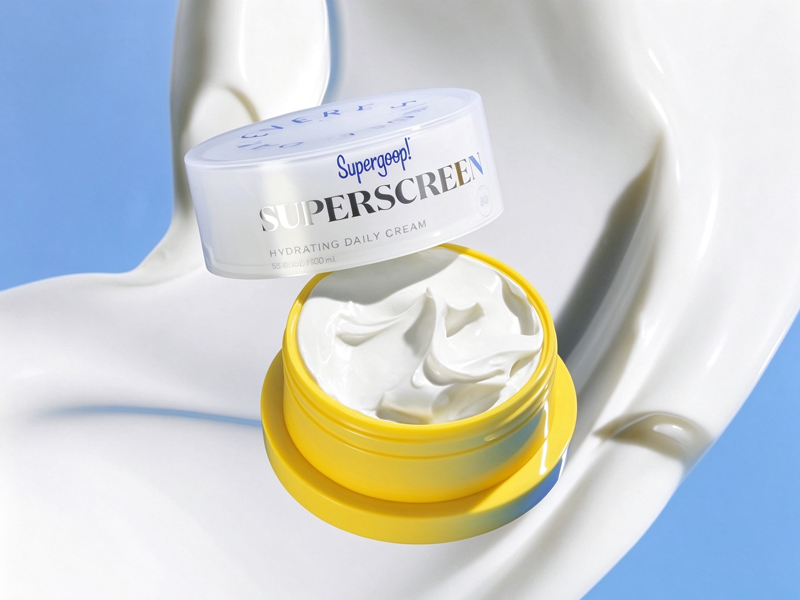
The Shelves Now Hold Fifty Ways to Wear SPF
The modern storefront is a study in category breadth. Beyond the hero Unseen line, the catalog spans Glowscreen illuminators, PLAY body and family formulas, powder and mist formats for reapplication, SPF lipsticks and eyeshadows, and body-care hybrids — more than fifty SPF SKUs by 2024, priced from about $12 to $76. The shopping experience leans educational, with routine-building content and shade-inclusive messaging consistent with the brand's inclusive positioning; products are Leaping Bunny certified cruelty-free and reef-conscious, with both chemical and mineral options for filter preferences. International shoppers should note the distribution strategy mirrors the retail history — availability across Sephora, Nordstrom, Ulta, and Bluemercury means most major markets are served locally, while the direct site concentrates bundles, exclusives, and refill economics.
Our Take on the Category's Mission-Driven Leader
Supergoop! is the strongest case study in skincare of mission and product pulling in the same direction. The strengths are concrete: an authentically founded public-health mission that predates the wellness boom, a hero product that genuinely changed sunscreen behavior, retail execution from Sephora shelf to Blackstone balance sheet, a catalog that covers nearly every format a daily-SPF convert could want, and a giving program that keeps the school origins alive. The caveats are equally concrete: premium pricing puts a full SPF wardrobe in the considered range; most formulas are chemical-filter, which some ingredient-conscious shoppers avoid regardless of the oxybenzone-free positioning; and after the Blackstone majority and CEO transition, the brand's indie-founder texture has inevitably given way to institutional polish. For shoppers who want sunscreen they will actually wear every day — the entire point of the brand since 2007 — the store remains the category's benchmark.