Lockdown acid routines broke teen barriers; he built the repair kit
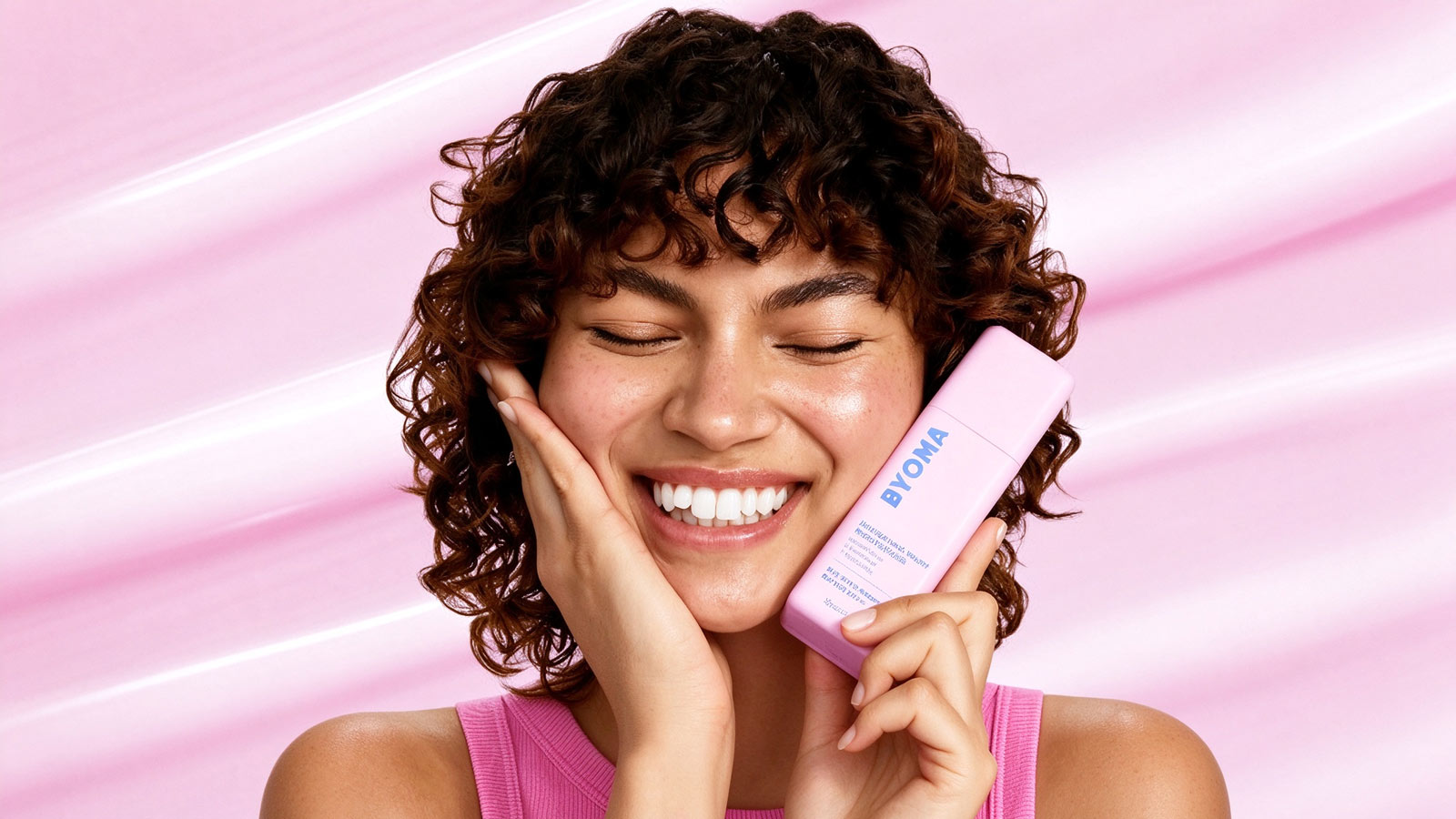
Official homepage: https://byoma.com/
Byoma turned a self-inflicted skincare epidemic into a category. While pandemic-era TikTok taught a generation to stack acids, retinoids, and exfoliants, Glasgow entrepreneur Marc Elrick — already known for self-tan hits Tan-Luxe, Isle of Paradise, and Tanologist — studied the damage and built a barrier-first line to fix it. Launched in February 2022, the brand became Target's biggest skincare launch of that year and now sells a product every second worldwide. Here is our review of its store.
A Self-Tan Mogul Watched Lockdown Skincare Go Wrong
Elrick's path to skincare ran through bronzed skin. He founded Future Beauty Labs in Glasgow in 2010, built Tan-Luxe into a skincare-led self-tanning leader, and backed color-correcting self-tan brand Isle of Paradise and dermatologist-approved Tanologist; private equity firm Yellow Wood Partners acquired a majority stake in the self-tan trio in May 2020. Then lockdown changed the subject. Confined to bathrooms, consumers became amateur chemists — layering medical-grade actives with little education, Elrick has said, "acids for breakfast, lunch and dinner," convinced they had sensitive skin when in reality their skin was sensitized. He saw a structural gap: dermatological brands were gentle but untargeted, while clinical active brands were effective but exacerbated sensitivity. The idea for Byoma — the name signals a skin-compatible approach — was to claim the middle ground, and he co-founded it with Rob Brittain in 2022 under the Future Beauty Labs incubator.
Thousands of Hours Studying One Layer of Skin
The research phase preceded the formulas. Elrick has said the team spent thousands of hours studying the skin barrier before a single product was briefed, because they believed that single layer — the stratum corneum's lipid wall — was the key to skin health. The output was a proprietary Tri-Ceramide Complex combining ceramides, cholesterol, and fatty acids at a 3:1:1 ratio, the proportions that most closely mimic the skin's natural barrier composition, built with Korean microbiome chemistry. Every formula pairs that complex with a handpicked active — ectoin and squalane for hydration, avocado oil for nourishment — and the clinical apparatus behind the claims is substantial for a mass brand: by 2026 the company cited more than 109 clinical trials and 130,000 skin measurements across clinical studies and AI-driven skin analysis. All products are dermatologist-tested, vegan, and fragrance-free, and the education is printed on the packaging itself — ingredients and usage instructions in plain language, so the bottle teaches rather than the brand lecturing.
Target's Biggest Skincare Launch of 2022
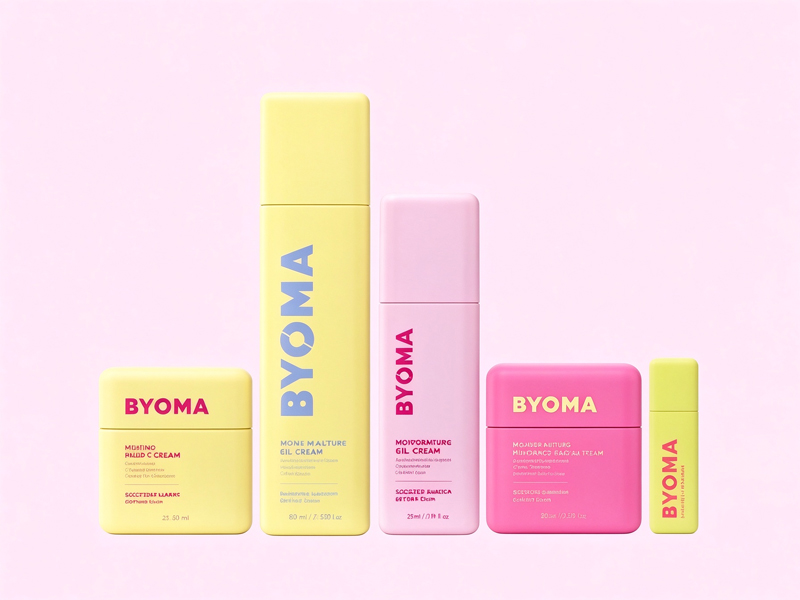
The February 2022 launch sequence was a study in channel discipline. Rather than chasing prestige first, Byoma debuted at Target as the retailer's biggest skincare launch of the year, with a six-piece collection priced from $12.99 — Creamy Jelly Cleanser, three serums, the Moisturizing Gel Cream, and a hydrating trio kit. TikTok did the amplification: the launch generated over 100 million impressions, and a repurchase rate 28.3 percent above competitive skincare brands at Target within months told Elrick the thesis was working. Industry awards followed fast — seven within its first eight months, including an Allure Best of Beauty Award for Best Cleanser. Retail expansion moved in deliberate steps: Ulta Beauty arrived in September 2022 across 715 stores, then Boots and Superdrug at home in the UK, Sephora in Canada and Australia, Space NK in the UK, and Walmart, with projections by late 2024 of $300 to $500 million in retail sales.
One Product Sells Every Second Worldwide
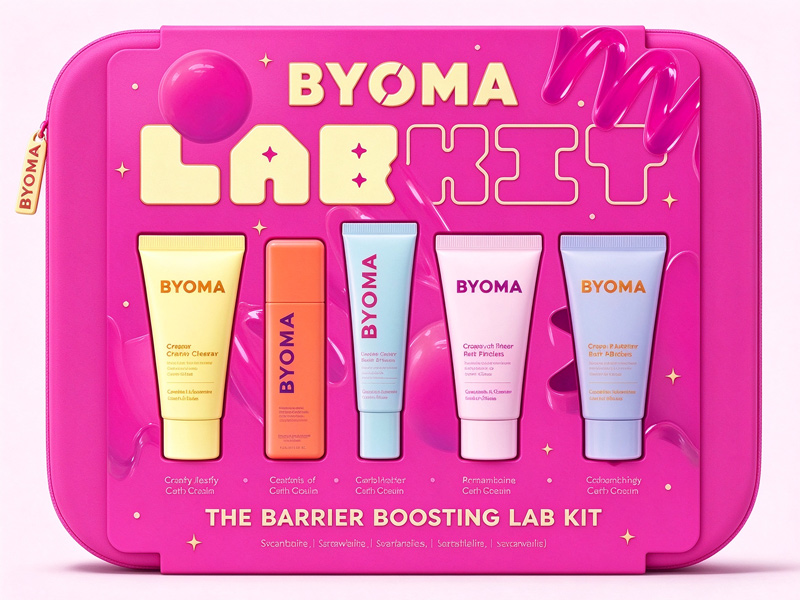
The numbers since then read like a roll-up of every growth metric a brand could want. Byoma became TikTok's biggest beauty launch of 2022; the Moisturizing Gel Cream went viral with 1.7 million TikTok views and became the bestseller; the community passed two million members with more than 1.6 million social followers; and by 2025 the company stated that one product sells every second somewhere in the world. Category extensions followed the same five-step system logic — body care and lip care in 2024, then the SPF50 barrier fluid clinically proven to improve barrier strength 27 percent within twelve hours with 76 percent immediate hydration, and the Bio-Collagen Radiance Face Mask launched alongside the Sephora Canada debut in 2026, a liquid-to-film formula promising glass skin in twenty minutes. The marketing stayed education-led: an annual Skin Barrier Awareness Month, launched in 2024, frames the mission as democratizing skin science.
Five Hundred Million Later, Bansk Took the Wheel
The ownership story tracks the growth curve. Yellow Wood backed the Future Beauty Labs portfolio from 2020; in September 2025, with Byoma past $500 million in cumulative retail sales and a top-five skincare position at leading retailers across markets, Yellow Wood sold its majority stake to New York-based Bansk Group — the consumer firm behind Amika, Eva NYC, and Ethique — at undisclosed terms. Elrick stayed on as founder and CEO, framing the deal as an accelerant for international expansion, and the brand marked the transition by pushing into Sephora Canada's 140 doors in March 2026 with the collagen mask launch. The continuity matters for shoppers: the same founder who diagnosed the over-exfoliation epidemic still controls the formulas, with institutional capital now funding the next shelf.
Our Final Assessment of Barrier-First Beauty
What byoma.com sells is a complete, legible system: a cleanser, targeted serums, a gel cream, SPF, and masks — all barrier-first, all under roughly $40, with the Tri-Ceramide promise printed where shoppers can see it. The honest caveats: ceramide complexes are no longer proprietary territory, and The Ordinary, CeraVe, and a dozen K-beauty rivals offer comparable barrier support at similar or lower prices, so the moat is brand voice, clinical volume, and retail muscle rather than unique chemistry; the Gen Z positioning that powers the community also ages with it, and the line's gentleness leaves little room for shoppers who eventually want stronger actives; and the rapid-fire PE transitions — Yellow Wood in, Bansk in — mean the brand's independence narrative is more incubated than organic. For the over-treated, the confused, and the budget-conscious building a first serious routine, though, this store remains the clearest expression of the barrier-first movement it named.