A korean word with no translation built this skincare brand
Official homepage: https://thenimetyou.com/
In an industry built on speed and trends, Then I Met You asks customers to slow down — and it anchors that philosophy in a Korean concept with no exact English equivalent. The brand was founded in 2018 by Charlotte Cho, the esthetician and entrepreneur who had already introduced America to Korean beauty through Soko Glam. Sixteen awards later, its periwinkle-blue jars are now stocked by Sephora and SpaceNK. Here is our review of its store from several angles.
A Bedroom Startup Introduced America to K-Beauty
Then I Met You is the second act of a genuinely formative story. Charlotte Cho, Korean American and raised in Southern California, moved to Seoul for work and fell in love with two things there: Korean skincare and the concept of jeong. In 2012, she and her husband Dave started Soko Glam from their bedroom — initially just shipping favorite Korean products home for friends and family — and turned it into the leading K-beauty destination in the United States, complete with an editorial arm, The Klog, and Cho's bestseller The Little Book of Skin Care. Nearly a decade of curating thousands of products, earning her aesthetician license, and listening to the Soko Glam community preceded the move from curating other brands' formulas to creating her own.
A Word Without Translation Became the Brand's Compass
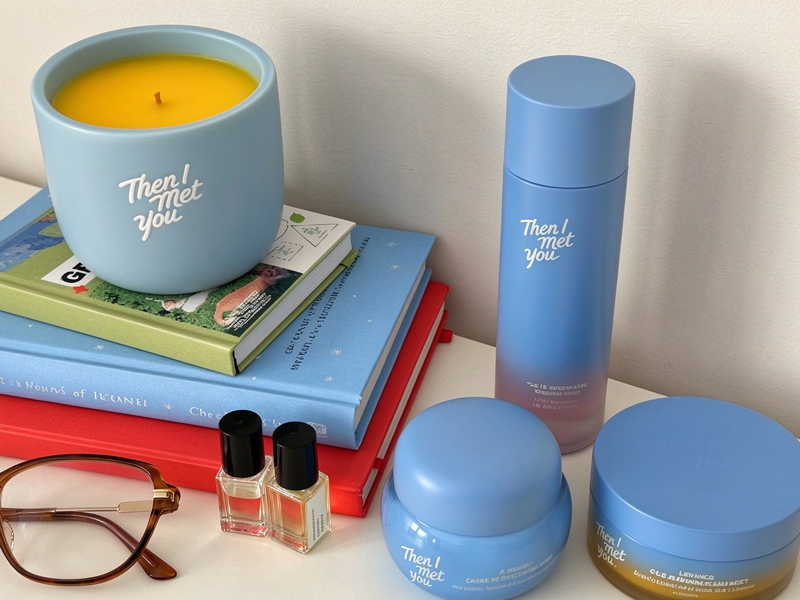
The brand's name is a promise and its philosophy is a vocabulary lesson. Jeong — a deep, slowly accumulated emotional bond with a person, place, or thing — is the concept Cho couldn't shake after years in Korea. Then I Met You applies it to skincare as an argument against the industry's "quick and easy" pitch: instead of routines optimized for speed, the brand celebrates taking one's time, savoring each step, and "glowing deeper." That positioning is unusual in a market that usually sells novelty, and it is consistent enough to shape everything from the periwinkle-blue packaging to the refusal to chase every trending ingredient. The second book, The Little Book of Jeong, turned the philosophy itself into a product — a telling signal of how central the concept is to the brand's identity.
Two Cleansers Launched a Deliberately Narrow Catalog
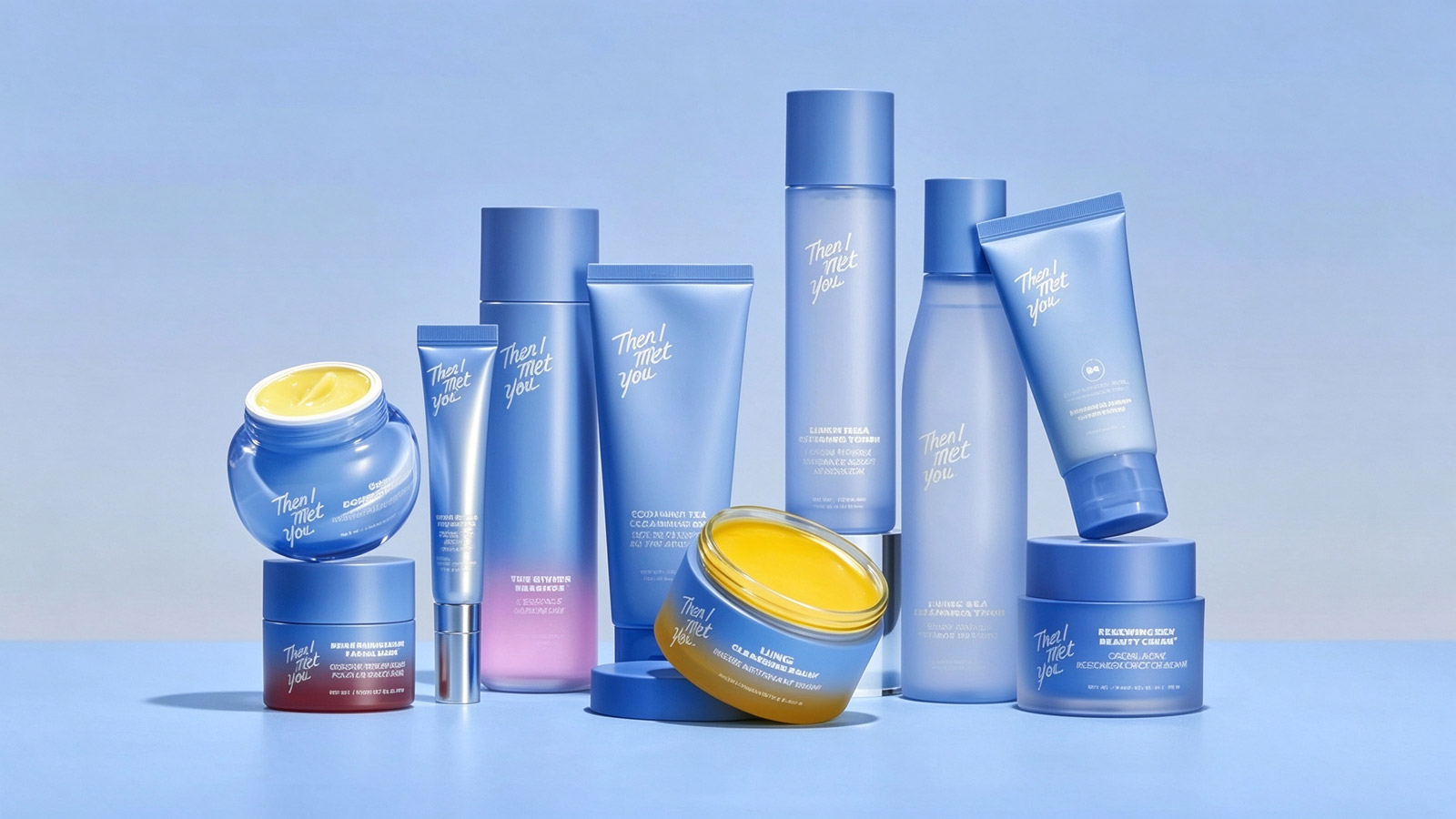
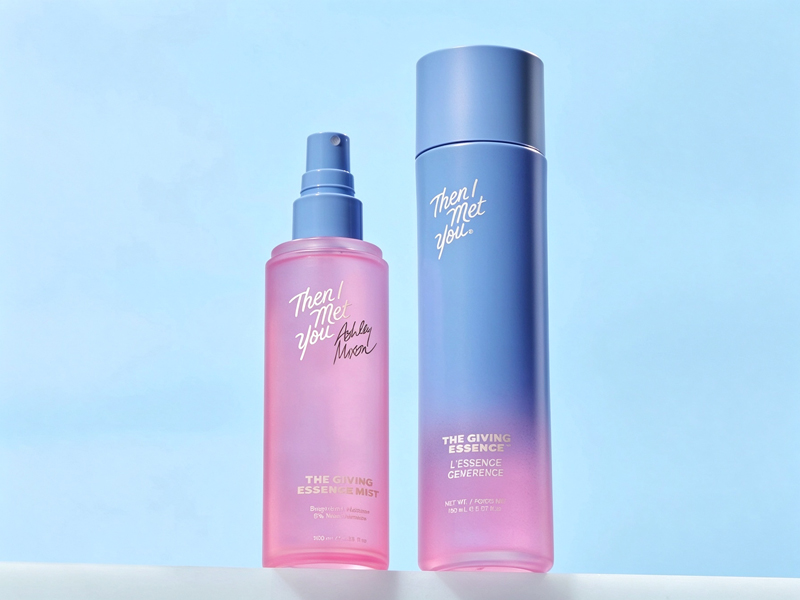
When the brand debuted in October 2018, it launched with exactly two products: the Living Cleansing Balm ($38) and the Soothing Tea Cleansing Gel. The choice was symbolic — double cleansing was the ritual that had started Cho's own skincare journey — and strategic, keeping the catalog narrow and deep while the community shaped what came next. The formulas deliberately merge gentle Korean ingredients with potent actives, and the line has expanded gradually since: the Birch Milk Refining Toner, The Giving Essence, the Bong² Bounce Cream, the Renewing Rich Cream, an SPF 50 sunscreen, and a honey lip mask. Products are cruelty-free, formulated without parabens, silicones, or sulfates, and manufactured in South Korea. Prices sit in the considered mid-premium range, roughly $24 to $60 per item.
The Balm Became a Sixteen-Time Award Winner
The flagship's reputation is out of proportion to the brand's size. The Living Cleansing Balm — a sorbet-soft, antioxidant-rich balm whose bright yellow comes from seaberry (sea buckthorn) oil and which counts persimmon extract among its ingredients — has accumulated sixteen industry awards, including an Allure Best of Beauty honor, and won devoted fans among skincare authorities like Caroline Hirons, who named it among her favorite beauty finds of the year. The Bong² Bounce Cream has become a bestseller in its own right, and the brand reports a 77 percent customer repeat rate — an unusually high figure that suggests the philosophy converts. For a line that did essentially no paid marketing for its first four years, this word-of-mouth accumulation is the store's most persuasive credential.
Sephora Came Calling Before the Brand Went Looking
The retail trajectory inverts the usual playbook. Rather than racing into US big-box distribution, the Chos turned down early approaches — including from the largest US beauty retailers within a day of launch — and spent years building community organically. The first major retail expansion actually ran east: Sephora stores in Singapore, Malaysia, Thailand, Hong Kong, and the Philippines began carrying the line in April 2024, a route the Chos describe as atypical but fitting for a brand born in the United States with a global Korean-beauty community. Sephora's US website followed, and in August 2024 the brand entered the UK through SpaceNK — where its Living Cleansing Balm cracked the retailer's top five cleansers and searches for Korean skincare on the site reportedly rose 150 percent. Industry watchers note the brand did it all self-funded, without institutional investment.
Who This Korean Ritual Brand Suits Best
Then I Met You is a brand with an unusually coherent center, and the store reflects it. The strengths are real: authentic K-beauty pedigree from a founder who genuinely shaped the category; award-dominant hero products with a 77 percent repeat rate; philosophy-driven branding that has proven commercially durable; and recent Sephora and SpaceNK availability that makes sampling low-commitment. The honest caveats: the ritual-forward positioning means the line leans sensorial and experiential, so shoppers hunting maximum-actives-per-dollar may find better value elsewhere; the catalog, while growing, remains a tight edit rather than a full routine for every skin concern; and premium-adjacent pricing makes the double-cleanse entry a considered purchase. For anyone drawn to Korean skincare as a practice rather than a trend — and for the millions who already trust Charlotte Cho's curation — this store is one of the most trustworthy in the category.