A gun holster, a tie-down strap, and the best running pack you've never heard of
Official homepage: https://www.orangemud.com
Every endurance athlete has finished a race hating their hydration gear. Josh Sprague actually did something about it. After tackling Ironman St. George and coming home frustrated by sloshing bladders, chest-tightening vests, ride-up belts, and handheld bottles that felt like dumbbells, the Colorado endurance racer sewed together a prototype from the most unlikely materials — a gun holster, a waist pack, and a tie-down strap. The result became the HydraQuiver: a rigid bottle mounted high on the back, where a quiver would sit, that did not bounce, did not squeeze the lungs, and rinsed clean in seconds. The company launched in 2012, and fourteen years later it remains a cult favorite among ultrarunners and triathletes — small, stubbornly American-made, and still solving the problem its founder could not ignore. This review measures the operation across eight dimensions.
An Ironman in St. George hated every pack
The founding moment is a story every endurance athlete has lived, told with unusual honesty. Sprague, a competitive endurance racer, finished one race having hated every hydration product he had used. He did what frustrated athletes rarely do: he went home and built the alternative. The company launched from Castle Rock, Colorado, in 2012 under a mantra that still heads the website — innovation from frustration — and a design team that, per the company's own materials, has spent years competing in adventure racing, ultras, mountain bike racing, trail running, marathons, and Ironman events. The products come from the athletes who needed them, not from a research brief.
Sewing a gun holster into a prototype
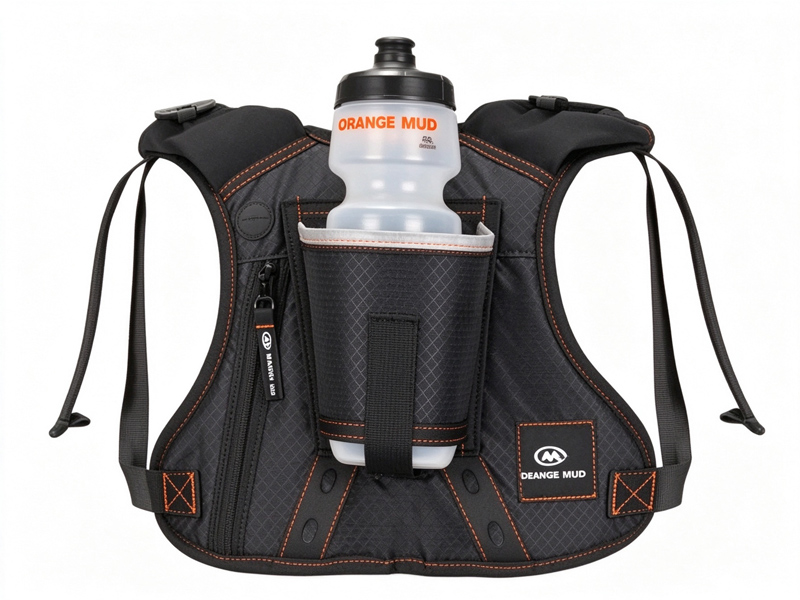
The prototype became the HydraQuiver Single Barrel — a twenty-five-ounce bottle mounted high on the upper back, where a quiver would sit. Sprague built it from a gun holster, a waist pack, and a tie-down strap, because those were the objects at hand that approximated what he needed: a rigid vessel held snug against the spine. He has admitted he thought that single idea might be the whole company. It was not — but it was the right first one, and it is still the product the brand is known by.

Bottle on the back, bounce on the floor
The engineering logic was disarmingly simple and, at the time, contrarian. Putting the weight up high keeps it stable and close to the spine, so it does not bounce; it does not squeeze the lungs the way a chest-mounted pack does; it does not squeeze the waist the way a belt does; and it frees both arms from the dumbbell effect of a handheld. A bottle on the back also solves the cleaning problem that quietly destroys bladders — a rigid bottle rinses clean in seconds, and the runner can put any drink mix in it without gumming up a tube.
The pack a Nebraska marathon sold in eighteen miles
The conversion story that defines the brand happened on a Nebraska marathon course. A reviewer for an endurance gear publication spent eighteen miles running behind a stranger wearing the HydraQuiver Vest Pack 2 — watching him comfortably sip cool water from his double-bottle configuration while the reviewer's own aid stations ran out of water. At the finish line the reviewer sought the stranger out, got a look at the pack, and wrote the review that follows: straps fully adjustable for every body type, a rear shock cord that holds a jacket, fuel pockets exactly where hands reach them, and a fit that never wrapped around the gut to chafe. The packs became fixtures at ultramarathons and Ironman events — Orange Mud sponsored Ironman Arizona for years, where the desert heat made hydration failure visible and the booth revenue reportedly doubled during race week. Trail runners at hundred-milers from Western States to Superior listed the Vest Pack in their gear reports alongside Garmin watches and Injinji socks.
From one barrel to twenty seven products
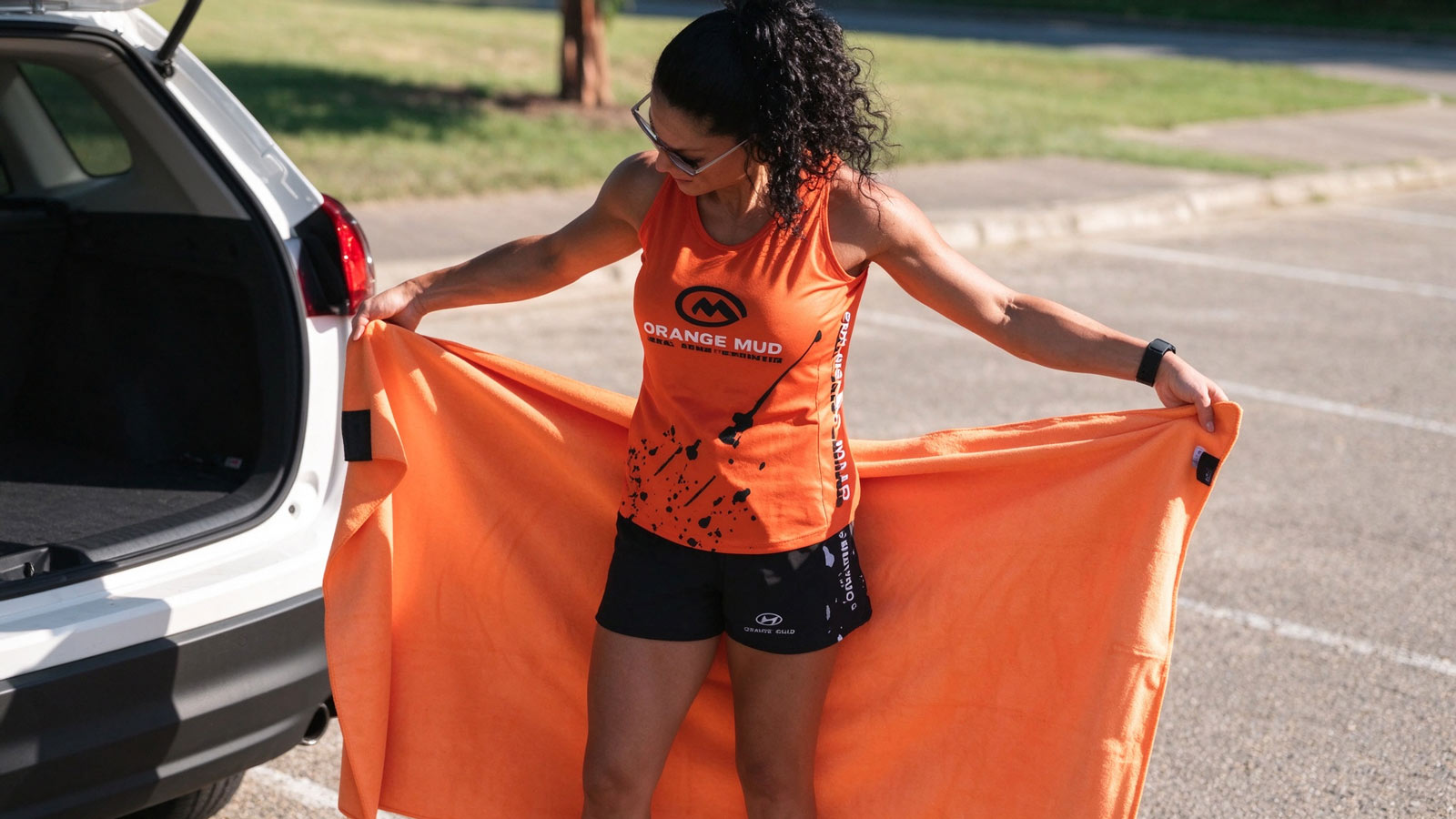
From the Single Barrel the catalogue grew to more than twenty-seven designed products. The HydraQuiver line expanded into the Double Barrel for two-bottle days, the minimalist Gear Vest, the bigger Endurance and Adventure packs for long mountain efforts, and the PFV series. The UltraFlask soft flasks slot into the chest pockets of the vests and shrink as they empty to stop sloshing. And then there are the products only a frustrated athlete would invent: the Transition and Seat Wrap — an award-winning towel that wraps around the waist after a workout and, flipped over, protects the car seat from the sweat and grime of the drive home — a genuinely beloved piece of gear among triathletes. An ambassador program, compression sleeves, apparel, and lifestyle packs round out the assortment. Nearly everything is made in the USA, a point the brand states plainly and prices accordingly.
Same day shipping before nine, refunds within five
The retail texture is small-brand-direct in the best sense. Orders placed by 9 a.m. Mountain Time ship the same day — a cutoff discipline that bests most brands ten times its size — with worldwide shipping available through a currency selector spanning most countries. Refunds process within five business days of the package arriving back at the Texas headquarters, and the bank may add three to ten more. The fine print carries the small-brand trade-offs: purchases made through a retailer must be returned to that retailer under that retailer's policy, while warranty claims go directly to Orange Mud either way with proof of purchase. The company answers a phone line and an email inbox personally, the way fourteen-year-old companies with founder fingerprints still do. Headquarters has moved a few times along the way — Colorado to California to Round Rock, Texas — but the workshop temperament never left.
Small batch cult status, retail channel reality
The honest caveats are the ones that come with the territory. Orange Mud is a cult brand, not a mass one: walk into a random running store and you are more likely to find Nathan or Salomon on the wall, which means the quiver sells mostly through word of mouth, race expos, and its own storefront. The pack that mounts high on the back fits some torso lengths better than others — the fully adjustable straps help, but ultrarunners with very short torsos sometimes find the bottle sits near the helmet line when they cycle. And the retailer-return split means the deal you found at a race expo comes with that retailer's policy attached, not the brand's. None of this is hidden; it is simply the anatomy of a small American gear company doing things the slow way.
Who should wear the orange quiver
Orange Mud in 2026 is for a specific runner: the marathoner who wants a rigid bottle instead of a bladder and hates slosh; the trail runner who runs hot and wants the weight up high off the lungs; the triathlete who needs the seat wrap more than another energy gel; and the gear nerd who prefers a fourteen-year-old prototype story to a quarterly product drop. For that runner, Orange Mud offers something the conglomerates cannot — a founder who sewed his first pack from a gun holster and a tie-down strap, a same-day shipping cutoff that respects the training calendar, and a bottle that rinses clean in seconds. It is less suited to the buyer who wants mall availability or a corporate returns department: the channel is narrow, the fit rewards a specific body, and the warranty line is an email inbox. But when a Nebraska marathon can sell a pack in eighteen miles of running behind it, the product has already said what this review is trying to — the frustration was real, and the fix is on the runner's back.