A boy who couldn't store fuel taught marathoners to burn it slow

Official homepage: https://ucan.co
Most sports nutrition brands begin in a kitchen or a laboratory. UCAN began in a hospital nursery, with a diagnosis that upended a family. In 2001, Jonah Feldman was born with glycogen storage disease type 1a — a rare metabolic disorder that prevented his body from breaking down stored carbohydrate, the fuel humans rely on between meals. Without it, his blood sugar could crash at any time. His parents fed him uncooked cornstarch through a feeding tube every two hours, around the clock, setting alarms through the night, for eight years. In 2002 they founded a research foundation; in 2008 the family-backed startup acquired a Scottish cooking patent that transformed ordinary corn into a slow-release carbohydrate called SuperStarch; in 2009, eight-year-old Jonah slept through the night for the first time in his life. The same formulation, the company reasoned, might steady an athlete's fueling the way it steadied a child's blood sugar. In 2010, the brand soft-launched at the Boston Marathon with a first ambassador named Meb Keflezighi. This review measures the operation across eight dimensions.
An alarm every two hours for eight years
The founding crisis had nothing to do with sports. A condition affecting roughly three thousand American children a year had sentenced the whole Feldman family to permanent exhaustion, and best practice offered no exit. Wendy and David responded the way parents do: they started the Children's Fund for Glycogen Storage Disease Research and went looking for scientists. The human stakes of that search — a tube-fed toddler, a household organized around alarms — remain the emotional engine of the brand two decades later, and the product's central claim descends directly from it: steady glucose, no spike, no crash.
A symposium in a Connecticut living room
The search led to a living-room symposium. One of the family's first meetings was with Dr. Stephen Squinto, co-founder of Alexion Pharmaceuticals, who helped organize a gathering of carbohydrate researchers at the Feldmans' house to brainstorm a better fuel. Peter Kaufman and his business partner Shoba Murali heard about the project and joined, with Murali becoming co-founder, president, and CEO — a runner who has completed the Hartford Half Marathon twice. Nobody at that symposium was thinking about marathons. The aim was to make life manageable for Jonah until a cure existed.

Scottish corn and a patient cooking process
The breakthrough came from a very particular way of cooking ordinary corn. The team acquired rights to technology from researcher Richard Tester, who used a precise, patient cooking process to transform starch into a slow-release form. Applied to a specific strain of non-GMO corn, it produced SuperStarch — a carbohydrate of such enormous molecular size that the body breaks it down glacially, releasing glucose over hours rather than minutes. For Jonah, that slowness meant a child who could sleep. For everyone else, the team soon realized, a carbohydrate that does not spike or crash was the holy grail of endurance fueling.
The night Jonah finally slept through
In 2009, they gave the formulation to eight-year-old Jonah. He slept through the night for the first time in his life. The same year, the company ran a clinical trial examining SuperStarch in athletes, with researchers including Dr. Jeff Volek of the University of Connecticut and Bob Seebohar, dietitian for the 2008 US Olympic triathlon team, reviewing the data. Their conclusion, as the company tells it: a slow, steady glucose source with a muted insulin response was a genuinely novel athletic fuel. The logic is hard to argue with — if the product could keep a medically fragile child's blood sugar stable, the demands of a long run were a gentler version of the same problem.
Meb, Boston, and a soft launch at the marathon
The commercial story is anchored by the greatest American marathoner of his era. UCAN soft-launched at the Boston Marathon in 2010, and Meb Keflezighi — Olympic silver medalist, winner of New York and Boston — became the first athlete to train with SuperStarch. His testimonial became the founding marketing: steadier energy through long runs, no spike, no crash, less next-day soreness. The product went to market formally in 2012 as Generation UCAN, the pun intentional. From those early roots in running, the customer base expanded to collegiate and professional teams, low-carbohydrate enthusiasts, and everyday athletes — swimmers, triathletes, even an Everest summiter.
Powder, bars, and hydration without the crash
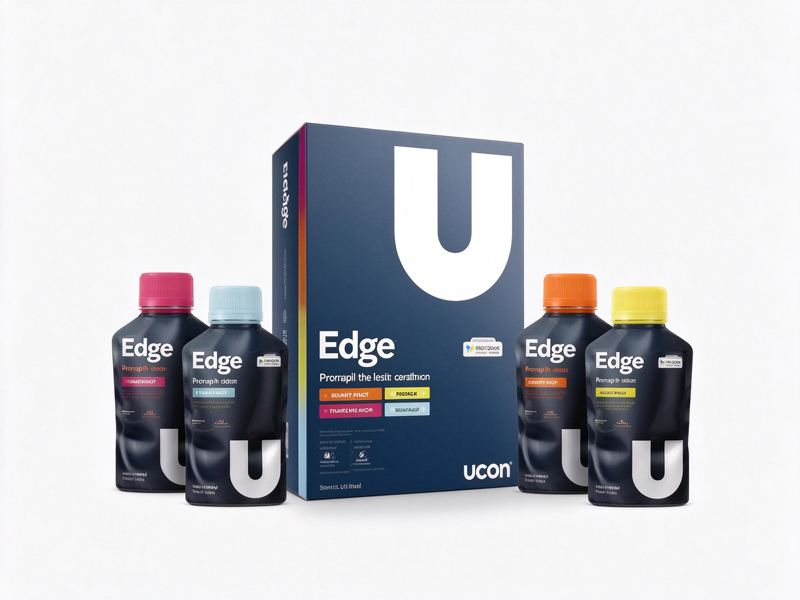
The catalogue is compact and powder-forward. Core Performance Energy powder in several flavors carries the SuperStarch story; Workout Energy and hydration variants handle the pre- and mid-effort window; energy bars add a chewable format; and everything is built on the same sugar-free, slow-release premise. The mechanism, explained by a Yale metabolism researcher advising the company, is molecular scale: simple carbs are small and absorb fast; SuperStarch is a really, really big molecule that breaks down really, really slowly. The texture — thick, mildly chalky, honest about being starch — is the trade-off reviewers consistently note against the taste-first gels of competitors. Pricing runs premium per serving, with a subscription discount around twenty-five percent softening repeat orders and free shipping above $65.
Thirty day returns and twenty five percent off subscriptions
The commercial terms are middle-of-the-category. Returns run thirty days for unused product in original packaging, with refunds to the original payment method after inspection — a shorter window than the forty-five days some competitors offer, but standard for the premium fuel tier. The subscription discount around twenty-five percent is among the more generous loyalty mechanisms in sports nutrition, rewarding the predictable consumption pattern of a training cycle. Free shipping at $65 is reachable on a single-month supply.
The texture conversation is worth having plainly, because it defines the buyer's decision. SuperStarch drinks are frequently described as bland or pasty next to fruit-flavored competitors, and the product rewards preparation ritual — shaken well, given a minute, served cold — rather than desperation gulping at mile twenty. The brand's answer is that the fuel was never designed for delight; it was designed for a child who could not afford a blood-sugar surprise, and the athletic version inherits that engineering. The thirty-day return window offers a low-risk way to find out whether you are a chemistry-first runner or a treat-first one.
Who should burn slow in 2026
UCAN in 2026 is for a specific runner: the marathoner who has bonked on sugar and wants to train the body to burn steadier; the runner managing blood-sugar swings across long efforts; the Meb admirer who wants the fuel of a champion; and the buyer who votes with origin stories — this one involving a foundation, a symposium, a sleeping child, and a Scottish cooking patent. For that buyer, UCAN offers something no flavor laboratory can replicate: a clinical trial pedigree, a two-decade mission that began in pediatrics rather than marketing, and the endorsement of the only man to win Boston, New York, and an Olympic medal. It is less suited to the taste-first gel loyalist or the deal-driven stockpiler: the texture demands ritual, the price runs premium, and the return window is thirty days against competitors' forty-five. But the boy who could not store his own fuel taught a generation of marathoners to burn theirs slowly — and the medal table, from Antwerp to Boston, suggests the lesson stuck.