A zulu word for shared humanity, knitted into every running sock
Official homepage: https://balega.com
Every running sock brand promises blister prevention. Balega promises it with a supply chain no competitor can copy — mohair from the region that produces the majority of the world's supply, knitted in Cape Town, hand-finished and hand-inspected, and shipped with a one-year warranty in a category where the warranty norm is effectively zero. Founded in the early 2000s alongside the generation that turned hosiery into performance equipment, the brand built its name on the anatomical truth that most blisters begin at a seam or a wet spot — then engineered both out. This review measures the operation across eight dimensions, from Nelson Mandela Bay to its Implus conglomerate parent.
Nelson Mandela Bay and the global mohair crown
Balega manufactures in Cape Town, South Africa, and Hickory, North Carolina, drawing on what the industry calls the unofficial mohair capital of the world — Nelson Mandela Bay, whose region produces most of the planet's mohair. The mohair in the flagship Blister Resist line is locally grown and spun, selected for the fiber's peculiar magic: smooth enough to reduce friction against skin, porous enough to regulate temperature in both directions, keeping feet warm in winter and cool in summer. The brand launched in the early 2000s and distinguished itself early by refusing the race-to-the-bottom — extra-fine yarn on high needle-count machines, no shortcuts on the toe seam, and a construction philosophy built around the friction points where blisters breed.
Every pair inspected by human hands
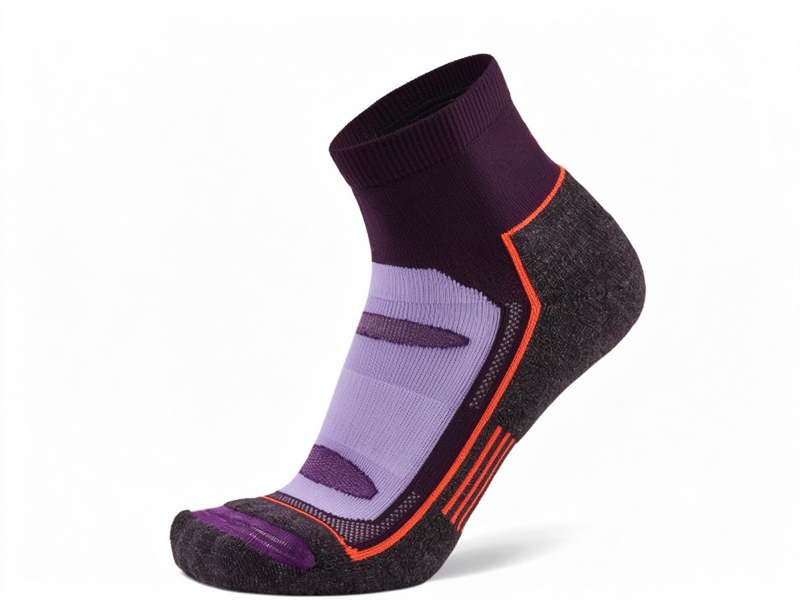
The construction details are where the brand spends its money. Every pair uses a hand-linked seamless toe — a slower, costlier closure method that eliminates the abrasive ridge across the top of the foot. Every pair passes a human quality inspection before it ships, a step most manufacturers at this price eliminated decades ago. The fit architecture recurs across the catalogue: an extra-deep heel pocket so the sock cannot migrate, a high heel tab that keeps grit out, a wide arch band that hugs without constricting, and reinforced microfiber mesh ventilation where feet sweat. Reviewers repeatedly note the same sensation: the sock disappears on the foot.
Blister Resist and the ultra benchmark
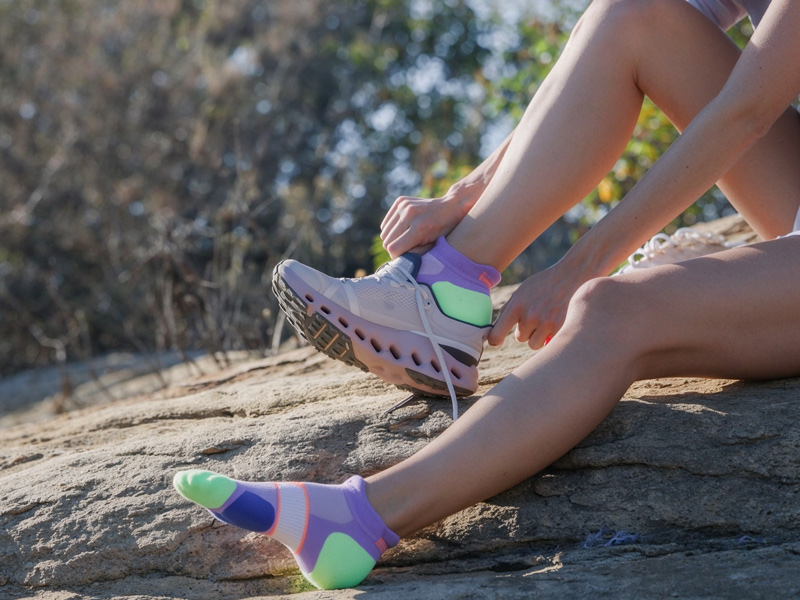
The catalogue is compact, and runners name its entries unprompted. Hidden Comfort is the volume leader — a plush, medium-volume no-show with dense terry cushioning reviewers call the everyday trainer of socks, suited to one mile or one hundred. Blister Resist is the specialist: mohair wrapped through heel and toe over the proprietary Drynamix wicking yarn, a recurring entry on ultramarathon benchmark lists — the sock trail runners reach for when the day promises eight hours of friction. Enduro adds the V-Tech Arch Support System for a locked-in midfoot. Silver threads silver chloride ions into the yarn for antimicrobial odor control. Ultraglide minimizes material for minimalists and racers. Support builds in stability for runners whose feet move more than they should.
Moh-rino, Drynamix, and V-Tech arch support
The materials story runs deeper than branding. Drynamix is the brand's proprietary wicking yarn, engineered to move moisture away from skin faster than cotton or generic polyester. The mohair blend appears in the Blister Resist line as mohair wrapped over Drynamix — natural fiber managing friction where the body needs it, synthetic fiber managing moisture where the body produces it. The V-Tech Arch Support System in Enduro adds structure through the midfoot for runners who want their sock to function like a light brace. Prices sit at roughly thirteen to sixteen dollars a pair, a bracket the brand defends by pointing at the hand inspection and the warranty.
Ubuntu, community programs, and one year of warranty
That warranty runs one year against manufacturing defects — longer than most hosiery, where the category norm is zero. The social texture carries a Zulu word: Ubuntu, meaning shared humanity, treated as an operating value rather than a slogan. Balega's community programs channel resources into its South African home base, and specialty retail partners — Fleet Feet among them — tell the Ubuntu story alongside the technical one. The identity sits comfortably in the specialty running channel the brand was born in: run shops, where a sock earns its shelf by surviving six-month field trials with the staff.
Corporate ownership in the Implus era
The corporate chapter explains both the polish and the anonymity. Balega today operates under Implus Footcare, the large accessory and sports-medicine conglomerate headquartered in Durham, North Carolina — the same corporate family that houses performance accessory brands across categories. The consequences are visible on the storefront: professional logistics, a region selector with local currency, standard corporate returns and shipping documents under the Implus name, and a site warmer than most conglomerate properties but unmistakably managed. The founding narrative is the inverse of the category's founder-forward brands — the story is told through manufacturing cities and fiber supply chains rather than a founder's name, leaving the origin chapter thinner than Feetures' podiatrists, Darn Tough's family mill, or Bombas' donation engine.
Thirteen dollars and change, warranty included
For a shopper, the calculus is refreshingly simple. At thirteen to sixteen dollars with a one-year warranty, the premium over commodity athletic socks buys verifiable construction — hand-linked toes, human inspection, regional mohair — rather than marketing. The catalog rewards matching the sock to the mission: Blister Resist for long hot ultras, Hidden Comfort for daily miles, Silver for the gym bag, Ultraglide for race day. The international network and specialty-retail availability mean trying a pair usually precedes buying a six-pack, and the price makes the six-pack painless.
Who should knit Ubuntu into their rotation
Balega in 2026 is for a specific runner: the ultramarathoner who treats blister prevention as engineering; the high-mileage road runner whose socks die by seam failure; the buyer who wants natural fiber performance with a traceable supply chain back to Nelson Mandela Bay; and the community-minded runner who likes knowing the Ubuntu programs exist. For that runner, Balega offers a quietly complete package — world-provenance materials, hand-finished construction, a real warranty, and benchmark status in the hardest category test there is, the all-day trail race. It is less suited to the buyer who shops by founder story or demands a radically distinctive direct-store experience: the brand's voice is corporate-warm rather than founder-raw, and its best moments happen in the sock drawer, not the marketing. But the blister count at the finish line is the metric that matters, and on that one, the socks knitted in Cape Town keep finishing near the front.