Twelve games a year, eighteen cards each, zero machines in the building

Official homepage: https://buttonshygames.com
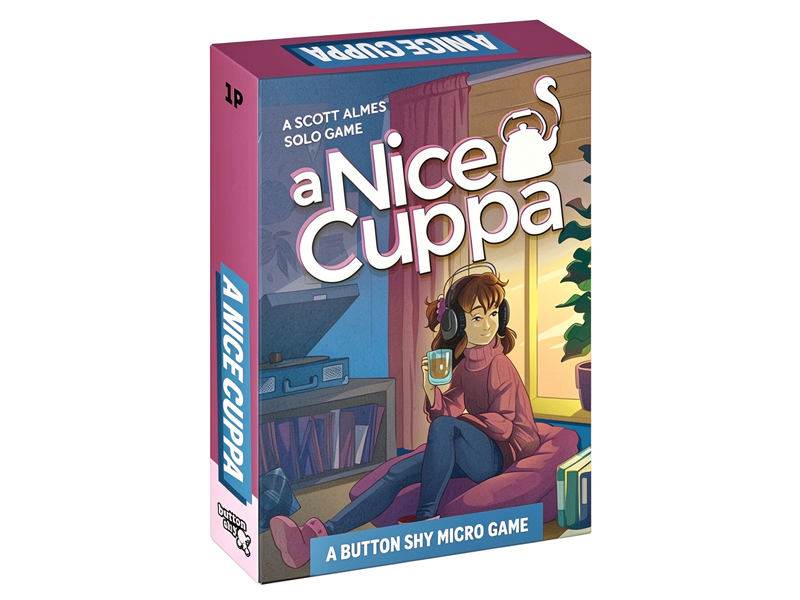
The board game industry loves big: bigger boxes, bigger minis, bigger pledges. Button Shy Games built one of its most loyal followings by going the other way — eighteen cards, a vinyl bi-fold wallet, and a price lower than most game-night pizzas. Jason Tagmire has been self-publishing under the Button Shy name since 2007 from South Jersey, and the label now releases a new Wallet Game every single month, hand-assembled by actual humans. This review looks at the store's unusual economics, its cult hits like Sprawlopolis, and whether tiny games can carry a whole business.
From Pixel Lincoln to an Eighteen-Card Manifesto
Jason Tagmire was designing and self-publishing games in South Jersey years before the current crowdfunding boom, cutting his teeth on oddities like Pixel Lincoln, a card game that reduced the sixteenth president to a sixteen-bit hero. Button Shy existed as a side label for years before it found its identity, and that identity turned out to be a constraint: what if a real, satisfying game could fit in eighteen cards? The answer became the Wallet Game — a pocket-sized design packed in a bi-fold vinyl wallet, cheap to make, cheap to ship, and durable enough to live in a jacket pocket. What began as an experiment now defines the company; the team works from a small workspace in Haddonfield, New Jersey, with a satellite crew in Shropshire, England, and the eighteen-card limit has never been broken.
Why Every Wallet Game Is Assembled by Hand
The store's most quietly radical policy is not about design at all. Every single Wallet Game is assembled by hand — cards sleeved, inserted, and checked by the Button Shy team itself. The company admits this is wild and says so openly: hand assembly is slower, harder to scale, and impossible to automate away. It persists because the team believes in small business and wants every copy inspected by a person who cares whether it is perfect. In an industry where games are shrink-wrapped continents away from the people who designed them, this is a meaningful difference. It also explains the store's shipping waves and occasional waits, which the company discusses with unusual candor rather than hiding behind a logistics provider.
A Release Cadence That Would Break Normal Publishers
Button Shy releases a new Wallet Game every month — twelve a year, a pace that would exhaust design teams ten times its size. Many launch on Kickstarter, where the label's community arrives reliably: the recent River Wild and Ancient Realm campaign, two solo games by Sprawlopolis co-designer Steven Aramini, asked for $2,000 and pulled in more than $68,000 from over 3,400 backers in eleven days. Others debut through the Board Game of the Month Club, a Patreon subscription where members receive each new wallet as it ships. The result is a store that never really has a quiet month: there is always a preorder window open, a club shipment going out, or a campaign countdown running, and regulars treat the release calendar the way soap opera fans treat a season schedule.
Kickstarter, Patreon, and the Direct Fan Economy
What is striking about the store's economics is how little stands between maker and player. There is no distributor chain to speak of: games are designed in-house or by a stable of trusted collaborators, crowdfunded or club-funded by fans, assembled by the team, and shipped direct. The label even runs a monthly podcast, Button Shy Deep Dive, in which Tagmire and collaborators dissect one game at a time — its design decisions, its art, its development mistakes — turning the back catalog into an ongoing documentary. For a shop this small, that content engine does real work: it keeps older titles selling alongside the new releases, and it gives the monthly cadence a narrative rhythm instead of a marketing drumbeat.
Sprawlopolis and the Accidental Empire It Built
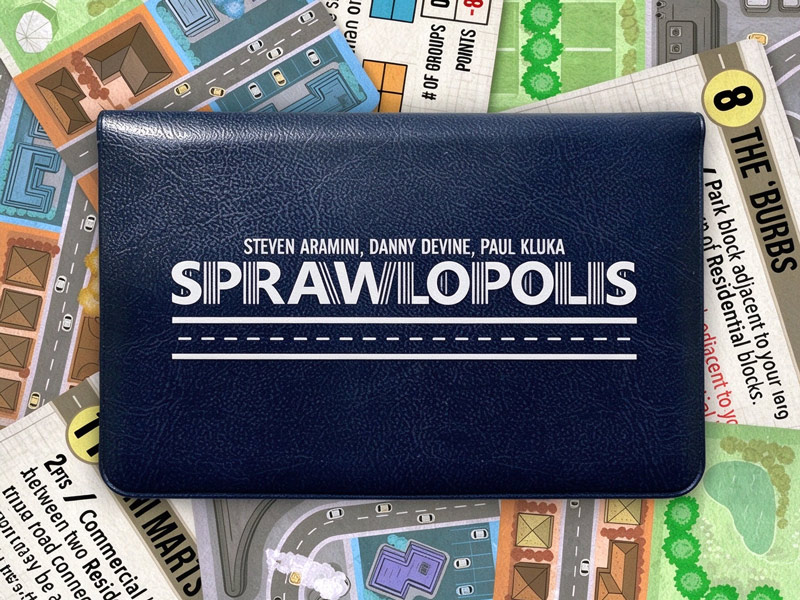
Every cult publisher has one game that changes its trajectory, and for Button Shy it is Sprawlopolis. Co-designed by Tagmire, Steven Aramini, and Danny Devine and released in 2018, the eighteen-card city builder gives each player a different scoring condition every game, which means the puzzle never plays the same way twice. It became a phenomenon in micro-game circles — the rare wallet game that shows up in game-of-the-year conversations — and spawned an Opolis lineage including Agropolis and Naturopolis, plus a steady stream of expansions. Critics routinely single it out as proof that depth has nothing to do with component count. For the store, it did something more practical: it turned a quirky monthly habit into a backlist that sells forever.
What Seven Dollars Buys in This Store
The pricing is almost disarming. A recent pre-order listing for the Tell-Tale Heart module, nine cards that slot into the Out of Print play system, runs $7; most wallets land in the teens, and expansions cost only a few dollars each. Even flagship items cost less than a cinema ticket for two. That low price floor is strategic: the format turns impulse purchases into a sustainable model, because customers who came for Sprawlopolis rarely leave with just one wallet. It also makes the store unusually giftable — a complete, genuinely good game small enough to tuck into a birthday card. The trade-off is visible on the shelf: there are no deluxe editions, no wooden inserts, no minis; the charm of the object is the wallet itself.
Where Charm Meets the Limits of Tiny
The constraints are honest ones. Eighteen cards cannot deliver tactile production, and players who buy games for the table presence will find the whole catalog physically underwhelming. The monthly cadence rewards FOMO: wait too long and a title can drift between print runs, and preorder shipping windows mean patience is mandatory. The wallet format is so pocketable that the games are famously easy to lose. And while prices are low per game, the club-and-campaign rhythm is engineered to keep you collecting; a $12 habit, repeated monthly, quietly becomes a budget line. None of this is deceptive — the store is unusually plainspoken — but the model works best on self-aware collectors.
Our Closing Word for the Person Always Carrying Games
Button Shy is one of the few stores where the business model and the product are the same idea made visible: small, handmade, frequent, personal. The games are genuinely good, the prices are genuinely low, the assembly is genuinely done by hand, and the podcast genuinely pulls back the curtain. If your game nights demand epic scope or deluxe components, look elsewhere. If you are the person who always has a game in a bag, a glovebox, or a jacket pocket — or someone who wants to become that person without spending much — this little New Jersey shop has been building exactly for you for nearly twenty years.