Shop the los angeles store that furnishes hollywood's biggest stars
Official homepage: https://nickeykehoe.com
Some stores sell furniture. Nickey Kehoe sells the worldview of the people who choose it. The shop is the retail arm of a Los Angeles interior design firm whose clients include Sarah Paulson, Natalie Portman, Mark Ruffalo, and chef Suzanne Goin — and whose founders renovated the Hollywood Roosevelt Hotel lobby, design Doen's stores, and published a Rizzoli monograph in 2024. Since 2008, the firm has run a shop on Beverly Boulevard where the sofa, the vintage French leather chest, the hand-painted taper candle, and the pair of earrings on the shelf are all part of the same vision. This review measures that vision — and its costs — across eight dimensions.
A spilled glass of creamer at a Manhattan dinner party
Every great design partnership has a meet-cute, and Todd Nickey and Amy Kehoe's belongs in the canon. Seated at the same dinner table at a Manhattan party around 1999, the two hit it off — the retellings disagree on details, though a spilled glass of creamer appears in most — in what they later described as platonic love at first sight. Nickey was designing retail environments for Donna Karan, Ralph Lauren, and Badgley Mischka; Kehoe was designing hotels for Starwood. Both eventually landed in Los Angeles, reunited, and founded their design firm in 2004 over glasses of Prosecco at an LA restaurant. In the fall of 2008 they opened a shop to showcase the treasures they kept finding while hunting for clients. The firm's portfolio now spans celebrity residences, hotel lobbies, restaurant interiors, and the book Golden Light — proof of concept the store has been running on ever since.
From Highland Avenue to Beverly Boulevard to Manhattan
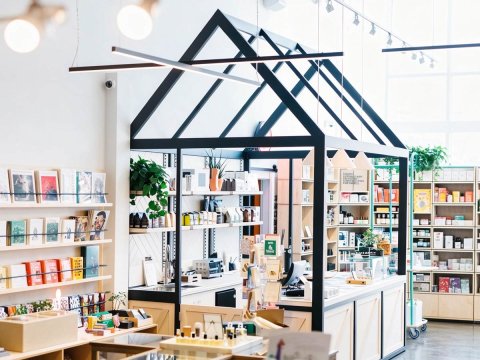
The shop's geography tracks its ambition. It began small on Highland Avenue, moved into the white-cube showroom at 7266 Beverly Boulevard on the edge of Hancock Park — reclaimed scaffolding planks for floors, whitewashed rafters overhead — then in 2017 opened a showroom at the New York Design Center. The real homecoming came in 2024: a 4,000-square-foot Greenwich Village brownstone at 49 East 10th Street, arranged like a residence with parlor, sun room, salon, and garden. The partners personally source vintage twice a year in Europe, with Japan trips on the calendar, so the New York rooms carry French Deco bucket chairs, Swedish Biedermeier stools, and leather chests beside the firm's own line. The firm now employs roughly forty-five people across design and retail.
The NK Collection is made by LA family workshops
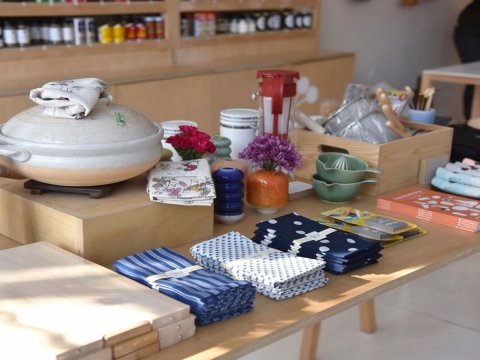
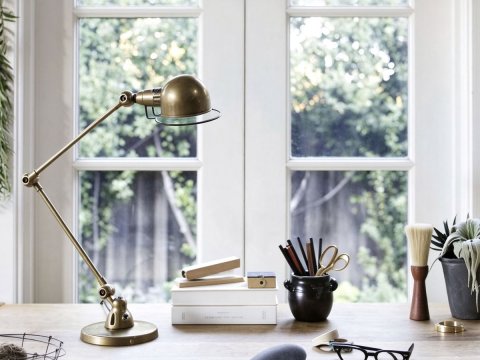
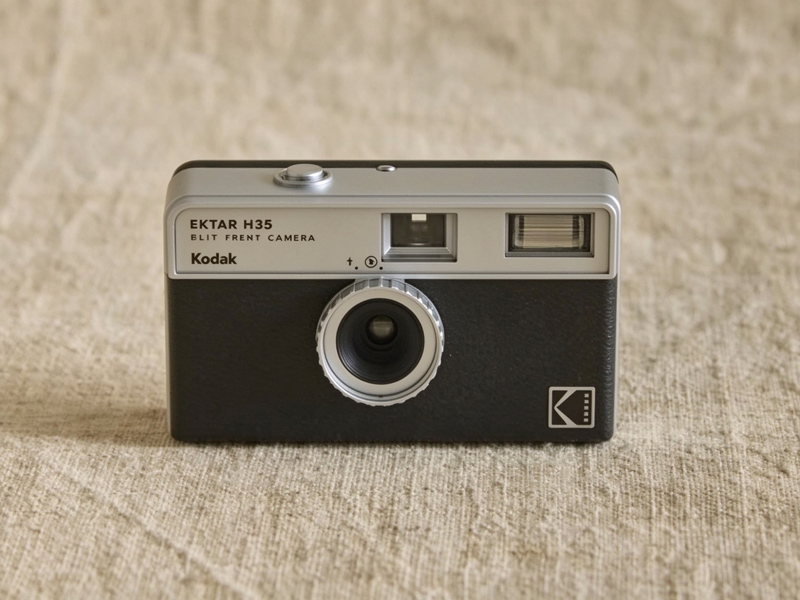
The catalogue's backbone is the NK Collection — the firm's own furniture line, whose signature pieces include the Spindle Back Viewing Chair, the Tuxedo Sofa, the Scallop Sconce, and the String Pendant Lamp. Every piece is fully customizable and handmade in family-owned workrooms around Los Angeles, with wood options painted in select Farrow & Ball colors. Around the collection sits a genuinely departmental assortment: furniture and lighting from other makers, wallpaper, bedding and textiles, tabletop, bath linens, fragrance, books, and small gifts — floral taper candles, incense holders, even earrings. Prices run from a fifteen-dollar striped towel to a four-thousand-eight-hundred-dollar chair and into five-figure vintage. Each NK piece is built to order, so lead times run in weeks — the price of made-in-LA customization.
Twice yearly vintage buying trips across Europe and beyond
The vintage program deserves its own paragraph. The partners personally source antiques on twice-yearly European buying trips — Børge Mogensen wingbacks, Italian mid-century pieces, French leather chests — and sell one-of-a-kind finds through the shops, a 1stDibs storefront, and the website. This is where the design practice feeds the retail business and back: client projects generate buying knowledge, and showroom pieces test what real rooms respond to. Kehoe has described the storefront as a creative laboratory where new product ideas get test-driven before production. It is vertical integration of the most charming kind — designers selling what they would put in their own homes, which, in their case, were famously mirror-image apartments in a Silver Lake duplex they shared for nine years.
White glove delivery for anything large or fragile
Logistics reflect the price point. Small household items ship domestically and internationally via UPS Ground, with duties and taxes displayed at checkout and a 48-to-72-hour processing window; large and fragile items — NK Collection pieces and vintage — travel by premium white glove delivery nationwide, blanket-wrapped with inside placement. Local pickup is available at the Beverly Boulevard showroom or a Commerce warehouse by appointment. The hard boundary is international: large furniture, fragile vintage, and fine art cannot leave the continental United States, though buyers may route through a domestic freight forwarder. Delivery quotes are valid for thirty days, and charges for failed delivery attempts are not refundable — clauses that matter when a six-thousand-dollar sofa is involved.
Fourteen days, with a steep fee over a thousand dollars
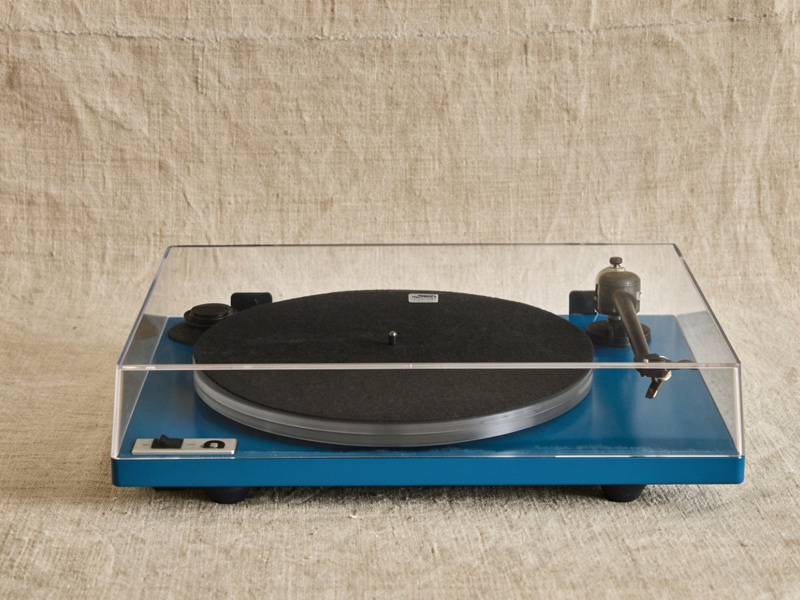
Returns are reasonable until they are not. The window is fourteen days from delivery — thirty for gift exchanges — items must be in original condition and packaging, customers pay return shipping unless the item arrived damaged, and refunds credit to the original payment method within three to ten business days. Then the clause that defines this store's risk profile: entirely returned orders over one thousand dollars incur a twenty-five percent restocking fee, which the store justifies as covering the considerable time, cost, and labor of careful packaging and shipment. On a four-thousand-dollar chair, that is a thousand dollars to change your mind — a steep psychological price for a firm whose entire brand is emotional connection to objects. International shipments are final sale altogether. And the store does not assume responsibility for returned items damaged in transit or lost without proof of delivery.
Seventy percent trade means seventy percent of the proof
The reputation case is unusual: roughly seventy percent of the business is trade, which means the shop's proof lives in professional networks rather than public review platforms. There is no significant Trustpilot presence; the documented record is press — Architectural Digest, WWD, Domino, Homes & Gardens — plus a trade program, project lists, and a client roster that reads like a film festival. For design-industry buyers this is the strongest endorsement available: repeat commissions from people who specify furniture for a living. For a first-time consumer, it means the reassurance is institutional rather than communal — you are trusting a Rizzoli monograph and a twenty-year body of work, not a corpus of five-star unboxings.
Who should shop a designer's own store
Nickey Kehoe the store is for the shopper who wants a designer's eye without hiring the firm — someone furnishing with intent, comfortable with made-to-order lead times, white glove logistics, and a restocking-fee calculus on big pieces. It is the most vertically integrated operation in this review series: the people who design Hollywood's houses also make the sofa, import the vintage, and sell the candle on your mantel. The trade-off structure is honest, if sharp: fourteen days, paid returns, a quarter of the ticket price as an exit fee on large orders, and an international door that only opens for small parcels. For its audience — design-literate, patient, and buying for keeps — it is one of the most complete home stores in America.