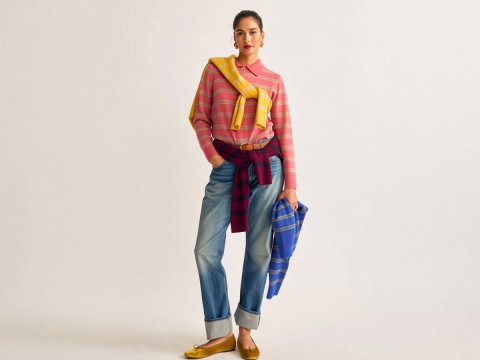
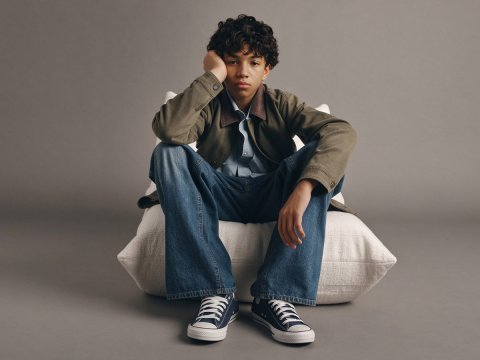
The materials science company selling sweatpants to save the world
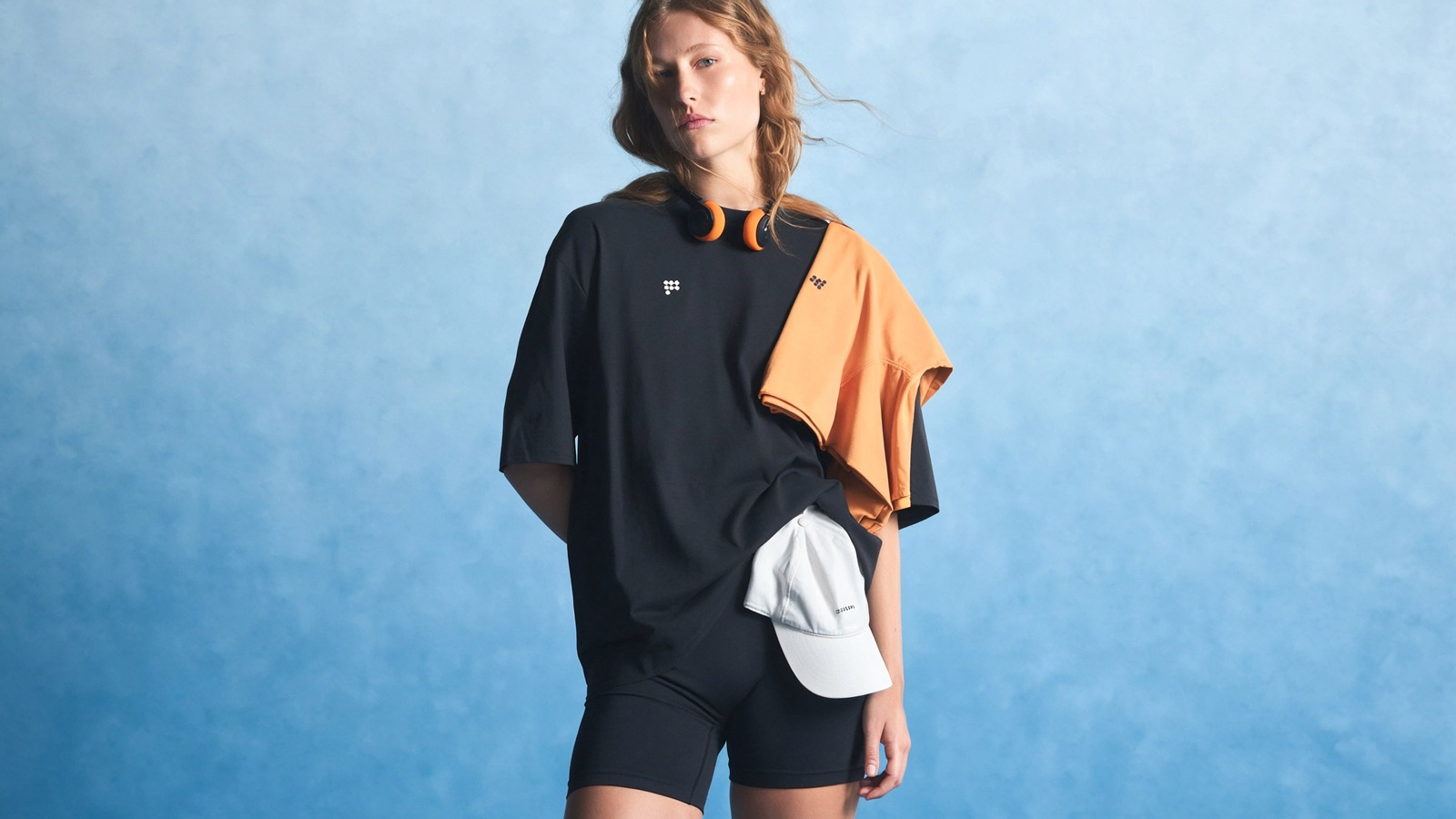
Official homepage: https://www.pangaia.com
Pangaia insists it is not a fashion brand. Founded in London at the end of 2018, the company describes itself as a materials science collective — scientists, designers, and technologists sharing one laboratory — that happens to sell hoodies. Those hoodies carry no logo; instead, each garment is printed with a text block cataloguing the materials and technologies inside it. The catalog reads like a speculative-fiction pantry: insulation made from wildflowers that took a decade of Italian laboratory research, T-shirts spun with seaweed powder, dyes ground from the brand's own production scraps, and black ink made from captured air pollution. This review examines the storefront dimension by dimension: the lab-not-lookbook identity, the printed bill of materials, the invention portfolio, and the honest arithmetic of innovation-priced loungewear.
A lab coat in place of a lookbook
The founding identity is a refusal, and the company states it plainly across its About pages and interviews: Pangaia is a materials science company, not a fashion label. The corporate entity is registered in Chorleywood, outside London, and the operation is organized as a collective — scientists, technologists, designers, and creatives sharing one platform whose stated purpose is to scale breakthrough material solutions through everyday products. The chief innovation officer, Amanda Parkes, frames the mission with a skeptic's arithmetic: the sexy lab breakthroughs, she has said, are just ten percent of the work — the R&D portfolio spans evolution, revolution, and disruption, and most of the effort is the unglamorous engineering of scaling, sourcing, and costing.
The fashion-industry context makes the posture legible: by 2018, sustainability storytelling had become a marketing treadmill, with brands pressured to announce novelties faster than they could adopt existing advances. Pangaia's bet was to invert the model — own the science, publish the receipts on the garment, and let the fashion follow the materials rather than the reverse.
The text block that replaced the logo
The most distinctive design decision in the catalog is the absence of one. Pangaia garments carry no conventional logo; each piece is printed with a signature text block detailing the materials and technologies used in its manufacture — the bill of materials, worn on the sleeve. The mechanism is the brand's identity in miniature: a wearer becomes a walking explanation, and the transparency that most companies relegate to a website is printed where every observer can read it. Chief impact officer Maria Srivastava described the garment's function to one magazine as representation — to wear a Pangaia hoodie is to represent a whole new world.
The timing was accidentally perfect. Pangaia launched at the end of 2018 with loungewear, and the pandemic converted the planet to sweatpants within fifteen months; by mid-2020 the colorful hoodies were saturating Instagram Explore feeds, backed by celebrity wearers — Bieber, the Kardashians, Bella Hadid, Jaden Smith — who functioned as the diffusion the text blocks were designed to provoke.
Ten years to make a flower warm
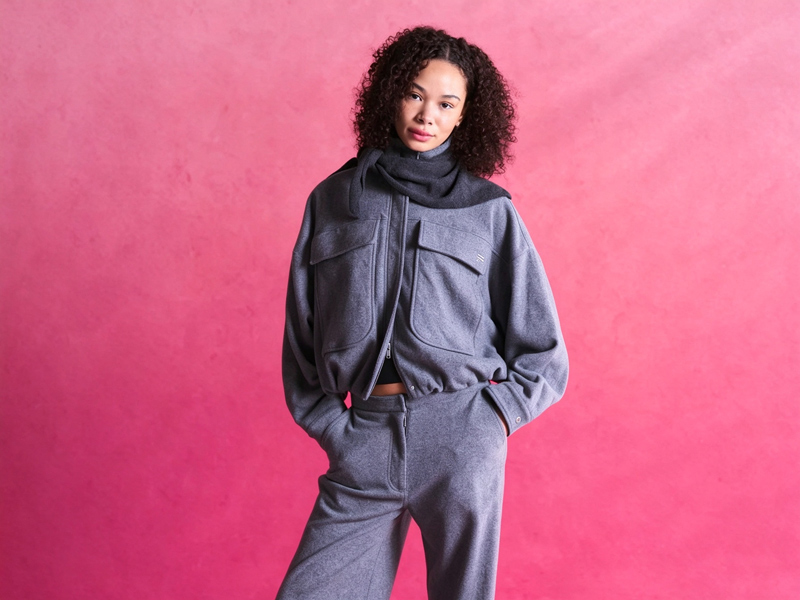
The flagship invention is FLWRDWN, a bio-based insulation that replaces both goose down and petrochemical synthetic fill. The origin story carries the company's patience in one detail: the science took Italian laboratories a decade to formulate. The feedstock is a wildflower that requires no farming — Parkes calls it basically a weed that grows best when left alone — and its cultivation supports monarch butterfly habitat at risk of endangerment. The process combines the flower with a biopolymer, then infuses the blend with a cellulosic aerogel to produce an insulation that is lightweight, breathable, animal-free, petrochemical-free, and biodegradable under specific conditions. The puffer jackets and coats carrying it retail between $750 and $950 — prices Parkes attributes to scale, not chemistry: nothing in the formula or the machinery necessitates that cost, and the company expects it to fall as production ramps.
The strategic detail is the licensing thesis: FLWRDWN is proprietary intellectual property, and Pangaia is deliberately vague about specifics — even the flower type — while simultaneously announcing plans to license the material to other brands. Owning a material, in Parkes' framing, means tweaking it for any end product and renting the breakthrough to rivals; the collection doubles as a working showcase proving market readiness to the industry.
Nettles, bananas, and the fiber farm
The apparel fibers extend the same logic — abundant, waste-adjacent feedstocks upgraded by processing science. PLNTFIBER blends Himalayan nettle, bamboo, eucalyptus lyocell, and seaweed: four plants that require no additional irrigation, pesticides, or fertilizers. FRUTFIBER combines bamboo lyocell with pineapple leaves and banana-leaf fibers — byproducts of the food industry that would otherwise be discarded. The processing distinction matters more than the romance: the lyocell-derived fibers use a closed-loop solvent process, while the pineapple, banana, and nettle are mechanically processed, producing a rawer hand-feel and, per Forbes' materials reporting, measurably different molecular-chain properties that translate into different texture and luster in the finished yarn. Pangaia has even taken a stake in a vertical Portuguese textile company — the partial ownership buys access to fiber and yarn R&D facilities that traditional supplier relationships cannot reach, and lets the brand iterate recipes at laboratory tempo.
The skeptic's question — is all cellulose just cellulose, and are the trademarked names a branded nod to the source? — was put to Parkes directly, and her answer is the company's method: the innovation lies in the recipe, in blending chemically and mechanically processed fibers to engineer tactile and tensile properties that neither produces alone. Science, in her repeated formulation, has already offered answers to most material problems; the work is contextualizing and applying them to fashion.
Pollution ink, scrap dye, and peppermint finish
The finishing portfolio reads like an alchemist's notebook. With Air-Ink, Pangaia captured air-pollution particles and converted them into a water-based black ink used to print its logos and text blocks. With Italian lab Officina+39, it developed Recycrom, a pigment ground from the brand's own production leftovers. A peppermint-oil treatment — developed in-house — functions as an antimicrobial, odor-control finish that keeps garments fresher longer, diminishing wash frequency and the water and energy each wash spends. Even the conventional materials carry published constraints: organic cotton lines claim ninety-five percent rain-fed water, and the seaweed-blend tees are positioned as a water-saving, fully biodegradable alternative to standard cotton.
The commitments are dated and scoped: net zero across scopes one through three by 2040, with biodiversity and water health tracked alongside carbon, and B Corporation certification arriving in December 2022. The brand is careful to present these as trajectories — an Earth Positive philosophy — rather than completed conditions, a framing that treats the buyer as an adult.
The Lab, and why they share their inventions
Pangaia Lab, launched in 2021, is the physical and institutional expression of the model: a home for the more radical end of the portfolio, including Brewed Protein — a bio-based alternative to wool and cashmere produced by fermenting microbes — and investments in outside inventors, such as a Brooklyn materials firm making fully compostable biosynthetic yarns from corn- and wheat-derived sugars. The through-line is the sharing thesis: the company has said it does not believe in hogging breakthrough materials, announcing licensing discussions, opening blueprints for impact to other industries, and treating its own catalog as a demonstration of market readiness. A circularity program with a US garment-renewal partner adds take-back and repair to the product lifecycle.
For the storefront reviewer, the Lab is what separates Pangaia from the storytelling treadmill it was founded to escape: the inventions are real, some are patented, several are being licensed, and the portfolio keeps widening — eight new materials launched in a single recent year alone.
The honest texture of innovation pricing
Three honest cautions belong in the ledger. First, price: at $750 to $950 for a puffer and premium bands across the loungewear, Pangaia sells to the sustainability-affluent — a position the company itself frames as temporary, with costs designed to fall as scale and licensing arrive, but real for today's buyer. Second, the hype cycle: the celebrity-saturation launch gave the brand reach most lab startups never touch, but celebrity-driven demand is fickle, and the durability of a decade-old seaweed tee under daily wear remains less documented than the science behind it — materials this novel do not yet have fifteen-year review histories. Third, the proprietary boundary: the brand is deliberately vague about the FLWRDWN feedstock and process details, which is understandable for IP protection but sits in productive tension with its own transparency-first branding.
None of these are disqualifying; all three are the standard taxes on genuine innovation. The company's own framing — the lab breakthroughs are ten percent — suggests it understands that the remaining ninety percent, the scaling and the wearing, is where the industry's promises usually die.
The verdict for the science-curious loungewear buyer
Pangaia's storefront is the apparel industry's materials-science experiment made shoppable: a collective that refuses the fashion label, prints its bill of materials where the logo should be, sells flower-stuffed puffers at the price of a lab prototype, and licenses its breakthroughs to the rivals who will ultimately validate them. The cons are the cons of the frontier: innovation pricing, unproven decade-scale durability, celebrity-cycle exposure, and the honest fact that the most sustainable garment is still the one already in your drawer.
Buy here if you want your loungewear to arrive with a chemistry lesson, if a text-block garment that starts conversations appeals as much as a logo-free one, if you can carry an eight-hundred-dollar flower puffer on the strength of a decade of Italian research, and if you would rather fund the material revolution at retail than wait for it to reach the mass market. Buy the certified-organic basics brands reviewed in this category if today's receipts matter more than tomorrow's breakthroughs. For the science-curious loungewear buyer who wants to wear the future a decade before it is affordable, this London lab's storefront remains the category's most ambitious bet — printed, provocatively, on the sleeve.