The brand that sized its whole catalog for the 70 percent
Official homepage: https://www.universalstandard.com
In 2015, two friends went shopping on Fifth Avenue and discovered that one of them could not come inside. Alexandra Waldman wore a size 20; Polina Veksler wore a size 6; and the stores that dressed Veksler had nothing for Waldman — a separation the two women resolved to end. They founded Universal Standard on a premise the industry called commercially impossible: every style, in every size from 00 to 40, at the same price, fit-tested on real bodies across the whole range. A decade later, the brand is one of the few profitable size-inclusive fashion companies in existence, its Foundation collection forced the industry's first true 00-40 line, and its Rodarte collaboration carried the premise onto high-fashion runways. This review examines the storefront dimension by dimension: the locked door, the redrawn size curve, the pricing doctrine, and the honest arithmetic of dressing seventy percent of women.
Two friends, one avenue, and a locked door
The origin story, told in every profile the founders grant, is a single shopping trip. Waldman, a journalist-turned-marketing-executive who wore a size 20, and Veksler, an investment-banking and strategy veteran who wore a size 6, walked Manhattan's Fifth Avenue together and discovered, store by store, that the avenue would admit only one of them. The frustration was not abstract: the friends could not shop together, could not wear the same things, could not participate in the same rituals of style — and the split mapped onto a number the industry preferred not to say aloud, that roughly seventy percent of American women wear a size fourteen or above, yet the fashion industry had organized its access around the thirty percent who did not.
The co-founding split of labor completed the partnership's logic: Waldman's creative and communications instincts, Veksler's financial discipline — the same creative-plus-operator architecture that the celebrity-brand and workwear founders in this category built, applied here to a market failure rather than a product gap. They launched in New York in 2015 with a capsule of minimalist essentials, sizes 6 to 32, and a name that announced the ambition: a standard, universal.
Seventy percent of women, sized out
The brand's founding rhetoric converts the anecdote into economics with unusual consistency. Waldman's formulation, repeated across years of interviews: some seventy percent of American women have been separated by the apparel industry from the access that always existed for the thirty percent — it makes no sense on any level, not consumer, not business. The mission line is the brand's most quoted sentence: we wanted a size 26 to shop in the same way as a size 6 — using style as her only filter.
The language of dignity runs through every public statement: no us and them, no plus and straight, no separate sections with different lighting and different mannequins — the practice of segregation that the industry had normalized since the department-store era, now named and refused. For a storefront reviewer, the consistency across a decade of quotes is itself a data point: the brand has never once softened the premise, including the years when softening would have been cheaper.

The size curve, redrawn around an eighteen
The engineering behind the premise is what separates Universal Standard from the extended-sizes crowd. The industry default — grade up from a size-6 sample using a formula — produces garments that fit the middle of the curve and betray the ends. Universal Standard instead centers its size curve on a size 18, closer to the actual average American woman, and fit-tests every core style on bodies across the full 00-to-40 range before it goes on sale: fit, proportion, comfort, and appearance, each verified on real women rather than extrapolated from a pattern block. The company's own materials state the doctrine plainly: this is not the industry norm, it is a significant investment of time and resources, and it is what actually produces clothes that fit.
The 2018 Foundation collection was the thesis made visible: seven fitted layering basics — crews, turtlenecks, tanks — engineered as the first line ever to span 00 to 40. The following year the range went sitewide, making Universal Standard one of the most size-inclusive brands on the market, and the Foundation pieces remain the engine room: the evergreen silhouettes whose fit data informs everything seasonal the company makes.
Same price, same page, and no exceptions
The pricing doctrine is the second half of the premise, and the rarer one. A size 40 costs the same as a size 2 at Universal Standard — always, without exception. The company publishes the logic as a direct rebuke to the industry's surcharge habit: the cost of producing extended sizes is a cost of doing business for an inclusive brand, not an extra fee to pass on to customers. Every garment, every size, no exceptions — one collection, one page, one price.
The operational economics behind the doctrine are worth stating: grading and fitting forty sizes multiplies pattern work, sampling, and fit-model costs, and the surcharge-free rule absorbs that multiplication into the base price rather than itemizing it onto the customers the industry has historically itemized everything onto. That the brand has remained, by third-party case-study accounting, one of the few profitable size-inclusive fashion businesses suggests the economics close — not easily, but close.
A Rodarte collab, and the luxury handshake
The legitimacy chapter arrived via high fashion. Universal Standard's collaboration with Rodarte — the Mulleavy sisters' couture-adjacent house — carried the inclusive premise onto territory the industry considered off-limits: luxury. The partnership's logic, as fashion press coverage framed it, was proof-of-concept at altitude: if a 00-40 range could be engineered for a Rodarte silhouette, the industry's excuse that inclusive design compromised fashion was a cost argument dressed as an aesthetic one. The brand's women-run identity — listed among the women-run fashion houses rewriting the industry's history — gave the collaboration its symmetry: two women-led houses dressing every woman the same way.
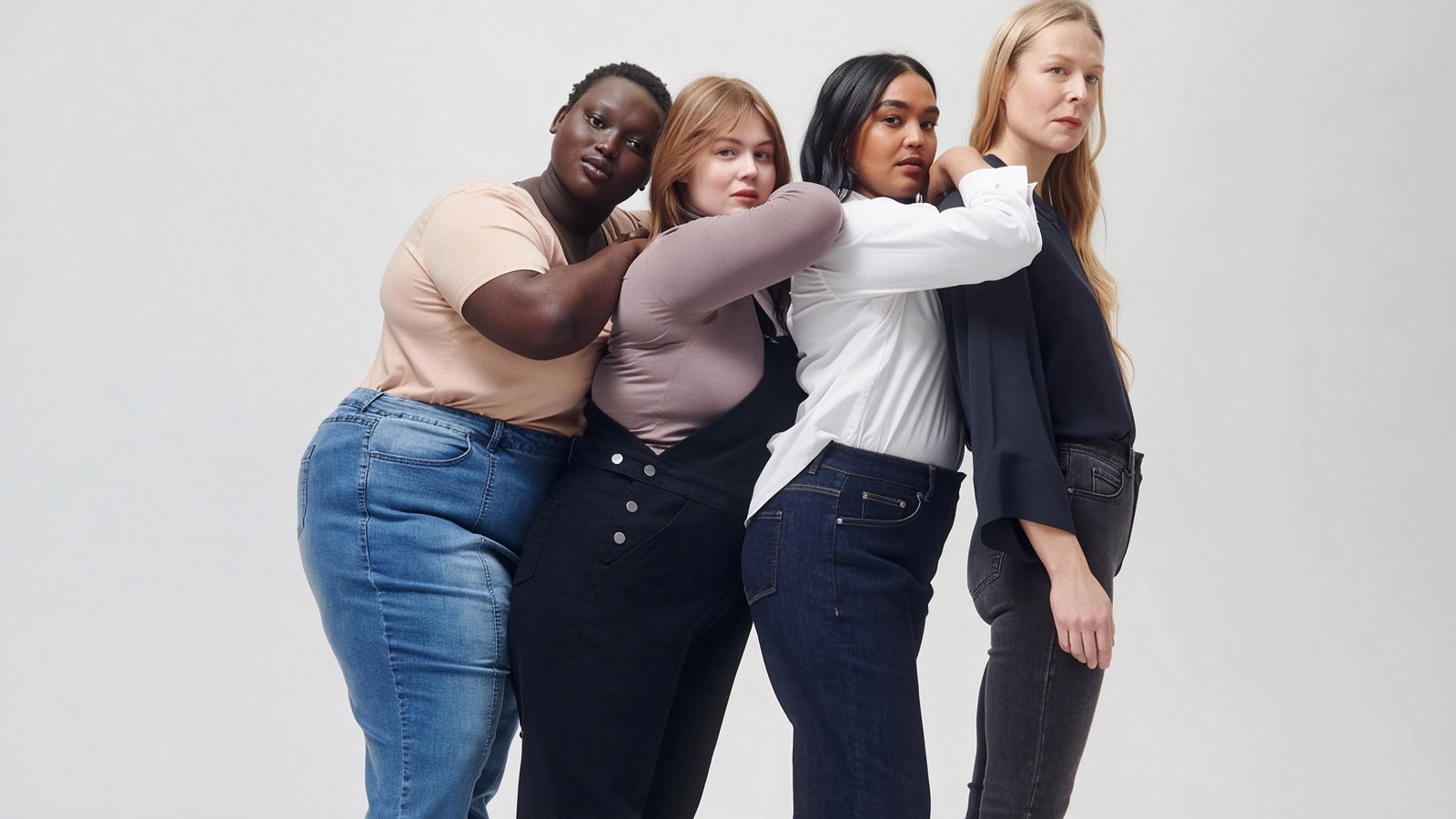
The representation program completes the visibility argument: the brand's campaigns have long featured models across the full size spectrum, unretouched, in the same garments and the same styling — the catalog as argument that style has no size gate.

One of the few profitable inclusive brands
The financial texture deserves precision. Independent case-study coverage describes Universal Standard as one of the few profitable size-inclusive fashion brands in the industry — a qualifier that does more work than any superlative, given how many inclusive brands have burned through venture money and closed. The company's own history includes the standard growth-scar tissue: a funding round, and an operational mistake the case study says shaped the business — the kind of inventory or expansion misstep nearly every DTC brand of the era absorbed. That the brand emerged profitable after a decade puts it in a category of perhaps one or two.
The wholesale and expansion record is quieter than the mission record — fewer stores, less celebrity heat than the category's giants — which the case-study literature reads as discipline and this review reads as both: the economics of forty-size grading favor a measured footprint.
The honest texture of a premium mission
Four honest cautions belong in the ledger. First, price: same-price-across-sizes is not the same as cheap — the minimalist essentials sit at accessible-luxury numbers, and the seventy percent the brand champions still includes millions for whom a ninety-dollar tee is a budget event; the mission democratizes access within its price band, not beyond it. Second, catalog breadth: the minimalist-edit strategy means a narrow, slow-changing assortment that filters for a specific taste. Third, the industry's follow-through: a decade of Universal Standard has moved the industry's ceiling meaningfully but not universally — extended sizes remain an afterthought at most houses, and the brand's premise, however proved, has been copied more in press releases than in pattern rooms. Fourth, fit nuance: forty sizes fit-tested is enormous engineering, and yet the range a single brand can cover cannot fit every body — the honest ceiling of any curve-based system.
None of these are contradictions; all four are the costs of being first and staying independent in a category that prefers its revolutions branded by others.
The verdict for the woman sized out of style
Universal Standard's storefront is the locked-door premise run as a business for ten years: two friends who could not shop together built the store where they could; a size curve redrawn around the average woman and fit-tested across forty sizes; one price that refuses to itemize dignity; a Rodarte silhouette proving the premise at altitude; and the rarest line in the case-study literature — a profitable size-inclusive brand. The cons are the cons of the frontier: accessible-luxury pricing that democratizes within its band, a minimalist catalog, an industry's slow follow, and the unavoidable ceiling of any curve.
Buy here if you have ever stood outside a store with a friend who got to go in, if one collection, one page, and one price is the shopping experience you were promised and never given, if fit-testing across forty sizes beats a size chart scaled from a sample, and if a brand that never once softened its premise matches your idea of integrity. Buy the deep-catalog basics brands reviewed in this category if trend breadth and price tiers outrank the mission. For the woman sized out of style who wants the door held open at last, this New York storefront remains the industry's most consistent argument — ten years of the same promise, kept in public.