Seventy percent of korea cooks rice in a cuckoo, starting at forty bucks
Official homepage: https://cuckooamerica.com
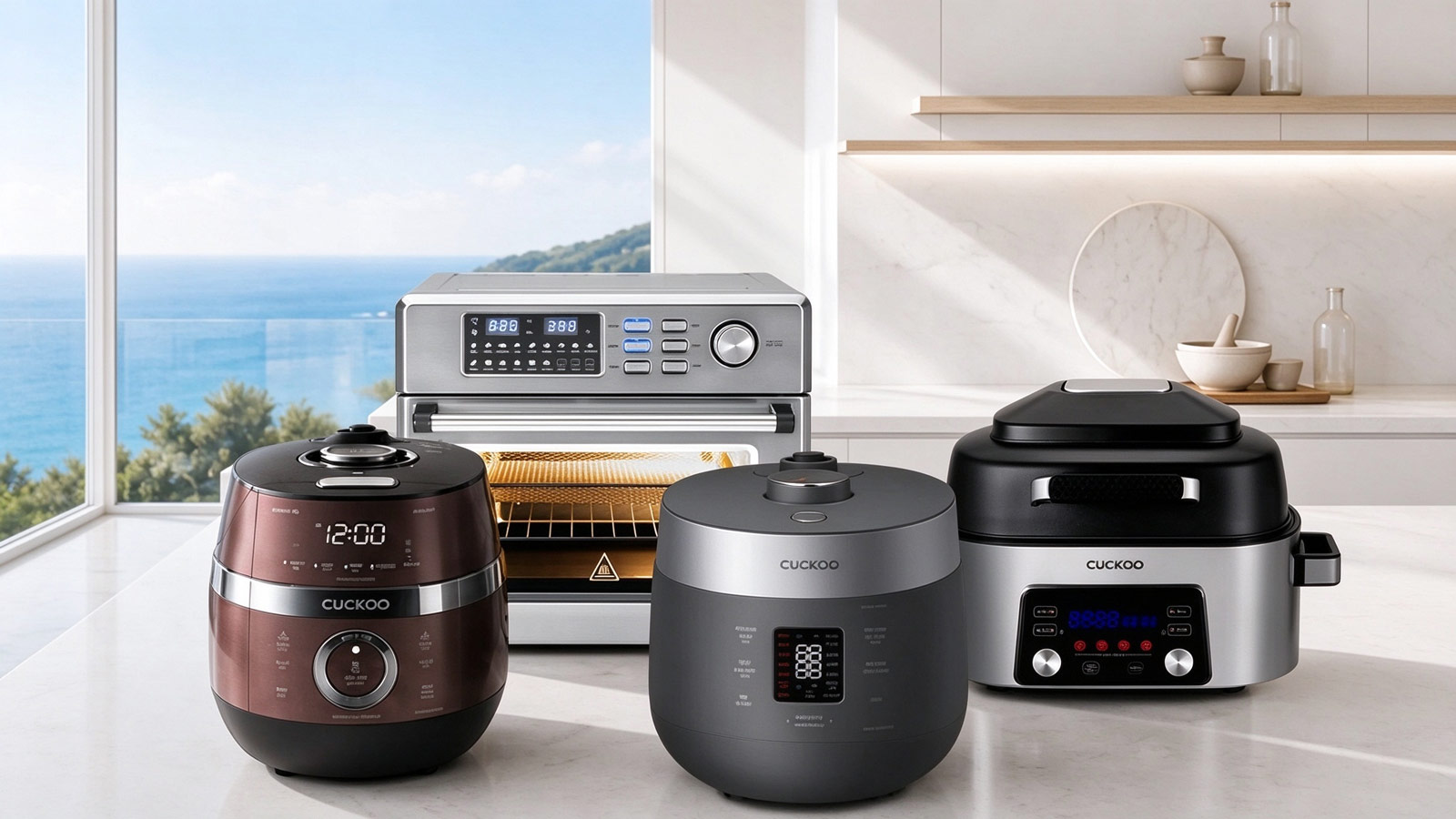
Cuckoo is the Korean appliance giant hiding in plain sight on this tag. Founded in 1978 as Sunkwang Electronics, it became the company behind roughly seven in ten Korean rice cookers, manufactured for Philips, LG, and Panasonic along the way, and its American storefront now runs from a $39.99 basic cooker to a $999 flagship — with replacement inner pots, rubber gaskets, and even rental water purifiers sold alongside. This review examines the technology, the parts ecosystem, and what reviewers disagree about.
Sunkwang Electronics, 1978, and the rice obsession
Cuckoo began life in 1978 as Sunkwang Electronics, and its entire trajectory has orbited one food: rice. By most accounts the brand's cookers hold around seventy percent of the Korean home market — a dominance built on the premise that rice is not a side dish but the center of the meal, deserving dedicated engineering. The company began exporting in 1982, became the first Korean manufacturer to sell rice cookers into Japan in 1990, and spent decades as an original-equipment manufacturer for Philips, LG, and Panasonic before the Cuckoo name went global on its own. The American storefront, Cuckoo America, carries that heritage into a catalog that stretches well past rice: coffee makers and kettles, air fryers and bread makers, blenders and ice makers, hot-water dispensers, water and air purifiers, vacuum cleaners, massage chairs, and bidets, all navigable in English or Korean.
Twin pressure, induction heat, and sixteen menus
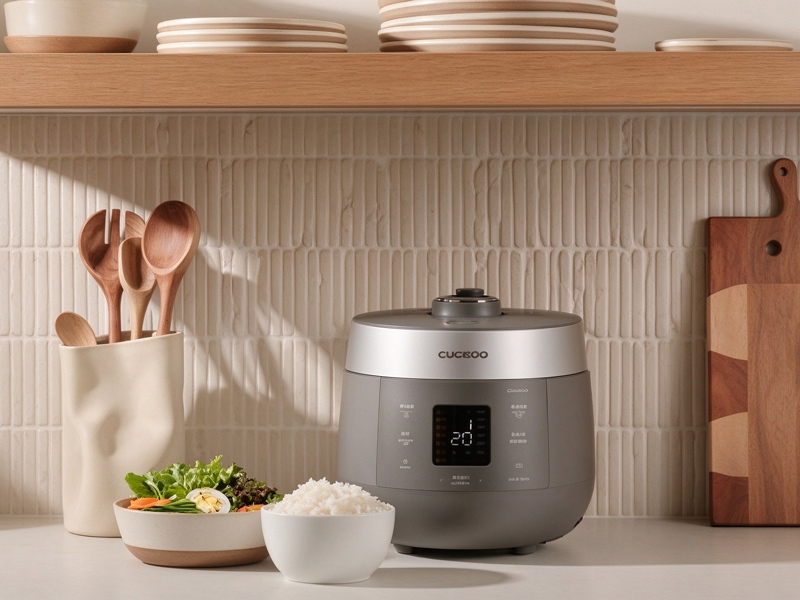
The engineering story is the pressure stack. Cuckoo's signature is twin pressure: a high-pressure mode for the glossy, sticky short-grain rice Korean tables demand, and a non-pressure mode for fluffy long-grain styles — switchable per batch. Above that sits induction heating, which warms the entire inner pot rather than a base plate, and a menu system with up to twenty-one programs: GABA brown rice with its germination cycle, scorched-rice crusts, porridges, multi-cook modes that turn the cooker into a small pressure kitchen, and turbo functions for weeknights. A self-steam-clean cycle addresses the one chore pressure cookers punish owners with, and a three-language voice guide — English, Korean, and Chinese — talks you through the cycle. Buyers should expect a learning curve measured in weeks, not minutes, and a counter footprint to match the ambition.
A three-language voice in your kitchen
The voice guide deserves its own paragraph because it captures the store's split identity. For Korean-speaking households it is a comfort: the cooker announces stages, warnings, and completion in the language of the household that designed it. For everyone else it is the most visible sign that this is an import tuned for its home market first, localized second — the manuals, the menu density, the audible personality all assume a user who grew up with rice cookers that talk. The bilingual storefront, the English-and-Korean toggle sitting in the header, makes the same point gently: this is a Korean company selling to America without pretending otherwise, which is either charming or alienating depending on your kitchen.
Replacement pots, rubber gaskets, and rental purifiers
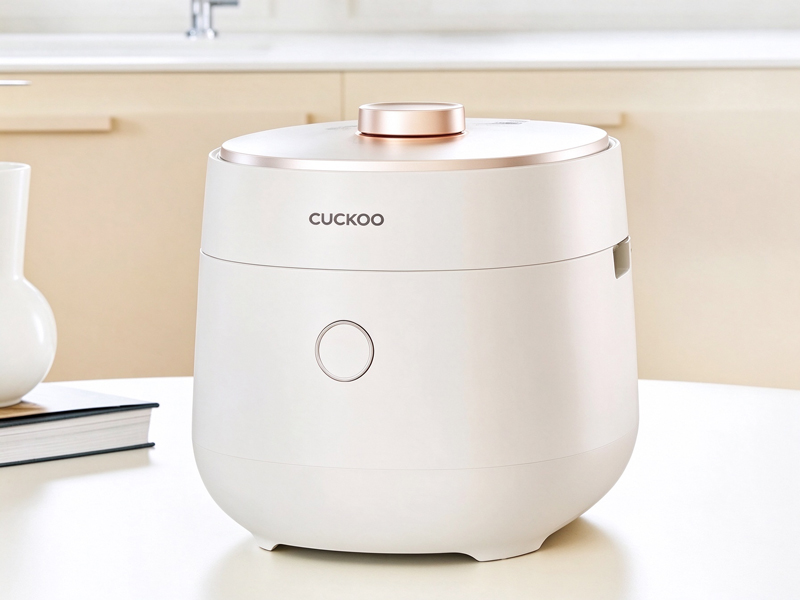
The most quietly radical page on the site is Parts. Cuckoo sells replacement inner pots, rubber packing gaskets, water filters, vacuum parts, air filters, bread-maker and kettle components — the full consumable anatomy of its machines, stocked years after purchase. In an appliance industry built on sealed units and upgrade cycles, a parts store is a longevity statement: keep the pot, replace the gasket, and the cooker outlives its fashion cycle. Around it the store layers second chances — a Like-New refurbished line discounted up to fifty percent, a rental program for water purifiers, and a Cuckoo Creators affiliate program feeding the community. Entry pricing reaches down to a $39.99 basic dome cooker, the simplest possible on-ramp to the brand.
The $39 dome cooker and the $999 flagship
The price ladder is the widest on this tag. At the base, the dome-style basic cooker does one thing honestly at forty dollars. The mid-tiers walk through micom logic, heating, and pressure cooking in the low hundreds. At the top, twin-pressure induction flagships list between roughly $340 and $999 depending on capacity and finish, competing directly with Zojirushi and Tiger at the ceiling of the category. Each tier keeps the Cuckoo signatures — voice guide, steam clean, the nonstick X-Wall pot — so the ladder trades capacity and pressure sophistication rather than features. For a household eating rice daily, the math favors the mid-pressure tiers; for occasional rice, the entry cooker is the honest buy.
Wired's mushy rice and Walmart's five stars
Here the review splits in an instructive way. A Wired test of a three-cup twin-pressure model found white rice mushy — 'rice for sick people,' in the reviewer's phrase — brown rice inconsistent across batches, and keep-warm mode gradually browning the pot's contents, concluding the machine was not $400-fine. Against that, the buyer wall on Cuckoo's own storefront and Walmart's listings reads like devotion: game changer, rice out of this world, owners who cannot go back to their old machines, and year-and-a-half durability updates still glowing. The reconciliation both camps would recognize: these are instruments tuned for Korean-style short-grain rice and GABA cycles, superb within that brief and merely competent outside it — and the disappointed Western reviewer was asking jasmine and basmati of a machine built for another grain.
The last grain in the Cuckoo pot
Cuckoo's American store is the most complete expression of a rice-first appliance brand on this tag: flagship pressure engineering, a forty-dollar entry point, genuine parts availability, refurbished and rental programs, a bilingual storefront, and a support stack — service centers, store locator, product registration, warranty lookup, service requests, and returns — that treats appliances as decade-scale purchases. Its trade-offs follow from the same identity: premium flagship pricing, a menu density that overwhelms newcomers, and a tuning bias toward the rice culture that built it. For households where rice is the main event, there is little reason to look elsewhere; for everyone else, the mid-tiers and the entry dome are the honest paths in.