Portal games: the polish publisher that taught board games to tell stories

Official homepage: https://shopportalgames.com
In 1999, a twenty-three-year-old college dropout in the Silesian city of Gliwice decided Poland needed a games industry, even though one did not exist. Ignacy Trzewiczek founded what became Portal Games anyway, spent a decade earning almost nothing, and ended up helping create one of the world's largest board game markets. Today the company, headquartered in Knurów, runs an American web store stocked with the catalog that made its reputation: Robinson Crusoe, Detective, Stronghold, Imperial Settlers, and twenty-five years of story-first design. This review examines the founder's unusual path, the house philosophy, and the store that carries it across the Atlantic.
Dropping Out of College to Invent an Industry
Trzewiczek's origin story starts with Warhammer. In 1994 he bought Warhammer Fantasy Roleplay, wrote adventures and articles for the Polish magazine Magia i Miecz, and became a recognized author almost by accident. In 1999 he dropped out of college to found a company dedicated to games — a decision he cheerfully tells young people not to copy, while admitting it worked for him. The first years were pure RPG publishing: the post-apocalyptic Neuroshima system, the dark fantasy Monastyr, and a pair of magazines. Board games, and the company the world now knows, arrived almost by accident — and nearly bankrupted the firm before they became its salvation.
Ten Years Without a Salary in Gliwice
What followed was a decade of hustle that reads like a founding myth. Trzewiczek taught by day, wrote video game tie-in scenarios for extra money, and worked twelve-hour days at the company — for years without drawing a salary, while debts mounted instead. Poland in the early 2000s had no board game culture to speak of: roleplayers bought one rulebook and were done, so the company had to invent demand for a product category before it could sell the product. Around 2007, the pivot arrived in the form of Neuroshima Hex, a tactical tile game designed by employee Michał Oracz. Taken to the Essen fair, it exploded with a worldwide audience and the company began, in Trzewiczek's words, to grow like crazy. The industry it helped spark now makes Poland one of the largest board game markets on earth.
The Two-Army Trick That Saved Neuroshima Hex
The legend every Portal fan knows is how close Hex came to killing the company. Priced at sixty-five złoty — about fifteen dollars, but a fortune for young Polish hobbyists in 2005 — the game sat unsold in the office while Oracz daily mourned that his design had doomed them all. Trzewiczek's solution was pure marketing theatre: they announced that due to the game's huge success, a two-player edition called Neuroshima Hex Light was coming. They unshrank the unsold boxes in their own office, removed two armies, resealed everything, and shipped it at a friendlier price. Copies finally sold, players discovered the game was brilliant, word spread, reprints followed, and the leftover armies became the first expansion. It is the hobby's favorite parable about stubbornness, and it explains the company's DNA better than any mission statement.
Robinson Crusoe and the Stories-as-Systems Formula
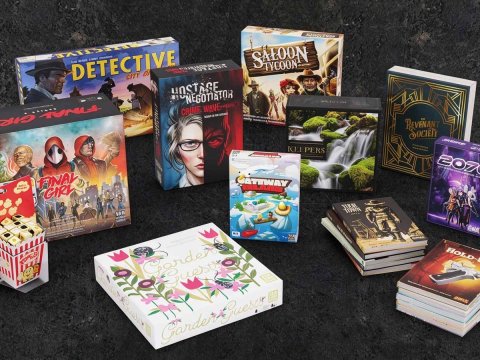
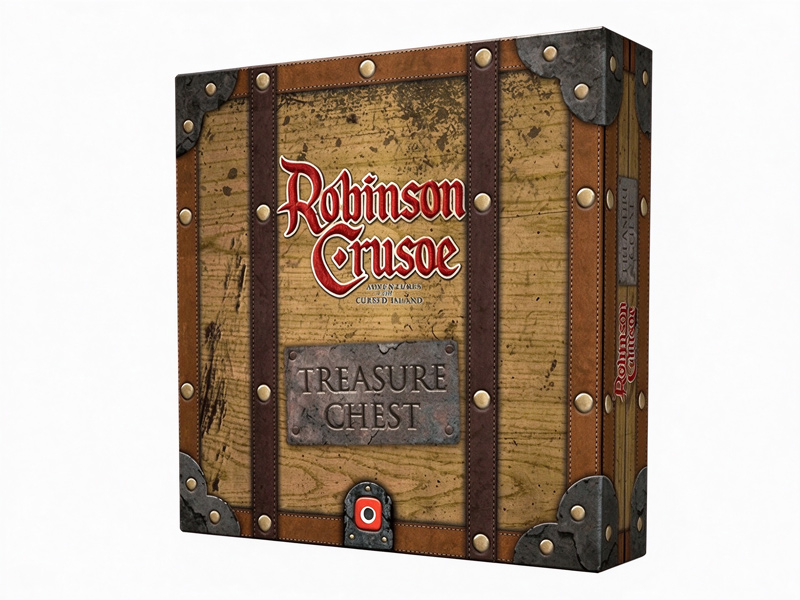
Portal's design signature emerged fully with Robinson Crusoe in 2012: a cooperative survival game where every rule exists to generate narrative, and every careless decision returns to haunt the group three turns later. Stronghold had already proven the studio could build dramatic asymmetry; Crusoe proved it could make theme operational, and it collected international awards by the armful. Detective: A Modern Crime Board Game pushed the idea further with an app-driven investigation across a decade-spanning story, and Imperial Settlers turned card drafting into nation-building vignettes. The unifying philosophy is the company slogan and the title of Trzewiczek's book: board games that tell stories. Theme comes first, mechanics serve the fiction, and the player is made responsible for what happens — a formula that reads as design advice and functions as brand identity.
Handing the Keys to the Chief Operating Officer
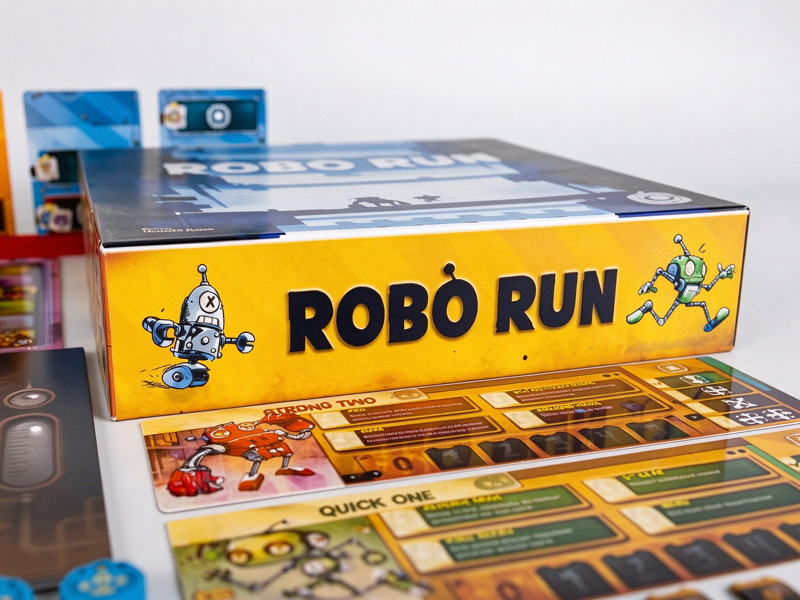
In January 2022 Trzewiczek stepped down as CEO to focus entirely on design and development, promoting longtime operations chief Grzegorz Polewka to run the company. It was a notable move in an industry of founder-cults: the label's most famous voice deliberately decoupled himself from day-to-day control while remaining its creative engine. The story repeated in miniature across the company — the CEO came to Trzewiczek without networks or connections, the marketing lead left school at eighteen to support his family — a pattern the founder credits for the studio's eye for overlooked talent. The catalog reflects the stability: annual VLOG updates, a long-running YouTube channel, and a 2026 slate that includes Robo Run, a silent two-player co-op that debuted at Essen and lists at $29.95.
A Storefront With Authors' Names on Everything
The American web store is unmistakably Portal. Product pages carry the designer's and artist's names in bold — Eryk Nowak and Hania Kuik on Robo Run — alongside direct links to BoardGameGeek entries, player counts, times, and ages stated without decoration. There are no lifestyle photoshoots or influencer tie-ins; the games are the marketing. The catalog is deep rather than broad: the Neuroshima Hex ecosystem with its dozens of armies, the Detective series, Crusoe's many expansions, and the classics kept in print. For fans of the house style, it is a tidy, trustworthy shop that assumes you already care about the difference between a story and a theme.
Where Direct-from-Poland Shipping Tests Your Patience
The trade-offs are mostly geographic and structural. New releases flow through Essen and Gen Con first, meaning store stock can lag the hype cycle; hot titles also appear at US retailers, sometimes cheaper than the direct shop. App-dependent games like Detective tie your purchase to the company's long-term support of its digital infrastructure, a bet the studio has honored so far but which remains a bet. And while the Neuroshima Hex anniversary reprints keep classic armies available, the sheer depth of the ecosystem means newcomers face a wall of expansions where a starter recommendation is genuinely hard to find. None of this is hidden — but it rewards research before checkout.
Who This Catalog Rewards Most
Portal serves the story-driven gamer: the person who wants decisions with consequences, fiction that survives contact with the rules, and designers whose names they learn. It rewards patience — with crowdfunding-free regular releases, with app integration, with a European sensibility that favors systems over spectacle. If your table wants dice-chucking flash or licensed minis, the catalog will feel austere. If you believe the best games leave you retelling what happened for days afterward, this Polish institution has spent twenty-five years refining exactly that craft, and its little American storefront is the most direct way in.