Outerknown: the surf legend's bet on the world's cleanest denim
Official homepage: https://www.outerknown.com
In April 2014, Kelly Slater — the eleven-time world champion who had worn Quiksilver's logos for twenty-three years — announced he was leaving to build his own brand. With him went designer John Moore, a Kering Group partnership, a board seat for fashion legend Julie Gilhart, and a supply-chain chief hired from Patagonia. The brand they launched, Outerknown, promised product without an expiration date: fair-labor, low-impact clothing built for the life between the beach and the boardroom. Eleven years in, it holds the record for the fastest Fair Labor Association accreditation in the industry's history, guarantees its jeans for life, and persuaded a luxury conglomerate that surf sensibility could carry sustainability at scale. This review examines the storefront dimension by dimension.
Twenty-three years of Quiksilver, and the exit
The exit was the loudest possible way to start a quiet brand. On April 1, 2014, Slater ended the twenty-three-year exclusive sponsorship that had defined surfwear's commercial era, saying in his statement that for years he had dreamt of developing a brand combining clean living, responsibility, and style — informed by the people and cultures of his constant global travels. Kering — the French luxury group behind Gucci and Balenciaga — signed on as strategic partner, lending both capital and sustainability infrastructure to a founder whose credentials were athletic rather than industrial. The team assembled accordingly: co-founder and creative director John Moore, freshly named one of GQ's best new menswear designers of 2014 after a career designing surf-inspired collections; Julie Gilhart, the former Barneys fashion director, taking a board seat; and Shelly Gottschamer, a Patagonia sourcing veteran, running supply chain and sustainability from the start.
The company's retrospective framing, in its launch materials, is that there were surfwear brands, designer brands, and technical brands — but no transitional brand joining all three for the consumer who travels, works, and surfs in the same week. That middle position, between sports and luxury, priced for investment pieces rather than throwaway beachwear, is the brand's founding geometry.
Surfers are environmentalists by nature
Moore's founding aphorism — surfers are, by nature, environmentalists — is the brand in one sentence, and his follow-up is the honest one: you can't unknow what you know. His own path to the conviction ran through twenty-five years inside the fashion machine, watching the environmental and human costs accumulate, until, in his words, looking his kids in the eyes made reversing some of the industry's wrongs the driving force. The design ethos that followed is printed across the catalog: product without an expiration date — clothing built to be kept, repaired, and passed down, whose sustainability begins with the radical act of durability.
The posture comes with a documented cost that the founders volunteer: every sustainable decision — fair wages, certified materials, cleaner chemistry — is additional investment, which means the clothes cost more than conventionally made equivalents. Moore's interview answer on whether marketing sustainability helped or hindered the brand is the most honest sentence in the company's public record: both — a big responsibility, a very fine line, and the instruction to his own team not to be preachy, just to make great products and tell inspiring stories.
The cleanest denim facility in the world
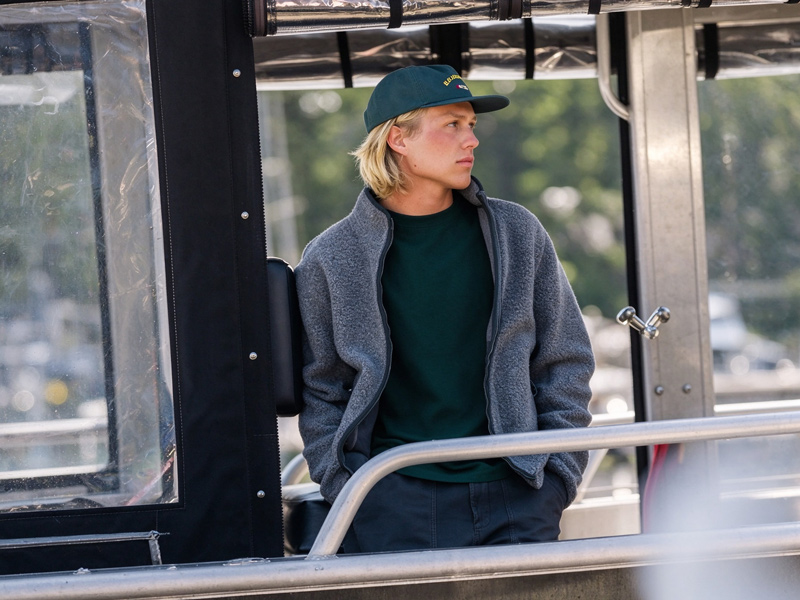
The S.E.A. Jeans program is the product that carries the most claims, and the most receipts. Forbes' denim coverage documents the program's premise: jeans crafted in what the brand describes as the world's cleanest denim facility, using dramatically less water and fewer chemicals on organic cotton. The guarantee attached to them is the rarest sentence in apparel retail: a lifetime warranty — Outerknown will repair or replace damaged S.E.A. Jeans free, and will take old pairs back for upcycling. In an industry engineered around planned obsolescence, a brand that insures a pair of jeans for the owner's lifetime is selling the opposite business model and funding the difference through the premium the construction commands.
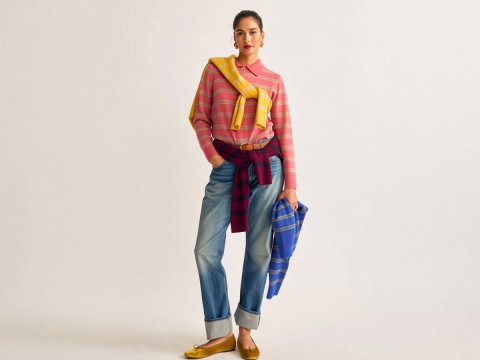
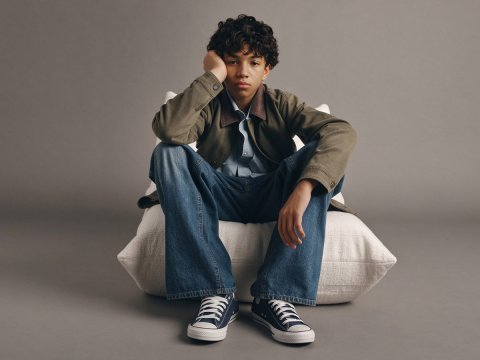
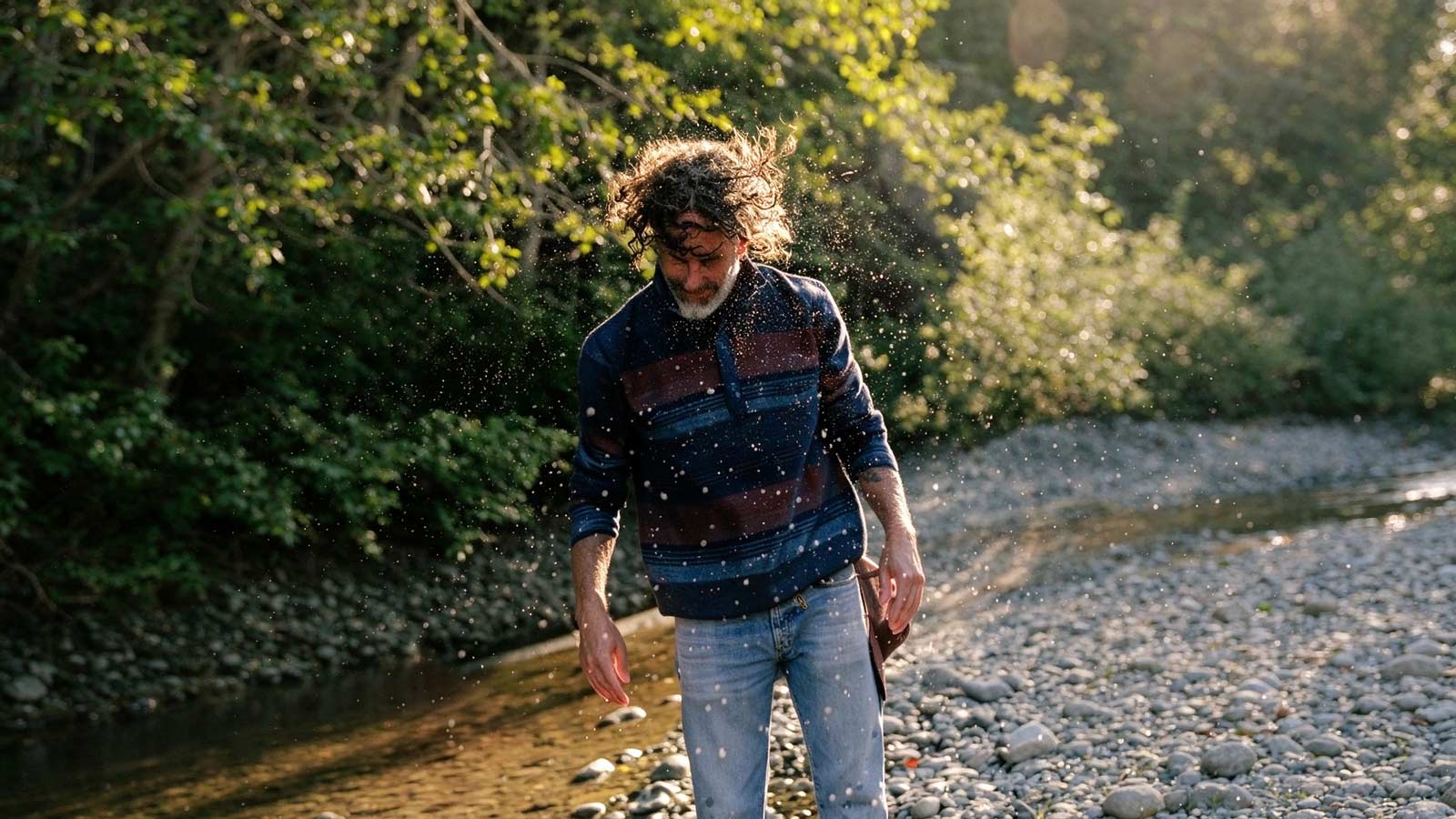
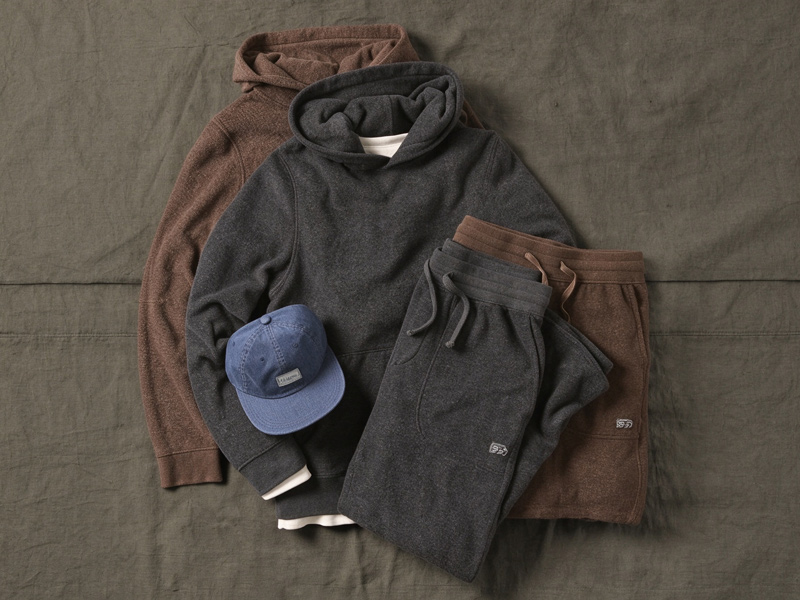
Around the jeans sits a catalog with the same logic in miniature: the Blanket Shirt — the company's most popular piece — in organic cotton with buttons cut from tagua palm nuts rather than plastic; swim trunks from recycled materials; fleece and flannel in the benefit-fiber palette. The aesthetic word the design team uses is ease — clean, unadorned, and easy, the clothes of southern California's coastal cities dressed up for the office or down for the weekend.
The fastest FLA accreditation in history
The third-party labor record is where Outerknown's paperwork outruns its size. Patterning its supply chain on Fair Labor Association guidelines, the company reached full FLA accreditation in two and a half years — faster than any clothing brand before it, per the company's own launch materials. Around that anchor sit the partnerships the industry recognizes by acronym: Fair Trade USA-certified factories, whose tags hang from individual garments; bluesign for chemical and process safety; ECONYL for regenerated nylon recovered from fishing nets — the launch imagery of Slater sitting atop a pile of nets destined to become textile remains the brand's single most iconic photograph; and Oceanworks for ocean-recovered plastics. The catalog's fiber ledger runs roughly ninety percent organic, recycled, or regenerated across collections, with the company's own math placing seventy percent of a garment's environmental impact at the raw-material stage — the reason the materials list leads every product page.
Gottschamer's house rule — don't expect what you don't inspect — is the operational translation of the certification wall: the paperwork exists because someone flies to the factories, and the site tells you so.
The wholesale floor that couldn't tell the story
The 2017 direct-to-consumer pivot is the store-review chapter, because it explains the storefront's personality. Outerknown launched in 2015 to a warm wholesale reception — the product placed well — but the brand's story and sustainable design went uncommunicated on other retailers' floors, where the shirts sat beside conventional competitors with no way to explain themselves. The company rebuilt its platform around direct retail so the website, emails, and social channels could do the educating wholesale could not — a shift the chief executive later credited with letting the brand reach, inform, and convert the customer on its own terms, evolving from still images to video and personalized communication as the tools matured.
The circular layer followed the same logic of ownership: Outerworn, the brand's secondhand marketplace, keeps its own garments in circulation — resale as brand stewardship rather than third-party afterthought. For a company whose founding thesis is product without an expiration date, the resale shelf is the thesis with a price tag.
Women's, and the ease of the southern coast
The men's line proved the thesis for four years before the women's collection arrived in March 2019 — seventeen styles, every one in what the company calls benefit fibers: organic, recycled, or regenerated, at prices from the forties to the high two hundreds. The debut leaned on women the founders admired across fields — activists and community builders — and partnered with Piece & Co, the organization empowering women worldwide through textile manufacturing, for a share of production. The design brief translated the men's ease into women's essentials: the Canyon Dress, the Bee Shirt, pieces that style up for work and down for the weekend.
The move also completed the founder geometry: if Outerknown was the transitional brand between sports and luxury, the women's line made it transitional between households — one aesthetic, two closets, a shared sensibility the catalog's styling has carried since.
The honest texture of premium sustainability
Four honest cautions belong in the ledger. First, price: the construction and the certifications are itemized on every page, and they add up — the Blanket Shirt and S.E.A. Jeans live at investment-piece prices in a category where most customers are trained to expect fast-fashion numbers; the founders own this arithmetic and call it the cost of the mission, but it defines who the brand is for. Second, scale and reach: Outerknown is a mid-sized private company without the store footprint or celebrity volume of the category's giants — a boutique sensibility with a global story, which means limited physical try-on access and dependence on the flagship website to do the fit persuasion. Third, celebrity-key exposure: the founder's name opens doors the product must keep open, and the brand's surfing-royalty aura, while authentic, concentrates its identity in one legend's biography. Fourth, the pace of category expansion — the women's line arrived four years in, and the catalog has widened deliberately rather than explosively, which loyalists read as discipline and impatient shoppers read as thinness.
None of these are contradictions of the mission; all four are its costs, stated plainly.
The verdict for the coastal conscious dresser
Outerknown's storefront is the surf-legend thesis executed with luxury-group discipline: a transitional brand between sports and luxury, built on the fastest labor accreditation in industry history, selling jeans guaranteed for life from a facility it calls the world's cleanest, with a blanket shirt that has become the unofficial uniform of the conscious coastal weekend. The cons are the cons of the mission's price tag: premium investment pricing, boutique-scale reach, and a brand identity concentrated in the biography of an eleven-time champion.
Buy here if your week runs from a morning surf to an afternoon meeting without a costume change, if a lifetime-guaranteed pair of jeans sounds like the end of a search, if Fair Trade tags hanging from garments and the fastest FLA file in the industry are your language of trust, and if the cleanest-denim-facility claim is one you would rather verify than admire. Buy the bigger certified-organic basics brands reviewed in this category if selection depth and price breadth outrank origin stories. For the coastal conscious dresser who wants one closet to serve the beach and the boardroom with a clear conscience, this Culver City storefront remains the category's most credentialed wave — and its most patient.