How two siblings turned the humble dog crate into a $395 side table
Official homepage: https://fablepets.com
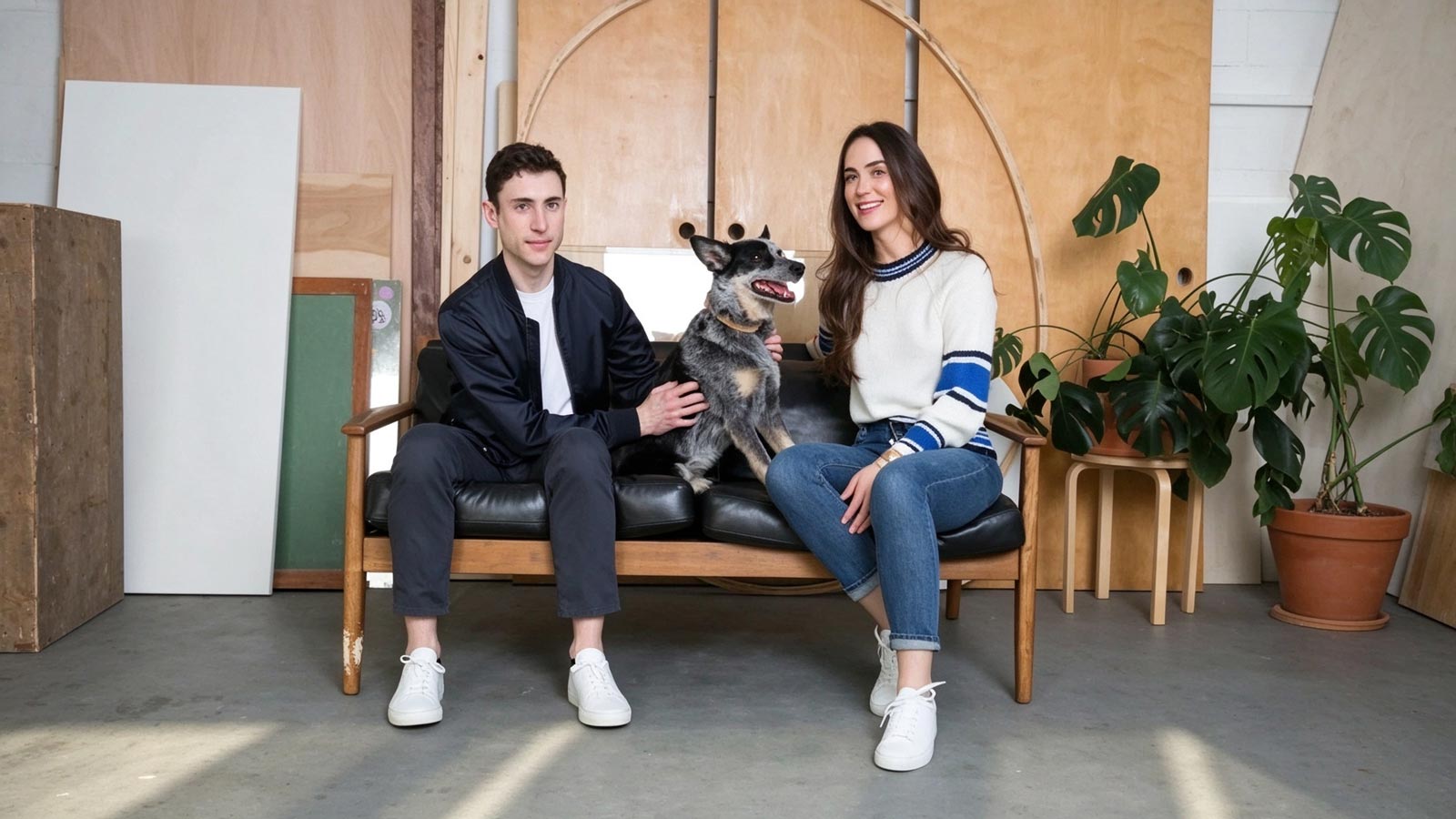
Fable was founded in 2018 when a brother and sister went looking for a better bed for their aging family dog and found the entire pet aisle wanting. Jeremy Canade, an e-commerce strategist from Jet.com and Walmart, and Sophie Bakalar, a venture investor at Collaborative Fund, built the New York company around one product that became a phenomenon: a bentwood dog crate handsome enough to serve as a side table. By early 2021, five thousand people were waiting for it. This review examines the storefront dimension by dimension: the origin, the waitlist years, the crate itself, the accessory ecosystem, the press avalanche, and the no-returns fine print that every buyer should read before the box arrives.
A dying dog's bed and a venture capitalist
The origin story, told across Fortune, The Quality Edit, and the company's own pages, is disarmingly small. Growing up in a household full of animals, the siblings watched their family dog age and went shopping for a bed that could accommodate his needs — and discovered that nothing on the market was designed for both the animal and the home it lived in. The insight widened from beds to the entire category: pet gear had not evolved to keep up with the customer, particularly the urban customer multitasking in a small apartment. They named the company Fable after the form in which animals have always carried lessons for humans.
The founders' résumés explain the store's competence. Bakalar had been investing in consumer brands and e-commerce at Collaborative Fund; Canade had led e-commerce retail strategy at Jet.com and then Walmart.com. One sibling brought capital fluency, the other marketplace mechanics — and neither brought sentimentalism about how pet products were supposed to look. The result is a store that behaves like a design studio with a supply chain.
Five thousand people, one waitlist, one crate
The pandemic made the company and nearly broke it. Pet adoptions surged just as global shipping collapsed, and by early 2021 the Signature Crate had a waitlist of more than five thousand people — a good problem, in the CEO's words, that still felt terrible. The company's response became a case study in demand management: frequent, honest email updates to the waitlist, a hunker-down discipline of cutting costs and pushing toward free-cash-flow positivity, and a redesign of relationships with manufacturers, including co-investing in machinery to compress lead times. The waitlist cleared, and the company reported threefold year-over-year growth from its 2019 launch trajectory.
The lesson the founders took, and repeated in interviews, was that scarcity handled transparently can build a brand faster than abundance — five thousand people waiting is also five thousand people pre-committed to telling the story of the crate that was worth waiting for.
The Signature Crate: bentwood, garage door, side table
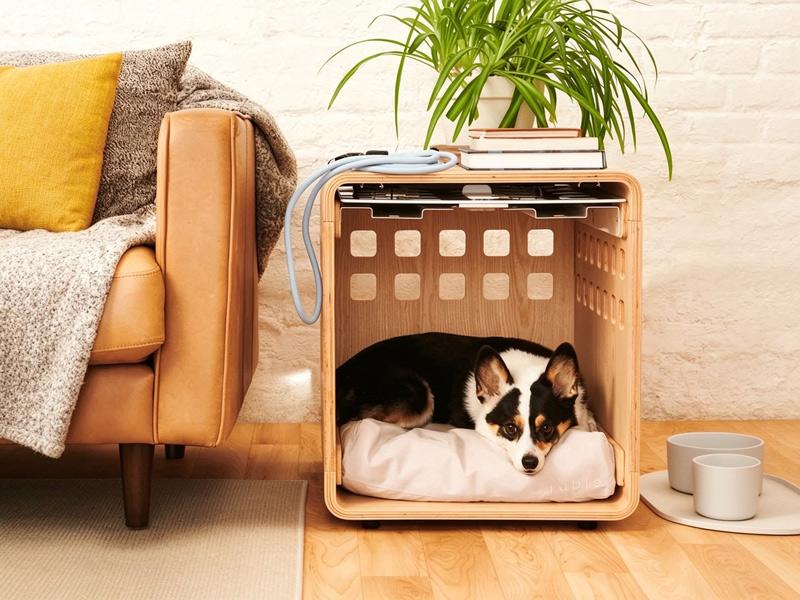
The product itself is engineered around the dual-function thesis. The crate is premium bentwood — handmade, with the company noting that dimensions may vary by roughly an inch — in signature or walnut finishes, with a garage-style door in white metal or clear acrylic that slides up and out of the way or stores discreetly inside the unit. It is sized as furniture first: small for dogs up to about twenty-five pounds, medium to fifty, with interior headroom listed precisely so buyers can measure. Air holes are spaced to keep the den ventilated and quiet — one tester noted that resting a coffee cup on top no longer terrifies the dog the way a clanging wire crate does — and the flat top genuinely functions as a side table beside a bed or sofa.
The honesty file is printed on the box. The crate is designed in the United States and made in China from bentwood — a label most premium pet brands blur. It is explicitly not recommended for dogs with serious chewing or destructive tendencies, particularly dogs that eat furniture, and the company publishes a sizing caution about dogs whose heads measure within three inches of the crate window openings. Pricing runs from roughly $395 at the small end to around $795 at retail for the largest configurations, with the custom-fit bed sold separately around $95 to $105.
The ecosystem play: from leash to The Game
The storefront's strategic genius, as TechCrunch's analysis put it, is that one product leads to another. The company launched with a collar and a leash, then the Magic Link hands-free leash for coffee-carrying urban walks, then the pieces that now anchor the catalog: The Game — a weighted-bottom silicone slow-feeder with an adjustable difficulty slider, the best-selling product in the store — and the Falcon, a chainable treat dispenser that can hang inside the crate so a resting dog stays stimulated. Bowls, a poop-bag dispenser, beds, and a soft carrier complete the system, all in matching earth and jewel tones.
The founders have described the roadmap in explicitly anti-obsolescence terms: enhance existing products with add-ons — a storage insert for the crate was publicly discussed — rather than retire-and-replace. For the reviewer's ledger, this is the same ecosystem logic that the keyboard vendors in this site's other categories run, executed in silicone and bentwood.
Wirecutter, AD, and the Bauhaus-to-bowwow era
The press record is the store's loudest asset. The New York Times Wirecutter named the Signature Crate among the best dog crates of 2026 in the function-and-design category — the wooden crate that looks like a nice piece of furniture. Architectural Digest included it in its gallery of crates pretty enough to display, praising the bentwood silhouette that passes for a modern side table. The Financial Times ran the phenomenon as print culture criticism under the headline "Bauhaus to Bow-Wow," Forbes profiled the sibling founders as luxury pet-brand builders, and House Beautiful listed the company among women-owned brands shaping modern decor.
Editorial validation of this density functions as the certification stack of a design brand — not audited chemistry, but repeatedly inspected taste. The storefront wears the logos like the certification badges its furniture-category neighbors wear, and with roughly equivalent commercial effect.
Nine million dollars and the wholesale door
The capital chapter is modest by the standards of this category: a $9 million Series A in January 2022 led by 14W with Female Founders Fund and Slow Ventures participating. The stated plan was product expansion and retail partnerships, and the wholesale door has indeed opened — the brand sells through Faire to independent pet boutiques and appears on Wayfair and Perigold, where pricing sometimes drifts above the direct store's. The company also framed the round around its anti-ownership philosophy — pets as companions, not property — a stance that functions as both values marketing and product mandate for humane, anxiety-reducing design.
For buyers, the omnichannel presence means price comparison matters: the same crate can carry different tags on the flagship, a boutique, and a marketplace, and the flagship is not always the cheapest door.
The no-returns fine print on a $600 crate
Here is the paragraph that must lead the cons column. Once opened, the Signature Crate cannot be returned or exchanged — the policy is printed on the product page itself, and reviewers repeat it as the single most important shopping instruction. A buyer who assembles the crate, finds it the wrong size for a growing puppy, or discovers their dog will not enter it owns that crate permanently. Shipping adds around $75, lead times run from about a week to three, the box weighs fifty to seventy-five pounds, and the garage-style door — beautiful as it is — has been flagged in owner reviews as fiddly to latch quickly when a dog is determined to exit.
The policy is not cruelty; it is hygiene for a pet product that cannot be resold once a dog has lived in it. But it transfers the entire sizing risk to the buyer, which makes the company's own measuring guides and the recommendation to start with a cheap wire crate for unproven puppies less like suggestions and more like terms and conditions.
The verdict for the design-led dog parent
Fable's storefront is the pet category's design argument made physical: a crate that earned a five-thousand-person waitlist by refusing to look like a crate, an ecosystem engineered so the leash matches the bowl matches the toy, and a press record that treats a dog den as an object of editorial scrutiny. The founders' combination — venture fluency plus marketplace mechanics — shows in every operational detail, from the transparency of the 2021 waitlist emails to the honest made-in-China label.
Buy here if your dog is crate-trained and calm, if the living room is a designed space the wire crate currently ruins, if you will measure twice and accept a no-returns policy on faith, and if the accessory ecosystem appeals as a system rather than a sales funnel. Buy a metal crate from the impact-tested specialists if your dog is a chewer, an escape artist, or still a puppy — and graduate to Fable once the den instinct is proven. For the design-led dog parent with a settled, gentle companion, this sibling-built storefront is the crate the rest of the room has been waiting for.