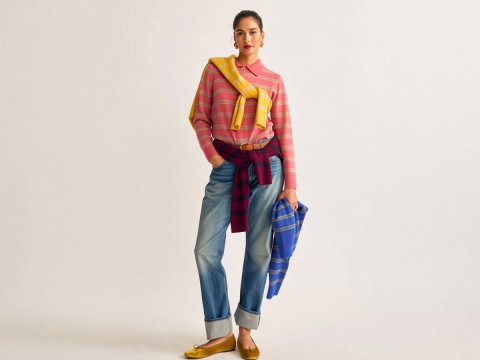
How 'fewer, better things' built a profitable brand that tells you to buy less
Official homepage: https://www.cuyana.com
In 2011, two business-school students decided to build a fashion company whose entire philosophy was that you should buy less of it. Karla Gallardo — an Ecuadorian former Goldman Sachs analyst — and Shilpa Shah — a Berkeley-trained user-experience designer who pumped breast milk in parking lots between venture meetings — launched Cuyana with a single Panama hat from Ecuadorian artisans and a two-word manifesto: fewer, better things. Fourteen years later, the brand is profitable, its Classic Leather Tote is still the bestseller it launched in 2012, ninety percent of production sells at full price, and its donation labels ship with every order so customers can give their old clothes away. This review examines the storefront dimension by dimension.
Goldman, Disney, and a pump in the parking lot
The founder biographies read like a deliberate rebuttal to the fashion-school pipeline. Gallardo grew up in Ecuador in a home where fewer, better was simply how things were done — investing in pieces that celebrated heritage and craftsmanship, and caring for them so they lasted. She came to America for school, fell into finance, and spent her early career at Goldman Sachs acquiring the analytical tools she knew a brand would need. Shah's path ran through two decades of design: a human-computer-interaction degree from Berkeley, information architecture at Disney's parks and resorts online division, interactive design at TBWA/Chiat Day, and design-director years at Punchcut. They met through a mutual friend while both were in business school — Gallardo at Stanford, Shah finishing her MBA at Berkeley's Haas at thirty-two with a young child at home.
The founding-era detail that profiles preserve is the one that defines the company: Shah has described driving to venture-capital meetings between MBA classes, pumping breast milk in parking lots before walking into rooms full of skeptics. The skeptics had a fair point — two women with almost no fashion-industry experience pitching a retail concept whose thesis was slower growth — and the founders answered them the way the brand still answers everyone: with sell-through numbers.
A hat from Ecuador, and a tote for thirteen years
The first product was a Panama hat, handmade by artisans in Gallardo's native Ecuador — the name Cuyana means to love in Kichwa, the Indigenous language of the Ecuadorian highlands. The second product became the institution: the Classic Leather Tote, introduced in 2012 and, more than a decade later, still the bestseller — a single, timeless, well-made object carrying a whole brand, which is exactly what fewer, better looks like when you stop saying it and start building it.
The market gap they named at launch, preserved in WWD's contemporary coverage, was a market split into two polarizing options: high-quality pieces at exorbitant prices, or affordable garments not made to last. Cuyana's founding premise was the missing middle — timeless, meaningful, high-quality products at attainable prices, sold direct so the markup structure worked for the customer. Investors were skeptical of fewer as a growth strategy; the tote's thirteen-year bestseller run is the rebuttal.
The Lean Closet Movement, and the guilt problem
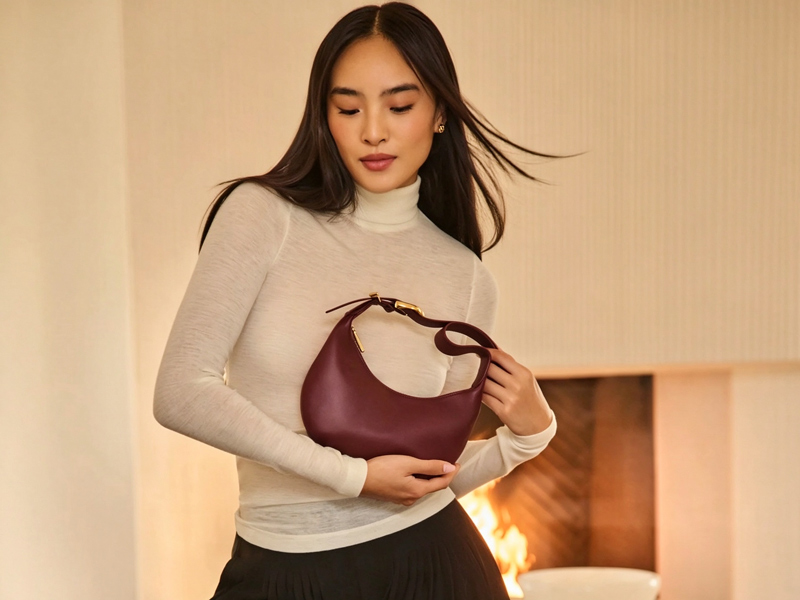
The marketing engine is the industry's most elegant inversion: Cuyana tells its customers to buy less. The Lean Closet Movement, launched early and still central, encourages women to declutter their wardrobes and donate gently used items to those in need — operationalized through a ThredUp partnership so concrete that complimentary donation shipping labels arrive with every domestic order. The H.E.A.R.T. program routes donations to women in need, closing the loop the philosophy opens.
Gallardo's explanation of why this works is the brand's core psychology, quoted across profiles: customers buy things unintentionally — on sale, on impulse — and those pieces sit in the closet associating the brand with guilt; sell something a customer loves, and the customer comes back for more. Cuyana's anti-marketing is, at bottom, a retention strategy dressed as a values statement — the rare case where the cynic and the loyalist arrive at the same behavior.
Small batches and the ninety-percent sell-through
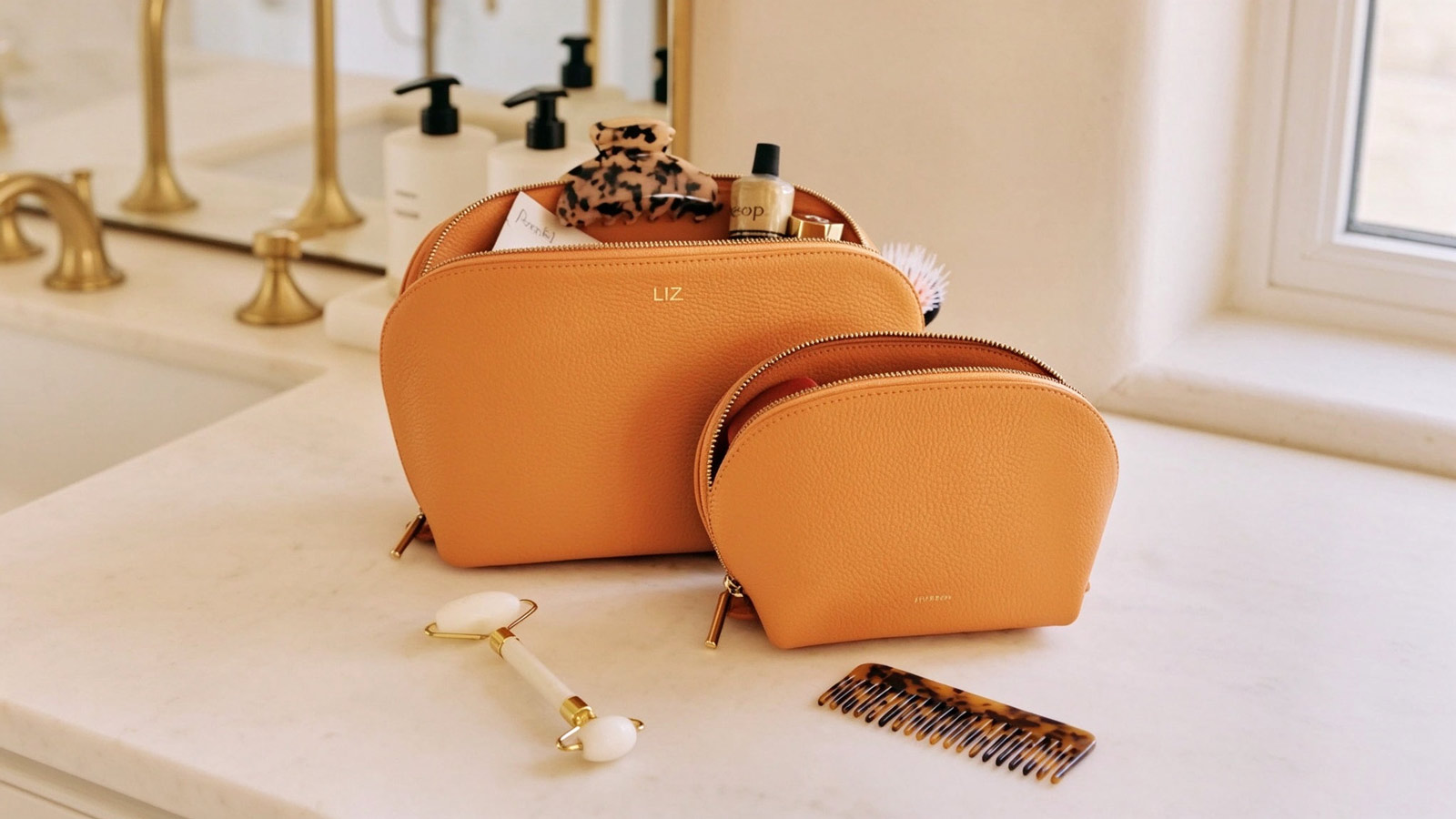
The production model is the arithmetic behind the philosophy. Rather than forecasting seasons of inventory and marking down the misses, Cuyana produces in small batches close to demand — with significant portions made to order — and publishes the result: roughly ninety percent of production sells at full price, against an industry standard the company cites at sixty to seventy. The modular system extends the logic: totes accept snappable add-ons and pouches in different textures and colorways, so a customer's bag evolves instead of being replaced. And the Revive resale platform gives retired pieces a second life under the brand's own roof.
For the storefront reviewer, the ninety-percent number is the whole business plan visible in one statistic: no markdown treadmill means no landfilled misses, no margin giveback, and a customer trained to buy at full price because the price is the price.
One hundred percent certified, and a family workshop
The materials file reached its stated goal in 2023: one hundred percent sustainably made materials across the catalog. The certification stack runs the premium-sustainable gamut — Leather Working Group-certified leathers, GOTS- and OEKO-TEX-certified cottons, Responsible Cashmere Standard-certified knitwear — and the supply chain runs through small, family-owned workshops in Italy, Peru, Ecuador, Argentina, Portugal, Turkey, and the United States, chosen for what Shah describes as centuries of knowledge about how to handcraft their products. The brand's sustainability frame has three published pillars: producing responsibly, maximizing wear, and extending product life.
Shah's framing of the sourcing philosophy, given in the founders' joint interviews, is the sentence that separates Cuyana from the local-only debate: rather than focusing on specifically local or sustainable — though the supply chain does invigorate local economies worldwide — the social change is about fewer, better things. A workshop in Peru with three generations of tanners and a certification file beats a factory down the street with neither.
Profitable growth, a duchess, and seven stores
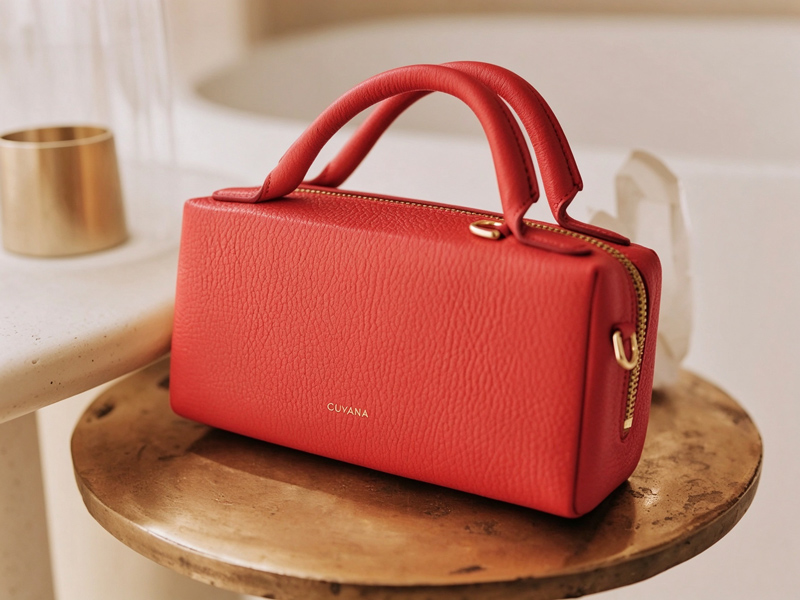
The capital arc ran in disciplined tranches: a $1.7 million seed round in 2013, a $7.2 million Series A in 2014, and a $30 million growth round in February 2019 led by H.I.G. Growth Partners with D.Luxury Brands — at the time among the largest rounds ever raised by a female-founded fashion retail company. Profitability arrived in 2018, before the big round; the team ran past a hundred and fifty people, roughly eighty-five percent women, and the online store posted $29 million in 2024 sales with a fifteen-to-twenty-percent growth trajectory. Physical retail stayed deliberately small — about seven stores contributing roughly fifteen percent of revenue, with new openings chosen strategically — and the fan list crossed into royalty: Meghan Markle carried the tote, and the duchess effect did what it does.
The warranty deserves a sentence: every order carries a two-year warranty, an unusual term in apparel and accessories, backing the durability claim with a contractual promise.
The honest texture of 'fewer' as strategy
Four honest cautions belong in the ledger. First, price: the missing-middle positioning still means investment-piece numbers — the famous day bag sits around a hundred and fifty dollars, and the full catalog prices quality at a level the fast-fashion customer will never reach. Second, international friction: the brand does not ship everywhere, does not accept international returns or exchanges, and offers no live chat — acceptable for a boutique scale, but the cross-border buyer should read the policy page first. Third, the narrow catalog: fewer is the point, but it means a minimalist edit that trend-driven shoppers may find thin, and a color palette that changes deliberately slowly. Fourth, the philosophy-versus-growth tension: a brand that teaches customers to buy less must keep finding new customers at exactly the rate its products fail to wear out — a beautiful constraint that PE-backed retail math does not always love.
None of these are hidden; all four are the published texture of a brand that has chosen its trade-offs in public for fourteen years.
The verdict for the lean-closet convert
Cuyana's storefront is the anti-consumption thesis that survived contact with capitalism: a hat from Ecuador that became a tote that became thirteen years of bestseller; a philosophy that mails you donation labels so you can shop its competitors' closets away; a ninety-percent full-price sell-through that makes the markdown aisle look like a confession; and a hundred percent certified materials file reached on schedule and announced quietly. The cons are the cons of the discipline: premium prices, a minimalist catalog, international friction, and the eternal question of how much growth a buy-less brand owes its investors.
Buy here if your closet philosophy has outgrown your closet, if a tote designed to accept add-ons for a decade appeals more than a new bag each season, if a two-year warranty and a donation label in every box are your language of trust, and if a brand that tells you to buy less — and then makes you want one perfect thing — matches your idea of retail honesty. Buy the deep-catalog basics brands reviewed in this category if breadth and price tiers outrank curation. For the lean-closet convert ready to own fewer things and love them longer, this San Francisco storefront remains the category's most consistent argument — fourteen years of fewer, better, and still counting.