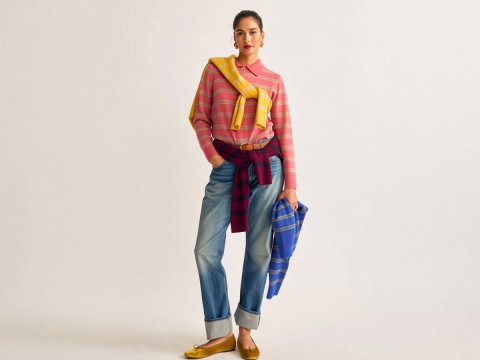
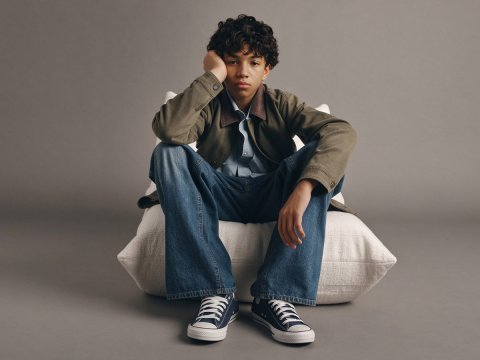
How a husband-and-wife dress brand taught customers to grow their own clothes
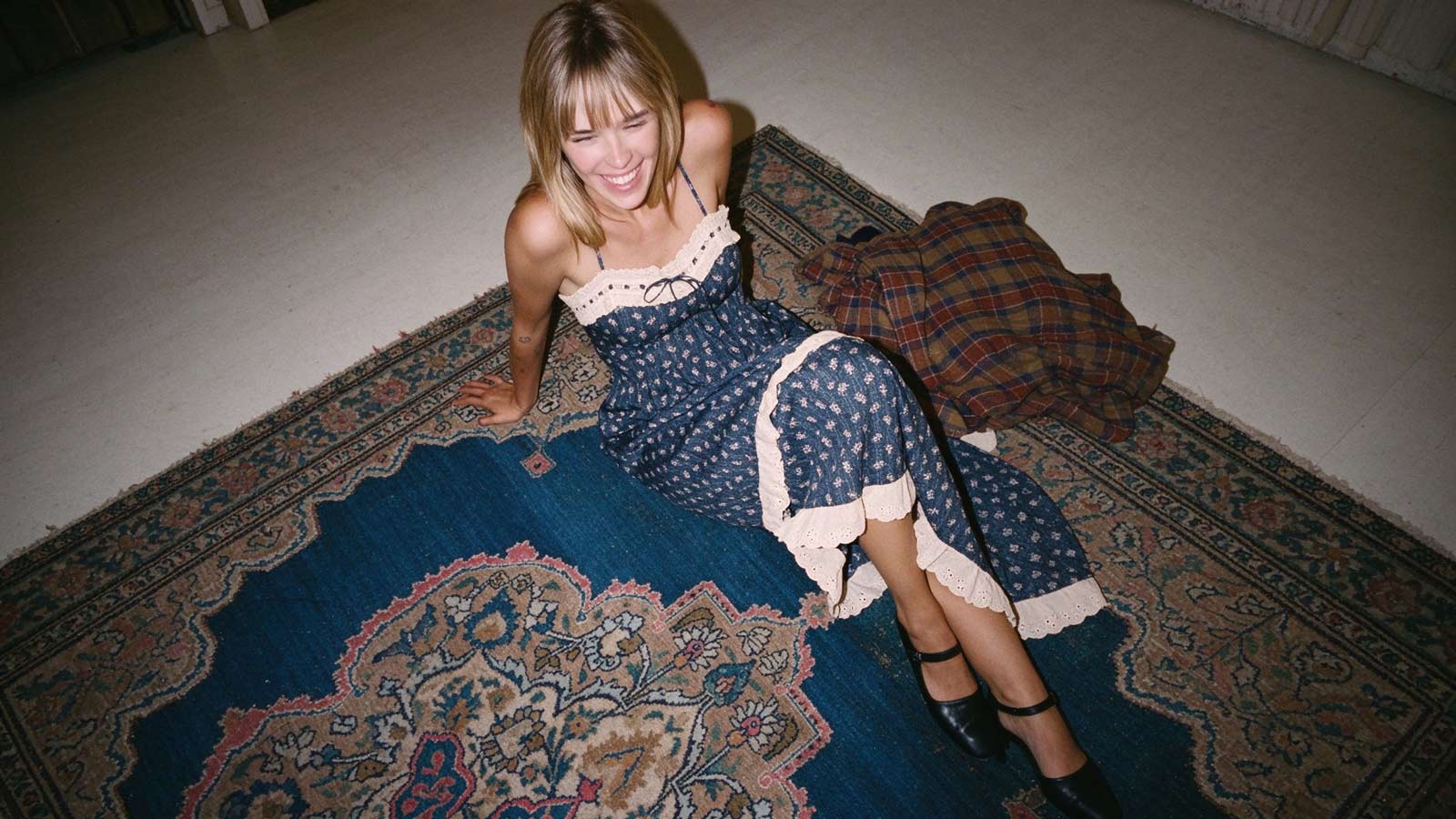
Official homepage: https://christydawn.com
Christy Dawn began with five dress styles, a model who designed them, and a husband who had won a season of Survivor. The fabric choice was an accident of poverty — the young couple could not afford factory minimums, so they bought leftover bolts from other brands — and the accident became a doctrine: rescue what exists, waste nothing. Then, in 2020, they concluded that doctrine was no longer enough, flew to a five-acre plot of stony, unloved ground in Erode, India, and began farming their own cotton. A decade in, the brand's customers can invest two hundred dollars to steward the soil that grows the cotton for their specific dress — and the founder says, on the record, that the company is not yet profitable. This review examines the storefront dimension by dimension.
A model, a reality-TV winner, and five dresses
The founding pair arrived from opposite runways. Christy Dawn grew up in Placerville, California — a gold-rush town she describes as timeless, little changed in a hundred years — modeled through her teens and twenties, collected vintage dresses, and kept running into the same problem: vintage was one-of-a-kind but rarely the right size, and rarely intact. She came home from a photoshoot one day and told her boyfriend she wanted to start her own company. The boyfriend was Aras Baskauskas, winner of Survivor: Panama, and together they launched Christy Dawn in 2014 with five styles, funded entirely from their own savings.
The first photoshoot was shot in Big Sur by a photographer friend; they were early adopters of Instagram, and the aesthetic — Christy's vintage-inspired dresses against California landscape — found its audience immediately. The dresses sold out quickly, and the sellout pattern became structural: the founding fabric choice dictated that every dress would be a limited edition, whether the founders intended it or not.
The happy accident that became a doctrine
The eco-conscious founding was, by the founders' own admission across years of interviews, a happy accident. They could not afford a fabric provider's minimums and they could not afford to commission an artist to design prints, so they bought deadstock — the leftover fabrics other fashion houses had overestimated and warehoused. The constraint inverted into the brand's first identity: rescue fabric before it reaches a landfill, cut it into dresses in small runs in Los Angeles, and let scarcity do the marketing — when the deadstock runs out, the dress is gone. Sometimes that meant one or two dresses in a specific fabric; always it meant the customer owned something no one else had.
The era's mechanics were published with unusual candor: pricing pages broke the cost of a dress into wages, materials, and markup; packaging arrived in biodegradable wooden boxes rather than plastic; and a take-back partnership offered store credit for dresses sent to resale. The education was the marketing — every customer learned to say deadstock, and saying it became the brand's word-of-mouth engine.
Why deadstock stopped being the answer
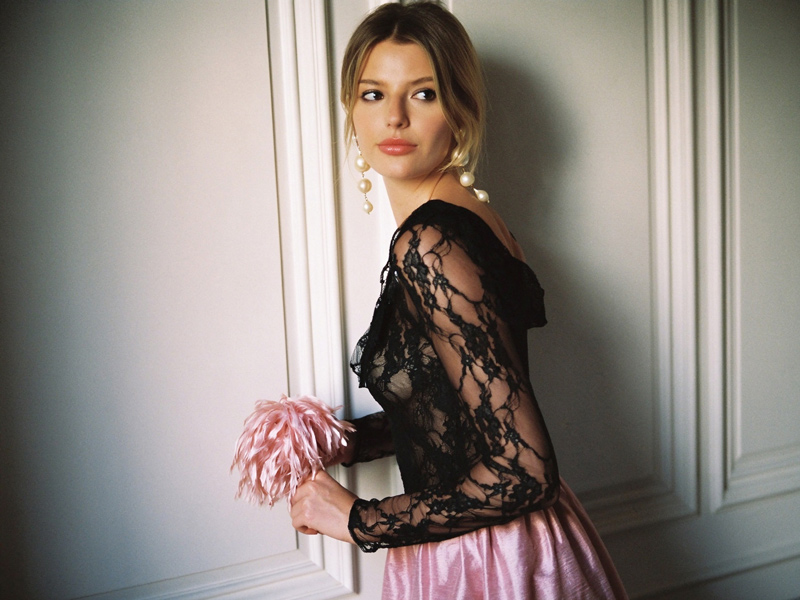
The pivot belongs in this review because the founders articulated it better than their critics could have. Deadstock, they concluded after years of rescuing it, was still leftovers from a toxic industry — better than landfill, certainly, but not a solution, and not an honor to the promise the brand had made to Mother Earth. The company's own materials compress the evolution into a sentence: sustainability is not enough — we can't just sustain. Aras Baskauskas's version is blunter, delivered in a podcast conversation: he hates the word sustainable — what are we sustaining? Why are we sustaining it? The question the couple set themselves in 2019 was how to grow clothing in a way that heals the earth rather than merely not harming it — and to do it through intimacy, meaning direct, personal relationships with the land and the farmers rather than certificates and intermediaries.
Twenty-four acres of stony ground in Erode
The farm chapter began with an introduction through Rebecca Burgess of Fibershed, the California fiber-systems nonprofit, and an online meeting with Nishanth Chopra, who had just received seed funding — literally — to pilot a five-acre regenerative cotton plot on stony, arid land in Erode, in Tamil Nadu, India. In February 2020 the Christy Dawn team flew out, met the farmers Kuppasamy and Eshwari for the first time, and got their hands dirty: digging cow manure and food-waste compost into depleted soil, learning cover crops that return nitrogen, potassium, and humus, planting companion herbs that feed pollinators and draw pests from the cotton. Aras invested to expand the pilot to twenty acres; within a few seasons the partnership had grown into Oshadi Collective cultivating roughly two hundred hectares, with the Christy Dawn block expanding from twenty to eighty acres — enough, by the most recent harvest, to cover the brand's entire annual cotton need.
The operational texture the founders publish is the part most brands skip: one week in the early scaling required fifty tonnes of compost to be mixed and distributed where the operation had previously handled one; worms, drip irrigation, native seeds, and eighteen different companion crops all appear in the cost ledger. The carbon arithmetic claimed alongside the farm: more than two million tons sequestered across the collective's work, and over sixty-six tons drawn down on the Christy Dawn land alone in the early seasons — numbers the company prints next to the product, dress by dress.
Grow your own dress, for two hundred dollars
The Land Stewardship Program is the storefront's most original mechanic. For two hundred dollars — purchasable for oneself or as a gift — a customer becomes the steward of 4,356 square feet of regenerating land: enough to grow the cotton for one dress. The money covers the farmers' salaries, the cotton seed, the eighteen companion crops, the drip irrigation, the worms. At harvest, in roughly month six, the brand buys the cotton back from the steward; some months later, once the fiber has been spun, woven, cut, and sewn, the steward chooses her dress. The yield is real farming — a bad season means less cotton, and the steward's two hundred dollars might return more or less, a risk the program states explicitly rather than smoothing over.
For the storefront reviewer, the mechanic is the deepest trust instrument in the category: the customer is not asked to believe an impact report but to underwrite one plot of ground and watch her own dress grow out of it — the opposite of the offset model, since the purchase precedes the proof by design.

Carbon receipts, natural elastic, and published prices
The product file carries the same receipts-first discipline as the farm. The Dawn Dress in regenerative cotton lists at two hundred and thirty-eight dollars; the Cleo jacket at nearly five hundred carries the carbon sequestered in its fiber — forty-two pounds — on the product page. When the design team confronted the plastic elastic inside smocked bodices and pajamas, an input no sustainability checklist had bothered with, they engineered a natural-rubber replacement — the founders' explanation is the brand's operating philosophy in one line: naive enough to think it can be done, stupid enough not to understand why it can't be. Deadstock, organic, and regenerative collections sit side by side on the site, letting a buyer choose her own depth of participation.
The celebrity file runs from Taylor Swift to Selena Gomez, Emma Watson, and Dakota Johnson, and the revenue trajectory has reached the mid-eight figures by the company's own statements — with menswear and intimates added in the expansion chapter, because, as Aras puts it, what about the woman who doesn't wear dresses, and what about a man who wants to wear the story too.
The honest ledger: admired, not yet profitable
The chapter this review owes its readers belongs to the founder himself. Asked about the company's finances in a long-form conversation, Aras said plainly that the regenerative cotton work had succeeded — the eighty acres harvested cover the brand's annual need, the soil is healed, the farmers earn reliably — but that he had not yet guided the ship to the place where Christy Dawn is a financially sustainable company, actually making a profit that would let him tell investors the model works for anyone. He named the harder truth beneath it: a dress marketed as cute will outsell a dress marketed as regenerative — which is devastating, but just the reality — and that he has had to let go of the fruits of the effort, letting the proof ripple outward instead of hoarding it. The ripple is visible: Pangaia and Citizens of Humanity have announced regenerative pivots of their own.
For the storefront reviewer, this is the rarest quality signal in the category — a founder auditing his own company in public, distinguishing the mission accomplished (soil, farmers, carbon) from the mission unfinished (profit), and refusing to blur the two.
The verdict for the woman who wears the farm
Christy Dawn's storefront is the slow-fashion thesis pushed past sustainability into regeneration: a model and a reality-show winner who accidentally built a deadstock brand, then deliberately tore it down and grew a farm; twenty-four acres of stony Tamil Nadu ground converted to living soil; a two-hundred-dollar stewardship that turns a customer into a landlord of her own dress; natural-rubber elastic where plastic used to hide; and a founder who will tell you, unprompted, that the dresses are beloved and the profit has not yet arrived. The cons are the cons of the frontier: premium prices from two hundred to five hundred dollars, a business whose economics remain unproven at scale, a yield-dependent stewardship that can disappoint, and a dress-first catalog that asks its wearers to fund the philosophy as much as the garment.
Buy here if you want the deepest possible receipt — not a certificate but a plot of land and the farmers' names — if a limited-edition dress made from rescued or regenerated cotton beats an infinite one, if pricing transparency and wooden boxes are your love language, and if you are willing to fund a proof-of-concept the founder himself calls unfinished. Buy the certified-organic basics brands reviewed in this category if today's margin of safety matters more than tomorrow's farm. For the woman who wants to wear the farm that grew her dress, this Los Angeles storefront remains the category's most intimate experiment — and its most honest one.