Hill house at ten: how the nap dress built a $110 million dress empire
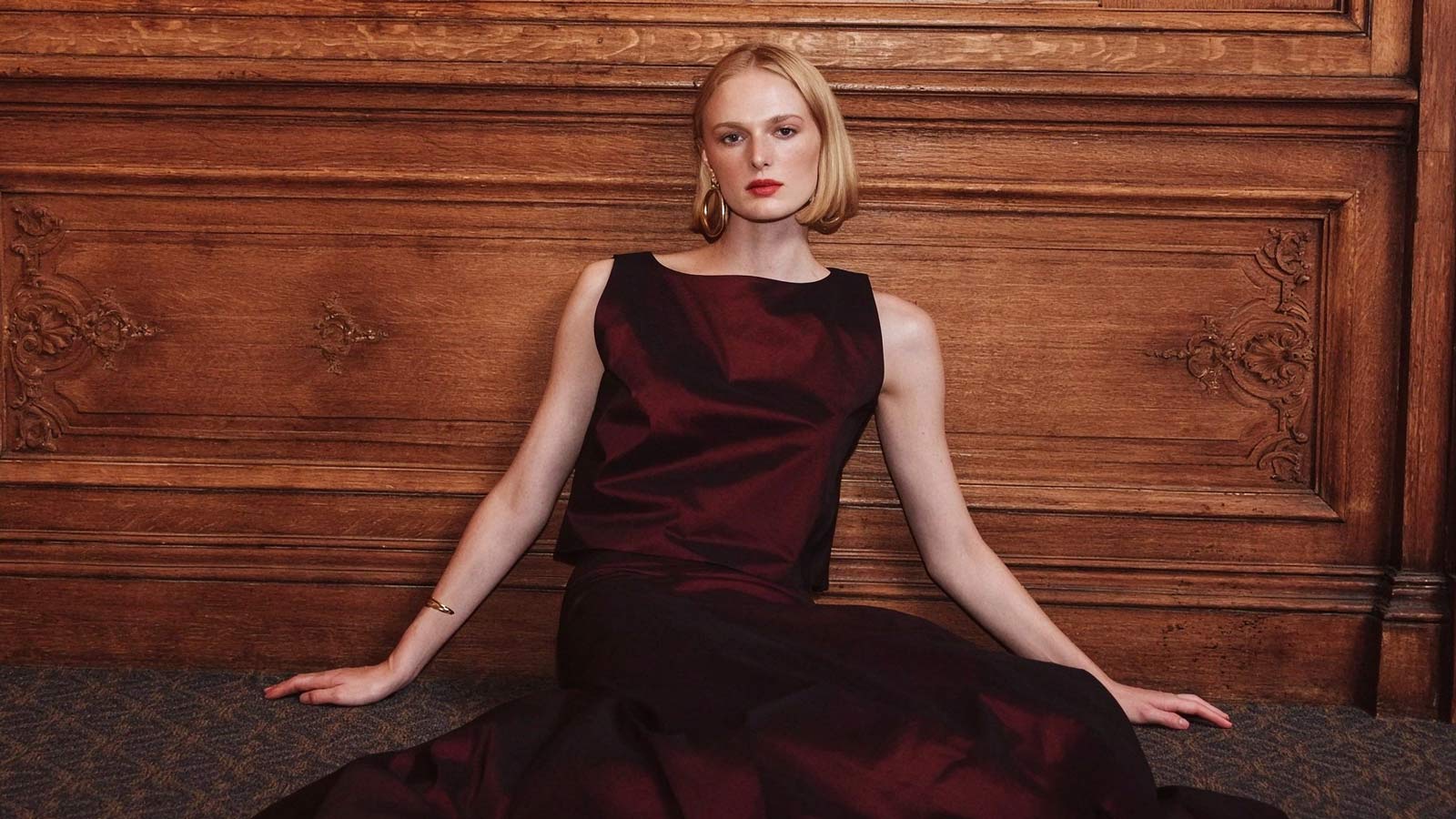
Official homepage: https://hillhousehome.com
Hill House Home began in 2016 as a bedding company founded by a Yale business student who wanted to find product-market fit without venture capital inflating her experiment. Four years later, a trademark filed in January 2020 — five weeks before the world locked down — turned her smocked house dress into the defining garment of the pandemic: one million dresses sold, twelve-minute sellouts, and a growth curve that took the company past $110 million in annual sales with sixty-five percent of purchases coming from repeat customers. This review examines the storefront dimension by dimension: the management-school founding, the 3 a.m. origin of the hero product, the waiting-room theater of its drops, and the anatomy of a dress empire.
English literature, then the school of management
Nell Diamond's path ran from an English-literature background — she has described a lifelong attachment to pre-Raphaelite painting and Victorian poetry — into the Yale School of Management, where she founded Hill House Home as a student. The SOM incubator gave her the two artifacts that still define the company: the trademarked Hill House Home name, and an operating philosophy she has repeated for a decade — start organically, find genuine product-market fit, and do not let venture funding artificially inflate the business the way the DTC playbook of the mid-2010s demanded. The minimum viable product was a website; the only way to buy anything for the first year, until a Nantucket pop-up became a permanent store, was online.
The early years were deliberately small. Diamond built the bedding assortment with her own aesthetic convictions — Victorian ghost was her internal name for the look, after the paintings of women at their toilette that filled her mood boards — and resisted every pressure to raise a seed round before the product had proven itself. The first physical presence was a Bleecker Street store, where the customers who would later make the Nap Dress famous first encountered the brand in person.
A 3 a.m. feeding and a Victorian ghost
The Nap Dress was not a pandemic product, and Diamond has spent years correcting the record. Developed from 2018 and launched in 2019, it was a solution to a problem inherent in her own life, as she describes it: a garment that could carry her from a 3 a.m. feeding — bone-tired, four thousand emails, taxes and laundry on the mind — through board meetings and into dinner with friends, without a costume change. Elasticated smocking let it move with the body; the trademarked name asserted the cheeky middle category between nightgown and day dress; the aesthetic translated the pre-Raphaelite boudoir — Waterhouse's Lady of Shalott, Rossetti's Lady Lilith — into machine-washable poplin.
The first collection could have been a founder's vanity project, and Diamond has admitted she wondered if it was a Nell Thing — something only she cared about. The Bleecker Street customers proved otherwise, and the mechanism of the proof became the brand's founding marketing insight: what Diamond calls the group-chat effect, the way one woman's dress becomes twenty women's dress through the simple act of telling a friend.
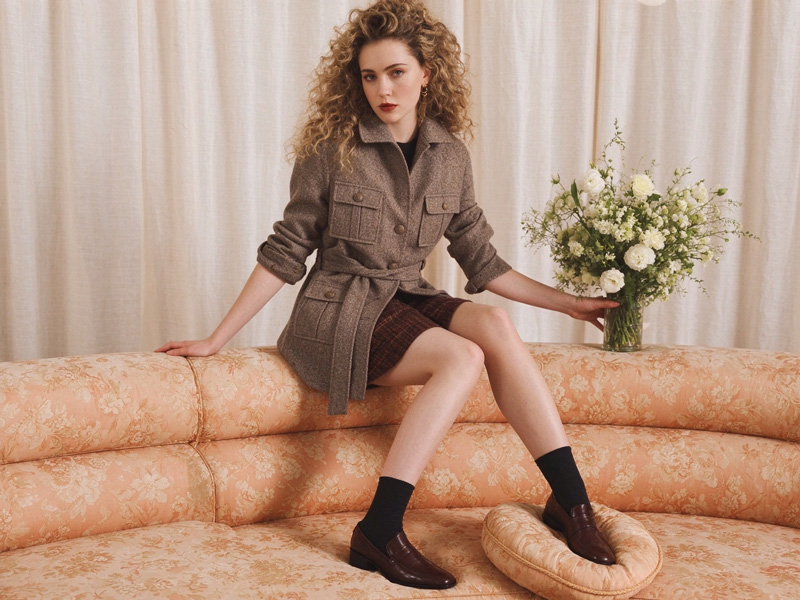
The trademark, the pandemic, and perfect timing
Hill House filed the Nap Dress trademark in January 2020. Five weeks later, the divisions between home, office, and evening dissolved, and the dress named for napping became the internet's uniform. The numbers from that year remain startling: overall growth of 275 percent, with the Nap Dress category alone up 1,120 percent. When a restock arrived that October, the brand sold roughly a million dollars of inventory in the first twelve minutes — by some accounts three million — more than the company's entire 2019 revenue. Drops sold out beyond the most aggressive projections; the holiday collection in tartan and gold brocade vanished in minutes; a Bridgerton-era appetite for house dresses did the rest.
The lesson Diamond drew, and teaches, is about iteration rather than luck: the company does not create products in a vacuum, and the pockets the Nap Dress originally lacked arrived because customers asked for them. Luck provided the moment; the trademark and the loyal early customers let the company own it.
The Nap Room turns waiting into community theater
When demand permanently outstripped supply, Hill House converted scarcity into ritual. Fifteen minutes before each collection drops, the website's waiting room opens — the Nap Room — where shoppers watch Diamond present the collection QVC-style in a livestream, trade jokes in a buzzing chat, and listen to a purpose-built Spotify playlist until the gates open. The Inc. profile that documented the theater called it a masterclass in branding; the company calls it what it is — a drop strategy born of necessity, engineered so that waiting for a dress feels like attending something.
Each consecutive drop has been the biggest sale day in company history — a streak the strategy was designed to extend, with summer drops generating millions of dollars in under an hour. The community layer is not decoration: it converts a restock notification into a shared event, and shared events are what turn a dress into a uniform.
The house that Ellie built
The question every journalist asked at the height of the phenomenon — what happens when the hype fades — has now been answered in public. As of 2026, sales have surpassed $110 million, the company is profitable, and the Ellie Nap Dress — the smocked-bodice, ruffled-sleeve maxi that was once over half the business — accounts for just 17 percent of it. Diamond's team calls the company the house that Ellie built, and the architecture of the expansion is instructive: conversations with customers identified smocking as the resonant detail, so the entire family of ninety-one smocked dresses — mini, midi, maxi, sleeved and sleeveless — now carries the nap name as a promise of what to expect. Around them have grown the categories a loyal customer asked for next: swim, sweaters, jackets, wedding-guest dresses, nightlife minis, and the bedding the company was founded on.
The anti-glut thesis from the early years still governs: hero products built to be worn for years, not trend items engineered to expire. It is the same argument the cookware and mattress brands in this site's other categories make — buy once, wear long — executed in smocked poplin.

One million dresses and the repeat-customer engine
The community metrics are the store's deepest asset. Hill House has sold more than a million Nap Dresses; 65 percent of 2025 purchases came from repeat customers; and the top ten percent of shoppers own an average of nineteen pieces. Fashion now feeds the original business — customers find the brand through a dress, then return for towels and bedding — reversing the usual lifestyle-brand flow. Distribution has followed the community: five stores from New York to Charleston, wholesale through Shopbop and Saks, and a $20 million investment in 2022, led by Beliade, to fund the fashion expansion — the first institutional capital after six organic years.
The founder's DEI commitments are woven into the operations: supplier vetting for safe production, all-gender and inclusive sizing, and campaigns featuring trans influencers — positions Diamond, a self-described privileged founder, frames as responsibilities to enact rather than values to advertise.
The honest texture of a drop economy
Three honest cautions belong in the ledger. First, drop fatigue: a model that trains customers to buy within minutes of a restock eventually trains them to expect scarcity, and the line between event and exhaustion is thin — the same model that made the brand can exhaust its audience. Second, the copycat economy: smocked dresses are now sold by every fast-fashion retailer on earth, and while the trademark protects the name, it cannot protect the silhouette; Hill House's defense is community and quality, not exclusivity. Third, price and fabric honesty: the dresses sit in the $150-to-$250 band, and while the poplins and linens hold up well per third-party reviewers, the premium over mass-market smocked dresses is a brand-and-community premium as much as a materials one — a fair trade for the loyalist, a harder sell for the cynic.
None of these are hidden: the drop calendar, the sellout cadence, and the fabric contents are all printed where the community can read them, and the community — sixty-five percent of it returning — has evidently done the math and stayed.
The verdict for the dress-girl wardrobe builder
Hill House's storefront is the hero-product playbook perfected: a trademark filed weeks before history needed it, a waiting room that turned scarcity into theater, a house dress engineered from one woman's 3 a.m. problem into a million-woman uniform, and a community so loyal that nineteen-piece collections in a single closet are a statistic rather than an anecdote. The cons are the cons of any drop-based cult — scarcity fatigue, ubiquitous copycats, and a brand premium that the cynical will audit line by line.
Buy here if you are, in Diamond's phrase, a dress girl — if your wardrobe runs on dresses the way other women's run on denim, if you want one garment to carry a whole day of feeding and meetings and dinner, if the Nap Room's theater appeals as shopping rather than pressure, and if a company that waited six years to take venture money matches your idea of discipline. Buy the high-street smocked dress if the silhouette is all you need. For the woman building a wardrobe around a single perfect dress, this ten-year-old school project remains the category's most instructive storefront — and its most loyal.